
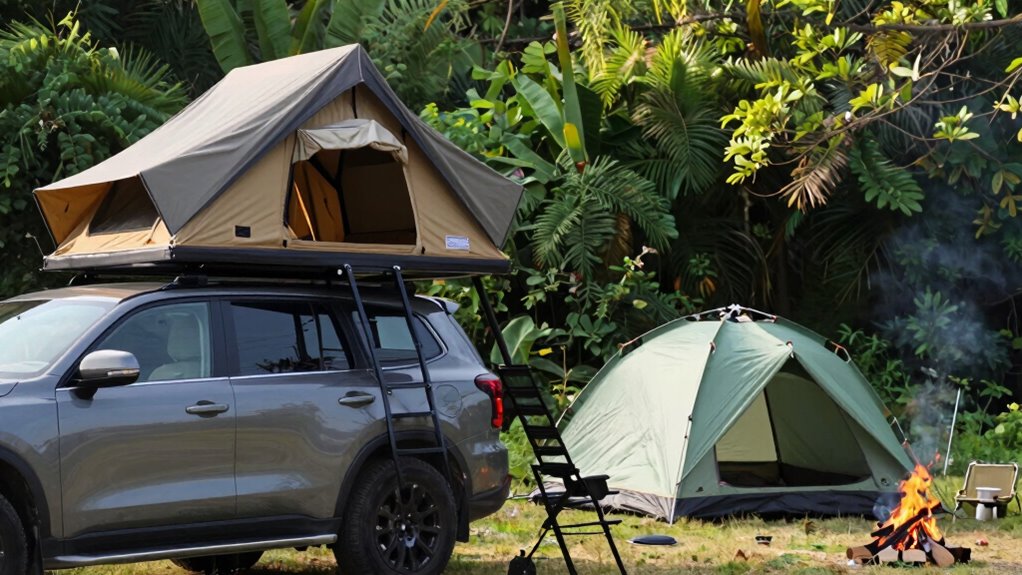

If you prioritize comfort and quick setup, a rooftop tent makes more sense, especially for mobile camping or scenic spots, as it keeps you off the ground and offers better insulation. It’s also more weather-resistant and keeps gear inside your vehicle. On the other hand, ground tents are lightweight, easier to pack into remote areas, and better for rugged terrain. To find out which suits your style best, explore the details ahead.

Prime made for students and young adults
- Fast, free delivery for dorm and study essentials
- Prime Video and Amazon Music included
- Member-only deals
Key Takeaways
- Rooftop tents offer quicker setup and better comfort with built-in mattresses, ideal for frequent travelers.
- Ground tents are more suitable for rugged terrain and remote areas due to easier packing and portability.
- Elevated rooftop tents provide superior weather resistance and protection from ground moisture and mud.
- Ground tents are generally more versatile in size and shape, suitable for various camping styles.
- Material durability influences the longevity and weather performance of rooftop tents, requiring careful selection.

When choosing between a rooftop tent and a ground tent, it’s important to take into account how you plan to camp and what features matter most to you. If you prioritize camping comfort, a rooftop tent offers a significant edge. It typically provides a more comfortable sleeping surface, often with built-in mattresses and better insulation. You’ll find that climbing into a cozy tent elevated off the ground can make a noticeable difference, especially after long days of hiking or exploring. Plus, many rooftop tents are designed with convenience in mind, allowing you to set up and pack down quickly, which means less hassle and more time enjoying your surroundings.
Weather resilience is another critical factor. Rooftop tents tend to perform better in adverse weather conditions. Being elevated keeps you away from puddles, mud, and ground moisture, which can seep into ground tents. Many rooftop options are made with durable, waterproof materials that can withstand wind and rain more effectively. Conversely, ground tents, while often lightweight and easier to carry, can struggle in heavy rain or high winds unless they’re high-quality, well-ventilated, and properly pitched. You’ll need to be more vigilant about securing and waterproofing ground tents, especially in unpredictable weather.
Rooftop tents excel in bad weather, staying dry and protected from ground moisture and mud.
Your camping style also influences the best choice. If you’re someone who camps in remote areas or rugged terrain, a ground tent might appeal because it’s generally more straightforward to pack and carry, especially if weight is a concern. However, if you prefer car camping or base camps with your vehicle nearby, a rooftop tent can transform your experience. It keeps your gear inside the vehicle, freeing up space outside, and provides quick access to your supplies.
Another aspect to evaluate is setup and pack-up time. Rooftop tents are designed for quick deployment, often in a matter of minutes. This can be a huge benefit if you’re moving frequently or want to minimize setup time. Ground tents can take longer to pitch and take down, especially in poor weather conditions, but they’re often more affordable and versatile in terms of size and shape.
Additionally, considering the durability of materials used in rooftop tents can help you prepare for different weather conditions and extend the lifespan of your gear. Ultimately, your choice depends on your camping style, weather conditions, and comfort preferences. Both setups have their advantages, but understanding how each aligns with your needs helps you make the best decision for enjoyable, hassle-free camping.
Popular right now

Shark AV2501AE AI Robot Vacuum with XL HEPA Self-Empty Base

De’Longhi Classic Matte Black Espresso Machine with Milk Frother

Ninja Crispi 5-in-1 Glass Air Fryer System, Emerald, FN103BF
As an affiliate, we earn on qualifying purchases.
Frequently Asked Questions
Are Rooftop Tents Suitable for All Weather Conditions?
Rooftop tents aren’t suitable for all weather conditions. They often offer good weather resistance, especially against rain and wind, but insulation quality can vary, making them less comfortable in extreme cold or heat. You’ll need to take into account the climate and season. In harsh weather, ground tents with better insulation or specialized setups might be more reliable. Always check the tent’s weather resistance features before your trip to ensure comfort and safety.
How Secure Are Rooftop Tents From Theft?
Rooftop tents offer decent security from theft thanks to built-in security features like lockable zippers and sturdy materials. To improve theft prevention, you can add lockable mounting brackets or cable locks. While they’re more secure than ground tents, always park in well-lit, busy areas and consider removing valuables when you’re away. These steps help deter theft and keep your gear safe during your outdoor adventures.
Do Rooftop Tents Impact Vehicle Fuel Efficiency?
Rooftop tents can slightly reduce your vehicle’s fuel efficiency due to the aerodynamics impact. The added height and shape may increase wind resistance, leading to higher fuel consumption. While the difference isn’t huge, expect to see a modest decrease in mileage, especially at highway speeds. To minimize this impact, keep the tent lightweight and make sure it’s properly attached, so it doesn’t create extra drag on your vehicle.
Can Ground Tents Be Used on Uneven Terrain Safely?
Yes, ground tents can be used safely on uneven terrain if you focus on ground tent stability. To guarantee a secure uneven terrain setup, use sturdy stakes, and consider using a ground tarp or footprint to create a flat surface. Adjust the tent’s positioning to avoid rocks or roots, and set up in a sheltered spot. Proper preparation guarantees a comfortable, safe camping experience even on challenging terrain.
What Are the Maintenance Differences Between the Two?
Did you know rooftop tents last about 20% longer than ground tents? Maintenance for rooftop tents is generally lower because they’re protected from ground moisture and dirt, reducing wear and tear. Ground tents, on the other hand, require regular cleaning, seam sealing, and fabric repairs, which can add to maintenance costs. Overall, rooftop tents tend to be more durable and easier to maintain, saving you time and money in the long run.
Conclusion
Choosing between a rooftop and ground tent depends on your camping style, but did you know that rooftop tents can be set up 50% faster? They also offer better protection from the elements and insects. Ground tents, however, are more budget-friendly and easier to pack away in tight spots. Consider your priorities—speed, comfort, or cost—and you’ll find the setup that makes the most sense for your adventures. Happy camping!