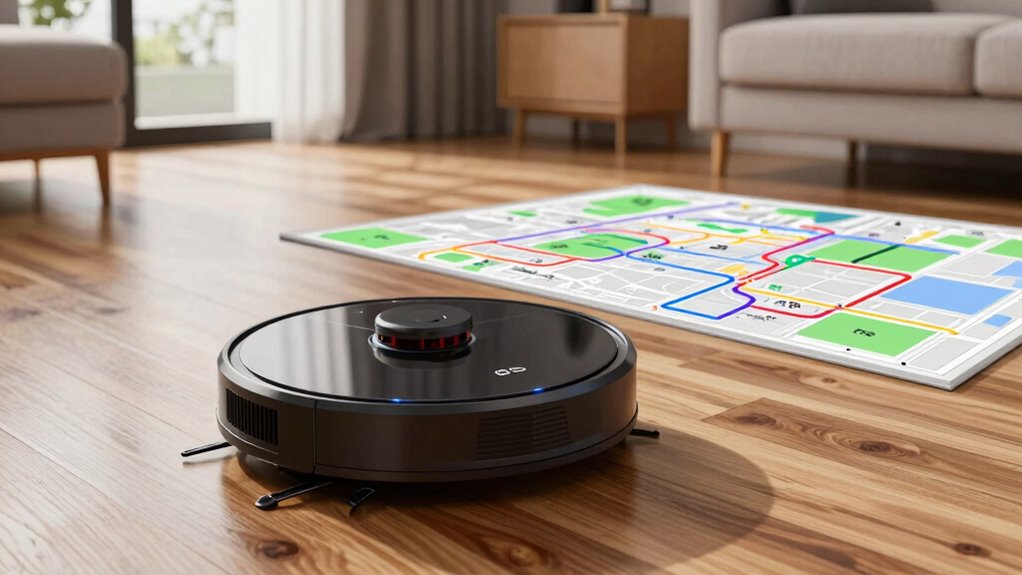

You might find terms like navigation zones, mapping accuracy, and dynamic mapping confusing because manufacturers often use them differently. Navigation zones are virtual boundaries you set to protect or target areas, while mapping accuracy depends on sensors and software that create precise home layouts. Dynamic mapping allows your robot to adapt to changes, like furniture moves. Understanding these terms helps you choose better, more effective models. Keep exploring to uncover the full details behind these confusing terminologies.

Prime made for students and young adults
- Fast, free delivery for dorm and study essentials
- Prime Video and Amazon Music included
- Member-only deals
Key Takeaways
- Navigation zones are virtual boundaries set for targeted cleaning or protection, but their terminology can be confusing.
- Mapping accuracy depends on sensor technology and software, which may be misunderstood as different or unreliable features.
- Dynamic mapping updates the robot’s understanding of home changes, often causing confusion over whether the map is static or adaptable.
- Advanced sensors and software are crucial for precise mapping but are sometimes misinterpreted as overly complex or unnecessary.
- Terminology like “zones,” “maps,” “navigation,” and “sensors” can be used interchangeably or misunderstood, leading to confusion about features.
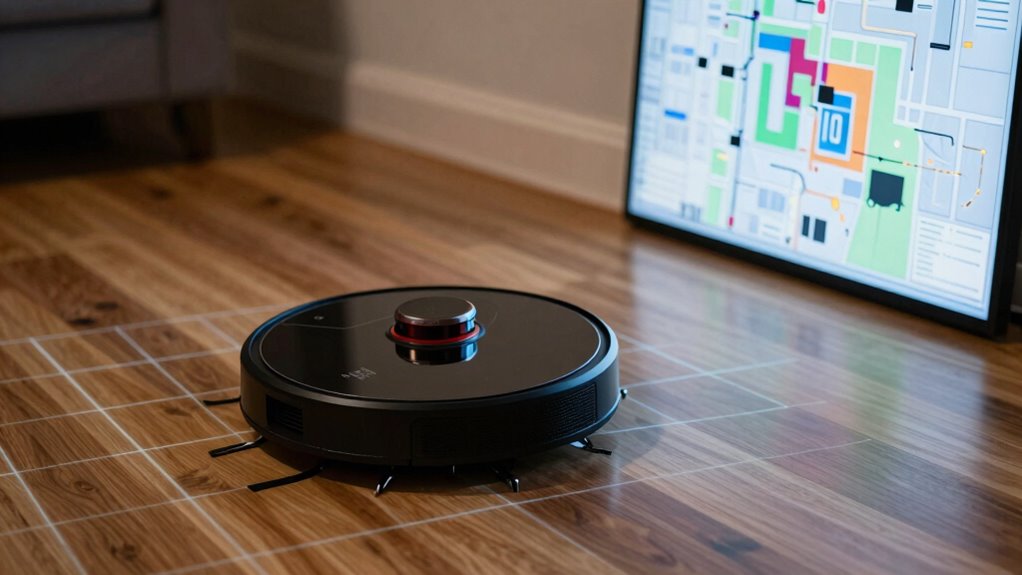
Understanding navigation zones is another critical term that can be confusing at first. These are specific areas within your home that the robot recognizes and divides during its cleaning process. Think of navigation zones as virtual boundaries or sections that the vacuum can target or avoid. Some robots allow you to set or modify these zones via an app, giving you more control over where your vacuum cleans. For example, you might want to create a zone around your pet’s area or a delicate rug that you don’t want the robot to disturb. Understanding navigation zones helps you optimize cleaning efficiency and protect fragile or off-limits areas. The better the robot’s ability to recognize and adapt to these zones, the more tailored the cleaning experience becomes. Efficient cleaning paths depend heavily on accurate mapping and zone management. You should also keep in mind that mapping accuracy directly impacts how well your robot can establish and utilize navigation zones. If the map isn’t accurate, the zones may be misplaced or ineffective, leading to inefficient cleaning or missed spots. Conversely, a robot with advanced sensors and mapping technology can adapt to changes in your home, updating its map as needed. This dynamic mapping allows your robot to handle furniture rearrangements or new obstacles seamlessly, maintaining high cleaning performance over time. Additionally, mapping accuracy relies heavily on the robot’s sensors and software, which are continuously improving in newer models. A comprehensive understanding of these features helps you evaluate different robot vacuum models more effectively. Understanding how these terms work together, especially sensor technology, helps you evaluate different robot vacuum models more effectively. A device with excellent mapping accuracy coupled with flexible navigation zone management will deliver a more thorough, efficient, and customizable cleaning experience. So, when you’re shopping, pay close attention to these features—your home’s cleanliness depends on it.
robot vacuum with mapping accuracy
As an affiliate, we earn on qualifying purchases.
As an affiliate, we earn on qualifying purchases.
Frequently Asked Questions
How Do Robot Vacuums Create Maps of My Home?
You might wonder how robot vacuums create maps of your home. They use sensors and cameras to scan your space, building a detailed floor plan. As they move, obstacle detection helps them avoid furniture and walls, updating the map in real time. This process allows the vacuum to plan efficient cleaning routes, ensuring every inch of your home gets cleaned while avoiding obstacles and maintaining an accurate layout.
What Is SLAM Technology in Robot Vacuums?
Imagine your robot vacuum as a smart explorer, using SLAM technology to map your home. SLAM, or Simultaneous Localization and Mapping, helps it navigate by combining advanced navigation algorithms with sensor integration like cameras and lasers. It’s like giving your vacuum a GPS and sense of space, so it can efficiently clean without missing spots or bumping into furniture. This technology guarantees a thorough, efficient clean every time.
Can Mapping Errors Be Fixed Automatically?
Yes, mapping errors can often be fixed automatically. Modern robot vacuums use advanced error correction features to improve mapping accuracy, helping them recognize and fix mistakes like missed spots or incorrect room layouts. When the vacuum detects a mapping inconsistency, it adjusts its data on the fly, enhancing performance. Regularly updating your device’s firmware and ensuring a clean sensor environment also aid in maintaining accurate maps and reducing errors.
Do All Robot Vacuums Use the Same Mapping Terms?
No, not all robot vacuums use the same mapping terms. Different brands and models may have unique terminology, which can affect your understanding of their mapping accuracy. It’s important to review each device’s language to guarantee clarity. Additionally, be aware of privacy concerns, as some vacuums store mapping data that could be shared or accessed, impacting your privacy. Always check the specific terms and privacy policies before choosing a vacuum.
How Secure Is My Home Map Data?
They say, “trust, but verify,” and that’s true for your home map data. Your robot vacuum’s data is generally secure thanks to data encryption, which protects your information from hackers. However, always review privacy policies to understand how your data’s managed. While most brands prioritize security, it’s wise to stay vigilant, keep firmware updated, and limit sharing to ensure your home map stays private and safe.
Conclusion
By now, you’re practically a mapping expert—your brain overflowing with terms that once sounded like alien technology! Armed with this newfound knowledge, you’ll conquer any robot vacuum’s mapping language like a true tech ninja. No more confusion, no more guessing—just pure, unstoppable cleaning mastery. Soon, you’ll be telling your friends you speak “mapping” fluently, and they’ll swear you’ve got a secret robot vacuum decoding superpower. The future of cleaning is all yours!
Fall Picks
fall essentials
As an affiliate, we earn on qualifying purchases.