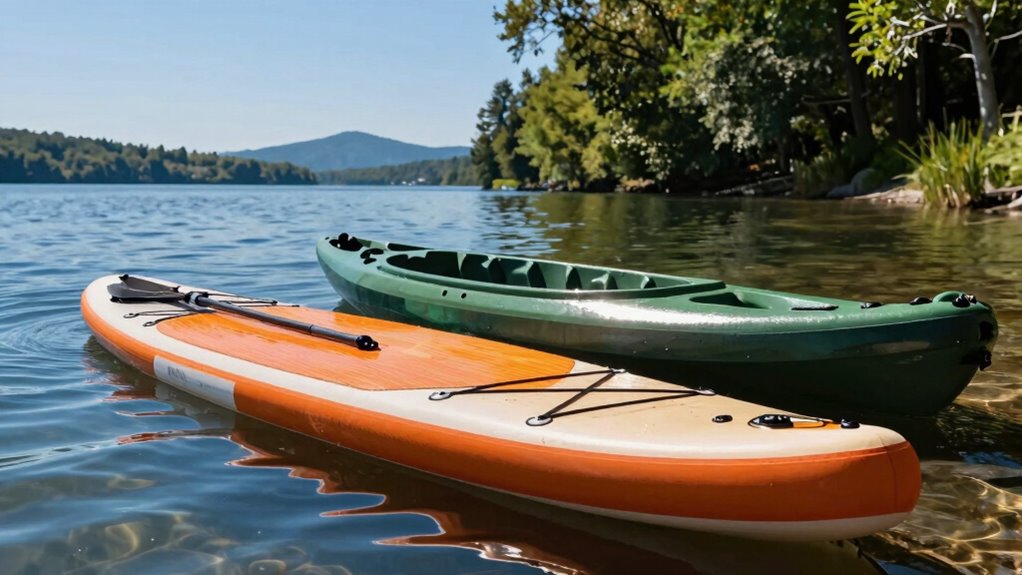

If you’re a beginner, an inflatable paddle board is usually easier to start with because it’s lightweight, stable, and simple to transport. It provides a broad surface, making balancing less intimidating and reducing falls. Unlike kayaks, inflatable boards require less maintenance and are great for learning water safety. Once you get comfortable, you can explore more challenging waters. Keep exploring to discover more insights that will help you choose the best option for your water adventures.

Prime made for students and young adults
- Fast, free delivery for dorm and study essentials
- Prime Video and Amazon Music included
- Member-only deals
Key Takeaways
- Inflatable paddle boards are generally easier for beginners due to their stability and simple setup.
- Kayaks may require more skill to paddle and maneuver, making them slightly more challenging for newcomers.
- Inflatable boards are lightweight and portable, simplifying transportation and storage for beginners.
- Kayaks offer more protection from water, which can be advantageous for those new to water safety.
- Overall, inflatable paddle boards are more beginner-friendly for starting water activities.
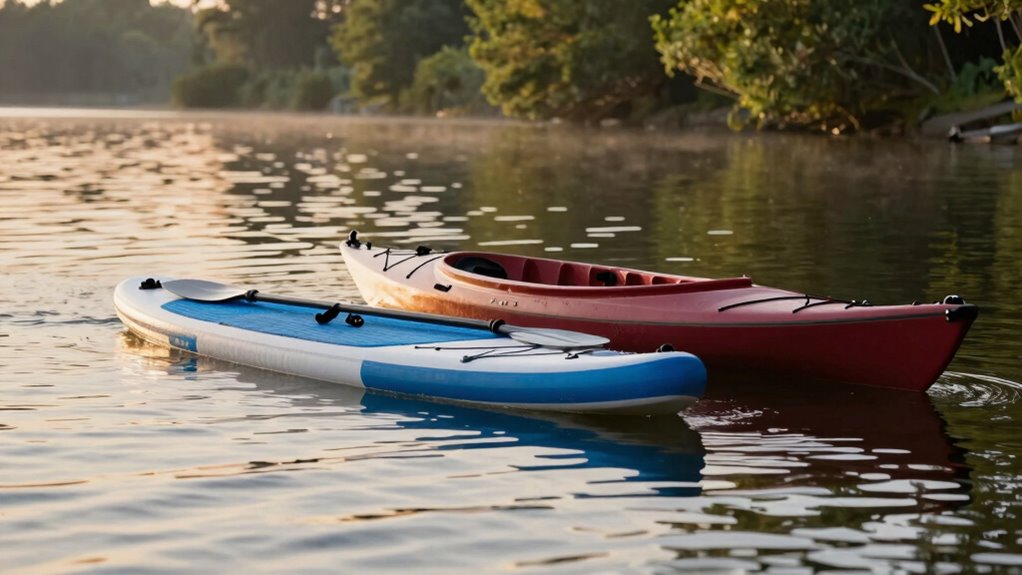
When choosing between an inflatable paddle board and a kayak, understanding their key differences can help you make the best decision for your water adventures. Both options offer unique experiences, but your choice depends on your comfort level, the environment, and your goals. If you’re new to water sports, you’ll want to consider which is easier to handle and maintain, especially when it comes to water safety and equipment upkeep.
Inflatable paddle boards are generally more straightforward for beginners. They’re lightweight, portable, and easy to store, which means you can pack them in a car or even carry them on public transportation. Because they’re inflatable, they’re less likely to tip over unexpectedly, giving you a more stable platform to learn on. This stability makes paddling and balancing less intimidating, particularly when you’re just starting out. On the other hand, kayaks tend to be bulkier and heavier, which might make transportation and storage more of a hassle. However, kayaks often provide more enclosed protection, which can be advantageous for water safety, especially in rougher conditions or colder water.
Inflatable paddle boards are ideal for beginners—lightweight, stable, and easy to transport and store.
When it comes to equipment maintenance, inflatable paddle boards require diligent care. You need to regularly check for punctures or leaks, especially after use in rocky or debris-filled waters. Ensuring proper drying and storage in a cool, dry place extends their lifespan. Conversely, kayaks need more comprehensive maintenance, like inspecting the hull for cracks, checking the integrity of the seating, and making sure the paddles stay in good condition. While both pieces of equipment require upkeep, inflatables tend to be easier to repair if punctured, often with simple patch kits, whereas repairing a kayak might involve more specialized work. Additionally, understanding water safety considerations for each can help prevent accidents and ensure a more enjoyable experience.
Water safety is crucial regardless of your choice. Inflatable paddle boards often have a broader, more stable surface, helping you stay balanced with less effort, which reduces the risk of falling. Many come with attachments for safety leashes, which prevent the board from drifting away if you fall off. Kayaks, especially closed-deck models, provide more protection from the water, keeping you dry and warm, which can be vital in colder or more unpredictable conditions. They also typically have more storage for safety gear like life jackets, signaling devices, and first aid kits.
Ultimately, if you’re looking for simplicity, portability, and easy maintenance, an inflatable paddle board might be your best bet to start with. It offers a gentle learning curve, making water safety manageable and equipment upkeep straightforward. While kayaks are excellent for longer trips and better protection, they might be better suited once you gain some experience and want to explore more challenging waters.
inflatable paddle board for beginners
As an affiliate, we earn on qualifying purchases.
As an affiliate, we earn on qualifying purchases.
Frequently Asked Questions
Which Is More Suitable for Children or Beginners?
A kayak is more suitable for children or beginners because it offers better child safety and stability. You can sit securely and use a paddle with control, helping build beginner confidence quickly. Kayaks are generally easier to learn, especially for kids, as they provide a stable platform and are less likely to tip over. This makes kayaking an ideal choice for young or novice paddlers starting their outdoor adventure.
Can Inflatable Paddle Boards Be Used in Rough or Choppy Water?
Inflatable paddle boards are not ideal for rough water or choppy waves, and you shouldn’t use them in such conditions. They lack the stability and rigidity needed to handle turbulent water safely. If you encounter rough water, choppy waves, or strong currents, a kayak or a more stable, hard-shell paddle board provides better control and safety. Prioritize your safety and choose the right watercraft for challenging conditions.
How Much Maintenance Do Inflatable Paddle Boards Require?
Inflatable paddle boards require minimal maintenance. You need to regularly check the inflation techniques to guarantee they stay firm and prevent leaks, especially after use. Rinse the board with fresh water to remove salt, dirt, or debris, and store it in a cool, dry place. The material durability of most inflatable boards is high, but avoid sharp objects and rough surfaces to prevent punctures and tears.
Are Kayaks More Stable Than Paddle Boards for Beginners?
Kayaks are generally more stable than paddle boards for beginners, offering better balance challenges and equipment versatility. Their design provides a lower center of gravity, making it easier to stay upright and control your movement. You’ll find it simpler to learn basic strokes and maneuverability, giving you confidence on the water. With a kayak, you get a stable platform that encourages exploration, whether you’re paddling on calm lakes or gentle rivers.
What Are the Storage Options for Inflatable Paddle Boards and Kayaks?
You have great storage options with both inflatable paddle boards and kayaks. Many inflatable paddle boards feature built-in storage compartments or straps to hold gear securely, while kayaks often come with dedicated storage areas or hatches. When it comes to portability options, inflatable paddle boards are highly portable, fitting into backpacks or duffel bags, making transportation easy. Kayaks are bulkier but can be transported on racks or trailer systems for convenience.
Conclusion
Whether you choose an inflatable paddle board or a kayak, you’ll find yourself gliding smoothly across the water, feeling that perfect blend of excitement and serenity. As you pack up your gear on a sunny morning, it’s almost like the universe conspired to make your adventure effortless. Maybe it’s the gentle breeze or the way the waves ripple just right—either way, starting out is easier than you’d think, and the water’s waiting to embrace you.
Columbus Day / Indigenous Peoples' Day Picks
long weekend sales
As an affiliate, we earn on qualifying purchases.