
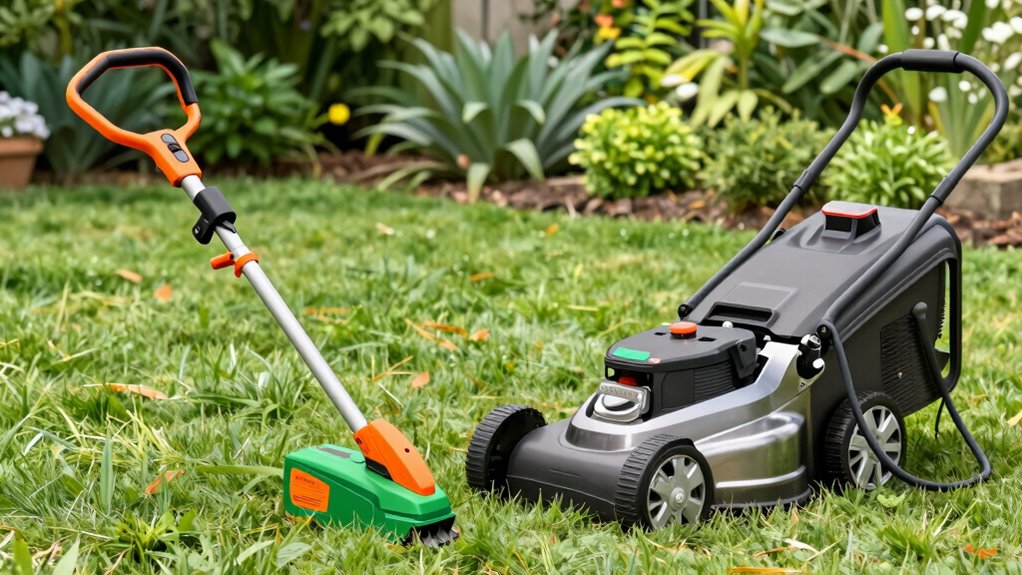

Battery-powered lawn tools are quickly taking over gas models thanks to their eco-friendliness, quiet operation, and ease of use. They produce zero emissions, are lighter, and don’t require fuel or extensive maintenance. While they may have shorter runtimes for large jobs, advancements in battery tech make them more powerful and convenient for most homeowners. If you’re curious about how these tools compare and what’s driving the shift, you’ll find some important details ahead.

Prime made for students and young adults
- Fast, free delivery for dorm and study essentials
- Prime Video and Amazon Music included
- Member-only deals
Key Takeaways
- Battery tools are gaining popularity due to their eco-friendliness and zero emissions during operation.
- Quieter operation of battery tools makes them more suitable for residential and noise-sensitive areas.
- Advances in battery technology are improving runtime and power, increasing their practicality.
- Gas tools still offer longer run times, making them preferred for large-scale or professional landscaping.
- Overall, the trend favors battery tools for their convenience, environmental benefits, and quieter performance.
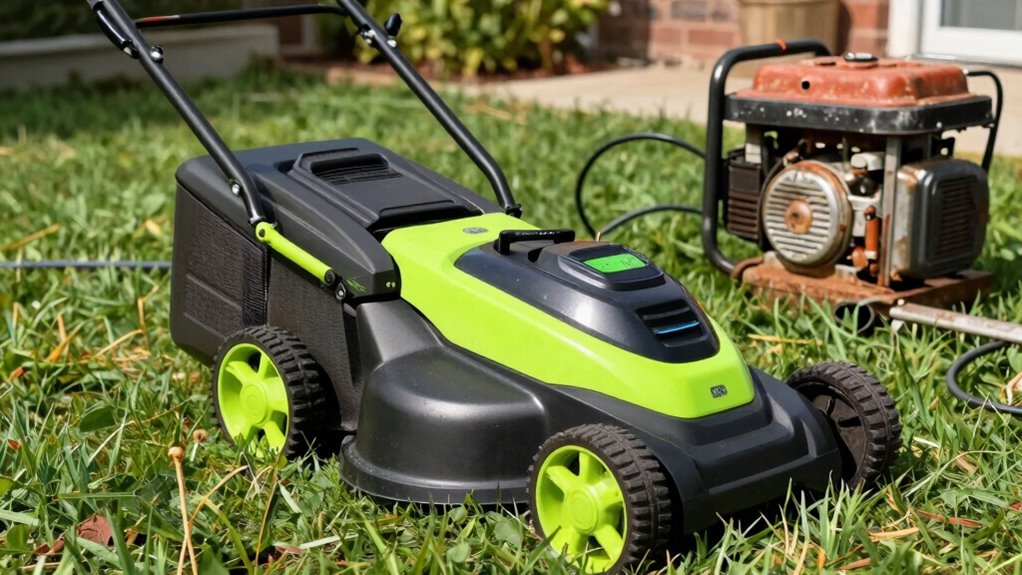
When choosing between battery and gas lawn tools, understanding their differences can help you make an informed decision that suits your needs. Battery-powered tools are increasingly popular for their eco-friendly options, which appeal to homeowners looking to reduce their environmental footprint. Unlike gas models, these tools produce zero emissions during operation, making them a cleaner choice for your yard and the planet. If you’re concerned about air quality or want to minimize your carbon footprint, battery tools are a clear advantage. Additionally, they tend to be more energy-efficient, requiring less maintenance and fuel, which further supports eco-friendly living. Advances in battery technology have also contributed to longer runtimes and greater power, making these tools more capable for various tasks.
Battery-powered lawn tools are eco-friendly, produce zero emissions, and require less maintenance for a cleaner yard and planet.
Noise pollution is another significant factor that often sways users toward battery-powered equipment. Gas-powered tools are notorious for their loud engines, which can disturb your family, neighbors, and even wildlife. The noise can be particularly frustrating if you’re operating your lawn tools early in the morning or late in the evening. Battery tools, on the other hand, operate quietly, allowing you to work without creating excessive noise. This makes them ideal for residential areas or situations where noise restrictions are in place. Plus, the quieter operation enhances your overall gardening experience, letting you work longer without the fatigue or irritation caused by loud machinery.
Beyond environmental and noise considerations, battery tools offer practical advantages that influence many users’ preferences. They are generally lighter and easier to handle, reducing fatigue during prolonged use. Without the need for a cord or fuel, you gain greater mobility and flexibility, making it simpler to maneuver around your yard. Quick-start features and minimal maintenance also mean less hassle, so you can finish your yard work faster and with less frustration. Additionally, advancements in battery technology have improved their runtime and power output, making them more suitable for a wider range of tasks. As a result, modern battery tools can now handle even more demanding jobs than before.
However, it’s essential to recognize some limitations of battery tools. Their runtime can be shorter than gas models, especially for larger yards or more demanding tasks. You might need to carry extra batteries or plan for recharging, which can interrupt your workflow. Gas tools, with their longer continuous run times, are better suited for extensive landscaping projects or professional use. Still, for most residential homeowners, the convenience and eco benefits of battery-powered tools outweigh these drawbacks.
In the end, the decision hinges on your priorities. If reducing noise pollution and choosing eco-friendly options are important to you, battery lawn tools are increasingly taking over because they meet these needs efficiently. They offer a quieter, cleaner, and more user-friendly alternative to traditional gas-powered equipment, making them the preferred choice for many modern gardeners.
Popular right now

Shark AI Ultra Robot Vacuum with Matrix Clean and Self-Empty Base

Bose QuietComfort Wireless Noise-Cancelling Headphones, Sandstone

KitchenAid Artisan Mini Tilt-Head Stand Mixer, 3.5 Quart, Aqua Sky Blue
As an affiliate, we earn on qualifying purchases.
Frequently Asked Questions
How Do Battery Lifespan and Replacement Costs Compare to Gas Engine Maintenance?
Battery longevity generally means you’ll replace batteries less often than dealing with gas engine maintenance. Replacement expenses for batteries tend to be higher upfront but are usually cheaper over time because you avoid costly oil changes, spark plugs, and tune-ups. Gas engines require ongoing maintenance, which adds up, while batteries have a limited lifespan but fewer ongoing costs. Overall, batteries often save you money in the long run.
Are There Environmental Benefits to Choosing Battery-Powered Tools Over Gas?
Choosing battery-powered tools offers eco-friendly benefits like reduced emissions and less air pollution, making them a greener option overall. You also avoid the noise pollution associated with gas engines. However, you should consider battery disposal concerns, as improper disposal can harm the environment. By recycling batteries properly, you help minimize environmental impact. Overall, battery tools help you maintain your yard while being more environmentally responsible.
Which Tool Type Offers Better Performance in Extreme Weather Conditions?
Battery-powered tools generally offer good performance in extreme weather, but gas tools tend to be more weather-resilient. You’ll find that battery durability can decline in very cold or hot conditions, affecting their performance. Gas tools, on the other hand, are usually more reliable in harsh weather because they’re less affected by temperature fluctuations. If you need consistent power in extreme conditions, gas tools might be the better choice for you.
How Do Noise Levels Differ Between Battery and Gas Lawn Equipment?
You’ll notice that battery lawn tools generally produce less noise pollution compared to gas-powered equipment. Their sound intensity is considerably lower, making them quieter during operation. This reduced noise can make your yard work more comfortable and less disruptive to neighbors. Gas tools, on the other hand, tend to be louder, contributing more to sound pollution. If noise levels are a priority for you, battery options offer a much quieter alternative.
What Are the Initial Purchase Costs for Battery Versus Gas Tools?
The initial purchase costs for battery lawn tools are generally higher than gas ones, due to batteries and chargers adding to the price. However, a cost comparison shows that over time, battery tools may save you money with less maintenance and fuel costs. User preferences play a role—some prefer the convenience and quieter operation of batteries, even if the upfront expense is higher. Ultimately, weigh upfront costs against long-term savings and personal convenience.
Conclusion
While gas lawn tools have long been the go-to, battery-powered options are catching up fast, offering quieter, cleaner, and more convenient performance. You might worry about battery life, but advancements mean you can now mow larger areas without frequent recharges. So, if you’re looking for a low-maintenance, eco-friendly alternative that keeps your yard looking great, giving batteries a try could be the smarter choice—without sacrificing power or efficiency.