
Understanding sleep cycles means knowing that your sleep repeats roughly every 90 to 120 minutes, containing both REM and non-REM stages. Non-REM includes three stages, from light to deep sleep, during which your body repairs itself and consolidates memories. REM sleep, which happens later in each cycle, involves vivid dreaming and brain activity similar to being awake. If you stay curious, you’ll learn how these phases work together to keep you healthy.
Listen free for 30 days with Audible
Thousands of audiobooks and originals — cancel anytime.
As an affiliate, we earn on qualifying purchases.
Key Takeaways
- Sleep cycles consist of alternating REM and non-REM stages, lasting about 90-120 minutes each.
- Non-REM sleep includes three stages: light sleep, deep sleep, and transition phases.
- REM sleep features rapid eye movements, vivid dreams, and brain activity similar to wakefulness.
- Multiple sleep cycles repeat nightly, with REM duration increasing in later cycles for restorative benefits.
- Proper sleep cycles are essential for physical health, memory, emotional regulation, and overall rest quality.
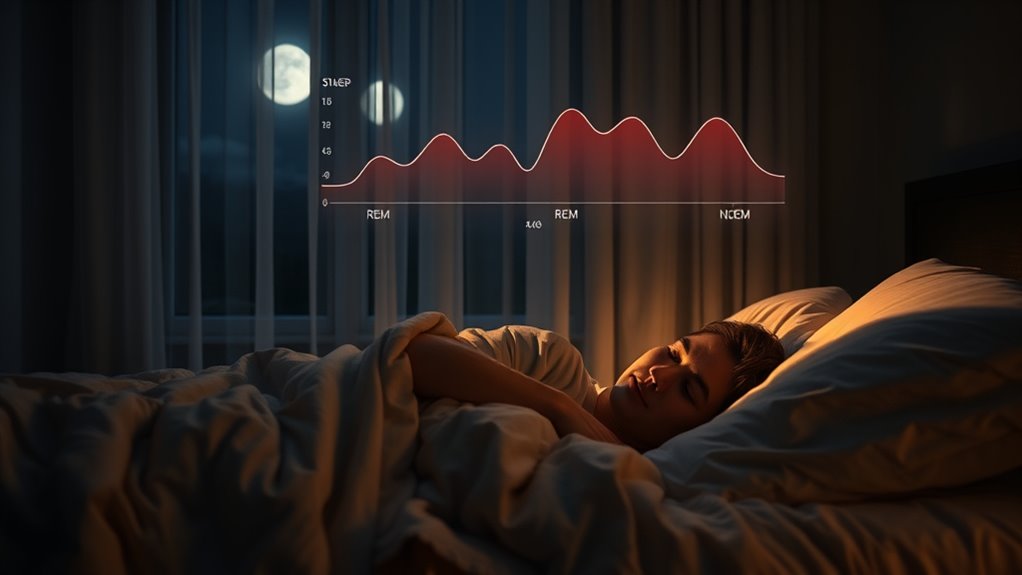
Sleep is a fundamental part of your health, and understanding its cycles can help you improve your rest. When you fall asleep, your body shifts through different sleep cycle phases, each with unique characteristics. These phases influence your dream patterns and overall sleep quality. Recognizing how these phases work allows you to optimize your sleep habits and wake up feeling refreshed.
Your sleep cycle consists of two main types: REM (Rapid Eye Movement) sleep and non-REM sleep. Non-REM sleep contains three stages, progressing from light sleep to deep sleep. During the first stage, you drift from wakefulness into a light sleep, where your muscles relax and your brain activity slows down. This stage is brief, typically lasting only a few minutes. As you move into the second stage, your body continues to relax, and your heart rate and breathing slow further. Brain waves become slower, and your body prepares to enter deep sleep. The third stage, known as slow-wave or deep sleep, is essential for physical restoration. During this phase, your body repairs tissues, strengthens your immune system, and consolidates memories. Well-structured sleep cycles are crucial for maintaining overall health and cognitive function.
Following non-REM stages, your body enters REM sleep. This phase usually occurs about 90 minutes after falling asleep and is characterized by rapid eye movements, increased brain activity, and vivid dreams. Dream patterns during REM sleep are more intense and story-like, often involving emotional or complex scenarios. Your muscles are typically paralyzed during REM to prevent acting out dreams, but your brain remains highly active, similar to wakefulness. This cycle of non-REM and REM sleep repeats multiple times throughout the night, with each cycle lasting roughly 90 to 120 minutes. The amount of REM sleep increases with each cycle, especially in the latter part of the night.
Understanding your sleep cycle phases helps you appreciate why consistent sleep schedules are essential. Interrupting these cycles can prevent you from reaching deep sleep or REM sleep, leaving you tired and less mentally sharp. If you wake up during REM, you might remember vivid dreams, but missing out on this phase can diminish memory consolidation and emotional regulation. To improve your sleep, aim to get enough total sleep time, which allows your body to complete multiple full cycles. Maintaining a regular sleep schedule and creating a calming pre-sleep routine can help your body naturally progress through these sleep cycle phases, leading to better rest and overall health. Additionally, optimizing your environment by reducing light and noise can support the natural progression through these phases for better sleep quality.

Smart Watch Fitness Tracker with 24/7 Heart Rate, Blood Oxygen Blood Pressure Monitor Sleep Tracker 120 Sports Modes Activity Trackers Step Calorie Counter IP68 Waterproof for Andriod iPhone Women Men
- High-Resolution 1.58'' Display: Vibrant colors and crisp clarity
- Always-On Display and Touch Controls: Easy time viewing and seamless operation
- 24/7 Heart Rate Monitoring: Real-time health data on your wrist
As an affiliate, we earn on qualifying purchases.
As an affiliate, we earn on qualifying purchases.
Frequently Asked Questions
How Do Sleep Cycles Vary With Age?
As you age, sleep cycle development and age-related changes alter your sleep patterns. Younger individuals spend more time in deep Non-REM sleep, especially in stages 3 and 4, which decline with age. REM sleep also decreases, and sleep becomes lighter and more fragmented. These changes can lead to less restorative sleep, making you wake up more often and feel less refreshed. Understanding these shifts helps you adapt your sleep habits for better rest.
Can Sleep Cycles Be Intentionally Controlled or Altered?
Like a skilled puppeteer, you can attempt to influence your sleep cycles through dream manipulation and conscious control. While complete mastery remains elusive, practices like lucid dreaming and meditation help you steer your dreams and enhance awareness during REM sleep. By training your mind, you can subtly alter your sleep patterns, making your journey through the night more intentional and connected to your inner world, much like an artist shaping their masterpiece.
What Are the Effects of Disrupted Sleep Cycles?
Disrupted sleep cycles can negatively impact your sleep quality, making you feel tired and less refreshed. You might experience poorer dream recall and difficulty entering REM sleep, which hampers mental restoration. As a result, your cognitive function, mood, and overall health suffer. To improve your sleep quality, aim for consistent sleep patterns and minimize disruptions, helping your body maintain healthy sleep cycles and allowing better dream recall and restorative rest.
How Do Sleep Cycles Differ Across Different Species?
Did you know that some animals, like dolphins, sleep with one brain hemisphere at a time? In comparative sleep architecture, sleep cycles vary widely across species due to evolutionary sleep adaptations. While humans experience about 90-minute cycles with distinct REM and Non-REM stages, other animals adapt their sleep patterns to their environment and survival needs. These differences highlight how evolution shapes sleep to optimize each species’ well-being and function.
Are There Genetic Factors Influencing Sleep Cycle Patterns?
Yes, genetic factors influence your sleep cycle patterns. Your genetic predispositions can determine how much REM and Non-REM sleep you get, affecting overall sleep quality. Sleep pattern inheritance means you might naturally have longer or shorter sleep cycles, or specific sleep disorders run in your family. These genetic influences shape how your brain regulates sleep, making some patterns more common based on your family history and inherited traits.
Conclusion
Now that you understand the differences between REM and non-REM sleep, you can better appreciate how essential quality rest is for your health. Remember, “a good laugh and a long sleep are the best cures for anything.” Prioritize your sleep cycles, and you’ll wake up refreshed and ready to face each day. Sleep isn’t just rest; it’s a crucial part of your well-being. So, make it a priority tonight—you deserve it.
College move-in / dorm season Picks
dorm essentials
As an affiliate, we earn on qualifying purchases.