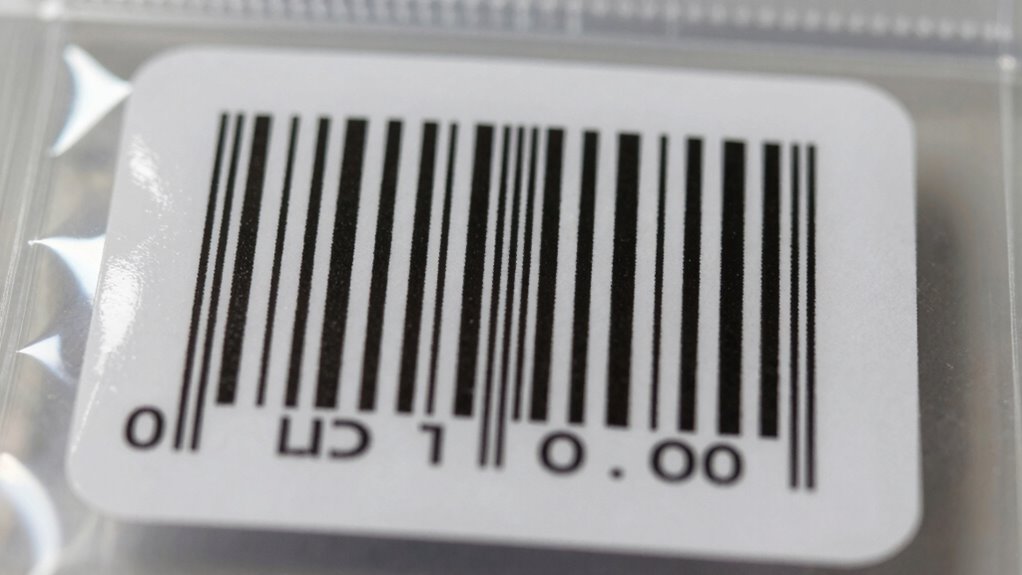

A UPC code is a unique barcode that helps identify retail products quickly and accurately at checkout. It consists of black and white bars with numbers underneath, serving as a digital fingerprint for each item. When scanned, it retrieves details like price, name, and stock levels, making transactions faster and reducing errors. If you’re interested, you’ll discover even more about how UPC codes keep retail operations running smoothly.

Prime made for students and young adults
- Fast, free delivery for dorm and study essentials
- Prime Video and Amazon Music included
- Member-only deals
Key Takeaways
- A UPC (Universal Product Code) is a barcode used to identify products uniquely in retail.
- It consists of black and white bars with a numeric code beneath.
- The code helps scan and retrieve product details like price and stock instantly.
- Each UPC is unique to ensure accurate product tracking and inventory management.
- UPCs streamline checkout, reduce errors, and support supply chain efficiency.
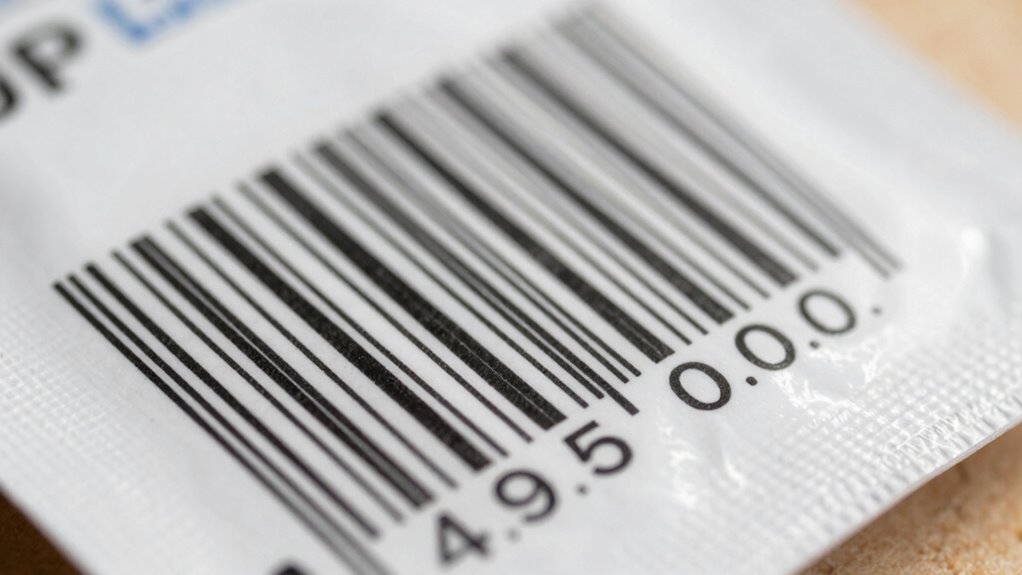
Have you ever wondered how stores quickly scan and identify products at checkout? It’s all thanks to barcode scanning, a technology that streamlines the entire shopping process. When you bring your items to the register, the cashier uses a barcode scanner to read the UPC code on each product. This code acts like a digital fingerprint, uniquely identifying the item in the store’s system. The process is fast, accurate, and efficient, allowing for smooth transactions and minimal wait times. But beyond just speeding up checkout lines, UPC codes play an essential role in managing retail inventory, helping stores keep track of their stock levels and sales data.
Barcode scanning speeds up checkout and manages inventory efficiently, making shopping quick and store operations seamless.
A UPC, or Universal Product Code, is a specific type of barcode that consists of a series of black and white bars along with a series of numbers beneath. These numbers are the key to the product’s identity. When the barcode is scanned, the store’s computer system retrieves information about the item, such as its name, price, and stock quantity. This instant data retrieval is critical for maintaining accurate retail inventory. It guarantees that items are correctly priced at checkout, and it helps store managers monitor which products are selling well and which aren’t. By automating this process, UPC codes eliminate the need for manual inventory counts, saving time and reducing errors.
You might not realize it, but each UPC code is carefully designed to be unique, guaranteeing no two products share the same barcode. This uniqueness is indispensable for inventory management because it allows stores to track every individual product with precision. When an item’s barcode is scanned, the system updates the inventory count automatically, reflecting real-time stock levels. This helps prevent stockouts or overstocking, optimizing the store’s supply chain and reducing waste. Retailers can analyze sales patterns based on UPC data, making smarter purchasing decisions and improving overall efficiency.
In essence, UPC codes simplify the complex logistics behind retail operations. They bridge the gap between physical products and digital data, making the process of selling, tracking, and managing inventory seamless. These barcode systems are fundamental to modern retail, ensuring accuracy and efficiency from the moment you pick up a product to the second you pay for it. Additionally, standardized coding ensures consistency across different stores and regions, further optimizing retail processes. The use of unique identifiers in UPC codes also supports the integration of retail data with broader supply chain and logistics systems, enhancing overall efficiency and traceability. Implementing these systems also improves inventory accuracy, which is vital for successful retail management.
As an affiliate, we earn on qualifying purchases.
Frequently Asked Questions
How Are UPC Codes Different From QR Codes?
UPC codes are different from QR codes because they serve distinct purposes in barcode scanning and product identification. A UPC code is a 12-digit number that’s primarily used in retail to identify products quickly and accurately at checkout. QR codes are two-dimensional, can store much more information like URLs or text, and are scanned with smartphones. While UPCs focus on inventory, QR codes offer versatile, detailed data sharing.
Can I Create My Own UPC Code?
Yes, you can create your own UPC code, but it’s important to understand that it needs to be a unique identifier for your product. You may work with authorized organizations or barcode providers to generate a custom code that’s unique to your brand. Keep in mind, having a valid UPC code helps retailers and scanners accurately track your product, so make certain your custom code is properly registered and recognized.
What Industries Primarily Use UPC Codes?
You walk through a bustling store, shelves lined with colorful products, each tagged with a UPC code. Retail industries rely heavily on these codes to track inventory and speed up checkout lines. They also play an essential role in supply chain logistics, ensuring products move smoothly from warehouse to shelf. From supermarkets to clothing stores, UPC codes help keep the shopping experience efficient, organized, and seamless, connecting every step of the retail process.
How Long Does It Take to Get a UPC Code?
Getting a UPC code usually takes a few days to a couple of weeks, depending on the provider. You’ll need to register with GS1, the official organization, to guarantee your code is unique for product identification and barcode scanning. Once registered, they assign your UPC, which you can then print on your packaging. This process helps streamline inventory management and sales across retail channels quickly and efficiently.
Are UPC Codes Mandatory for All Retail Products?
Yes, UPC codes are mandatory for most retail products because they help with product labeling and managing retail inventory efficiently. When your products have UPC codes, it becomes easier for stores to track sales, restock, and organize their inventory. Without these codes, retail businesses might face difficulties in scanning and processing products quickly, which can lead to delays and errors at checkout. As a result, including UPC codes is essential for smooth retail operations.
Conclusion
Now that you know what a UPC code is, you’re equipped to recognize it everywhere—from your favorite grocery store to online shopping carts. Think of it as a tiny but mighty barcode superhero, effortlessly connecting products to inventory and sales data worldwide. Once you spot that pattern of bars and numbers, you’ll see it’s not just a code, but the heartbeat of retail logistics—pumping data faster than a lightning bolt during a thunderstorm!
Fall Picks
fall essentials
As an affiliate, we earn on qualifying purchases.