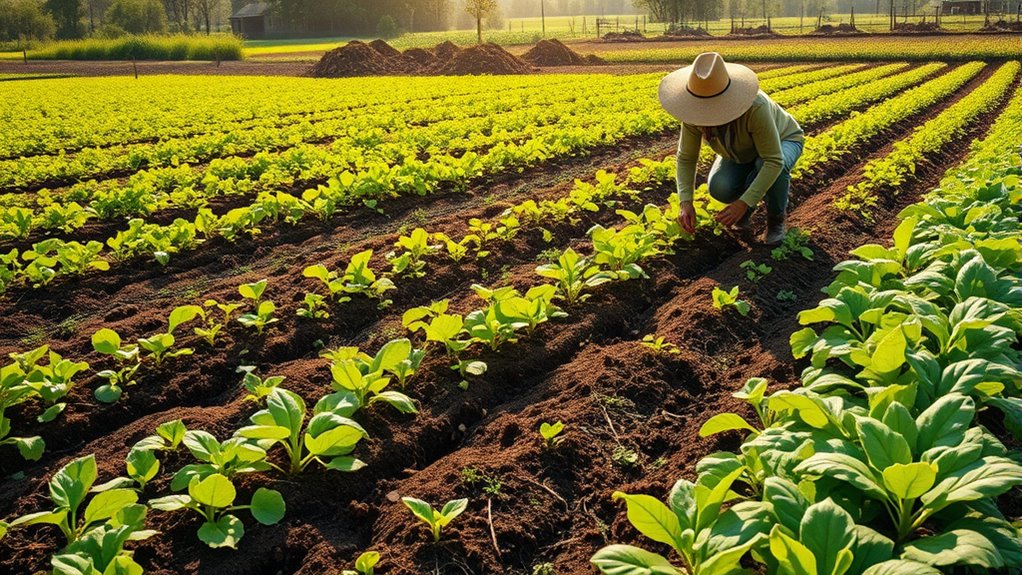

Regenerative agriculture is a farming approach that prioritizes restoring soil health, increasing biodiversity, and boosting ecosystem resilience. It focuses on growing a variety of crops, using cover crops, and applying sustainable land practices to improve soil structure, enhance water retention, and sequester carbon. By reducing chemical use and promoting natural systems, you can create more productive and resilient land. If you look further, you’ll discover even more ways this method benefits the environment and your food system.

Get school and study supplies delivered free — and shop member deals
- Fast, free delivery on millions of items
- Access to Prime Big Deal Days deals on October 6–7
- Prime Video, Amazon Music and more included
Key Takeaways
- Regenerative agriculture restores ecosystems by improving soil health through practices like cover cropping and crop diversity.
- It emphasizes building a vibrant soil community of microbes, fungi, and organic matter to support plant growth.
- The approach increases land’s water retention, reduces erosion, and sequesters carbon to combat climate change.
- Diverse cropping systems reduce pests and diseases, enhance nutrient cycling, and promote resilient, sustainable farming.
- It aims to minimize chemical inputs, boost biodiversity, and create more nutritious crops for healthier ecosystems.

Have you ever wondered how farming can heal the land rather than harm it? It’s a question that leads you into the world of regenerative agriculture, a method that actively restores ecosystems instead of degrading them. At its core, this approach emphasizes improving soil health, which is fundamental for sustainable farming. Healthy soil isn’t just dirt; it’s a vibrant, living community filled with microbes, fungi, and organic matter that work together to support plant growth. When you adopt regenerative practices, you help rebuild this essential ecosystem, increasing its capacity to retain water, resist erosion, and sequester carbon. This means fewer chemical inputs, better resilience against droughts, and ultimately, more nutritious crops for you and the environment.
Another key element of regenerative agriculture is crop diversity. Instead of planting monocultures—large fields of a single crop—this approach encourages growing a variety of plants. Crop diversity isn’t just about having more colorful fields; it’s about creating a resilient system that mimics natural ecosystems. When you diversify your plantings, you reduce the risk of pests and diseases, because no single pest can wipe out all your crops. It also improves soil health by providing a range of root structures and organic residues that feed soil microbes, enhancing nutrient cycling. Incorporating cover crops is a vital practice, as they help improve soil structure, add organic matter, and support beneficial organisms. As a result, your land becomes more productive over time, requiring fewer synthetic fertilizers, which can harm the soil and water systems.
Frequently Asked Questions
How Does Regenerative Agriculture Impact Local Economies?
Regenerative agriculture boosts your local economy by promoting economic revitalization through increased job opportunities and sustainable farming practices. It encourages community resilience by supporting local farmers, reducing dependency on external inputs, and strengthening local food systems. As you adopt regenerative methods, you help create a more self-sufficient community, attracting customers who value sustainable products, and fostering a healthier environment—all of which contribute to a thriving, resilient local economy.
What Are Common Misconceptions About Regenerative Farming Practices?
Many misconceptions about regenerative farming involve believing it’s solely about soil health or only about crop diversity. You might think it’s complicated or costly, but it’s simply sustainable, sensible practices that restore soil, support crop diversity, and reduce chemicals. These methods may seem minor, but they make a major difference in fostering fertile fields, fostering resilience, and fostering a healthier planet—all without sacrificing productivity.
Can Regenerative Agriculture Be Implemented on Small Farms?
Yes, you can implement regenerative agriculture on small farms. Focus on improving soil health by using cover crops, compost, and reduced tillage. Incorporate crop diversity to enhance resilience and prevent pests. Small farms often have the advantage of being more adaptable, allowing you to experiment with practices that boost sustainability. By actively managing your land with these principles, you’ll create a more productive, healthy ecosystem that benefits your farm and the environment.
What Are the Long-Term Environmental Benefits of Regenerative Agriculture?
Think of regenerative agriculture as planting a seed for the planet’s future. Over time, it boosts soil health, turning barren ground into a vibrant tapestry of life. You’ll see biodiversity enhancement flourish, creating resilient ecosystems that fight climate change and restore natural balance. These long-term benefits aren’t just environmental—they’re a gift to future generations, ensuring a thriving, sustainable world where nature and agriculture grow in harmony.
How Do Regenerative Practices Influence Crop Yields Over Time?
Regenerative practices boost your crop yields over time by improving soil health and increasing crop resilience. As you implement cover cropping, reduced tillage, and composting, your soil becomes richer, retains moisture better, and supports beneficial microbes. These changes help your crops withstand pests and weather fluctuations, leading to more consistent and higher yields. Over the long term, you’ll notice healthier plants and sustainable productivity as your soil continues to regenerate and strengthen.
Conclusion
As you embrace regenerative agriculture, you’re stepping into a story as old as the land itself—one where farmers and nature work together in harmony. Just like the phoenix rising from ashes, your efforts can restore soil, boost biodiversity, and secure a sustainable future. Remember, the choices you make today echo through generations, shaping a world where the earth heals and thrives, much like the eternal cycle of renewal woven into the fabric of life itself.
Fall Picks
fall essentials
As an affiliate, we earn on qualifying purchases.