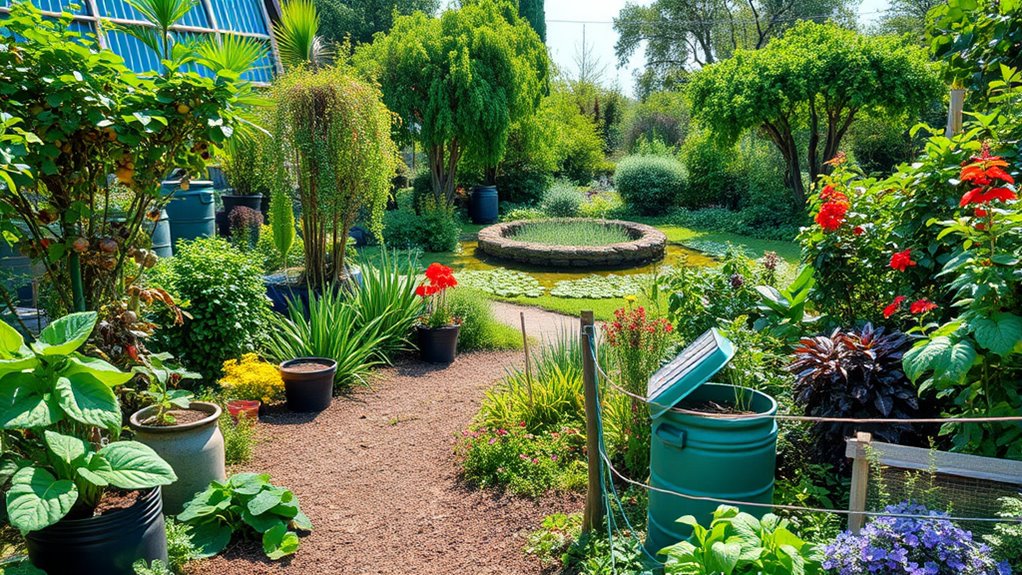
Permaculture is a design method that combines ecological principles with gardening practices to create sustainable and self-sufficient landscapes. It encourages understanding how plants and animals interact to promote ecosystem balance, using techniques like companion planting and water harvesting to maximize efficiency. By reducing reliance on chemicals and external inputs, permaculture aims to develop resilient, water-wise gardens that work with nature. Exploring these concepts further will help you learn how to turn your space into an eco-friendly, productive environment.
Key Takeaways
- Permaculture integrates ecological principles with sustainable gardening to create self-sufficient, resilient ecosystems.
- It emphasizes plant interactions, like companion planting, to enhance growth and reduce pests naturally.
- Water harvesting techniques, such as rainwater collection and swales, conserve resources and improve soil moisture.
- Combining companion planting with water management creates synergistic, drought-resistant landscapes.
- The overall goal is to develop sustainable, low-input systems that support healthy ecosystems and reduce environmental impact.
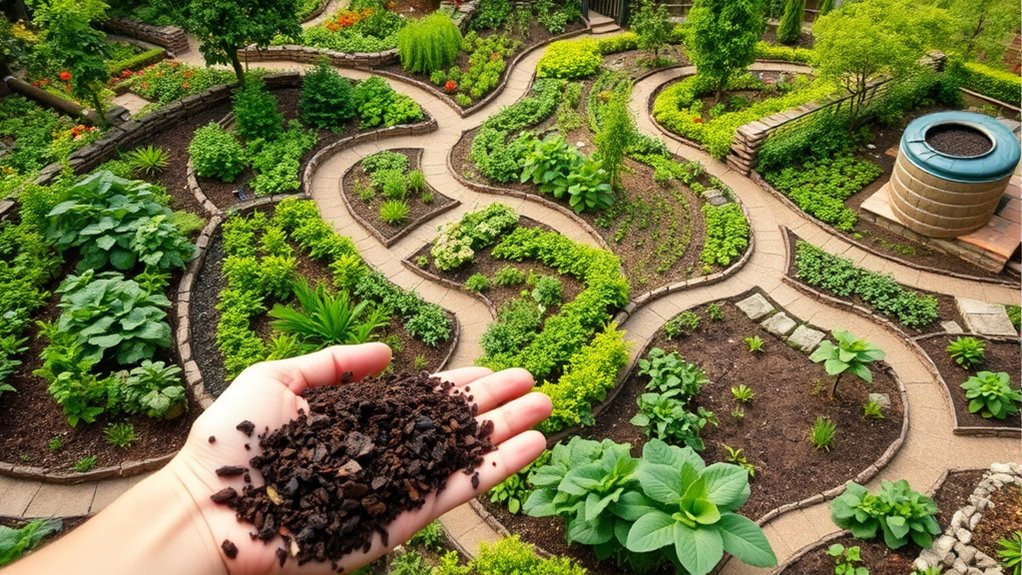
Have you ever wondered how to create a sustainable and self-sufficient garden or farm? Permaculture offers a practical approach, blending ecological principles with everyday gardening practices. One of the core techniques involves companion planting, where you strategically grow certain plants together to enhance growth, repel pests, and improve soil health. For instance, planting marigolds alongside tomatoes can naturally deter nematodes, reducing the need for chemical pesticides. Similarly, basil and peppers benefit from each other’s proximity, boosting flavor and resistance. Companion planting isn’t just about plant placement; it’s about understanding how different species interact to create a balanced ecosystem.
Another essential aspect of permaculture is water harvesting. Water is a precious resource, and harvesting it efficiently ensures your garden remains productive even during dry spells. You can collect rainwater from rooftops using gutters and barrels, directing it to your plants or storage tanks. This not only conserves water but also reduces runoff and soil erosion. Incorporate swales—contour ditches on your land—to slow water flow and encourage it to seep into the soil, nourishing roots deeply. Mulching around plants further conserves moisture, keeping roots cool and reducing evaporation. Water harvesting techniques like these turn a simple garden into a resilient system that withstands droughts and minimizes dependence on external water sources.
Combining companion planting with water harvesting creates a synergistic effect, making your garden more sustainable. When plants are paired thoughtfully, they can shade each other, reducing evaporation and soil temperature, which helps retain moisture. For example, planting taller, leafy crops alongside ground covers shields the soil from direct sunlight, decreasing water loss. The roots of companion plants can also improve soil structure, increasing its ability to hold water. Meanwhile, harvesting rainwater ensures you have a steady supply to support these plants, especially during periods of low rainfall. This integrated approach minimizes your ecological footprint and helps you develop a resilient, productive landscape.
Frequently Asked Questions
How Does Permaculture Differ From Traditional Farming Methods?
Permaculture differs from traditional farming by focusing on creating sustainable, self-maintaining ecosystems. You enhance soil health naturally through composting and minimal disturbance, avoiding chemical inputs. Plant diversity is key; you grow a variety of crops that support each other, reducing pests and increasing resilience. Unlike conventional methods that often exhaust soil and rely on external inputs, permaculture aims to work with nature, fostering long-term productivity and ecological balance.
Can Permaculture Be Implemented in Urban Environments?
Yes, you can transform your urban rooftop into a lush oasis or create vibrant community gardens. Think of permaculture as planting seeds of sustainability amidst city life; it’s adaptable and efficient. You’ll design your space to mimic natural ecosystems, using vertical gardens, rainwater harvesting, and companion planting. This hands-on approach not only beautifies your environment but also fosters community connections and sustainable living, proving that green thumbs thrive even in concrete jungles.
What Are the Initial Costs of Starting a Permaculture Garden?
Your initial investment for a permaculture garden varies based on size and materials, but you should plan your budget carefully. Expect costs for soil amendments, plants, tools, and possibly raised beds or compost systems. With good budget planning, you can start small and gradually expand. Keep in mind that upfront expenses may seem high, but the long-term benefits and savings make it a worthwhile investment in sustainable gardening.
How Long Does It Take to See Results From Permaculture Practices?
You’ll start seeing results from permaculture practices within a few months, especially as soil improvement begins and plant diversity increases. In the first season, you’ll notice healthier plants, better yields, and improved soil structure. Full benefits, like resilient ecosystems and sustained productivity, develop over a few years. Patience pays off as your garden evolves, creating a thriving, self-sustaining environment that requires less intervention over time, thanks to your focus on soil and diversity.
Are Permaculture Principles Suitable for Large-Scale Agriculture?
They say “big things have small beginnings,” and permaculture principles can be scaled up, but you’ll face challenges. For large-scale agriculture, these principles help mitigate scaling challenges and reduce monoculture risks, promoting diverse, resilient systems. However, adapting permaculture to vast areas requires significant planning, resources, and local knowledge. While feasible, it’s not a one-size-fits-all solution. You must tailor approaches carefully, balancing sustainability with practical demands.
Conclusion
Think of permaculture as tending a vibrant garden where every plant, insect, and element works together in harmony. When you understand its principles, you’re like a skilled gardener who nurtures this ecosystem, ensuring each part supports the others. By embracing permaculture, you become the gentle rain that sustains growth, the sunlight that encourages life. With each mindful action, you help cultivate a sustainable world—one beautiful, balanced patch at a time.