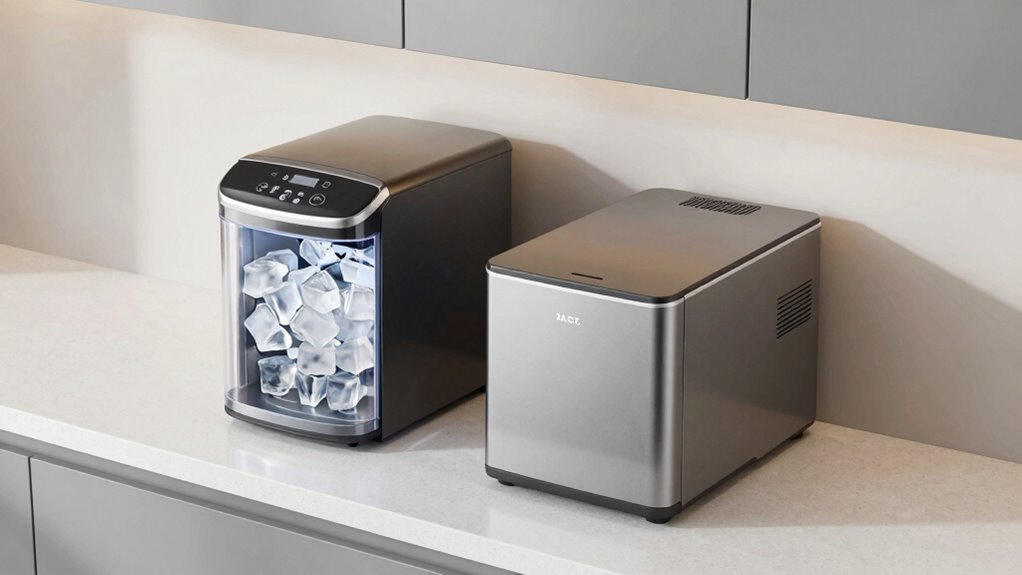

Undercounter ice makers are larger, produce ice faster, and have higher capacity, making them ideal for busy bars or commercial settings. They attach beneath your counter, requiring more space and installation effort. Countertop models are compact, portable, and perfect for small-scale or personal use, but they produce ice more slowly and need frequent refills. Understanding these differences helps you choose the right one; keep exploring to find the perfect fit for your needs.

Prime made for students and young adults
- Fast, free delivery for dorm and study essentials
- Prime Video and Amazon Music included
- Member-only deals
Key Takeaways
- Undercounter ice makers produce ice faster and in larger quantities, suitable for high-volume needs.
- Countertop models are smaller, portable, and ideal for personal or low-demand use.
- Undercounter units consume more energy and require dedicated installation space.
- Countertop units are energy-efficient, easy to set up, and fit on surfaces for flexible placement.
- Choose based on capacity, space, installation complexity, and whether you need continuous or occasional ice.
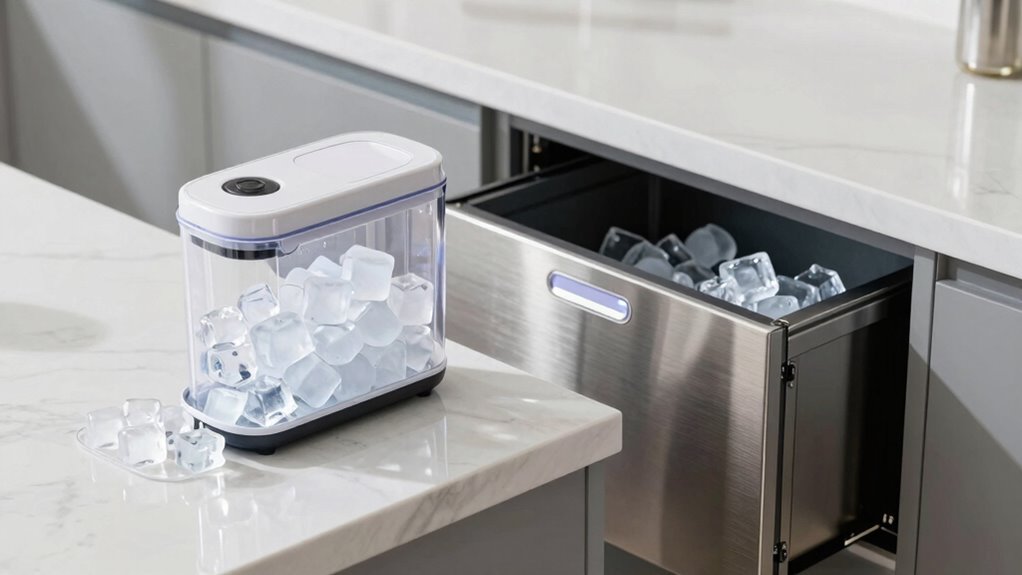
When choosing an ice maker for your home or business, understanding the differences between undercounter and countertop models is essential. One of the key factors to consider is ice production speed. Undercounter ice makers generally produce ice more quickly and in larger quantities compared to countertop units. If you frequently host gatherings or run a busy bar, this faster ice production can be a significant advantage, ensuring you never run out of ice when you need it most. Countertop models, on the other hand, tend to be smaller and produce ice at a slower pace, which might be sufficient for personal use or small-scale needs but could cause delays during peak times. Additionally, the ice production capacity of each unit varies, making it important to choose one that aligns with your typical usage.
Another vital aspect to weigh is energy consumption. Undercounter ice makers are often larger and equipped with more powerful compressors, which can lead to higher energy use. However, they are designed to operate continuously and efficiently, making them suitable for locations where ice demand is steady. Countertop models, being smaller and less powerful, usually consume less energy overall. This makes them an attractive option if you’re conscious of your electricity bills or want a more eco-friendly choice. Still, keep in mind that because they produce less ice over time, you might end up running them more often, which could offset some of the energy savings. Proper maintenance practices can help optimize their efficiency and extend their lifespan. Additionally, selecting a unit with energy-efficient features can further reduce operational costs.
Size and installation are also important considerations. Undercounter units are built to fit beneath your kitchen counter or bar, offering a sleek, integrated look. They require more space and a dedicated water hookup, making them ideal for larger setups or commercial environments. Countertop models are compact and portable, easily fitting on a countertop or bar surface, perfect for small kitchens or temporary setups. Their portability means you can move them around as needed, but their smaller ice capacity means you’ll need to refill or turn them on more frequently.
As an affiliate, we earn on qualifying purchases.
Frequently Asked Questions
Which Ice Maker Consumes More Electricity?
You’ll find that undercounter ice makers generally consume more electricity than countertop models due to their larger size and higher capacity, impacting energy efficiency and power consumption. They operate continuously to keep up with demand, which increases energy use. Countertop units, being smaller and more compact, often have lower power consumption and are more energy-efficient, making them ideal if you’re concerned about energy costs or limited space.
Can Both Types Make Crushed Ice?
Yes, both undercounter and countertop ice makers can make crushed ice. The ice texture depends on the machine’s settings, and both types often have adjustable options. Your storage capacity influences how much crushed ice you can keep on hand. Undercounter models generally offer larger storage, making them ideal for frequent use. Countertop units are more compact but still efficiently produce crushed ice for daily needs.
Are Undercounter Models Suitable for Outdoor Use?
Undercounter models generally aren’t designed for outdoor use because they lack weather resistance and outdoor durability. If you want an ice maker outdoors, look for one specifically built for weather resistance, with features like sealed components and corrosion-resistant materials. Using an undercounter ice maker outside could lead to damage from moisture, sun, or temperature fluctuations, so choose a model designed for outdoor durability to guarantee longevity and reliable performance.
How Long Does It Take to Produce a Batch of Ice?
It typically takes about 20 to 30 minutes for your ice maker to produce a batch of ice. The ice production speed depends on the model, with larger batch size efficiency often taking a bit longer. If you need frequent ice, choose a machine with high production capacity. Keep in mind, some models produce smaller batches faster, so consider your usage needs to select the right one.
Do These Ice Makers Require Special Plumbing Connections?
Think of your ice maker as a tiny river needing a smooth flow. Most don’t require special plumbing installation; they connect easily to your water line with standard fittings. However, some undercounter models benefit from water filtration systems, ensuring pure, clean ice. You might need a dedicated water supply, but rest assured, most units integrate seamlessly without complex plumbing, turning your ice-making into a hassle-free, invigorating experience.
Conclusion
Ultimately, choosing between an undercounter and a countertop ice maker is a matter of harmony with your lifestyle. Both bring their unique charm to your space, quietly enhancing your moments of refreshment. By understanding the gentle nuances of each, you can invite a touch of convenience and elegance into your daily routine. Trust your instincts, and let your choice softly elevate the way you enjoy those cool, crisp moments with loved ones.
Halloween Picks
halloween
As an affiliate, we earn on qualifying purchases.