

For families seeking educational tablets for kids, the LeapFrog LeapPad Academy is my best overall pick for its child-focused learning approach, while the EDUAITABLET K10D-002 stands out for a larger screen and parental controls. The Evermyth 10-Inch Kids Tablet is another option for families who want a stylus alongside a protective case. The main tradeoff is between a purpose-built learning experience and a more flexible Android tablet that may need more setup and supervision. Screen size, app access, parental controls, and drop protection can matter as much as memory specifications. Read on for the full breakdown and guidance on choosing the right fit.

Prime made for students and young adults
- Fast, free delivery for dorm and study essentials
- Prime Video and Amazon Music included
- Member-only deals
Key Takeaways
- The two LeapPad Academy entries are the learning-first choices: they stand apart from the Android models by centering the tablet around kids’ educational use rather than general app access.
- The lineup splits between compact 7-inch tablets and roomier 10-inch models: smaller screens are easier for little hands to manage, while larger screens suit shared activities, reading, and drawing.
- Android models offer more general-purpose flexibility, but require more parent setup: parental controls and a protective case help, yet families still need to review apps, settings, and content access.
- Storage and memory figures vary, but they do not establish learning quality: app selection, ease of use, and a child-appropriate interface are better decision points than headline specifications alone.
- The Evermyth is the distinctive pick for stylus use: it adds a creative input option, while buyers focused on a dedicated learning environment may prefer a LeapPad Academy.
| EDUAITABLET K10D-002 10.1-Inch Kids Android 16 Tablet with Parental Controls, Teal |  | Best for a Roomy Learning Screen | Operating system: Android 16 | Display: 10.1-inch IPS, 1280 × 800 | Processor: UNISOC T7200 octa-core, up to 1.8 GHz | VIEW LATEST PRICE | See Our Full Breakdown |
| 7-inch Kids Tablet with WiFi, YouTube, Parental Control and Durable Case – Blue |  | Best for Offline Learning on a Simple Setup | Screen: 7 inches | Operating system: Android 11 | Processor: Quad-core, 1.6 GHz | VIEW LATEST PRICE | See Our Full Breakdown |
| YosaToo Android 16 Kids Tablet – 7″ 4GB RAM, 32GB Storage with Drop‑Proof Case and Parental Controls |  | Best Compact Android Pick | Screen: 7 inches | Operating system: Android 16 | Memory: 4 GB RAM | VIEW LATEST PRICE | See Our Full Breakdown |
| LeapFrog LeapPad Academy Kids’ Learning Tablet – Pink |  | Best for a Curated Learning Library | Age range: 3–8 years | Screen: 7-inch shatter-safe screen | Processor: Quad-core Qualcomm, 1.5 GHz | VIEW LATEST PRICE | See Our Full Breakdown |
| COLORROOM 10.1-Inch Android 15 Kids Tablet, 10GB RAM, 64GB Storage, Blue |  | Best for Expandable Media Storage | Operating system: Android 15 | Display: 10.1-inch, 1280 × 800 | Processor: Octa-core | VIEW LATEST PRICE | See Our Full Breakdown |
| Jeazans 10-Inch Kids Tablet, Android 16, 64GB Storage, Protective Case |  | Best for Expandable Storage | Operating system: Android 16 | Display: 10-inch HD IPS, 800 × 1280 | RAM: 3GB physical RAM + 21GB virtual expansion | VIEW LATEST PRICE | See Our Full Breakdown |
| PEICHENG 7-Inch Kids Tablet, Android 12, 4GB RAM, 32GB Storage, Parental Controls, Blue |  | Best Compact Pick | Operating system: Android 12 | Display: 7-inch IPS, 1024 × 600 | RAM: 4GB (2GB + 2GB expansion) | VIEW LATEST PRICE | See Our Full Breakdown |
| ICONLINK Q8K 7-Inch Kids Tablet, 32GB, Pink |  | Best for App-Based Learning | Operating system: Android 12 | Display: 7-inch IPS, 1024 × 600 | Processor: Quad-core Unisoc | VIEW LATEST PRICE | See Our Full Breakdown |
| LeapFrog LeapPad Academy Kids’ Learning Tablet, Green |  | Best for Structured Early Learning | Operating system: Android 10 | Screen: 7-inch shatter-safe screen | Included learning apps: More than 20 educator-approved apps | VIEW LATEST PRICE | See Our Full Breakdown |
| EDDBNi K10 Kids Tablet, 10.1-Inch HD, 64GB, Android 15, with Protective Case and Parental Controls |  | Best for Google Kids Space | Operating system: Android 15 | Display: 10.1-inch HD IPS, 1280 × 800 | Processor: Quad-core | VIEW LATEST PRICE | See Our Full Breakdown |
| Evermyth 10-Inch Kids Tablet, Android 16, 64GB Storage, Stylus and Protective Case |  | Best for Creative Learning | Operating system: Android 16 | Screen size: 10 inches | Processor: A333, up to 1.8GHz | VIEW LATEST PRICE | See Our Full Breakdown |
| educational tablets for kid | Operating system | Storage | Connectivity | Processor |
|---|---|---|---|---|
| EDUAITABLET K10D-002 10.1-Inch | Android 16 | 32 GB, expandable up to 1 TB | Dual-band Wi-Fi, Bluetooth 5.4 | UNISOC T7200 octa-core, up to 1.8 GHz |
| 7-inch Kids Tablet with WiFi | Android 11 | 32 GB, expandable to 64 GB | Wi-Fi 802.11n, Bluetooth, USB | Quad-core, 1.6 GHz |
| YosaToo Android 16 Kids Tablet | Android 16 | 32 GB internal, expandable to 64 GB | Wi-Fi, 3G cellular | — |
| LeapFrog LeapPad Academy Kids’ | — | — | — | Quad-core Qualcomm, 1.5 GHz |
| COLORROOM 10.1-Inch Android 15 | Android 15 | 64GB internal; expandable to 1TB via microSD card | 2.4GHz and 5GHz Wi-Fi, Bluetooth, USB, AUX | Octa-core |
| Jeazans 10-Inch Kids Tablet | Android 16 | 64GB, expandable up to 1TB with a separately purchased TF card | Wi-Fi 6, Bluetooth 5.4 | — |
| PEICHENG 7-Inch Kids Tablet | Android 12 | 32GB, expandable up to 512GB via Micro SD | — | Quad-core |
| ICONLINK Q8K 7-Inch Kids Table | Android 12 | 32GB, expandable up to 512GB via microSD | Wi-Fi, Bluetooth, 3.5 mm headphone jack | Quad-core Unisoc |
| LeapFrog LeapPad Academy Kids’ | Android 10 | — | Wi-Fi, USB | — |
| EDDBNi K10 Kids Tablet | Android 15 | 64GB, expandable up to 1TB via microSD | Wi-Fi, 3.5mm audio interface | Quad-core |
| Evermyth 10-Inch Kids Tablet | Android 16 | 64GB; expandable up to 1TB via TF card, not included | Wi-Fi 6 and Bluetooth 5.4 | A333, up to 1.8GHz |
More Details on Our Top Picks
EDUAITABLET K10D-002 10.1-Inch Kids Android 16 Tablet with Parental Controls, Teal
The EDUAITABLET K10D-002 is a good fit for families who want a larger display for reading, videos, and shared learning activities. Its 10.1-inch screen gives kids more room than the 7-inch YosaToo Android 16 Kids Tablet, while Google Kids Space adds child profiles, content controls, and screen-time limits. The included EVA case and foldable stand make it easier to use on a table and help protect it during everyday handling.
The tradeoff is that its 1280 × 800 resolution is modest for this screen size, and the 32GB of internal storage may not hold a large library of downloaded apps and media without expansion. I’d choose it over the LeapFrog LeapPad Academy when a general-purpose Android tablet and bigger screen matter more than a curated learning library; families seeking educator-approved built-in content may prefer LeapFrog instead.
Pros:- Google Kids Space supports child profiles, content controls, and screen-time limits.
- 10.1-inch IPS display offers more room for reading and educational apps than 7-inch options.
- Teal EVA case and foldable stand are included.
- Dual-band Wi-Fi, Bluetooth 5.4, and expandable storage support flexible everyday use.
Cons:- The 1280 × 800 resolution is modest across a 10.1-inch screen.
- 32GB of internal storage may be limiting for downloaded learning content.
- The product data does not specify battery life.
Best for: Families with children aged 3 and up who want a larger Android screen, parent-managed profiles, and a stand for table-based learning.
Not ideal for: Families who plan to store many videos and apps locally without adding storage, or who want a sharper 10-inch display.
- Operating system:Android 16
- Display:10.1-inch IPS, 1280 × 800
- Processor:UNISOC T7200 octa-core, up to 1.8 GHz
- Memory:16 GB RAM
- Storage:32 GB, expandable up to 1 TB
- Battery:6000 mAh
- Connectivity:Dual-band Wi-Fi, Bluetooth 5.4
- Included components:Tablet, teal EVA case, USB-C charging cable, gift box, user manual
Our verdict“Choose the EDUAITABLET if a roomy screen and Google Kids Space matter more than higher display resolution or ample built-in storage.”
7-inch Kids Tablet with WiFi, YouTube, Parental Control and Durable Case – Blue
The Trayoo KIDS707 stands out for families who want learning apps available even when Wi-Fi is not. Its preloaded offline educational apps make it more self-contained than the COLORROOM C30, which is positioned as a broader Android tablet with expandable storage and stereo speakers. A rugged case and low blue-light LCD add practical protection for younger users, while parental controls let adults set time limits, filter content, and assign educational goals.
This is the most basic option here: Android 11, 2GB RAM, and storage expansion capped at 64GB leave less room for app growth than the YosaToo Android 16 Kids Tablet with 4GB RAM. Network setup may also take extra effort because the tablet requires WPA/WPA2 on a 2.4GHz band. I’d favor it for offline use and straightforward learning, not for families who want newer software or a large media library.
Pros:- Preloaded educational apps support offline learning.
- Parental controls include screen-time limits, content filtering, and educational goals.
- Rugged kid-proof case and low blue-light LCD suit everyday child use.
- Listed average battery life is 8 hours.
Cons:- Android 11 is older than the Android 16 software on the YosaToo and EDUAITABLET models.
- Storage expansion is limited to 64GB.
- Wi-Fi setup requires WPA/WPA2 on a 2.4GHz network, which may complicate setup.
Best for: Caregivers who want a compact tablet with preloaded educational apps for trips, downtime, or homes where children should not depend on internet access.
Not ideal for: Families seeking newer Android software, substantial storage expansion, or a device that connects easily to every Wi-Fi setup.
- Screen:7 inches
- Operating system:Android 11
- Processor:Quad-core, 1.6 GHz
- Memory:2 GB RAM
- Storage:32 GB, expandable to 64 GB
- Connectivity:Wi-Fi 802.11n, Bluetooth, USB
- Battery:5000 mAh
- Battery life:8 hours average
Our verdict“Pick the Trayoo for compact, offline-friendly learning, but choose a newer model if software and storage headroom matter more.”
YosaToo Android 16 Kids Tablet – 7″ 4GB RAM, 32GB Storage with Drop‑Proof Case and Parental Controls
The YosaToo Android 16 Kids Tablet pairs a compact 7-inch size with 4GB RAM, giving it more memory than the Trayoo KIDS707’s 2GB for switching among learning apps. Google Kids Space, parental controls, and preloaded offline educational content make it a stronger fit for supervised use than a plain small-screen tablet. Its silicone case and built-in adjustable stand also support hands-free viewing without needing a separate accessory.
Compared with the 10.1-inch EDUAITABLET K10D-002, this model is easier for a child to hold but gives less room for books, lessons, and drawing. The listed 13.3Wh battery may need frequent charging during heavy use, and the 32GB base storage with expansion to 64GB is limited for growing downloads. The warranty information is also narrow: it lists a 30-day replacement or refund period alongside lifetime technology support.
Pros:- Android 16 and 4GB RAM provide a newer platform and more memory than the Trayoo KIDS707.
- Google Kids Space and parental controls support supervised use.
- Preloaded offline educational apps can be used without an internet connection.
- Drop-resistant silicone case includes an adjustable stand.
Cons:- The 7-inch screen offers less learning and reading space than the EDUAITABLET K10D-002.
- 32GB internal storage expands only to 64GB.
- The 13.3Wh battery may require frequent charging, and the listed replacement or refund period is 30 days.
Best for: Families who want a small, child-grippable Android tablet with Google Kids Space, offline learning content, and an integrated stand.
Not ideal for: Children who benefit from a larger reading or writing area, or families who need generous local storage and clearly stated long-term warranty coverage.
- Screen:7 inches
- Operating system:Android 16
- Memory:4 GB RAM
- Storage:32 GB internal, expandable to 64 GB
- Battery:13.3 watt-hours, lithium polymer
- Connectivity:Wi-Fi, 3G cellular
- Included learning features:Google Kids Space and preloaded offline educational apps
- Warranty and support:30-day replacement or refund; lifetime technology support listed
Our verdict“Choose the YosaToo for compact Android learning with a stand, but skip it if screen space, storage, or longer stated return coverage is a priority.”
LeapFrog LeapPad Academy Kids’ Learning Tablet – Pink
The LeapFrog LeapPad Academy takes a more education-first route than the general-purpose Android tablets in this group. It arrives with over 20 educator-approved learning apps, parental tools for managing time and apps, and a stylus for handwriting and drawing activities. The shatter-safe 7-inch screen, silicone bumper, and built-in kickstand are well matched to younger children, particularly ages 3–8. Compared with the YosaToo Android 16 Kids Tablet, its appeal is a more curated learning environment rather than newer Android software and broader Play Store access.
That focus comes with limits. Access to the larger LeapFrog Academy library is offered through a three-month trial, so families should account for an ongoing subscription if they want that additional content. The product data also does not state battery life, making it harder to plan for longer sessions away from a charger. I’d choose it for structured early learning, not for families who want an open-ended Android tablet.
Pros:- Includes over 20 educator-approved learning apps.
- Stylus supports drawing and handwriting activities.
- Silicone bumper, kickstand, and shatter-safe screen are designed for child use.
- Parental controls allow time limits, app management, and web-content supervision.
Cons:- The larger LeapFrog Academy library requires a subscription after the three-month trial.
- Battery life is not specified in the product data.
- Its learning-focused environment is less open-ended than Android tablets such as the YosaToo.
Best for: Families with children aged 3–8 who prefer a curated educational experience, stylus activities, and adult controls over general-purpose Android access.
Not ideal for: Families who want unrestricted Play Store access, a fully specified battery runtime, or a large learning library without a subscription after the trial.
- Age range:3–8 years
- Screen:7-inch shatter-safe screen
- Processor:Quad-core Qualcomm, 1.5 GHz
- Battery:Lithium-ion, 12.2 watt-hours
- Dimensions:8.5 × 5.9 × 0.6 inches
- Included components:Tablet, removable silicone bumper with kickstand, stylus, USB-C cable, wall adapter, quick start guide
- Included learning content:Over 20 educator-approved apps; three-month LeapFrog Academy trial
Our verdict“Choose the LeapPad Academy for guided early learning and stylus activities, provided its subscription-based extra library suits your family.”
COLORROOM 10.1-Inch Android 15 Kids Tablet, 10GB RAM, 64GB Storage, Blue
The COLORROOM C30 suits families who want a large-screen learning tablet with more built-in storage than the EDUAITABLET K10D-002. Its 64GB internal storage, expandable to 1TB with a separately purchased microSD card, leaves more room for apps and downloaded lessons. Google Kids Space and parental controls help adults manage content and screen time, while the EVA case and headphone jack make it practical for shared family spaces and travel.
Both this model and the EDUAITABLET have a 10.1-inch, 1280 × 800 display and a 6000mAh battery, so neither is the pick for sharper visuals. The COLORROOM runs Android 15 rather than the EDUAITABLET’s Android 16, and its battery claims vary: the specs list 8 hours while the description gives an 8–12-hour estimate. I’d favor it for storage capacity, not for the newest software or a clearly consistent runtime.
Pros:- 64GB internal storage exceeds the EDUAITABLET K10D-002’s 32GB.
- Expandable storage supports microSD cards up to 1TB.
- Google Kids Space and parental controls support child-appropriate use and time limits.
- EVA case, dual stereo speakers, and a 3.5mm headphone jack are included features.
Cons:- The 1280 × 800 display is modest for a 10.1-inch screen.
- A microSD card for expanded storage is sold separately.
- Battery life is listed as 8 hours, while the description gives an 8–12-hour estimate.
Best for: Families who want a 10.1-inch tablet for educational apps and downloaded media, with more internal storage and the option to add a large microSD card.
Not ideal for: Buyers who want a sharper display, the newest listed Android version, or a battery-life estimate with no conflicting claims.
- Operating system:Android 15
- Display:10.1-inch, 1280 × 800
- Processor:Octa-core
- Memory:10GB (4GB + 6GB)
- Storage:64GB internal; expandable to 1TB via microSD card
- Battery:6000mAh
- Connectivity:2.4GHz and 5GHz Wi-Fi, Bluetooth, USB, AUX
- Audio:Dual stereo speakers and 3.5mm headphone jack
- Included components:EVA case, USB cable, manual
Our verdict“Choose the COLORROOM if 64GB of built-in storage and broad expansion matter more than Android 16 or a sharper screen.”
Jeazans 10-Inch Kids Tablet, Android 16, 64GB Storage, Protective Case
The Jeazans stands out for families who want a large screen and room to grow: its 10-inch display is easier to share for lessons or videos than the 7-inch PEICHENG Q8K, and storage can expand to 1TB with a separately purchased TF card. Its parental controls cover screen time, app permissions, and content filtering, while the adjustable-stand case supports hands-free reading and learning activities. A low-blue-light reading mode adds another useful option for longer sessions. The tradeoffs are the screen’s 800 × 1280 resolution and stated 4–8 hours of continuous use, which make it less compelling for sharp detail or long stretches away from a charger. Buyers should also budget for the storage card if 64GB is not enough.
Pros:- Parental controls include screen-time limits, app permissions, and content filtering.
- Adjustable-stand protective case supports hands-free learning and viewing.
- Storage can expand up to 1TB with a separately purchased TF card.
- Low-blue-light reading mode offers another setting for reading sessions.
Cons:- The 800 × 1280 display resolution is modest for a 10-inch screen.
- Listed continuous-use battery life is 4–8 hours.
- TF card for expansion is sold separately.
Best for: Families seeking a 10-inch screen, detailed parental controls, and substantial optional storage for downloaded learning content.
Not ideal for: Children who need a tablet for long outings without charging, or families who want high-resolution video and included expandable storage.
- Operating system:Android 16
- Display:10-inch HD IPS, 800 × 1280
- RAM:3GB physical RAM + 21GB virtual expansion
- Storage:64GB, expandable up to 1TB with a separately purchased TF card
- Battery:6000mAh; listed continuous use 4–8 hours
- Cameras:5MP rear + 8MP camera
- Connectivity:Wi-Fi 6, Bluetooth 5.4
- Weight:0.48 kg
Our verdict“Choose the Jeazans if a large learning screen and major optional storage matter more than sharper resolution or all-day battery life.”
PEICHENG 7-Inch Kids Tablet, Android 12, 4GB RAM, 32GB Storage, Parental Controls, Blue
The PEICHENG Q8K is the more portable choice here: its 7-inch IPS screen is easier for small hands to hold than the 10-inch Jeazans, and the included case adds an adjustable stand for desk or table activities. Its parental controls are unusually broad for a compact option, covering separate profiles, app management, screen time, and web filtering. Expandable storage up to 512GB can also make space for offline learning materials as a child’s library grows. The main compromise is the 1024 × 600 display, which offers less room and detail than the larger EDDBNi K10’s 1280 × 800 screen. This model also lacks cellular connectivity, so web access and online learning depend on Wi-Fi.
Pros:- Compact 7-inch size is easier for children to hold than 10-inch alternatives.
- Parental controls include profiles, app management, screen-time limits, and web filtering.
- Expandable storage supports a library of downloaded learning content.
- Included protective case has an adjustable stand.
Cons:- The 1024 × 600 resolution is limited for reading dense text or viewing detailed content.
- No cellular connectivity is supported.
- 32GB built-in storage may prompt a separate Micro SD card purchase.
Best for: Younger children who need a compact tablet for supervised learning at home or on Wi-Fi-connected trips.
Not ideal for: Families who want a larger, sharper display for shared lessons or need internet access away from Wi-Fi.
- Operating system:Android 12
- Display:7-inch IPS, 1024 × 600
- RAM:4GB (2GB + 2GB expansion)
- Storage:32GB, expandable up to 512GB via Micro SD
- Processor:Quad-core
- Cameras:2MP front, 5MP rear
- Battery:Lithium-ion, 11 watt-hours
- Ports:USB Type-C, 3.5 mm headphone jack
Our verdict“Pick the PEICHENG for a compact, well-controlled Wi-Fi tablet, but choose the EDDBNi K10 if screen size and resolution matter more.”
ICONLINK Q8K 7-Inch Kids Tablet, 32GB, Pink
The ICONLINK Q8K fits families who want a small Android tablet with preinstalled kids apps and access to Google Play and Netflix. Like the PEICHENG Q8K, it pairs a 7-inch 1024 × 600 IPS display with profile and web controls, app management, expandable storage, and a stand-equipped case. Its clear distinction is the stated support for Google Play apps, which gives parents flexibility to add learning tools beyond the preinstalled selection. That flexibility is useful, but it also puts more responsibility on adults to choose and manage apps. The 3000mAh battery is a notable limitation beside the larger Jeazans and EDDBNi models, both of which list 6000mAh capacities. Its screen is also best suited to basic activities rather than spacious reading or detailed lessons.
Pros:- Preinstalled kids apps provide a starting point for supervised use.
- Supports Google Play apps, giving parents options to add learning tools.
- Parental controls include profiles, app controls, screen-time limits, and web filtering.
- Case includes an adjustable stand and storage can expand up to 512GB.
Cons:- The 3000mAh battery capacity is smaller than the capacities listed for the Jeazans and EDDBNi tablets.
- The 1024 × 600 display gives limited space and detail for learning content.
- 32GB built-in storage may require a microSD card as apps and downloads accumulate.
Best for: Parents who want a compact Android tablet with kids apps and the option to add selected learning apps through Google Play.
Not ideal for: Children who use tablets for extended periods away from a charger, or families seeking a larger screen for reading and shared activities.
- Operating system:Android 12
- Display:7-inch IPS, 1024 × 600
- Processor:Quad-core Unisoc
- RAM:4GB (2GB + 2GB expansion)
- Storage:32GB, expandable up to 512GB via microSD
- Battery:3000mAh
- Cameras:2MP front, 2MP rear
- Connectivity:Wi-Fi, Bluetooth, 3.5 mm headphone jack
Our verdict“Choose the ICONLINK if app choice in a compact format is the priority, but look to the Jeazans or EDDBNi for a larger screen and greater listed battery capacity.”
LeapFrog LeapPad Academy Kids’ Learning Tablet, Green
Unlike the Android tablets in this group, the LeapPad Academy is built around guided learning for ages 3–8, with more than 20 educator-approved apps spanning reading, math, writing, coding, problem-solving, and creativity. The included stylus and shatter-safe 7-inch screen suit hands-on activities better than the general-purpose PEICHENG Q8K, while a bumper with kickstand and controls for apps and screen time help parents manage use. A three-month LeapFrog Academy trial adds another route to structured content. The tradeoff is a narrower content model: additional games, videos, music, and eBooks are sold separately, and Academy access requires a subscription after the trial. It also runs Android 10, rather than the newer Android versions on the Jeazans and EDDBNi tablets.
Pros:- More than 20 educator-approved apps cover several early learning areas.
- Included stylus supports writing and interactive learning activities.
- Shatter-safe screen and removable bumper with kickstand suit child use.
- Parental controls allow app management and screen-time limits.
Cons:- Additional games, videos, music, and eBooks are sold separately.
- LeapFrog Academy access requires a subscription after the included trial.
- Android 10 is older than the operating systems on the Jeazans and EDDBNi tablets.
Best for: Parents of children ages 3–8 who prefer built-in, age-targeted learning activities and a stylus over a general-purpose Android tablet.
Not ideal for: Families seeking broad app flexibility, a newer Android operating system, or learning content without potential ongoing subscription costs.
- Operating system:Android 10
- Screen:7-inch shatter-safe screen
- Included learning apps:More than 20 educator-approved apps
- Age range:3–8 years
- Academy trial:3 months
- Cameras:2MP rear, 0.3MP front
- Connectivity:Wi-Fi, USB
- Included accessories:Removable silicone bumper with kickstand, stylus, USB Type-C cable, wall adapter
Our verdict“Choose the LeapPad Academy for a more guided early-learning experience, but pick a general-purpose Android model if app flexibility matters more.”
EDDBNi K10 Kids Tablet, 10.1-Inch HD, 64GB, Android 15, with Protective Case and Parental Controls
The EDDBNi K10 is a strong fit for families who want a large-screen Android tablet with Google Kids Space, which offers age-appropriate learning and creative content. Its 10.1-inch, 1280 × 800 IPS display gives lessons and reading material more room than the 7-inch ICONLINK Q8K, and the EVA case with stand supports supervised desk use. Parents can set screen-time limits, approve apps, and filter content; 64GB of storage plus expansion up to 1TB leaves space for downloaded materials. The listed 6GB RAM also exceeds the Jeazans’ 3GB physical RAM, though the Jeazans lists Android 16 while this model runs Android 15. The tradeoffs are HD-level resolution and an unspecified battery runtime, so buyers cannot judge how long it will last between charges from the supplied details.
Pros:- Google Kids Space offers age-appropriate learning and creative content.
- Parental controls support screen-time limits, app approval, and content filtering.
- EVA case with stand adds grip and supports hands-free use.
- 64GB storage can expand up to 1TB with a microSD card.
Cons:- The 1280 × 800 display is HD rather than a higher-resolution screen.
- Battery runtime is not specified.
- Expandable storage requires a separately acquired microSD card.
Best for: Families who want Google Kids Space, a 10-inch-class learning screen, and expandable storage for supervised home use.
Not ideal for: Parents who need a stated battery runtime for travel or want a higher-resolution display for detailed reading and video.
- Operating system:Android 15
- Display:10.1-inch HD IPS, 1280 × 800
- Processor:Quad-core
- RAM:6GB
- Storage:64GB, expandable up to 1TB via microSD
- Cameras:Dual camera
- Connectivity:Wi-Fi, 3.5mm audio interface
- Warranty:2 years
Our verdict“Choose the EDDBNi K10 for Google Kids Space and a roomy display, but favor the Jeazans if Android 16 or a stated battery runtime is more important.”
Evermyth 10-Inch Kids Tablet, Android 16, 64GB Storage, Stylus and Protective Case
The Evermyth stands out for children who will use a tablet for drawing and writing as well as videos and learning apps. Its included stylus adds a hands-on activity option that the Jeazans 10-Inch Kids Tablet does not list, while the 10-inch screen gives kids more room to work than the 7-inch YosaToo. UKIDOZ Kids Space offers content filtering, app permissions, and screen-time limits, giving caregivers practical controls over use. The case’s adjustable stand can make reading or watching lessons easier without requiring a separate holder.
The tradeoff is that the description provides no specific educational app library, so parents will need to choose suitable learning content themselves. Its 64GB storage can be expanded up to 1TB, but the TF card is sold separately. This is a more accessory-rich pick than the simpler Jeazans, though its A333 processor and 6000mAh battery do not establish a performance or runtime advantage.
Pros:- Included stylus supports drawing, doodling, and writing practice.
- UKIDOZ Kids Space provides screen-time limits, app permissions, and content filtering.
- Protective case includes a 180° adjustable stand and anti-slip, anti-scratch, and drop-resistant design.
- 64GB storage can be expanded up to 1TB with a separately purchased TF card.
Cons:- TF card for expanded storage is not included.
- No specific educational app library or curriculum is identified in the product details.
- The 10-inch form is less compact for small hands and travel than 7-inch options.
Best for: Families with children ages 3–12 who want a large-screen tablet for drawing, handwriting practice, and parent-managed learning apps.
Not ideal for: Parents seeking a tablet with a clearly specified built-in curriculum or a smaller device for travel; this model requires families to select learning apps, and its 10-inch size is less compact than 7-inch options.
- Operating system:Android 16
- Screen size:10 inches
- Processor:A333, up to 1.8GHz
- RAM:24GB
- Storage:64GB; expandable up to 1TB via TF card, not included
- Battery capacity:6000mAh
- Cameras:5MP front; 8MP autofocus rear
- Connectivity:Wi-Fi 6 and Bluetooth 5.4
- Included accessories:Protective case with adjustable stand, stylus, 5V 2A Type-C charger, USB-A to USB-C cable, user manual, and card ejector
Our verdict“Choose the Evermyth if stylus-based activities and parental controls matter more than a built-in curriculum or a compact size.”
How We Picked
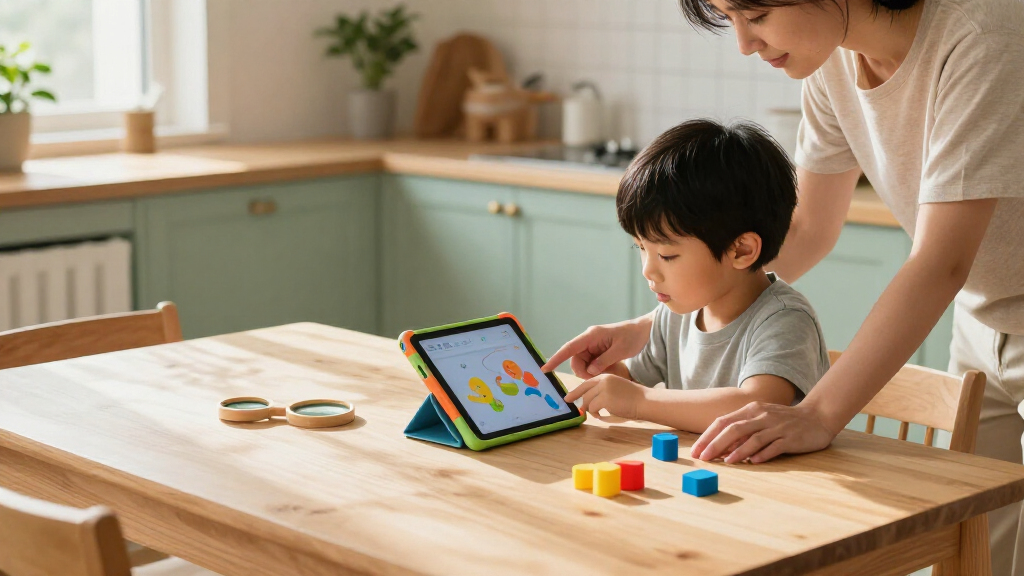
I compared these 11 tablets through the needs that shape a child’s learning experience: age-appropriate usability, learning focus, parental controls, screen size, protective design, and flexibility. I also weighed practical details such as storage, included accessories, and whether the product is positioned as a dedicated learning tablet or a general Android device. Those details affect how much setup parents may need to do and whether a tablet can support activities beyond a single learning app or content library.
The ranking favors options that make educational use straightforward while still fitting a clear buyer need. The LeapPad Academy models rank highly for their learning-first identity; larger Android tablets earn consideration for broader use and more screen space, but their value depends on parents configuring the experience. Compact models suit smaller hands and simpler use, though their limited screen area can be less comfortable for extended reading or creative tasks. Products with sparse or unclear educational details rank as alternatives rather than automatic learning picks, since specifications alone do not establish the quality of their learning content.
| educational tablets for kid | Operating system |
|---|---|
| EDUAITABLET K10D-002 10.1-Inch | Android 16 |
| 7-inch Kids Tablet with WiFi | Android 11 |
| YosaToo Android 16 Kids Tablet | Android 16 |
| LeapFrog LeapPad Academy Kids’ | — |
| COLORROOM 10.1-Inch Android 15 | Android 15 |
| Jeazans 10-Inch Kids Tablet | Android 16 |
| PEICHENG 7-Inch Kids Tablet | Android 12 |
| ICONLINK Q8K 7-Inch Kids Table | Android 12 |
| LeapFrog LeapPad Academy Kids’ | Android 10 |
| EDDBNi K10 Kids Tablet | Android 15 |
| Evermyth 10-Inch Kids Tablet | Android 16 |
Factors to Consider When Choosing Educational Tablets For Kids
Before choosing a tablet, decide what “educational” means for your household: guided lessons, reading and creative apps, or a supervised general-purpose device. A few practical checks can prevent paying for features your child will not use or choosing a tablet that demands more parent setup than expected.
Choose a Learning Environment Before Comparing Hardware
A device marketed for kids is not automatically a structured learning tool. Ask whether the tablet is built around a defined learning environment or gives access to general Android apps that you select and manage. A dedicated system can simplify the first setup and keep activities more focused, while a general-purpose tablet may suit a family that wants to choose its own reading, math, or creative apps. Check what content is included and whether it stays useful as a child’s skills change. Avoid choosing from processor or memory figures alone when the content experience is unclear. The right balance depends on whether you want a ready-made starting point or more control over app choices.
Match Screen Size to the Activity and the Child
A 7-inch screen is easier to hold and carry, which can help younger children use a tablet independently for short activities. A 10-inch screen gives text, illustrations, and drawing tools more room, making it a better fit for shared reading or longer creative sessions. Bigger does not automatically mean better for a small child: weight, grip, and where the tablet will be used matter too. Think about whether your child will hold it, use it on a table, or share it with an adult. A common mistake is focusing on screen size without checking whether the protective case adds bulk. Choose based on the task and handling comfort, not on the idea that one size suits every age.
Treat Parental Controls as a Setup Task, Not a Guarantee
Parental controls can help manage screen time, apps, and access, but their usefulness depends on what settings the device actually provides and how easy they are to change. Before handing over a tablet, review app permissions, web access, account settings, and any content filters. Some families will prefer a more guided environment; others may accept a general Android device if they are ready to configure it. Do not assume that a “kids” label blocks every unsuitable app or online destination. Check whether controls can be tailored for more than one child and whether restrictions work across the apps your family plans to use. This setup work is part of the real cost of choosing flexibility.
Prioritize Protection for Your Child’s Use Pattern
A protective case can reduce the risk of damage from everyday bumps, but it cannot make a tablet indestructible. Consider where the device will be used: a table at home, a car, a shared play area, or a backpack on outings. Raised edges, a comfortable grip, and a stand can make daily use easier, while added bulk may make a larger tablet harder for smaller hands to carry. Check whether the case is included and whether the listed protection describes the case or the tablet itself. If the device is mainly for supervised desk activities, you may value screen space more than rugged styling. For frequent handling, physical protection can matter more than a small difference in storage.
Buy Storage for the Apps and Media You Will Actually Keep
Storage affects how many apps, books, videos, and offline materials can stay on the tablet, but the listed capacity is not the same as free space available to your child. The operating system and preloaded content use part of it. If you expect offline travel use, check the device’s storage expansion options and confirm that the apps you rely on can store content locally. Memory figures also do not tell you whether an educational app is well designed or whether the tablet will remain easy for a child to use. Avoid paying attention to a high specification without a clear use case. A smaller, focused app collection can be easier for families to manage than filling every available gigabyte.
Decide How Much Flexibility Your Family Wants
A general Android tablet can support learning apps, entertainment, and creative projects on one device, but that range brings more decisions for parents. A purpose-built learning tablet may offer a narrower experience that is simpler to introduce, though it may not match every family’s preferred apps or activities. Consider whether the child needs one clear routine or a device that can serve multiple roles as interests change. Stylus support may be useful for drawing and writing practice, but it matters less if the tablet will mainly be used for reading or guided lessons. Think ahead about who will choose apps and maintain settings. Paying for flexibility makes sense only when you plan to use it.
Frequently Asked Questions
Is a dedicated learning tablet better than an Android tablet for a young child?
A dedicated learning tablet can offer a more guided starting point, which may help a young child stay focused without requiring parents to build the experience from scratch. An Android tablet gives families more choice of apps and activities, but that flexibility usually means more setup and regular supervision. Compare the available learning content and control options rather than relying on the product category alone. If your priority is a narrow, child-centered experience, a LeapPad Academy-style option is a natural place to start. If you want broader app choice and are comfortable managing it, consider an Android model.
Should I choose a 7-inch or 10-inch tablet for my child?
Choose a 7-inch tablet when portability and a smaller grip matter most, especially for short activities or use on the move. A 10-inch model gives children more room for text, illustrations, and creative work, but it can be bulkier to hold. Think about the main activity and whether the tablet will be used in a case with a stand or held in the child’s hands. If possible, compare the full device size with its case rather than judging by screen measurement alone. Neither size is a universal fit, so the child’s handling comfort should guide the choice.
Are parental controls enough to make an Android kids tablet safe to use?
Parental controls are useful tools, but they do not replace reviewing apps, accounts, and internet access. Families should check what restrictions are available, how they are applied, and whether they cover the apps the child will use. A kids-branded device can still need configuration before it suits a household’s rules. Set limits and content access before giving the tablet to a child, then revisit them as the child’s use changes. If you prefer fewer setup decisions, a more guided learning environment may be a better match.
Does more storage mean a tablet is better for educational use?
More storage can help if you plan to keep many apps, books, or offline videos on the device, but it does not indicate the quality of the learning experience. The operating system and preinstalled content take up some space, so listed capacity is not all available for new material. Check whether the tablet supports storage expansion and whether your chosen apps allow offline downloads. For a child using a small set of guided learning apps, a larger capacity may make little practical difference. Focus on the content and access needs first, then choose enough storage for that plan.
When is a stylus useful on a children’s tablet?
A stylus can support drawing, tracing, handwriting practice, and other activities that benefit from more precise input. It is less useful if the child mainly watches lessons, listens to stories, or taps through simple activities. Consider whether the stylus is included and how easily it can be misplaced or stored with the tablet. A larger screen can make stylus-based work more comfortable, though it may be less portable than a compact model. Treat the stylus as a task-specific advantage, not a reason by itself to choose a tablet.
Conclusion
For the best overall learning-first choice, I recommend the LeapFrog LeapPad Academy; the pink and green versions share the same basic role, so choose by preferred color and availability. For a larger-screen Android option with parental controls, the EDUAITABLET K10D-002 is my best overall flexible pick. The best value depends on your priorities: a compact 7-inch model can be a sensible fit when portability matters more than screen space, while a 10-inch Android model suits households seeking a broader device. For beginners who want a more guided starting point, choose LeapFrog; for a premium feature set within this lineup, consider the Evermyth for its stylus and protective case, not as a claim of superior learning content. If your child mainly needs a small, easy-to-carry tablet, compare the 7-inch YosaToo, PEICHENG, and ICONLINK options against the apps and controls you plan to use. Match the tablet to the learning routine you want, then pick the screen size and setup level your family can comfortably manage.