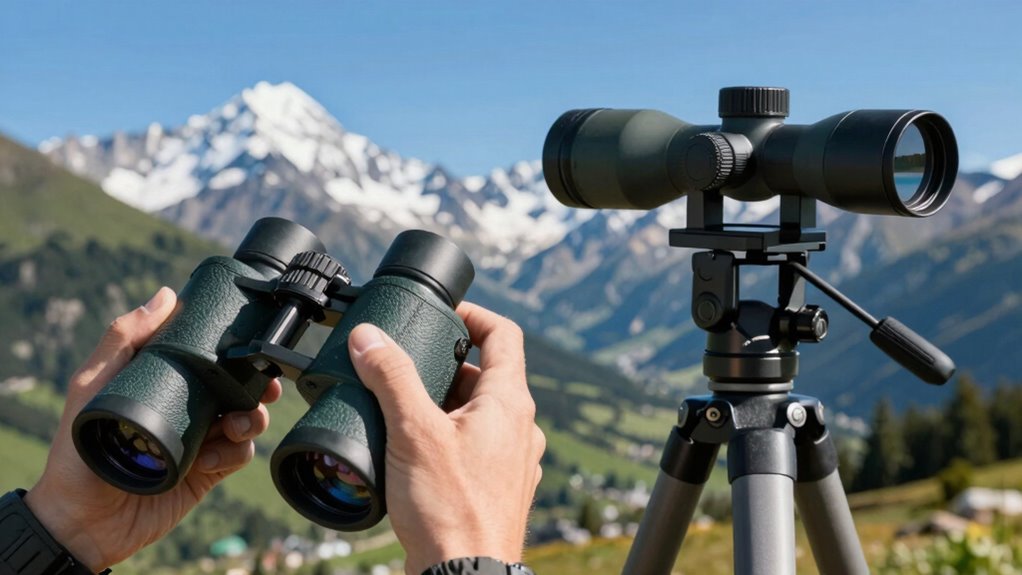

If you’re choosing between a spotting scope and binoculars for long-distance viewing, consider how much detail and ease of use you need. Spotting scopes offer higher magnification for detailed observations but are bulkier and require a tripod. Binoculars are more portable, easier to handle, and great for quick scans but have lower magnification. To find out which fits your activities best and learn the key differences, keep exploring the options.

Prime made for students and young adults
- Fast, free delivery for dorm and study essentials
- Prime Video and Amazon Music included
- Member-only deals
Key Takeaways
- Spotting scopes offer higher magnification (20x-60x), ideal for detailed long-distance viewing compared to binoculars’ 8x-15x.
- Binoculars provide a wider field of view, making quick scanning easier at long distances.
- Spotting scopes require tripods for stability, which may limit mobility during long-distance observation.
- Binoculars are more portable and user-friendly for dynamic, long-range outdoor activities.
- The choice depends on whether detailed viewing or quick, versatile scanning is prioritized.
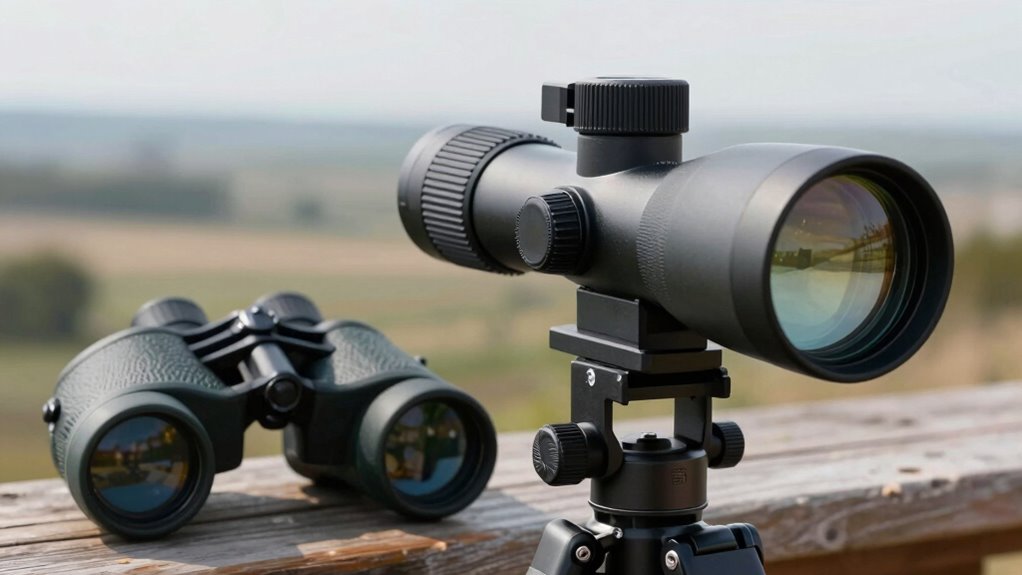
Have you ever wondered which optical device is better for your outdoor adventures—spotting scopes or binoculars? When it comes to long-distance viewing, understanding the key differences can help you make the right choice. One of the main factors to weigh is magnification power. Spotting scopes generally offer higher magnification, often between 20x and 60x, allowing you to see distant objects with remarkable detail. Binoculars, on the other hand, typically range from 8x to 15x, providing a wider view but less detail at extreme distances. So, if you’re scanning vast landscapes or trying to identify distant wildlife or bird species, a spotting scope’s higher magnification can be a game-changer. However, higher magnification often comes with trade-offs, such as a narrower field of view, which can make locating and tracking moving targets more challenging.
Your field of view is another critical aspect to evaluate. Binoculars excel here because they offer a broader view, making it easier to spot objects quickly and follow their movement. This wider perspective is especially useful when you’re in dynamic environments like birdwatching or hiking, where you need to scan large areas efficiently. Spotting scopes tend to have a narrower field of view, which means you must be more precise in your aiming and steady your device well to keep objects centered. This makes binoculars more user-friendly for casual or fast-paced outdoor activities, while spotting scopes shine when you already have a target in sight and want to examine it closely. Additionally, the overall design and build quality of each device can influence how well they perform in different weather conditions and environments. When considering weather resistance, choosing a durable model can significantly extend the lifespan and reliability of your optical device. Moreover, the optical quality of lenses and coatings can greatly impact image clarity and brightness, especially in challenging lighting conditions. Furthermore, understanding the differences in optical technology can help you choose a device that best suits your specific needs.
Portability and ease of use also come into play. Binoculars are compact, lightweight, and easier to carry around, making them ideal for quick observations and active pursuits. Spotting scopes are bulkier and often require a tripod for stability, which can limit their convenience for on-the-move adventures. If long-distance viewing is your priority and you’re willing to carry extra gear, a spotting scope can deliver detailed images, but if you want quick access and versatility, binoculars are more practical. So, assessing your typical outdoor environment and activity level can help determine which device aligns best with your lifestyle.
Ultimately, your choice depends on what you value most. If detailed, long-range observation is your goal, a spotting scope’s higher magnification will serve you well—just remember it comes with a narrower field of view and less portability. If you prefer quick, wide-angle viewing with ease of handling, binoculars are the way to go. Both have their strengths, so weigh your specific outdoor needs before making a decision.
high magnification spotting scope for wildlife
As an affiliate, we earn on qualifying purchases.
As an affiliate, we earn on qualifying purchases.
Frequently Asked Questions
Which Is More Durable for Rugged Outdoor Use?
You’ll find that binoculars are generally more durable for rugged outdoor use because of their compact, lightweight design and sturdy build. Look for models with high material durability and weather resistance, like rubber armor or waterproof coatings, to withstand tough conditions. Spotting scopes tend to be more delicate and less weather-resistant, making binoculars a better choice if durability against the elements is your priority.
Can Binoculars Replace a Spotting Scope Entirely?
Binoculars can’t entirely replace a spotting scope, especially for long-distance viewing. Think of binoculars as a Swiss Army knife—versatile but limited—typically offering a magnification range of 8x to 12x and a wider field of view. A spotting scope provides higher magnification, like 20x or more, with a narrower view, making it ideal for detailed observations at great distances. For serious long-range viewing, both tools work best together.
Which Offers Better Image Clarity in Low Light?
In low light, a spotting scope generally offers better image clarity due to superior light transmission and image brightness. Its larger objective lens gathers more light, providing clearer, brighter images in dim conditions. Binoculars, with smaller lenses, transmit less light, making images darker and less sharp in low light. If you prioritize clarity during dawn or dusk, a spotting scope is your best choice for long-distance viewing.
Are There Significant Weight Differences Between the Two?
Like a feather compared to a brick, binoculars are generally lighter than spotting scopes. The weight comparison is significant if portability concerns you, as binoculars are more compact and easier to carry around. Spotting scopes tend to be bulkier and heavier, making them less convenient for long hikes or extended outdoor use. If you prioritize ease of transport, binoculars could be your better choice for long-distance viewing.
How Do Maintenance Needs Compare for Each?
You’ll find that binoculars generally require less maintenance than spotting scopes. Binoculars are more compact, making lens cleaning easier, and many models offer moisture resistance to withstand elements. Spotting scopes, with their larger lenses and finer adjustments, need more frequent lens cleaning and careful moisture protection to prevent fogging or damage. Regularly wiping lenses and ensuring proper sealing can keep both devices performing well, but spotting scopes demand a bit more upkeep.
Conclusion
When choosing between a spotting scope and binoculars for long-distance viewing, consider your specific needs and how each offers unique advantages. Notably, a recent study shows that experienced birdwatchers who use spotting scopes can identify 25% more details at great distances than those with binoculars alone. Ultimately, understanding these differences helps you make a smarter choice, ensuring you get the best view whether you’re observing wildlife or enjoying scenic vistas. Your perfect long-distance companion awaits!
Fall Picks
fall essentials
As an affiliate, we earn on qualifying purchases.