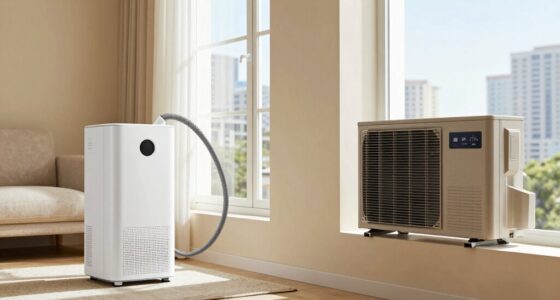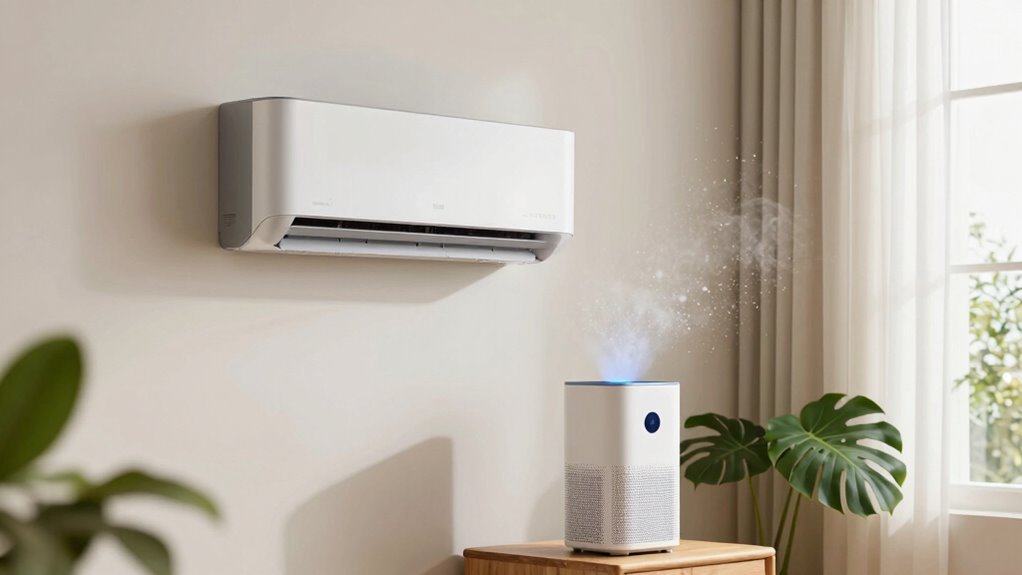

Choosing between whole-house and room air purifiers changes how effectively your air stays clean and how convenient it feels to manage. Whole-house systems filter air via your HVAC, providing continuous, all-encompassing coverage but require professional installation and higher upfront costs. Room purifiers are portable, easy to use, and target specific areas, offering quick relief. Your decision depends on your needs and priorities—continue to explore to discover which option suits your lifestyle best.

Get school and study supplies delivered free — and shop member deals
- Fast, free delivery on millions of items
- Access to Prime Big Deal Days deals on October 6–7
- Prime Video, Amazon Music and more included
Key Takeaways
- Whole-house systems filter air throughout the entire home via HVAC, offering comprehensive coverage; room purifiers target specific areas for localized cleaning.
- Installation and maintenance differ: whole-house systems need professional setup and regular upkeep, while room units are portable and easier to maintain.
- Whole-house filters typically involve higher upfront costs but provide consistent filtration; room purifiers are more affordable and flexible.
- Whole-house systems benefit households with allergies or asthma by providing seamless, all-encompassing air quality improvement.
- Both options influence indoor air quality, but their effectiveness depends on household needs, placement, and maintenance practices.
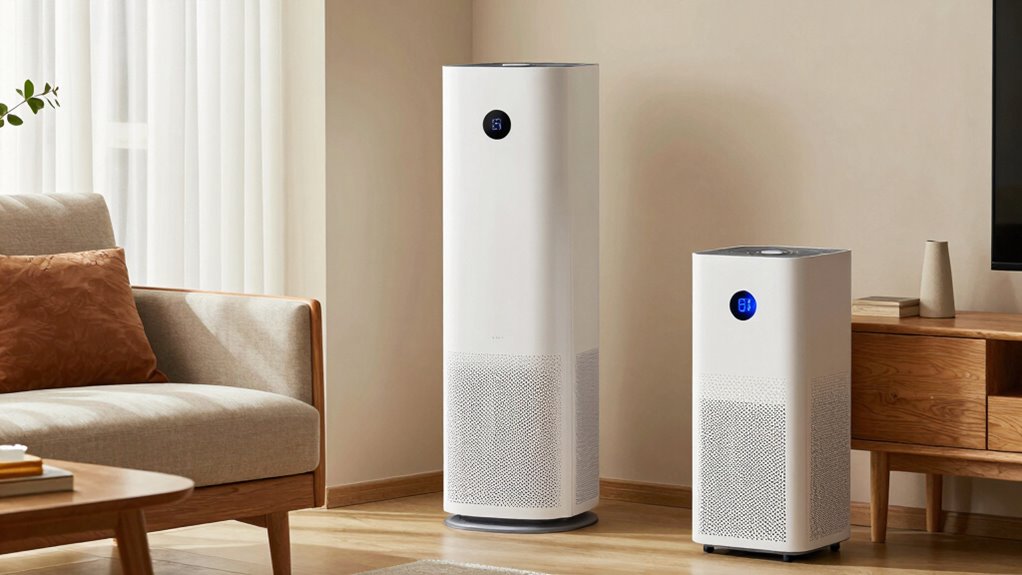
When it comes to improving indoor air quality, choosing the right air purifier can make a significant difference. If you’re trying to decide between a whole-house system and a room purifier, understanding how each impacts your environment is essential. Whole-house air purifiers are integrated into your home’s HVAC system, filtering the air as it circulates through ducts. This setup means you get extensive coverage, reducing allergens, dust, and odors throughout your entire home. However, it also requires professional installation and regular maintenance to keep the system running efficiently. Proper air purifier maintenance is critical here; neglecting filters or neglecting system checks can diminish performance and increase energy consumption. Additionally, selecting energy-efficient models can help reduce ongoing operational costs.
Choosing the right air purifier impacts your home’s air quality and maintenance needs.
Room air purifiers, on the other hand, are portable devices designed to target specific areas. They’re easy to set up and move around, giving you flexible control over where you want cleaner air. These units often feature HEPA filters that effectively trap airborne particles, making them ideal for bedrooms, offices, or any space where you spend a lot of time. While they are generally more affordable upfront, their energy efficiency varies based on the model and usage. Running multiple units in different rooms can add up in energy costs over time, so choosing energy-efficient models and using them judiciously can help keep your energy bills in check. Proper placement and operation also maximize their effectiveness, ensuring you get the most benefit from your investment. Understanding air filtration**** and how it impacts indoor air quality is essential for making the best choice.
Both options influence your home’s air quality, but they do so differently. Whole-house systems excel at providing consistent, all-encompassing filtration, which benefits households with allergies or asthma. Room purifiers give you targeted, immediate relief in specific spaces, especially where you spend the most time. Understanding air quality needs in your home can help determine which type of system is most suitable for your lifestyle. Moreover, considering system compatibility with your existing HVAC can ensure optimal performance and integration. Staying informed about indoor air quality factors can further help you make the best choice for your health.
Ultimately, your choice depends on your priorities—whether you value seamless, maintenance-heavy coverage or flexible, easy-to-use devices. Whichever you pick, prioritizing energy efficiency and proper air purifier maintenance will guarantee you enjoy cleaner air without unnecessary costs.
As an affiliate, we earn on qualifying purchases.
Frequently Asked Questions
How Do Maintenance Costs Compare Between Whole-House and Room Air Purifiers?
You’ll find that maintenance costs for whole-house purifiers tend to be higher due to their larger filters and more complex systems, but they’re more energy-efficient over time. Room air purifiers usually cost less to maintain and replace filters more frequently. Consider installation complexity—whole-house units often need professional setup, which adds to initial costs, while room purifiers are simple to move and maintain, making them more budget-friendly for ongoing upkeep.
Can Both Types Effectively Remove Allergens and Pet Dander?
Both types of purifiers are like gatekeepers, effectively blocking allergens and pet dander. They rely on HEPA efficiency to trap tiny particles, making your air cleaner. For ongoing performance, you’ll need to monitor filter replacement regularly. Whole-house systems cover more space, but room units can be targeted for specific areas. So, either option can improve air quality when maintained properly, especially with quality filters and timely replacements.
Are There Specific Air Purifier Models Recommended for Large Homes?
If you have a large home, look into air purifier brands like Honeywell, Blueair, or Austin Air, which offer models suitable for bigger spaces. These units often have higher CADR ratings and coverage areas. The installation process varies; some require professional setup, especially whole-house systems, while portable room purifiers are easier to place and operate. Choose a model that fits your home’s size and your specific air quality needs.
How Do Noise Levels Differ Between Whole-House and Room Units?
Think of sound levels like a gentle whisper versus a roaring storm. Whole-house units tend to hum softly in the background, like a distant breeze, offering quieter noise comparison. Room air purifiers, however, may bump up the volume, especially on higher settings, sounding more like a steady chug. So, if you crave peace, whole-house models often keep sound levels lower, making your home feel calmer and more serene.
What Is the Typical Lifespan of Each Type of Air Purifier?
You can expect a typical lifespan of 5 to 10 years for both whole-house and room air purifiers. Regular air filter replacement is vital to sustain efficiency, and it varies based on usage and air quality. Whole-house units often have higher energy consumption, which can slightly shorten their lifespan, while room units generally use less power. Proper maintenance ensures your purifier works effectively over its lifespan.
Conclusion
So, whether you choose a whole-house or room air purifier, remember that each has its own power to transform your space. Think of it as choosing between a mighty shield or a precise arrow—each defending your health in its own way. The real question is: which will you trust to clear the air and protect your well-being? Ultimately, it’s your choice to make, but the air you breathe shouldn’t be left to chance.
Halloween Picks
halloween
As an affiliate, we earn on qualifying purchases.