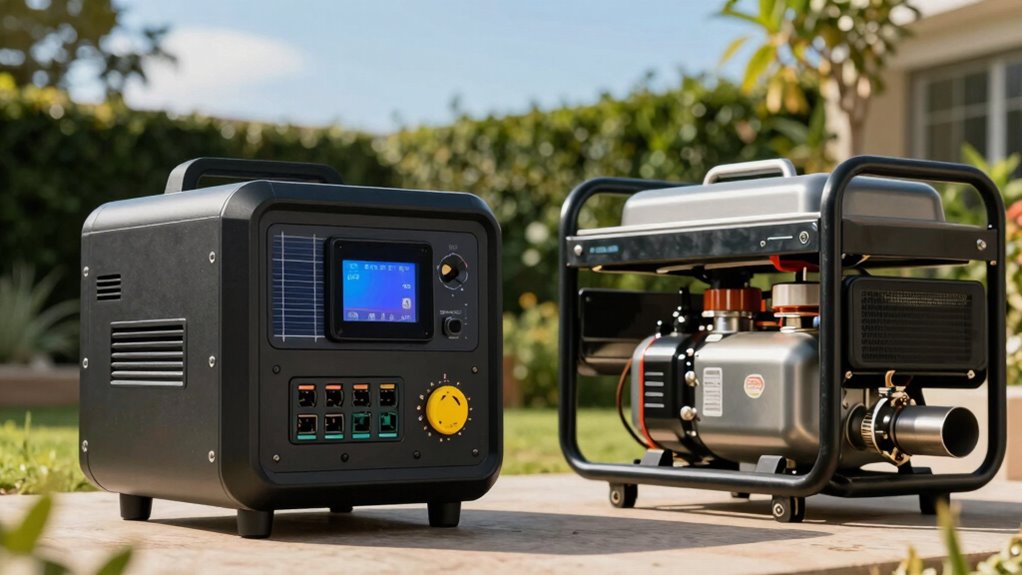

You’re choosing between eco-friendly solar and reliable gas generators for home backup. Solar generators are quiet, low-maintenance, and cost less over time, but their capacity depends on sunlight and weather. Gas generators produce more power instantly, ideal for bigger homes or extended outages, yet they emit pollution and require ongoing fuel costs. To discover which option fits your needs best, explore the details further—more practical insights await to help you make an informed decision.

Prime made for students and young adults
- Fast, free delivery for dorm and study essentials
- Prime Video and Amazon Music included
- Member-only deals
Key Takeaways
- Solar generators are eco-friendly, quiet, and low-maintenance, ideal for sustainable home backup solutions.
- Gas generators provide higher power output and reliability during extended outages or high energy demands.
- Solar systems involve higher upfront costs but lower long-term expenses with no fuel needed.
- Gas generators require ongoing fuel costs and regular maintenance, making them more costly over time.
- Choice depends on environmental priorities, power needs, and the frequency/duration of backup power required.

When choosing a backup power source for your home, understanding the differences between solar and gas generators is essential. Both options can keep your essentials running during outages, but they serve different needs and priorities. Solar generators harness renewable energy, converting sunlight into electricity through solar panels. This makes them an environmentally friendly choice because they don’t produce emissions or rely on fossil fuels. You might find that solar generators appeal to your sense of sustainability and desire to reduce your carbon footprint. They operate quietly and require minimal maintenance since they have fewer moving parts. Plus, solar energy is free once you’ve installed the system, which can lead to significant savings over time.
Solar generators are eco-friendly, quiet, low-maintenance options that harness free sunlight to power your home sustainably.
However, solar generators tend to have limitations when it comes to power output and availability. Their fuel efficiency, in this case, refers to how well they convert sunlight into usable energy. On cloudy days or during winter, when sunlight is less abundant, their performance can decrease. That means you might need a larger or more advanced system to reliably power your home, which can be costly upfront. They also usually require a battery bank to store excess energy, adding to the initial investment. Despite these challenges, solar generators are a sustainable choice that can operate independently of fuel costs and supply chain disruptions. Additionally, advancements in solar panel technology continue to improve their efficiency and performance, making them an increasingly viable option for many households. Furthermore, solar storage solutions are evolving to provide more reliable backup options during low sunlight conditions. Moreover, integrating smart energy management can optimize the use of stored solar energy and enhance overall system efficiency. As technology progresses, the cost of solar systems is gradually decreasing, making them more accessible to a broader range of homeowners. It’s also worth noting that government incentives can sometimes help offset the initial setup costs.
Gas generators, on the other hand, rely on fossil fuels like gasoline or propane to generate electricity. They are known for their high power output and ability to run for extended periods, making them suitable for larger homes or situations where you need consistent power. Fuel efficiency varies based on the model, but generally, gas generators can produce more power with less concern about sunlight, as they are not dependent on weather conditions. They’re often more immediate to deploy and start, providing quick backup power when outages occur. Gas generators also tend to be more versatile in terms of fueling options, which can be advantageous if you have access to multiple fuel sources.
That said, gas generators aren’t as eco-friendly. They emit greenhouse gases, and their ongoing fuel costs can add up over time. Maintenance is also more involved, with regular checks needed for oil, filters, and spark plugs. If your priority is an environmentally conscious, low-maintenance system that saves on fuel costs long-term, a solar generator might be a better fit. But if you need reliable, heavy-duty power without worrying about sunlight, a gas generator offers unmatched fuel efficiency and power output. Ultimately, your choice depends on your energy priorities, environmental values, and the size of your home’s backup power needs.
As an affiliate, we earn on qualifying purchases.
Frequently Asked Questions
How Long Do Solar Generators Typically Last Before Needing Replacement?
Solar generators typically last about 8 to 15 years before needing replacement, depending on battery lifespan and usage. The battery’s replacement interval generally falls between 5 to 10 years, as batteries degrade over time. You can extend the lifespan by maintaining proper care and avoiding extreme temperatures. Keep an eye on performance, and plan for replacement when you notice reduced efficiency, ensuring your backup power remains reliable.
Are Solar Generators Effective During Prolonged Power Outages?
Yes, solar generators are effective during prolonged power outages, especially when you consider their solar panel durability. They quietly supply power without noisy fumes, making them ideal for extended use. While they depend on sunlight, you can supplement with stored energy from batteries. This combination guarantees a reliable backup, reducing your reliance on noisy gas generators, and keeping your home powered smoothly during long outages.
Can Solar Generators Power High-Energy Appliances Like Refrigerators?
Yes, solar generators can power high-energy appliances like refrigerators, especially if they’re designed with sufficient capacity. They promote renewable energy and enhance your home’s energy efficiency. However, you’ll need a powerful solar generator with a high wattage and proper energy management. During prolonged outages, they offer an eco-friendly alternative to gas generators, reducing emissions while providing reliable backup power for essential appliances like refrigerators.
What Are the Maintenance Requirements for Gas Generators?
Think of a gas generator as a vintage car—requiring regular tune-ups to keep running smoothly. You need to check and change oil, inspect spark plugs, and clean air filters. Regular maintenance improves fuel efficiency and reduces emission levels, ensuring cleaner operation. Also, keep an eye on fuel levels and schedule periodic professional servicing to prevent unexpected breakdowns. Proper upkeep helps your generator run efficiently and prolongs its lifespan.
Are Solar Generators More Environmentally Friendly Than Gas Generators?
Yes, solar generators are more environmentally friendly than gas generators. They harness renewable energy from the sun, reducing your carbon footprint considerably. Unlike gas generators, which emit greenhouse gases and pollutants, solar systems produce clean energy with minimal environmental impact. By choosing a solar generator, you’re supporting sustainable energy practices, decreasing pollution, and contributing to a healthier planet, making it an eco-conscious choice for home backup power needs.
Conclusion
Choosing between a solar generator and a gas generator is like picking between a steady, eco-friendly river and a wild, roaring stream. Solar generators offer quiet, clean energy but depend on sunlight, while gas generators deliver instant power but at the cost of noise and emissions. Think about your home’s needs and your lifestyle—whether you want a calm, sustainable flow or a powerful surge. Either way, you’re securing your home’s energy future, like having your own personal power plant.
Fall Picks
fall essentials
As an affiliate, we earn on qualifying purchases.