
The National Geographic Amazing Chemistry Set is my best overall pick for kids ready to try a wide range of classic experiments, while the Doctor Jupiter My First Science Experiments Kit suits younger beginners and the National Geographic Earth Science Kit offers a change from chemistry-focused activities. The biggest tradeoff is breadth versus fit: a kit with many experiments may offer more variety, but age-appropriate instructions and manageable setup matter more than a large activity count. Some kits focus on chemistry, while others lean into gross-out science, magic demonstrations, or earth science. I compare all 15 options by their intended audience, variety, usability, and distinct focus below. Read on for the full breakdown and help match a kit to the child who will use it.

Prime made for students and young adults
- Fast, free delivery for dorm and study essentials
- Prime Video and Amazon Music included
- Member-only deals
Key Takeaways
- Broad chemistry coverage led the roundup: the National Geographic Amazing Chemistry Set stands out as the strongest all-around choice for families seeking a substantial set of classic experiments.
- High experiment counts do not tell the whole story: UNGLINGA’s 272-experiment kit offers breadth, but buyers should weigh the child’s age, adult involvement, and likely follow-through alongside the number.
- Younger children have dedicated options: Doctor Jupiter’s My First kit and Melican’s 60+ kit are labeled for ages four and up, making age fit a more useful starting point than choosing an advanced chemistry set.
- Special themes can make science more appealing: National Geographic’s Gross Science and Magic Chemistry kits give kids a clear hook, while the Earth Science Kit serves children less interested in chemical reactions.
- Several kits serve similar roles: National Geographic’s 45-experiment chemistry set, junior chemistry set, and mega lab differ in scope and age framing, so choosing by complexity and theme matters more than brand alone.
| National Geographic Amazing Chemistry Set with 100+ Experiments |  | Best for Building Chemistry Skills | Brand: Blue Marble | Age range: 8 years and up | Experiments: 15 with included materials, plus 85 using common household items | VIEW LATEST PRICE | See Our Full Breakdown |
| National Geographic Magic Chemistry Set for Kids, 10 Tricks |  | Best for Science-Shy Kids | Brand: National Geographic | Recommended age: 8–12 years | Number of experiments: 10 | VIEW LATEST PRICE | See Our Full Breakdown |
| UNGLINGA 272-Experiment Science Kit for Kids |  | Best for Maximum Activity Variety | Brand: UNGLINGA | Recommended age: 8 years and up | Number of experiments: 272 | VIEW LATEST PRICE | See Our Full Breakdown |
| National Geographic Gross Science Kit with 45 Experiments for Kids |  | Best for Kids Who Like Gross-Out Science | Brand: Blue Marble | Age range: 8 years and up | Total experiments: 45 | VIEW LATEST PRICE | See Our Full Breakdown |
| National Geographic Mega Science Lab: 75 Experiments for Kids Ages 8–12 |  | Best for Cross-Subject Exploration | Brand: Blue Marble | Age range: 8 years and up | Experiments: 75 | VIEW LATEST PRICE | See Our Full Breakdown |
| Doctor Jupiter My First Science Experiments Kit for Kids Ages 4+ |  | Best for Experiment Variety | Brand: Doctor Jupiter | Manufacturer: Metis Learning Solutions Pvt. Ltd. | Model: DJ Junior Science | VIEW LATEST PRICE | See Our Full Breakdown |
| National Geographic Chemistry Set with 45 Experiments for Kids Ages 8+ |  | Best for Older Beginner Chemists | Brand: National Geographic | Experiment count: 45 in title; product details also mention 100-plus | Recommended age: 8 years and up | VIEW LATEST PRICE | See Our Full Breakdown |
| Doctor Jupiter My First Science Experiments Kit for Kids Ages 4+ |  | Best for First-Time Experimenters | Brand: Doctor Jupiter | Age range: 4+ years | Experiment count: 50+ | VIEW LATEST PRICE | See Our Full Breakdown |
| Science Kit for Kids with 80 Experiments |  | Best for Activity Range | Brand: Kuovei | Experiment count: 80 | Recommended age range: 36 months–12 years | VIEW LATEST PRICE | See Our Full Breakdown |
| Melican 60+ Science Experiment Kit for Kids Ages 4 and Up |  | Best for Themed Preschool Activities | Brand: Melican | Age range: 4 years and up | Experiment count: 60+ | VIEW LATEST PRICE | See Our Full Breakdown |
| National Geographic Junior Chemistry Set with 50 Experiments |  | Best for Preschool Chemistry | Brand: Blue Marble | Age range: 4 years and up | Experiments: 50 | VIEW LATEST PRICE | See Our Full Breakdown |
| National Geographic Earth Science Kit for Kids | 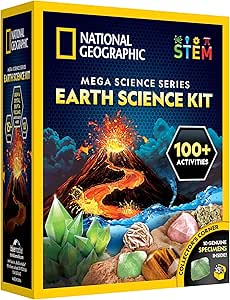 | Best for Earth Science Variety | Brand: National Geographic | Activities: More than 15 experiments | Included activities: Water tornadoes, erupting volcano, crystal growing, and two geologic dig kits | VIEW LATEST PRICE | See Our Full Breakdown |
| National Geographic Science Magic Kit with 100+ Experiments for Kids Ages 8–12 |  | Best for Science-Magic Fans | Brand: Blue Marble | Experiments: 100+ | Recommended age: 8–12 years | VIEW LATEST PRICE | See Our Full Breakdown |
| UNGLINGA 150-Experiment Science Kit for Kids | 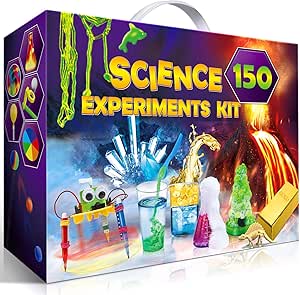 | Best for Broad Science Coverage | Brand: UNGLINGA | Experiments: 150 | Recommended age: 8 years and up | VIEW LATEST PRICE | See Our Full Breakdown |
| UNGLINGA 70-Experiment Science Kit for Kids |  | Best for Named, Varied Activities | Brand: UNGLINGA | Experiments: 70 | Age range: 8 years and up | VIEW LATEST PRICE | See Our Full Breakdown |
| science experiment kits for kid | Brand | Age range |
|---|---|---|
| National Geographic Amazing Ch | Blue Marble | 8 years and up |
| National Geographic Magic Chem | National Geographic | — |
| UNGLINGA 272-Experiment Scienc | UNGLINGA | — |
| National Geographic Gross Scie | Blue Marble | 8 years and up |
| National Geographic Mega Scien | Blue Marble | 8 years and up |
| Doctor Jupiter My First Scienc | Doctor Jupiter | 4+ years |
| National Geographic Chemistry | National Geographic | — |
| Doctor Jupiter My First Scienc | Doctor Jupiter | 4+ years |
| Science Kit for Kids with 80 E | Kuovei | — |
| Melican 60+ Science Experiment | Melican | 4 years and up |
| National Geographic Junior Che | Blue Marble | 4 years and up |
| National Geographic Earth Scie | National Geographic | Not specified |
| National Geographic Science Ma | Blue Marble | — |
| UNGLINGA 150-Experiment Scienc | UNGLINGA | — |
| UNGLINGA 70-Experiment Science | UNGLINGA | 8 years and up |
More Details on Our Top Picks
National Geographic Amazing Chemistry Set with 100+ Experiments
This set makes the most sense for kids who want to explore chemistry with recognizable lab tools rather than a mix of unrelated science topics. It supplies materials for 15 experiments involving activities such as reactions and crystal growing, and adds 85 household-item activities for continued practice. Test tubes, beakers, and pipettes help make measuring and handling materials part of the learning, not just the result. Compared with the National Geographic Mega Science Lab, this kit keeps its focus tighter on chemistry; the Mega Science Lab offers more variety across Earth science and science magic. The tradeoff is that the advertised 100-plus activities do not all come with kit materials, so families should expect to source supplies for most of the bonus experiments. Its age guidance starts at eight.
Pros:- Provides materials for 15 hands-on chemistry experiments
- Adds 85 activities using common household items
- Includes test tubes, beakers, and pipettes for practicing lab-tool use
- Focuses on chemistry concepts such as reactions and crystal growing
Cons:- Materials are supplied for only 15 of the listed activities
- The chemistry focus offers less subject variety than the National Geographic Mega Science Lab
Best for: Families with children eight and older who want a chemistry-focused kit and are comfortable gathering household supplies for extra activities.
Not ideal for: Buyers who want materials included for every listed experiment or a kit that spans several science subjects.
- Brand:Blue Marble
- Age range:8 years and up
- Experiments:15 with included materials, plus 85 using common household items
- Educational focus:STEM
- Included tools:Test tubes, beakers, and pipettes
- Dimensions:8.78 x 3.19 x 11.93 inches
- Weight:1.8 pounds
- Model number:NGMEGACHEMAR
Our verdict“Choose this set for a child ready to focus on chemistry and use real lab-style tools, provided you are willing to find supplies for the bonus activities.”
National Geographic Magic Chemistry Set for Kids, 10 Tricks
For a child more drawn to performing a trick than following a conventional lab activity, this kit gives chemistry a playful hook. Its 10 experiments are framed as magic, with examples such as floating a coin and changing water color; an illustrated guide explains the science behind the effects. The wand and white gloves support the performance angle, making it a natural choice for a short demonstration with family. Compared with the National Geographic Amazing Chemistry Set, this is less about extended chemistry exploration and more about presentation and surprise. That focus also limits its range: there are only ten activities, and the recommended age band is narrower at 8–12. Choose it for engagement and accessible explanations, not for the broad activity count of the larger kits.
Pros:- Presents chemistry experiments as engaging magic tricks
- Illustrated guide explains the science behind the effects
- Includes a wand and white gloves for presenting demonstrations
- Activities include visible effects such as floating a coin and changing water color
Cons:- Includes only 10 experiments, fewer than the other National Geographic kits in this batch
- Recommended age range of 8–12 may not suit younger beginners or older children
- Its performance-oriented format offers less subject variety than the National Geographic Mega Science Lab
Best for: Families with children ages 8–12 who enjoy performing tricks and may be more motivated by a show-and-tell activity than a traditional chemistry kit.
Not ideal for: Older children seeking a large collection of experiments or families prioritizing broad, sustained chemistry practice.
- Brand:National Geographic
- Recommended age:8–12 years
- Number of experiments:10
- Included accessories:Magic wand and white gloves
- Guide:Illustrated experiment guide with science explanations
- Example activities:Make a coin float and change the color of water
Our verdict“Pick this for an 8–12-year-old who likes performing science, but choose a larger chemistry kit for more experiments and extended exploration.”
UNGLINGA 272-Experiment Science Kit for Kids
The standout here is sheer range: 272 experiments give curious kids many different activities to choose from, including volcano eruptions, crystal growing, holographic projection, and rainbow walking water. An illustrated, step-by-step guide helps make that breadth more approachable for children ages eight and up. Compared with the chemistry-centered National Geographic Amazing Chemistry Set, this kit casts a wider net and is better suited to families who want frequent changes of activity rather than a more focused introduction to chemistry tools. That scale comes with practical tradeoffs: some experiments may need adult participation, and the lab tools are plastic. Its 9.8 x 7.7 x 4-inch footprint is compact relative to the large activity count, but the supplied description does not specify materials for each individual experiment.
Pros:- Offers 272 experiments across varied activities
- Illustrated step-by-step guide supports children working through projects
- Includes recognizable activities such as volcanoes, crystals, and rainbow walking water
- Designed for sharing with family, friends, or classmates
Cons:- Some experiments may require adult participation
- Lab tools are made of plastic
- The product details do not specify which experiments have materials included
Best for: Families with children eight and older who want a broad menu of projects to share with siblings, friends, or classmates and can help with some activities.
Not ideal for: Children expected to complete every experiment independently, or buyers who prefer a narrowly focused chemistry set with clearly listed included materials.
- Brand:UNGLINGA
- Recommended age:8 years and up
- Number of experiments:272
- Material:Plastic
- Theme:Chemistry
- Included components:Experiments kit
- Item dimensions:9.8 x 7.7 x 4 inches
- Number of items:1
Our verdict“Choose this for an older child who values a large, varied activity menu and has adult help available for more involved experiments.”
National Geographic Gross Science Kit with 45 Experiments for Kids
This kit uses gross-out appeal to get kids into concepts that can otherwise feel abstract. Its activities introduce polymers, chemical reactions, and pH through kid-friendly illustrated instructions, giving the theme real science content rather than relying on shock value alone. There are materials for 15 experiments, plus 30 more activities that use household products. Compared with the National Geographic Magic Chemistry Set, this is less about performing a trick and more about exploring chemistry through a playful theme; the magic set, by contrast, includes performance accessories and only ten experiments. The main limitation is the split between included and household supplies: the full count does not mean all materials are in the box. For children who dislike messy or gross themes, the framing may also reduce the appeal.
Pros:- Uses a playful gross-science theme to introduce chemistry
- Includes materials for 15 experiments
- Provides 30 additional activities using common household products
- Illustrated instructions introduce polymers, reactions, and pH science
Cons:- Materials are included for only 15 of the 45 listed experiments
- The gross-out theme may not suit children who prefer conventional science activities
- The additional activities require families to supply household products
Best for: Children ages eight and up who enjoy gross-out activities and benefit from playful, visual introductions to chemistry.
Not ideal for: Families wanting materials for all 45 activities, or children who prefer tidy projects and neutral science themes.
- Brand:Blue Marble
- Age range:8 years and up
- Total experiments:45
- Experiments with included materials:15
- Additional activities:30 using common household products
- Educational objective:STEM
- Batteries:No batteries required
- Model number:NGMEGAGRS
Our verdict“Choose this for a child motivated by gross-out science, while keeping in mind that most of the listed activities need household supplies.”
National Geographic Mega Science Lab: 75 Experiments for Kids Ages 8–12
Among these five kits, this one offers the clearest mix of science subjects: Earth science, chemistry, and science magic sit in the same set, along with rock, mineral, and crystal specimens. That breadth makes it a stronger fit for a child still discovering which kind of science captures their interest than the chemistry-focused National Geographic Amazing Chemistry Set. The activities can also build observation and critical-thinking skills through hands-on exploration. Its guide adds 30 household-item experiments, so the stated total of 75 should not be read as 75 activities with every supply included. Families should expect to gather common materials for some projects. Compared with the UNGLINGA 272-Experiment kit, this has a more defined three-subject mix, but a much smaller stated activity count.
Pros:- Combines Earth science, chemistry, and science magic
- Includes rock, mineral, and crystal specimens
- Adds 30 experiments using common household items
- Activities support observation, critical thinking, and STEM learning
Cons:- Some experiments require families to supply household items
- Its 75 activities are fewer than the 272 listed for the UNGLINGA kit
- The mix of subjects provides less chemistry depth than the National Geographic Amazing Chemistry Set
Best for: Families with children around ages 8–12 who want one kit to sample Earth science, chemistry, and science magic, including hands-on specimen exploration.
Not ideal for: Buyers seeking the largest possible experiment count or a kit where all activities come with materials in the box.
- Brand:Blue Marble
- Age range:8 years and up
- Experiments:75
- Kit contents:Earth science kit, chemistry kit, and science magic kit
- Additional activities:30 experiments using household items
- Educational objectives:Critical thinking, observation skills, and STEM
- Included specimens:Rock, mineral, and crystal specimens
- Model number:NGMEGASCIKIT
Our verdict“Choose this for a child who wants to sample several science subjects in one kit, rather than concentrate on chemistry or maximize the activity count.”
Doctor Jupiter My First Science Experiments Kit for Kids Ages 4+
For families looking for a long runway of simple, screen-free activities, this Doctor Jupiter kit stands out with over 100 experiments and tools for activities such as walking water. Its beakers, flask, funnel, tray, and safety goggles give young children tangible lab gear, while the illustrated instructions help adults guide each activity. Compared with the other Doctor Jupiter kit in this roundup, which lists 50+ experiments and examples such as oobleck and dinosaur squishies, this one emphasizes breadth and includes a more detailed inventory of reusable tools and experiment materials. That range can help keep repeat sessions fresh, but it also means more small components to organize. The ages 4+ label is not a cue for unsupervised play: younger children need close adult oversight, particularly around small parts and experiment materials.
Pros:- More than 100 experiments offer a broad range of activities.
- Includes beakers, a flask, funnel, tray, and safety goggles for hands-on setup.
- Illustrated instructions support adult-led activities with young children.
- ASTM F963-17 safety standard is listed.
Cons:- Small parts require close supervision around younger children.
- The many components and experiment materials need sorting and storage.
- Adult help is needed to guide activities for the intended age group.
Best for: Families with preschool or early-elementary children who want many guided, screen-free activities and can supervise and store multiple small lab pieces.
Not ideal for: Caregivers seeking a mostly independent activity for a young child, or households that want a compact kit with few components to manage.
- Brand:Doctor Jupiter
- Manufacturer:Metis Learning Solutions Pvt. Ltd.
- Model:DJ Junior Science
- Age range:4+ years
- Experiment count:Over 100
- Lab tools:2 beakers, 1 conical flask, spatula, 2 stirring sticks, 2 spray bottles, 2 cups, funnel, and tray
- Other included components:Safety goggles, food essences, food additives, dried leaves, food colours, instruction manual, and bonus experiment booklet
- Safety standard:ASTM F963-17
Our verdict“Choose this Doctor Jupiter kit if you want an especially broad selection of guided experiments for a young child and are prepared to supervise and organize the parts.”
National Geographic Chemistry Set with 45 Experiments for Kids Ages 8+
This National Geographic set is the clearest fit here for an older child ready for more deliberate chemistry activities. Its listed projects include a volcano, geyser, and rocket, and the illustrated instructions introduce the scientific process alongside reactions. Compared with the preschool-oriented Doctor Jupiter kits, its 8+ age recommendation points toward children ready to follow more involved directions rather than relying on simple exploratory play. It is also more focused than the broad Kuovei kit, whose 80 experiments span a wide mix of activities and materials. One detail needs checking before purchase: the product title says 45 experiments, while the supplied product information also mentions 100-plus in the included-components description. That inconsistency makes the exact activity count unclear, so I would choose it for its age fit and chemistry focus, not a promised number of experiments.
Pros:- Chemistry focus includes volcano, geyser, and rocket activities.
- Illustrated, kid-friendly directions introduce scientific process.
- Recommended for children aged 8 and up.
- Does not require batteries.
Cons:- Product information conflicts between 45 and 100-plus experiments.
- Its chemistry focus is narrower than kits offering a wider mix of STEM activities.
- The age recommendation makes it a poor fit for younger children.
Best for: Families with children aged 8 or older who want illustrated, chemistry-centered activities and an introduction to scientific procedure.
Not ideal for: Buyers prioritizing a confirmed experiment count, or families shopping for a preschool child who needs simpler, adult-led activities.
- Brand:National Geographic
- Experiment count:45 in title; product details also mention 100-plus
- Recommended age:8 years and up
- Educational focus:STEM and chemistry
- Set count:1
- Battery requirement:No
- Dimensions:8.78 × 3.19 × 11.93 inches
- Weight:2.9 pounds
- Model:NGMEGACHEMX
Our verdict“Pick this set for an older beginner drawn to chemistry and guided procedures, but do not rely on the listing for a definitive experiment count.”
Doctor Jupiter My First Science Experiments Kit for Kids Ages 4+
With 50+ experiments and examples including oobleck, volcanoes, and dinosaur squishies, this Doctor Jupiter kit offers a manageable introduction to hands-on science for young children. Its illustrated, step-by-step manuals can help an adult turn each activity into a guided session rather than a box of unexplained materials. Compared with the other Doctor Jupiter kit here, this version lists fewer experiments but provides specific examples that signal a playful, tactile mix; the 100-plus kit may suit families wanting the widest activity selection. The tradeoff is that the supplied details do not itemize the included tools or materials, so buyers have less information about what comes in the box. Although it is marked for ages 4 and up, some experiments call for adult guidance, making it a better pick for shared activity time than independent play.
Pros:- More than 50 activities provide varied opportunities for hands-on exploration.
- Specific examples include oobleck, volcanoes, and dinosaur squishies.
- Illustrated, step-by-step manuals support guided experiments.
- Meets the listed ASTM F963-17 toy safety standard.
Cons:- Adult guidance may be needed for some activities.
- The supplied product details do not specify the included tools and materials.
- Offers fewer listed experiments than the other Doctor Jupiter kit in this roundup.
Best for: Parents or caregivers introducing preschool and early-elementary children to guided experiments, especially messy, tactile activities.
Not ideal for: Buyers who want a detailed component list before choosing, or children expected to complete experiments without adult help.
- Brand:Doctor Jupiter
- Age range:4+ years
- Experiment count:50+
- Instruction format:Illustrated, step-by-step manuals
- Example activities:Oobleck, volcanoes, and dinosaur squishies
- Safety standard:ASTM F963-17
Our verdict“Choose this version for a young child’s first guided science activities if its 50-plus experiments suit your needs and adult participation is available.”
Science Kit for Kids with 80 Experiments
The Kuovei kit is a strong match for families seeking a mix of 80 guided experiments and a broad assortment of activity materials. Rainbow rain, erupting volcanoes, and balloon-blowing bottles hint at variety beyond a chemistry-only set like the National Geographic Chemistry Set, while the included goggles and gloves add basic protective gear. Its long component list—spanning petri dishes, test tubes, droppers, pigments, balloons, and more—may help children try different setups without relying on a small set of tools. The tradeoff is that a wider assortment also brings more pieces to track, and some experiments use chemical materials that need careful storage. The listed age range is unusually broad, from 36 months to 12 years, so I would use the activity instructions and adult judgment to decide whether a particular experiment fits a child.
Pros:- Includes materials and instructions for 80 experiments.
- Activities range from rainbow rain and volcanoes to balloon-based experiments.
- Goggles and gloves are included.
- A wide assortment of tools supports different experiment setups.
Cons:- Some chemical materials require careful storage.
- The many small tools and components may take effort to organize.
- The broad listed age range does not clarify which activities suit each age.
Best for: Families wanting a varied collection of guided experiments for children at different stages, with an adult available to handle materials and storage.
Not ideal for: Households looking for a low-maintenance kit with few components, or caregivers uncomfortable storing chemical materials securely.
- Brand:Kuovei
- Experiment count:80
- Recommended age range:36 months–12 years
- Item dimensions:1 × 1 × 1 inches (as listed)
- Item weight:0.75 kg
- Protective gear:Goggles and gloves
- Included equipment:Petri dishes, measuring cups, test tubes, droppers, measuring spoons, and other tools
- Other included materials:Chemical materials, pigments, effervescent tablets, balloons, and assorted activity items
Our verdict“Choose Kuovei for a broad activity mix and plentiful tools, provided you can supervise experiments and store materials carefully.”
Melican 60+ Science Experiment Kit for Kids Ages 4 and Up
Melican earns its place for families drawn to recognizable, playful projects—volcanoes, dinosaur egg digs, milk animation, and lava lamps—rather than a kit defined mainly by a high experiment count. With 60+ activities and an illustrated manual, it gives adults a set of options for introducing STEM through varied demonstrations. Compared with the Doctor Jupiter 50+ kit, Melican lists a larger activity count and specifically names dinosaur digs and milk animation; the 100-plus Doctor Jupiter option offers a broader selection if sheer volume is the priority. Melican’s product details are less specific about individual tools and materials, however, listing them as experiment materials and tools rather than itemizing them. It is marked for ages 4 and up, but parent guidance is recommended, so its best use is shared experiment time rather than independent play.
Pros:- More than 60 experiments include several named, varied activities.
- Illustrated instructions support adult-guided sessions.
- Safety goggles are included.
- Chemistry theme offers a clear focus for introductory STEM play.
Cons:- Parent assistance is recommended for the experiments.
- The supplied details do not itemize the experiment tools and materials.
- Has fewer listed activities than the 100-plus Doctor Jupiter kit.
Best for: Caregivers of children aged 4 and up who want themed, visually engaging activities and are happy to participate in experiments.
Not ideal for: Buyers who need a precise inventory of tools before buying, or families seeking a kit for children to use independently.
- Brand:Melican
- Age range:4 years and up
- Experiment count:60+
- Theme:Chemistry
- Included components:Experiment materials, tools, manual, and safety goggles
- Instruction format:Illustrated instructions
- Material:Plastic
- Model:SYTZ2
Our verdict“Pick Melican for a young child who will enjoy varied, themed experiments with an adult nearby, rather than for a highly specified or independent kit.”
National Geographic Junior Chemistry Set with 50 Experiments
For younger children starting hands-on chemistry, this set puts 50 activities and 20+ child-friendly tools into a kit aimed at ages 4 and up. Illustrated, step-by-step directions make it easier for an adult and child to follow experiments together, while the use of household ingredients such as baking soda and vinegar can help keep activities going beyond the supplied tools. Compared with the National Geographic Science Magic Kit, this set is more directly focused on early chemistry exploration than performance-style tricks. Its main tradeoff is that common ingredients are not all included, so some activities require advance preparation. The preschool age guidance also means younger users will need an adult nearby to handle setup and help with instructions.
Pros:- Offers 50 hands-on experiments for varied chemistry play.
- Includes more than 20 child-friendly lab tools, including test tubes and goggles.
- Illustrated step-by-step instructions support shared adult-child activities.
- Household ingredients can supplement the included tools.
Cons:- Some experiments require household ingredients that must be supplied separately.
- The age range makes adult help appropriate for setup and activity guidance.
Best for: Adults seeking a guided first chemistry kit for children ages 4 and up, with simple activities and reusable lab tools.
Not ideal for: Families wanting a fully self-contained kit, since some experiments call for household ingredients not included.
- Brand:Blue Marble
- Age range:4 years and up
- Experiments:50
- Lab tools:20+
- Included components:Test tubes, goggles, and other lab tools
- Educational objective:STEM
- Batteries required:No
- Dimensions:11 x 4.22 x 9.64 inches
Our verdict“Choose this for a young beginner who is ready for simple chemistry with adult support and household ingredients close at hand.”
National Geographic Earth Science Kit for Kids
This is the clearest choice in the group for children drawn to geology and natural phenomena rather than a broad mix of chemistry and physics. Its more than 15 experiments include a volcano, crystal growing, water tornadoes, and two geologic dig kits, giving activities a tangible connection to Earth science. The full-color guide adds explanations alongside instructions, which can help turn each project into a conversation about how the effect works. Compared with the UNGLINGA 150-Experiment Science Kit, this set has a narrower subject focus and fewer stated experiments, but the range of Earth-science activities makes its theme more coherent. The available product details do not list the full kit contents or an age range, so buyers have less information for judging fit and planning materials.
Pros:- Combines several Earth science themes, including volcanoes, crystals, and geologic digs.
- Includes two geologic dig kits for hands-on exploration.
- Full-color guide pairs activity instructions with science explanations.
- Activities are described as suitable for exploring alone or with others.
Cons:- The available product details do not specify the full kit contents.
- No age range is provided in the supplied product information.
- The stated activity count is more than 15, so buyers cannot confirm a 100-plus activity claim from these details.
Best for: Families, classmates, or young rock and nature enthusiasts who want a focused mix of Earth science projects and geology activities.
Not ideal for: Buyers who need a stated age recommendation or a complete, itemized list of included materials before choosing.
- Brand:National Geographic
- Activities:More than 15 experiments
- Included activities:Water tornadoes, erupting volcano, crystal growing, and two geologic dig kits
- Guide:Full-color guide with experiment instructions and science explanations
- Age range:Not specified
- Group use:Designed for individual or shared exploration
Our verdict“Pick this for a child who prefers geology and Earth science projects, provided the unspecified age range and kit contents are acceptable.”
National Geographic Science Magic Kit with 100+ Experiments for Kids Ages 8–12
For kids who enjoy presenting a surprising result as much as learning the science behind it, this kit offers a distinct science-and-magic angle and a stated 100+ experiments. Its recommended ages of 8–12 set it apart from the National Geographic Junior Chemistry Set, which is aimed at younger children and centers on introductory chemistry. This older age range may suit kids ready to follow more involved activities and share results with an audience. The tradeoff is limited detail in the supplied product information: it does not identify particular experiments, tools, or materials. That makes it harder to tell whether the activities match a child’s interests or what needs to be prepared at home. Blue Marble provides U.S.-based customer support, but the kit’s specific contents remain unclear.
Pros:- Lists more than 100 experiments.
- The science-magic concept gives the activities a performance-oriented hook.
- Recommended age range identifies its intended audience as children ages 8–12.
- Made by Blue Marble, which provides U.S.-based customer support.
Cons:- The available details do not name specific experiments.
- Tools and included materials are not specified in the supplied product information.
- The broad experiment count alone gives limited guidance about activity variety.
Best for: Children ages 8–12 who are attracted to science demonstrations, magic-style effects, and a large stated experiment count.
Not ideal for: Parents who want a clearly itemized set of experiments and supplies before choosing a kit.
- Brand:Blue Marble
- Experiments:100+
- Recommended age:8–12 years
- Theme:Science magic
- Customer support:U.S.-based
Our verdict“Choose this for an 8–12-year-old drawn to science tricks, but skip it if you need a detailed preview of experiments and supplies.”
UNGLINGA 150-Experiment Science Kit for Kids
The UNGLINGA 150-Experiment Kit makes the strongest case for children who want to move among chemistry, physics, and Earth science in one set. Its illustrated, step-by-step manual gives that breadth a practical structure, while included tools and materials mean it is not presented as a guidebook alone. Compared with the UNGLINGA 70-Experiment Science Kit, this one lists substantially more activities and broader subject coverage; the 70-experiment set, however, names specific projects such as a balloon rocket and fruit circuits, making its activity mix easier to judge. Here, the product details do not name individual experiments, and some activities rely on household items that are not included. It suits kids ages 8 and up who value variety, but parents should check what supplies an activity needs before starting.
Pros:- Lists 150 hands-on experiments across several areas of science.
- Includes science tools and materials for activities.
- Illustrated, step-by-step manual gives children guidance through experiments.
- Some activities use common household items, extending the experiments beyond kit materials.
Cons:- Some experiments require household items that are not included.
- Specific activities are not identified in the supplied product details.
- The product information describes the educational objective as creative skills rather than naming more specific learning outcomes.
Best for: Children ages 8 and up who want a varied home science set spanning several subject areas and can use household supplies as needed.
Not ideal for: Buyers looking for a fully specified activity list or a kit that supplies every material for every experiment.
- Brand:UNGLINGA
- Experiments:150
- Recommended age:8 years and up
- Educational objective:Creative skills
- Science coverage:Chemistry, physics, Earth science, and more
- Included components:Science experiment tools and materials
- Item dimensions:11.42 x 8.67 x 3.94 inches
- Material:Plastic
Our verdict“Pick this for an older child who wants broad science variety and does not mind sourcing some household materials.”
UNGLINGA 70-Experiment Science Kit for Kids
This set is a more activity-specific alternative to the UNGLINGA 150-Experiment Kit: its 70 listed experiments include a volcano eruption, crystal growing, a balloon rocket, and fruit circuits. That mix gives parents and children a clearer sense of what they will actually do, while the illustrated guide explains both the steps and the science. The 8-and-up age recommendation fits children ready to connect an activity with its underlying idea, and the stated child-friendly ingredients add useful context for home use. The tradeoff is fewer experiments and less stated subject breadth than the 150-activity sibling kit. Younger children may also need adult supervision, and the supplied details do not say which activities require it, so families should review instructions before starting.
Pros:- Includes 70 varied activities, with examples such as a volcano, crystal growing, balloon rocket, and fruit circuits.
- Illustrated guide explains activity steps and the science concepts.
- Child-friendly ingredients are included.
- Encourages STEM learning and problem-solving.
Cons:- Has fewer experiments than the UNGLINGA 150-Experiment Science Kit.
- Some activities may require adult supervision for younger children.
- The supplied details do not identify which activities need adult oversight.
Best for: Families with children ages 8 and up who prefer a clearly named mix of chemistry, building, and classic science activities.
Not ideal for: Buyers seeking the largest listed activity count, or those wanting to leave younger children unsupervised during experiments.
- Brand:UNGLINGA
- Experiments:70
- Age range:8 years and up
- Set name:Comprehensive Science Experiment Set
- Educational focus:STEM and chemistry
- Example activities:Volcano eruption, crystal growing, balloon rocket, and fruit circuits
- Dimensions:11 x 8.66 x 3.54 inches
- Model number:HZDZKH030
Our verdict“Choose this for an 8-and-up child who values a recognizable range of named experiments over the biggest activity count.”

How We Picked
I compared these science experiment kits for kids by the factors that shape whether a child can enjoy and return to them: stated age range, subject variety, experiment count, clarity of the intended use, and how distinct the kit’s theme is. I treated activity count as a sign of breadth, not a guarantee of quality or ease. A focused kit can be a better fit than a larger one when its subject matches a child’s interests or its age guidance better suits their independence.
The ranking favors kits with a clear role and broad usefulness, then recognizes options that make a stronger case for a particular age, theme, or learning preference. The National Geographic Amazing Chemistry Set leads for its broad chemistry focus; younger-child kits rank on accessibility, while magic, gross science, and earth science kits earn their place for serving more specific interests. When two products overlap, I distinguish them by their stated experiment count, age framing, and subject rather than treating them as interchangeable. The list includes two listings for the Doctor Jupiter My First Science Experiments Kit, so that product appears once as a recommendation rather than being counted as two distinct choices.
| science experiment kits for kid | Brand |
|---|---|
| National Geographic Amazing Ch | Blue Marble |
| National Geographic Magic Chem | National Geographic |
| UNGLINGA 272-Experiment Scienc | UNGLINGA |
| National Geographic Gross Scie | Blue Marble |
| National Geographic Mega Scien | Blue Marble |
| Doctor Jupiter My First Scienc | Doctor Jupiter |
| National Geographic Chemistry | National Geographic |
| Doctor Jupiter My First Scienc | Doctor Jupiter |
| Science Kit for Kids with 80 E | Kuovei |
| Melican 60+ Science Experiment | Melican |
| National Geographic Junior Che | Blue Marble |
| National Geographic Earth Scie | National Geographic |
| National Geographic Science Ma | Blue Marble |
| UNGLINGA 150-Experiment Scienc | UNGLINGA |
| UNGLINGA 70-Experiment Science | UNGLINGA |
Factors to Consider When Choosing Science Experiment Kits For Kids
Before choosing among these kits, I’d match the activities to the child and the household, not just the number on the box. These broader questions can help narrow a crowded category and prevent a kit from ending up unused.
Match the Activity to the Child’s Age and Independence
Age labels are useful starting points, but they do not reveal how much help a child will need. A younger child may enjoy watching a reaction and following simple steps, while an older child may want to measure, compare, and repeat an experiment independently. Check whether the kit’s activities invite hands-on participation or rely on an adult to handle setup and instructions. A common mistake is buying an advanced kit for its subject matter without planning for supervision. If siblings will share one set, choose for the youngest child’s safe participation and let older children take on additional steps with an adult. The best fit is the kit a child can use with the support your household can realistically provide.
Look Beyond the Experiment Count
A high activity count can mean variety, but it may also include short demonstrations or activities that depend on the same materials. Think about whether the child prefers trying many quick ideas or repeating a smaller number of experiments and changing one variable at a time. Check the product details for what is included and what families may need to provide separately. Missing household supplies can interrupt an activity even when the kit itself contains many components. If you want a kit for occasional rainy-day use, a large menu can be appealing; for regular learning, clear instructions and repeatable experiments may matter more. Treat the count as one clue, not a measure of learning value.
Choose a Subject That Can Hold Their Attention
Children often stay engaged when the theme connects with what they already enjoy, whether that is colorful reactions, gross-out demonstrations, magic-style reveals, or rocks and earth science. A themed kit can be a stronger choice than a general set when a child has a clear interest. The tradeoff is that a narrow theme may offer less variety if that interest fades. For a child who has not settled on a favorite science topic, a broader kit gives more room to discover what they like. Consider whether the child wants to perform a surprising demonstration or understand why an effect happens; those goals can point to different kits. A theme should attract attention, while the instructions and activities should give that curiosity somewhere to go.
Plan for Setup, Cleanup, and Storage
Experiment kits vary in how much time they ask of the adult as well as the child. Before buying, look for clues about preparation, workspace, cleanup, and whether activities use common household items. A kit that requires a clear table and adult supervision may work well for planned weekend sessions but less well for spontaneous play. Small components can also be difficult to store between experiments, especially if a child wants to revisit the kit over several weeks. Pick a set that fits the space and routine you have, not an idealized schedule. If cleanup is likely to discourage use, choose activities that your family can manage comfortably.
Decide When a Specialized Kit Is Worth It
A specialized kit makes sense when a child already gravitates toward one subject or when a broad set would feel unfocused. Earth science, magic-style experiments, and gross science each offer a distinct entry point into learning, but they do not serve the same purpose as a general chemistry collection. Avoid paying for a theme only because it sounds exciting if the child is more interested in building, observing nature, or solving puzzles. On the other hand, a strong interest can motivate a child to read instructions and repeat activities. Consider whether the kit is meant to be a first introduction or a way to extend an existing hobby. That distinction helps balance subject appeal against long-term variety.
Check What Adult Support and Safety Mean at Home
Do not assume that a child’s age label means every activity is suitable for unsupervised use. Read the product information and instructions for supervision guidance, handling requirements, and any materials families need to supply. Think about how comfortable you are helping with measurements, preparing a workspace, and putting materials away. If the child will work with a sibling, plan for shared tasks and clear adult oversight rather than relying on the kit to manage the group. A set that works well in one household may be a poor match for another if it asks for more attention than caregivers can give. Choosing with supervision in mind helps keep the activity enjoyable and manageable.
Frequently Asked Questions
Which kit is the best starting point for a child who has never done a science experiment?
I’d start by matching the child’s age and confidence to the kit’s stated audience rather than choosing the one with the most activities. Doctor Jupiter’s My First Science Experiments Kit is labeled for ages four and up, while the National Geographic Junior Chemistry Set offers a chemistry-focused route for children ready for that subject. An adult should still check the activity instructions and be prepared to help with setup. A manageable first experiment can build more interest than a large kit that feels difficult to start. Choose a theme the child already finds appealing so they have a reason to return to it.
Is a kit with more experiments always a better buy for siblings?
No: the number of listed experiments does not tell you whether activities are easy to share or repeat. UNGLINGA’s 272-experiment kit offers a large menu, but siblings may still need adult help taking turns, gathering supplies, and following the same instructions. Consider whether the children are close in age and whether they enjoy similar kinds of activities. A focused kit can work better if both children like the same theme, while a broader set may suit siblings with different interests. Check the product details for included materials and supervision guidance before deciding.
Should I choose chemistry, earth science, or a themed kit?
Start with what the child wants to explore, then use the subject to narrow the options. Chemistry sets offer reaction-focused activities, while the National Geographic Earth Science Kit gives children a different route into observing the natural world. Gross science and magic kits can make demonstrations feel playful, which may appeal to children motivated by surprise or spectacle. The tradeoff is that a focused theme can feel limiting if interest changes. If the child is unsure, a broader kit may give them more chances to discover a favorite subject; if they already have a strong interest, a specialized kit can be more inviting.
How can I tell whether an experiment kit is manageable for our household?
Look beyond the age label and activity count for information about setup, adult supervision, cleanup, and materials that are not included. Ask whether you have a suitable workspace and time to help when the child gets stuck. A kit can be a good match for planned activities even if it is not convenient for independent play. If the product details leave these points unclear, read the included instructions or packaging information before starting an activity. Choosing a kit that fits your routine is more useful than buying one that only suits an occasional ideal day.
Why are there two Doctor Jupiter listings, and should I treat them as different kits?
The roundup includes the same Doctor Jupiter My First Science Experiments Kit for Kids Ages 4+ twice in the supplied product list. I treat those entries as one distinct option rather than presenting them as separate kits or implying they have different contents. If you encounter separate listings while shopping, compare the exact product name, included activities, and package details before assuming they are variants. A duplicated listing does not add more variety to the available choices. For this roundup, the kit’s role is as an age-oriented beginner option.
Conclusion
For the broadest chemistry-focused starting point, I’d choose the National Geographic Amazing Chemistry Set as best overall. Families seeking a large activity menu can look at the UNGLINGA 272-Experiment Science Kit as the best value-style pick for breadth, while the National Geographic Mega Science Lab is my best premium-style option for shoppers who want a more substantial, multi-activity science set. For beginners, the Doctor Jupiter My First Science Experiments Kit is the clearest age-labeled choice. Pick the National Geographic Earth Science Kit for a child drawn to nature and geology, or choose the Gross Science or Magic Chemistry kit if a playful theme is more likely to hold their attention. The right choice depends less on the biggest experiment count than on age fit, subject interest, and how much adult support your household can provide.
Fall Picks
fall essentials
As an affiliate, we earn on qualifying purchases.