
An inverter compressor adjusts its motor speed based on your cooling needs, helping you save energy and keep your indoor temperature stable. Unlike traditional units that turn on and off, it runs smoothly at different speeds to avoid wasteful energy use and reduce noise. This results in quieter operation and less wear and tear, so your system lasts longer. If you want to learn more about how it works and benefits, there’s more to discover below.

Prime made for students and young adults
- Fast, free delivery for dorm and study essentials
- Prime Video and Amazon Music included
- Member-only deals
Key Takeaways
- An inverter compressor adjusts its speed based on cooling needs, offering more precise temperature control.
- It uses electronic components like variable frequency drives to modulate compressor activity.
- Inverter compressors operate at variable speeds, reducing energy consumption and improving efficiency.
- They run more quietly and create less vibration compared to traditional fixed-speed compressors.
- Their flexible operation extends the compressor’s lifespan and reduces maintenance requirements.

Have you ever wondered how modern air conditioners and refrigerators save energy while maintaining ideal cooling? The secret lies in a technology called the inverter compressor. Unlike traditional compressors that run at a fixed speed, inverter compressors adjust their speed based on your cooling needs. This dynamic operation markedly boosts energy efficiency because the compressor doesn’t waste power by turning on and off repeatedly. Instead, it modulates its activity, running only as hard as necessary to keep the temperature stable. As a result, you consume less electricity and see lower utility bills. Plus, because the compressor operates smoothly and steadily, it generates less heat and consumes less energy overall.
Inverter compressors adjust their speed to save energy, reduce noise, and maintain stable, efficient cooling.
Another key benefit of inverter compressors is noise reduction. Traditional units switch the compressor on and off frequently, which causes loud, abrupt sounds and vibrations. In contrast, the inverter compressor runs at a variable speed, maintaining a more consistent and gentle operation. This continuous, quieter functioning reduces the noise levels inside your home, making your living environment more comfortable. You won’t be disturbed by loud humming or rattling sounds, especially during nighttime or in quiet spaces. The smooth operation also means less wear and tear on the compressor, extending its lifespan and reducing maintenance needs. Additionally, the precise control offered by inverter technology ensures optimal performance and longevity. It also employs electronic components, which are essential for its adaptability and efficiency. These components are designed to respond quickly to changing conditions, further enhancing energy efficiency.
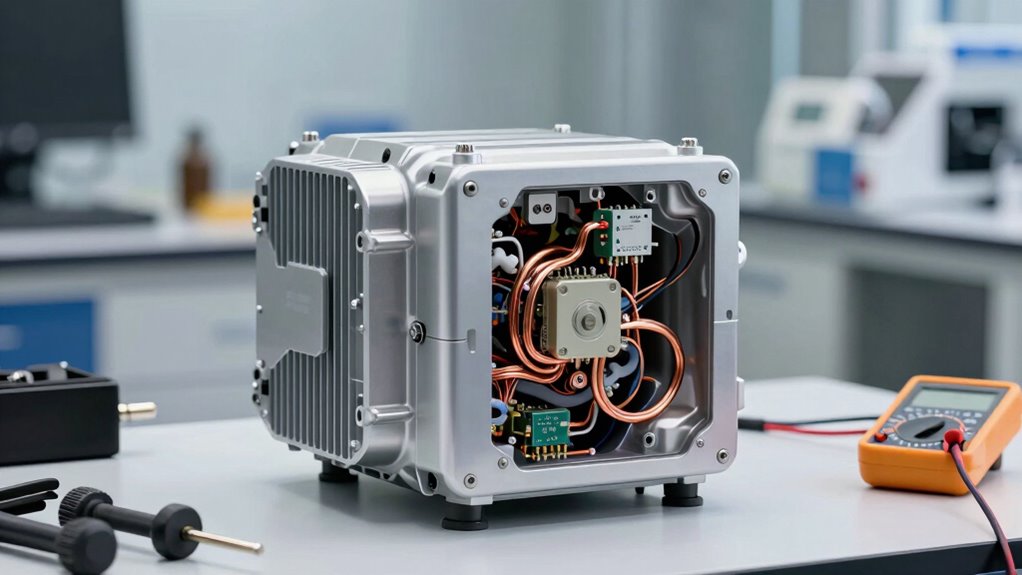
The technology behind inverter compressors is sophisticated yet highly effective. It uses electronic components like variable frequency drives to control the compressor’s speed precisely. When your room temperature rises, the inverter increases the compressor’s speed to cool down quickly. Once the desired temperature is reached, it slows down, maintaining a steady state without unnecessary energy use. This adaptability ensures that your cooling system responds efficiently to changing conditions, avoiding the wasteful cycles that characterize traditional compressors. Efficient operation is a core advantage that helps maximize energy savings. Moreover, the inverter’s ability to adjust speed helps reduce the overall strain on the compressor, extending its operational life.
Additionally, inverter compressors contribute to faster cooling and more consistent performance. Because they can ramp up quickly when needed, you experience rapid cooling even during hot days. Conversely, they can operate at lower speeds to sustain a comfortable temperature without overcooling. This flexibility results in a more stable indoor environment, preventing temperature fluctuations that can cause discomfort. All these advantages combined make inverter compressors a superior choice for those seeking energy efficiency, quieter operation, and reliable cooling performance. They truly represent a noteworthy leap forward in modern climate control technology, helping you save energy while enjoying a quieter, more comfortable home.
inverter compressor air conditioner
As an affiliate, we earn on qualifying purchases.
As an affiliate, we earn on qualifying purchases.
Frequently Asked Questions
How Does an Inverter Compressor Differ From a Traditional Compressor?
An inverter compressor differs from a traditional compressor by adjusting its speed based on cooling or heating needs, which reduces noise levels and enhances efficiency. You’ll notice it’s often smaller and lighter, making installation easier. Unlike traditional models that run at full capacity or turn off completely, the inverter continuously modulates power, leading to quieter operation, lower energy bills, and a more consistent temperature.
What Are the Energy Savings Benefits of Inverter Compressors?
You’ll notice energy efficiency and cost savings with inverter compressors because they adjust their speed based on cooling or heating needs, rather than running at full power constantly. This means they use less electricity, reducing your energy bills. Over time, the improved energy efficiency translates into significant cost savings, making inverter compressors a smart choice for saving money while maintaining best performance.
Are Inverter Compressors More Reliable Than Fixed-Speed Compressors?
Think of inverter compressors as the marathon runners of HVAC systems—they’re built for endurance. They tend to be more reliable than fixed-speed compressors because their efficiency improvements reduce wear and tear. Plus, their ability to run at variable speeds leads to noise reduction, making your environment more comfortable. While no system is perfect, inverter compressors generally offer enhanced durability and stability, giving you peace of mind and consistent performance.
How Long Is the Typical Lifespan of an Inverter Compressor?
An inverter compressor typically lasts around 10 to 15 years, depending on maintenance and usage. You’ll notice lower maintenance costs because it operates more efficiently and experiences less wear. Additionally, inverter compressors run quieter than fixed-speed models, making your environment more comfortable. Proper maintenance, like regular cleaning and timely repairs, can extend its lifespan, ensuring you enjoy reliable performance and energy savings over the years.
Can Inverter Compressors Be Used in All Types of Cooling Appliances?
Yes, inverter compressors can be used in various cooling appliances, including refrigerators, air conditioners, and heat pumps. They’re especially beneficial for smart home integration, allowing you to control and monitor your devices remotely. Plus, they help reduce noise levels by operating more smoothly and efficiently. This makes them ideal for both residential and commercial settings, offering energy savings and quieter operation across different types of cooling appliances.
Conclusion
Think of an inverter compressor as the steady heartbeat of your cooling system, quietly adapting its rhythm to match your needs. Just like a seasoned conductor guides an orchestra, it fine-tunes its performance, ensuring harmony and efficiency. When you choose an inverter compressor, you’re embracing a symbol of smart, adaptable living—where technology flows seamlessly, keeping your home cool and your energy bills in check, like a gentle breeze that always knows when to arrive.
Halloween Picks
halloween
As an affiliate, we earn on qualifying purchases.