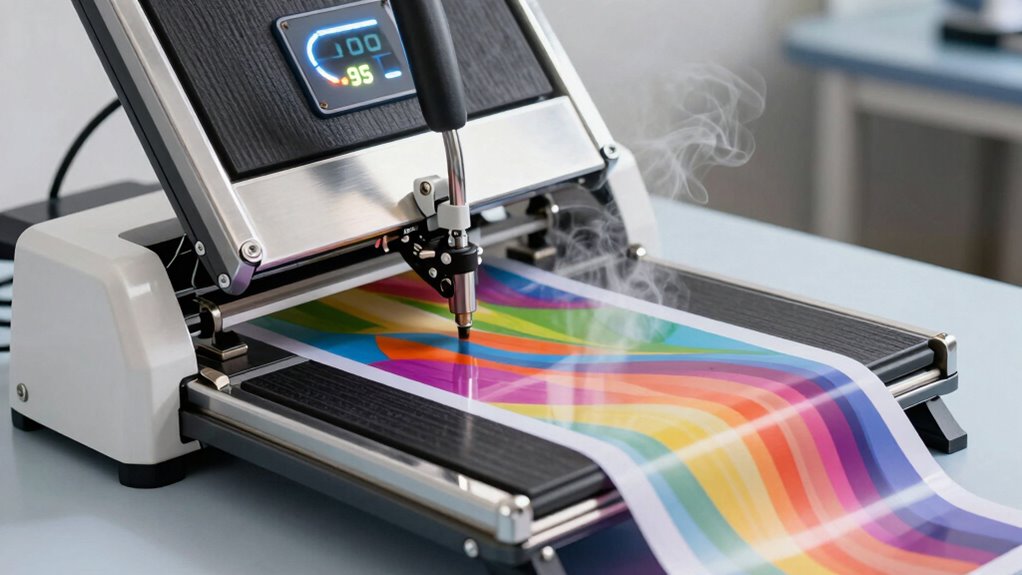

To get good results, you need to control both temperature and pressure carefully. Too much heat can burn or damage your fabric, while too little may cause poor adhesion. The right pressure ensures full contact for a strong transfer without distorting your material. Most projects need temperatures between 300°F and 380°F, but it depends on your fabric and transfer type. If you keep these basics in mind, you’ll achieve professional-quality results every time. Explore further to master these essential techniques.

Prime made for students and young adults
- Fast, free delivery for dorm and study essentials
- Prime Video and Amazon Music included
- Member-only deals
Key Takeaways
- Proper temperature and pressure control ensures durable, high-quality transfers and prevents fabric damage.
- Different fabrics require specific heat and pressure settings to avoid scorching or incomplete adhesion.
- Adjustable temperature controls allow fine-tuning for various materials, typically between 300°F and 380°F.
- Consistent, even pressure guarantees full contact, preventing ghosting and double impressions.
- Testing with small samples helps determine optimal settings for different transfer media and fabric types.
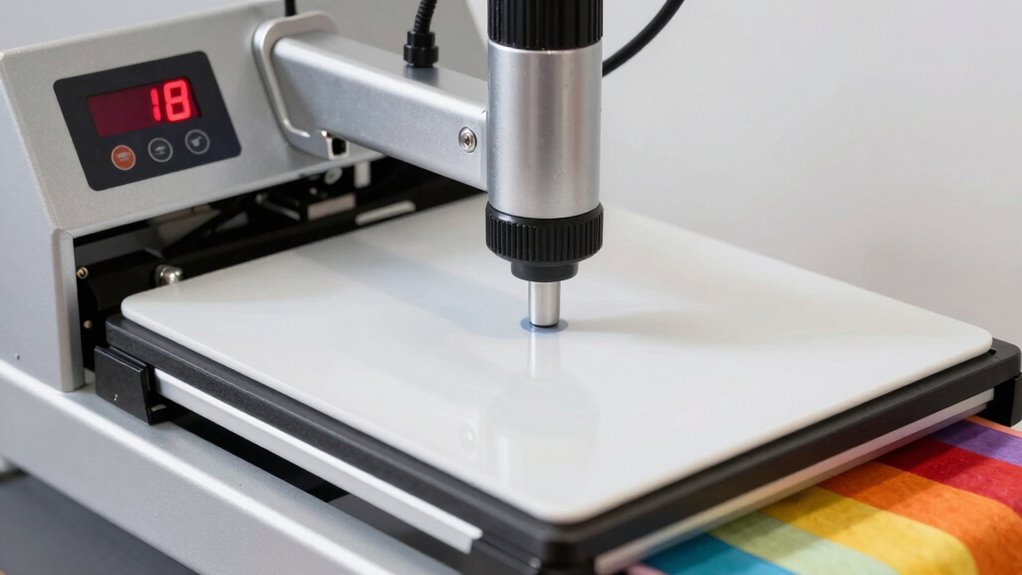
Have you ever wondered what makes heat pressing such a popular method for customizing apparel and accessories? It all comes down to the precise control of temperature and pressure, which are essential for achieving durable, professional-quality results. When you understand how heat press temperature and pressure work together, you can guarantee your designs transfer smoothly and last through multiple washes. One key aspect is thermal transfer, a process where heat and pressure activate adhesives or inks, allowing images or text to bond securely to fabric surfaces. The success of thermal transfer depends heavily on selecting the right temperature and pressure settings, tailored to both your material and the type of transfer medium you’re using. Proper temperature and pressure management ensures the transfer bonds effectively without damaging your fabric or transfer material. Fabric compatibility is another critical factor. Different fabrics react differently to heat and pressure. For instance, cotton and polyester might require different temperature ranges to prevent scorching or melting. If you’re working with delicate fabrics, you need to lower the temperature to avoid damage, but still apply enough pressure to activate the transfer adhesive properly. Conversely, tougher fabrics may need higher temperatures to ensure the transfer adheres firmly. Knowing the fabric compatibility helps you avoid mishaps like color bleeding, scorching, or incomplete transfers, which can ruin your project and waste materials. Additionally, understanding the thermal transfer process enables you to optimize your settings for better results. Setting the right temperature is more than just following a generic guideline; it involves understanding the specific requirements of your transfer material and fabric. Most heat presses have adjustable temperature controls, allowing you to fine-tune the heat to match the manufacturer’s recommendations. Typically, for heat transfer vinyl or sublimation, temperatures range from about 300°F to 380°F, but always check your product instructions. Applying too much heat can cause the ink to fade or the fabric to burn, while too little heat might result in poor adhesion or peeling over time. Balancing this correctly assures the transfer bonds firmly without damaging the fabric. Pressure, on the other hand, influences how well the transfer material adheres to the fabric. Too little pressure can lead to incomplete transfers, while excessive pressure might cause impressions or distortions in the fabric. The goal is to apply even, firm pressure, ensuring the transfer medium makes full contact with the fabric surface. Many heat presses have adjustable pressure settings, so you can customize the force based on the thickness of your material and the type of transfer. Testing with small samples can help you find the ideal balance. Proper pressure application is also essential for preventing common issues like ghosting or double impressions, especially with intricate designs.
heat press machine with adjustable temperature
As an affiliate, we earn on qualifying purchases.
As an affiliate, we earn on qualifying purchases.
Frequently Asked Questions
How Does Humidity Affect Heat Press Results?
Humidity effects can considerably impact your heat press results, as moisture interference from high humidity can cause uneven transfers or poor adhesion. When the air is humid, moisture might get trapped in the fabric or transfer, leading to bubbling or peeling. To minimize these issues, make sure your workspace is dry, and consider adjusting your press temperature or time to counteract the effects of humidity.
Can Different Fabrics Require the Same Temperature and Pressure?
You can’t expect all fabrics to respond the same way under the same heat press settings. Different fabrics, like cotton and polyester, have unique fiber compositions that demand specific temperature and pressure adjustments. For fabric compatibility, it’s vital to customize your heat press to each material. Achieving temperature consistency ensures vibrant, durable designs without damaging delicate textiles. Visualize a delicate silk resting gently under high heat—each fabric needs its own perfect press.
What Are Common Signs of Incorrect Heat Press Settings?
You’ll notice signs of incorrect heat press settings through uneven heat transfer, such as incomplete or peeling designs. Excessive pressure can cause fabric damage or ghosting, while insufficient pressure results in poor adhesion. Always check your pressure calibration regularly to guarantee consistent results. Proper temperature and pressure are essential for successful transfers, so monitor your settings closely, and adjust them based on fabric type and transfer instructions for the best outcome.
How Do I Adjust for Multiple Layers in a Design?
Think of your design like a layered cake—you need precise layer alignment and proper adhesive application. To adjust for multiple layers, guarantee each layer is correctly aligned before pressing. Use a Teflon sheet to prevent sticking, and apply adhesive evenly between layers. Press each layer at the recommended temperature and pressure, then carefully peel away the transfer. This approach keeps your multi-layer design crisp and vibrant.
What Safety Precautions Should I Follow During Heat Pressing?
For heat press safety, always wear protective equipment like heat-resistant gloves and aprons to prevent burns. Make certain the area is well-ventilated to avoid inhaling fumes. Keep the press cord clear to prevent tripping and never leave the machine unattended while it’s hot. Regularly check for damaged parts and follow the manufacturer’s safety instructions. These precautions help keep you safe during heat pressing sessions.
Conclusion
Mastering heat press temperature and pressure is like tuning a fine instrument—you’ll achieve perfect results when everything’s just right. Remember, finding that sweet spot guarantees your designs stick and colors pop without a hitch. Don’t be afraid to experiment and adjust based on your materials. With patience and practice, you’ll turn your heat press into a trusty brush, painting vibrant, durable creations that truly stand out. Keep pressing forward—you’re almost there!
Halloween Picks
halloween
As an affiliate, we earn on qualifying purchases.