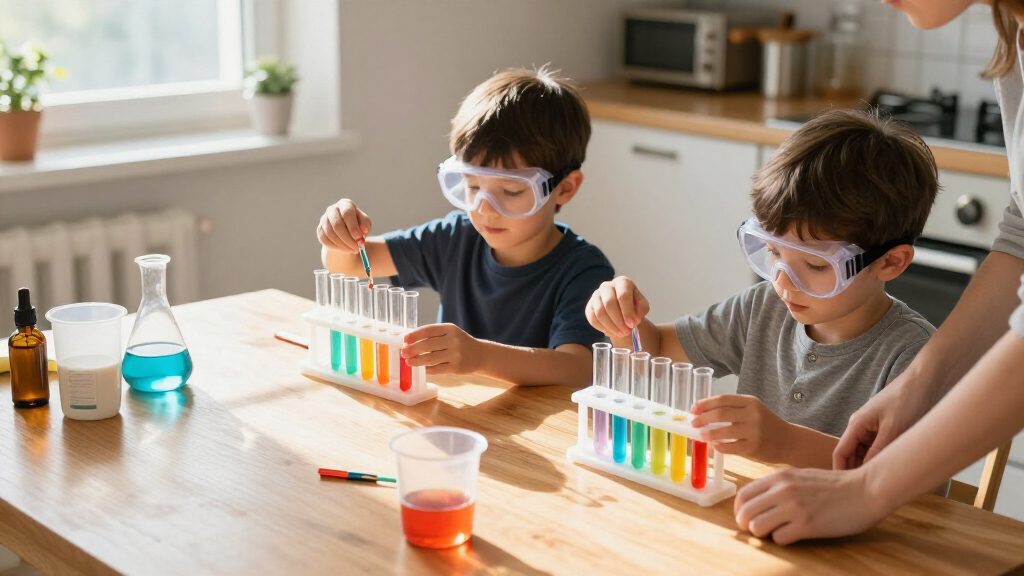

For families seeking chemistry lab kits for kids, I would start with the National Geographic Amazing Chemistry Set as the best overall balance of experiment variety and chemistry focus. The UNGLINGA 272-Experiment Science Kit suits families who want a large activity library, while KiwiCo Colorful Chemistry is a better fit for younger children who need simpler, more visual activities. The main tradeoffs are how much adult help experiments need, whether a kit sticks to chemistry or mixes in other science topics, and how well its activities match a child’s age. Experiment counts alone do not tell you how satisfying or manageable a kit will be. Read on for the full comparison, buying guidance, and recommendations by child and household.

Prime made for students and young adults
- Fast, free delivery for dorm and study essentials
- Prime Video and Amazon Music included
- Member-only deals
Key Takeaways
- The National Geographic Amazing Chemistry Set leads this roundup for buyers who want a chemistry-centered kit with a broad experiment selection, while the larger UNGLINGA kits emphasize activity volume over a narrower subject focus.
- Experiment count is not the same as usable variety. Kits with many activities may suit families who enjoy choosing from a large menu, but younger beginners may do better with a smaller, more approachable set.
- Age fit changes the buying decision. KiwiCo Colorful Chemistry is the clear younger-child option in this group; many of the other kits are aimed at school-age children and may need adult support.
- Presentation shapes the experience. Playz Mega Kaboom! and the National Geographic gross-science kits lean into dramatic or silly results, while more general chemistry sets are better suited to varied demonstrations.
- Some kits trade chemistry focus for broader science play. The National Geographic Mega Science Lab and the Doctor Jupiter kit may appeal to families who want more than chemistry, but they are less direct choices for a child seeking chemistry activities specifically.
| UNGLINGA 272-Experiment Science Kit for Kids |  | Best for Maximum Experiment Variety | Brand: UNGLINGA | Experiments: 272 | Recommended age: 8 years and up | VIEW LATEST PRICE | See Our Full Breakdown |
| Kuovei Science Kit for Kids: 80 Experiments |  | Best for a Supplied Variety of Lab Tools | Brand: Kuovei | Experiments: 80 | Recommended age: 6 years and up; age information varies in the listing | VIEW LATEST PRICE | See Our Full Breakdown |
| National Geographic Amazing Chemistry Set with 100+ Experiments |  | Best for Household-Supply Follow-Up Activities | Brand: Blue Marble | Age range: 8 years and up | Experiments: 15 with included materials; 85 additional household-item experiments | VIEW LATEST PRICE | See Our Full Breakdown |
| Doctor Jupiter Ultimate Science Experiments Kit for Kids Ages 8+ |  | Best for a Large Supplied Activity Selection | Brand: Doctor Jupiter | Age range: 8 years and up | Included experiments: 135+ | VIEW LATEST PRICE | See Our Full Breakdown |
| National Geographic Junior Chemistry Set with 50 Experiments |  | Best for Younger Beginners | Brand: Blue Marble | Recommended age: 4 years and up | Experiments: 50 | VIEW LATEST PRICE | See Our Full Breakdown |
| Playz Mega Kaboom! Chemistry Science Kit for Kids |  | Best for Big, High-Energy Reactions | Brand: Playz | Age range: 8 years and up | Experiments: More than 150 | VIEW LATEST PRICE | See Our Full Breakdown |
| National Geographic Incredibly Gross Science Chemistry Kit for Ages 8+ |  | Best for Gross-Out Chemistry | Brand: Blue Marble | Age range: 8 years and up | Experiments with included materials: 6 | VIEW LATEST PRICE | See Our Full Breakdown |
| National Geographic Chemistry Set with 45 Experiments for Kids Ages 8–12 |  | Best for a Balanced Chemistry Introduction | Brand: National Geographic | Recommended age: 8 years and up | Listed experiment count: 45 | VIEW LATEST PRICE | See Our Full Breakdown |
| Ooze Labs Chemistry Station Experiment Set |  | Best for Younger Beginners | Brand: Thames & Kosmos | Age range: 6 years and up | Pieces: 57 | VIEW LATEST PRICE | See Our Full Breakdown |
| UNGLINGA 150-Experiment Science Kit for Kids | 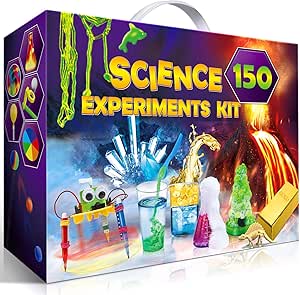 | Best for Cross-Subject Variety | Brand: UNGLINGA | Experiments: 150 | Recommended age: 8 years and up | VIEW LATEST PRICE | See Our Full Breakdown |
| KiwiCo Colorful Chemistry Set for Kids Ages 3–8 |  | Best for Preschool Science and Art | Brand: KiwiCo | Recommended age: Ages 3–8 listed; manufacturer recommendation is 36 months–5 years | Educational objective: Observation skills | VIEW LATEST PRICE | See Our Full Breakdown |
| National Geographic Mega Science Lab with 75 Experiments for Kids |  | Best Multisubject Science Bundle | Brand: Blue Marble | Age range: 8 years and up | Experiments: 75 total: 45 kit experiments and 30 additional guide experiments | VIEW LATEST PRICE | See Our Full Breakdown |
| National Geographic Gross Science Kit with 45 Experiments for Kids Ages 8–12 |  | Best for Gross-Out Chemistry | Brand: Blue Marble | Age range: 8 years and up | Experiments: 45 total: 15 with included materials and 30 using household items | VIEW LATEST PRICE | See Our Full Breakdown |
| Barbie Chemistry Science Kit with 50 Experiments for Kids Ages 8–12 |  | Best for Guided Starter Experiments | Brand: Blue Marble | Age range: 8 years and up | Experiments: 50 total; materials included for 15 | VIEW LATEST PRICE | See Our Full Breakdown |
| chemistry lab kits for kid | Brand | Experiments | Dimensions | Included components |
|---|---|---|---|---|
| UNGLINGA 272-Experiment Scienc | UNGLINGA | 272 | 9.8 x 7.7 x 4 inches | Experiment kit with test tube, measuring spoon, beaker, and conical flask |
| Kuovei Science Kit for Kids: 8 | Kuovei | 80 | — | Goggles, chemical materials, petri dishes, measuring cups, test tubes, gloves, droppers, balloons, and other experiment supplies |
| National Geographic Amazing Ch | Blue Marble | 15 with included materials; 85 additional household-item experiments | 8.78 x 3.19 x 11.93 inches | — |
| Doctor Jupiter Ultimate Scienc | Doctor Jupiter | — | — | Measuring cylinder, conical flask, spatula, stirring sticks, test tube stand, glycerin flakes, cups, funnel, tray, soap moulds, food essences, food colours, experiment ingredients, instruction manual, and bonus experiment booklet |
| National Geographic Junior Che | Blue Marble | 50 | 11 x 4.22 x 9.64 inches | Test tubes, goggles, and other lab tools |
| Playz Mega Kaboom! Chemistry S | Playz | More than 150 | 11.81 x 14.96 x 3.15 inches | — |
| National Geographic Incredibly | Blue Marble | — | 7.67 x 2.79 x 10.51 inches | — |
| National Geographic Chemistry | National Geographic | — | 8.78 x 3.19 x 11.93 inches | — |
| Ooze Labs Chemistry Station Ex | Thames & Kosmos | Approximately 20 | — | — |
| UNGLINGA 150-Experiment Scienc | UNGLINGA | 150 | 11.42 x 8.67 x 3.94 inches | Science experiment tools and materials |
| KiwiCo Colorful Chemistry Set | KiwiCo | — | 11 x 7.5 x 3.38 inches | Baking soda, citric acid, color powder set, jars, trays, spray bottle, beaker, stir stick, waterproof mat, scoops, flask, shape and color cards, watercolor paper, tissue paper |
| National Geographic Mega Scien | Blue Marble | 75 total: 45 kit experiments and 30 additional guide experiments | — | Earth science kit, chemistry kit, and science magic kit |
| National Geographic Gross Scie | Blue Marble | 45 total: 15 with included materials and 30 using household items | — | — |
| Barbie Chemistry Science Kit w | Blue Marble | 50 total; materials included for 15 | 11 x 4.22 x 9.63 inches | Lab gear, goggles, materials for 15 experiments, and a guide with 35 additional activities |
More Details on Our Top Picks
UNGLINGA 272-Experiment Science Kit for Kids
The UNGLINGA kit’s defining advantage is its 272 listed experiments, a much broader menu than Kuovei’s 80 activities or National Geographic Amazing Chemistry Set’s 15 experiments with supplied materials. The examples range from volcano eruptions and crystal growing to holographic projections and rainbow walking water, so it reaches beyond chemistry into general science. Its illustrated instructions and child-sized lab tools can help children follow procedures rather than just watch a demonstration. The tradeoff is that the description does not spell out which materials are included for each activity; a large experiment count does not mean every activity is ready to start from the box. Some projects may also need adult supervision. I’d choose it for families seeking many ideas, but prefer Doctor Jupiter’s kit if a clearer inventory of included components matters more.
Pros:- Lists 272 experiments, giving children a broad range of activities to revisit.
- Illustrated, step-by-step instructions support independent following.
- Includes a test tube, measuring spoon, beaker, and conical flask.
- Activities cover chemistry concepts as well as wider STEM topics.
Cons:- The description does not identify the materials needed for each experiment.
- Some activities may require adult supervision.
- The mix includes broader science activities, so it is less narrowly focused on chemistry than a dedicated chemistry set.
Best for: Families with children 8 and older who want a large selection of guided science activities and are comfortable checking each project’s supply needs.
Not ideal for: Buyers who want a clearly itemized set of ingredients for every experiment or a chemistry-only activity range.
- Brand:UNGLINGA
- Experiments:272
- Recommended age:8 years and up
- Theme:Chemistry
- Material:Plastic
- Dimensions:9.8 x 7.7 x 4 inches
- Included components:Experiment kit with test tube, measuring spoon, beaker, and conical flask
Our verdict“Choose this for the widest stated activity selection, provided you are willing to check supply needs and supervise some experiments.”
Kuovei Science Kit for Kids: 80 Experiments
Kuovei stands out for the range of tools and materials listed, including goggles, gloves, petri dishes, measuring cups, test tubes, and droppers. That breadth gives children several ways to handle and observe experiments, while the 80 guided activities offer more structure than a kit built mainly around household-supply ideas. It is recommended for ages 6 and up, making it a younger-starting option than UNGLINGA’s 272-experiment kit, which is listed for ages 8 and up. The tradeoff is uncertainty: the product information gives conflicting age guidance, and the listed dimensions of 1 × 1 × 1 inches may not describe the full kit. I’d pick Kuovei when the included tool assortment matters most, but National Geographic Junior Chemistry Set is a more clearly described choice for younger children.
Pros:- Lists 80 experiments with illustrated guidance.
- Includes goggles, gloves, petri dishes, measuring cups, test tubes, and droppers.
- Includes chemical materials and other experiment supplies.
- The stated minimum age is younger than that of several kits in this batch.
Cons:- Age recommendations vary between the description and product details.
- The listed 1 × 1 × 1-inch dimensions may not represent the full kit.
- The supplied information does not detail which materials are provided for each experiment.
Best for: Families looking for a varied set of experiment tools and guided activities for a child ready to explore hands-on science.
Not ideal for: Buyers who need consistent age guidance or reliable package-size information before choosing a kit.
- Brand:Kuovei
- Experiments:80
- Recommended age:6 years and up; age information varies in the listing
- Item weight:0.75 kg
- Item dimensions:1 × 1 × 1 inches
- Included components:Goggles, chemical materials, petri dishes, measuring cups, test tubes, gloves, droppers, balloons, and other experiment supplies
Our verdict“Pick Kuovei for its listed assortment of lab tools, but skip it if inconsistent age and size information would complicate your decision.”
National Geographic Amazing Chemistry Set with 100+ Experiments
This set separates supplied experiments from extra ideas more clearly than most high-count kits: materials are included for 15 activities, while the guide offers 85 additional experiments using common household items. That distinction is useful for families who want a defined starter set and then more activities to try with supplies already at home. The test tubes, beakers, and pipettes also give it a recognizable chemistry-lab feel. Compared with UNGLINGA’s 272 listed experiments, National Geographic’s total is smaller, but its split between included-material and household-item activities is explicit. The main compromise is that only 15 experiments come with materials, so the 100-plus total should not be read as 100-plus ready-to-run projects. I’d choose Doctor Jupiter instead if a larger number of experiments with included materials is the priority.
Pros:- Offers 15 experiments with included materials plus 85 household-item activity ideas.
- Includes test tubes, beakers, and pipettes for hands-on procedures.
- Focuses on chemistry and chemical reactions, including crystal growing.
- The materials-versus-household-items split is stated clearly.
Cons:- Only 15 experiments include materials in the kit.
- The 85 additional activities depend on finding household items.
- Its listed activity total is lower than the UNGLINGA and Doctor Jupiter kits.
Best for: Families who value a clearly explained mix of supplied chemistry activities and follow-up experiments using common household items.
Not ideal for: Children who want a large number of experiments with all specialized materials supplied in the kit.
- Brand:Blue Marble
- Age range:8 years and up
- Experiments:15 with included materials; 85 additional household-item experiments
- Educational focus:STEM and chemistry
- Included tools:Test tubes, beakers, and pipettes
- Dimensions:8.78 x 3.19 x 11.93 inches
- Weight:1.8 pounds
- Model number:NGMEGACHEMAR
Our verdict“Choose this if you want a modest supplied starter set followed by many activities that draw on household supplies.”
Doctor Jupiter Ultimate Science Experiments Kit for Kids Ages 8+
Doctor Jupiter is the strongest fit for families seeking a large number of included experiments: it lists more than 135, with another 90-plus bonus activities using household items. That makes it a more substantial supplied-activity option than National Geographic Amazing Chemistry Set, which includes materials for 15 experiments and draws on household items for the rest. Its illustrated instructions and broad tool set—including a measuring cylinder, conical flask, test tube stand, and funnel—support a more hands-on lab routine. Leak-proof bottles may also help contain some mess. The tradeoff is that bonus activities still depend on household supplies, and the kit is aimed at children 8 and older, not preschool beginners. Compared with UNGLINGA’s higher stated experiment count, Doctor Jupiter provides more detail about its included components.
Pros:- Includes materials for more than 135 experiments.
- Adds access to over 90 bonus activities using household items.
- Lists a broad tool assortment, including a measuring cylinder, conical flask, and test tube stand.
- Illustrated, step-by-step instructions and leak-proof bottles support a more manageable activity setup.
Cons:- Some bonus experiments require everyday household items.
- The recommended age begins at 8 years, limiting its fit for younger children.
- The listed activity count spans included-material and household-item experiments, so not all activities are equally ready to start.
Best for: Families with children 8 and older who want many guided experiments and a substantial assortment of listed lab tools and ingredients.
Not ideal for: Families shopping for a preschool or early-primary beginner, or buyers who want every bonus activity to use only kit materials.
- Brand:Doctor Jupiter
- Age range:8 years and up
- Included experiments:135+
- Bonus experiments:90+ using household items
- Educational objective:STEM
- Included components:Measuring cylinder, conical flask, spatula, stirring sticks, test tube stand, glycerin flakes, cups, funnel, tray, soap moulds, food essences, food colours, experiment ingredients, instruction manual, and bonus experiment booklet
- Manufacturer:Metis Learning Solutions Pvt. Ltd.
Our verdict“Choose Doctor Jupiter for a large, tool-rich experiment set for an 8-and-up child, while allowing for household supplies in the bonus activities.”
National Geographic Junior Chemistry Set with 50 Experiments
The Junior Chemistry Set is the youngest-child option in this group, with a stated age range beginning at 4 years. Its 50 experiments and more than 20 lab tools give beginners several guided ways to handle and observe simple activities, while illustrated instructions can make each step easier to follow with an adult nearby. Compared with Kuovei, whose age guidance varies in the listing, this kit gives a clear starting age; compared with National Geographic Amazing Chemistry Set, it has fewer listed activities but is aimed at a much younger audience. The tradeoff is that some projects need common household items, so the box does not cover every activity by itself. I’d choose it as an introductory chemistry set, not as a replacement for the more involved 8-and-up kits.
Pros:- Designed for children as young as 4 years.
- Includes 50 hands-on experiments and more than 20 lab tools.
- Illustrated, step-by-step instructions support guided activities.
- Uses common household items for some experiments, extending the kit beyond its supplied tools.
Cons:- Some experiments require household items that are not included.
- Its early-childhood age focus may feel limited for older children ready for more involved chemistry.
- Adult guidance may be needed to help young children follow steps and prepare activities.
Best for: Parents introducing children ages 4 and up to basic chemistry activities, with an adult available to help gather supplies and guide experiments.
Not ideal for: Older children seeking more advanced procedures, or families who want every experiment’s materials included in the box.
- Brand:Blue Marble
- Recommended age:4 years and up
- Experiments:50
- Lab tools:20+
- Included components:Test tubes, goggles, and other lab tools
- Educational objective:STEM
- Battery required:No
- Dimensions:11 x 4.22 x 9.64 inches
- Weight:0.72 kg
Our verdict“Choose this as a guided first chemistry kit for a young child, provided an adult can help with household supplies and supervision.”
Playz Mega Kaboom! Chemistry Science Kit for Kids
The Playz Mega Kaboom! is the chemistry pick for kids who want dramatic demonstrations as well as basic color and fizz reactions. Its 150-plus experiments offer a larger activity pool than the six included experiments in National Geographic Incredibly Gross Science, while the illustrated step-by-step guide gives children a path through the activities. Balloon rockets and exploding-bag experiments lean toward spectacle, which can help hold the attention of kids who prefer action to quiet observation. That same emphasis brings a tradeoff: some activities involve combustion or explosive effects, so this is less suited to unsupervised play than the younger-focused Ooze Labs Chemistry Station. The kit is also geared to ages 8 and up, rather than early elementary learners. I’d choose it for families ready to supervise energetic experiments, not those seeking the calmest introduction.
Pros:- Offers more than 150 experiments, giving repeat users a broad activity selection.
- Illustrated, step-by-step guide supports children as they follow procedures.
- Includes visually dramatic activities such as balloon rockets and color reactions.
- Combines hands-on projects with STEM learning.
Cons:- Some activities involve combustion or explosive effects and may call for adult supervision.
- Its energetic demonstrations may be a poor fit for families wanting quiet, low-mess activities.
- Recommended for ages 8 and up, so it is less suited to younger beginners than Ooze Labs Chemistry Station.
Best for: Families with children 8 and up who want a large menu of dramatic, hands-on chemistry activities and can supervise experiments.
Not ideal for: Buyers seeking a low-supervision kit for younger children, especially if they want to avoid experiments involving combustion or explosive effects.
- Brand:Playz
- Age range:8 years and up
- Experiments:More than 150
- Theme:Chemistry
- Guide:Illustrated, step-by-step lab guide
- Dimensions:11.81 x 14.96 x 3.15 inches
- Model number:7560_Kaboom
- ASIN:B0CGWWNYKX
Our verdict“Choose Playz Mega Kaboom! if your older child wants a deep supply of dramatic experiments and an adult can supervise the more energetic activities.”
National Geographic Incredibly Gross Science Chemistry Kit for Ages 8+
National Geographic Incredibly Gross Science makes a narrow but clear choice: it uses gooey, gross-themed projects to make chemistry appealing to kids who enjoy silly sensory play. The box includes supplies for six experiments, such as squishy eyeballs and gooey guts, and a bonus guide adds ten more activities using common household items. That’s a smaller ready-to-go selection than the 45 activities listed for the National Geographic Chemistry Set, but the themed experiments give this kit a more focused hook than a broad introductory set. The science explanations help connect the messy results to what is happening, rather than leaving the kit as a collection of gags. The tradeoff is that only six activities come with materials, and the bonus projects require families to source household supplies. I’d pick it for kids motivated by gross-out fun, not those seeking the biggest all-in-one experiment assortment.
Pros:- Includes materials for six themed hands-on experiments.
- Gross-out projects such as squishy eyeballs and gooey guts can engage kids who are less interested in conventional lab activities.
- Bonus guide adds ten experiments using common household items.
- Explains the science behind the activities.
Cons:- Only six experiments include kit materials.
- The ten bonus activities require household items that are not included.
- Its gross-themed focus is narrower than the National Geographic Chemistry Set with 45 Experiments.
Best for: Families of children 8 and up who are drawn to gooey, silly experiments and are comfortable gathering household items for bonus activities.
Not ideal for: Buyers who want materials included for every activity or a broad, general-purpose chemistry curriculum.
- Brand:Blue Marble
- Age range:8 years and up
- Experiments with included materials:6
- Bonus experiments:10 using common household items
- Theme:Gross-themed chemistry
- Dimensions:7.67 x 2.79 x 10.51 inches
- Weight:1.2 pounds
- Model number:NGSCIGRS
Our verdict“Choose this kit for a child who loves gross science and will enjoy the themed projects more than a larger, less focused experiment collection.”
National Geographic Chemistry Set with 45 Experiments for Kids Ages 8–12
For a child who wants variety without a kit built around one theme, the National Geographic Chemistry Set offers a practical middle ground. Its listed 45 experiments range from volcano and geyser activities to rockets, while the illustrated guide introduces chemistry concepts, the scientific process, and safe lab practices. That makes it a more structured starting point than the spectacle-first Playz Mega Kaboom!, with a broader chemistry focus than National Geographic Incredibly Gross Science. There is one meaningful uncertainty in the supplied product details: the experiment count says 45, but the included-components listing describes a “Mega Science Kit with 100 Plus Easy Experiments.” I would treat the 45 figure as the clearest stated count and verify the package contents before buying if the total matters. It suits families seeking guided variety, but not buyers who need perfectly consistent activity-count information.
Pros:- Lists 45 hands-on experiments across several activity types.
- Illustrated, kid-friendly guide explains each experiment.
- Introduces chemistry concepts, the scientific process, and safe lab practices.
- Includes volcano, geyser, and rocket activities.
Cons:- Product details conflict: the experiment count says 45 while the included-components listing says 100-plus experiments.
- Recommended for ages 8 and up, so it may be less approachable for younger children than Ooze Labs Chemistry Station.
- The conflicting activity information makes it harder to know exactly what is included.
Best for: Families with children 8 and up who want a guided, varied chemistry introduction that includes classic demonstrations and basic lab practices.
Not ideal for: Buyers who need an unambiguous experiment count or are choosing mainly for a confirmed 100-plus activity collection.
- Brand:National Geographic
- Recommended age:8 years and up
- Listed experiment count:45
- Included-components listing:Mega Science Kit with 100 Plus Easy Experiments
- Educational objective:STEM
- Dimensions:8.78 x 3.19 x 11.93 inches
- Weight:2.9 pounds
- Battery required:No
- Model number:NGMEGACHEMX
Our verdict“Choose this set for guided chemistry variety if the listed 45 experiments meet your needs and you are willing to check the package details.”
Ooze Labs Chemistry Station Experiment Set
Ooze Labs Chemistry Station is the most approachable option here for younger children: it is recommended from age 6 and includes a physical station where experiment cards can stay visible during a project. Its 57-piece setup supplies vessels, measuring tools, non-hazardous chemicals, and a full-color manual for about 20 activities, including slime, fizzing reactions, chromatography, and an underwater volcano. Compared with the age-8-and-up Playz Mega Kaboom!, this kit favors guided exploration over explosive spectacle; that makes the format easier to follow, though it offers a smaller activity count. The included chemicals do not contain borax, but that does not remove the need for adult help with some experiments. Buyers should also expect a focused starter station rather than the 150-plus project breadth of Playz or UNGLINGA. I’d choose it when accessible equipment and a clear workspace matter more than maximum variety.
Pros:- Includes a plastic chemistry station, experiment cards, lab equipment, and a full-color manual.
- Cards clip onto the station for convenient reference while working.
- Provides materials for about 20 experiments, including slime, fizzing reactions, and chromatography.
- Uses non-hazardous chemicals and does not contain borax.
Cons:- About 20 experiments offer less activity breadth than the 150-plus Playz Mega Kaboom! and UNGLINGA kits.
- Some experiments may require adult supervision.
- The station format is more specialized than a general kit of loose tools and materials.
Best for: Families introducing chemistry to children from age 6 who want supplied lab tools, visible activity cards, and a guided station format.
Not ideal for: Older children seeking a large experiment library or families who want activities that require no adult supervision.
- Brand:Thames & Kosmos
- Age range:6 years and up
- Pieces:57
- Experiments:Approximately 20
- Included equipment:Plastic chemistry station, experiment cards, vessels, syringe, measuring cup, pipette, spatula, tube, petri dish, and funnel
- Chemicals:Non-hazardous; does not contain borax
- Manual:Full-color
- Warranty:1 year against manufacturer defects
- Model number:642105
Our verdict“Choose Ooze Labs for a younger beginner who benefits from an organized station and supplied equipment rather than a very large experiment count.”
UNGLINGA 150-Experiment Science Kit for Kids
The UNGLINGA 150-Experiment Science Kit is the broadest choice for families who want chemistry alongside physics, earth science, and other topics. It includes lab tools, child-friendly materials, goggles, and an illustrated manual, so children have a basic kit for following the activities rather than relying entirely on improvised equipment. Compared with the chemistry-focused National Geographic Chemistry Set, UNGLINGA trades a tighter subject focus for 150 activities across several science areas; that can keep family projects varied, but it also means chemistry is only part of the selection. Some activities call for household items that are not supplied, so the printed count does not mean every experiment is ready to start straight from the box. This is a strong fit for curious kids who move between science subjects, but less compelling for a buyer who wants chemistry-only instruction or fully self-contained experiments.
Pros:- Offers 150 hands-on experiments across chemistry, physics, earth science, and other topics.
- Includes an illustrated, step-by-step manual.
- Supplies lab tools, materials, and goggles for activities.
- Supports family activities and hands-on learning across multiple science subjects.
Cons:- Some experiments require household items that are not included.
- Chemistry is only one part of a wider science selection, unlike the National Geographic Chemistry Set.
- The supplied details do not specify the exact number of chemistry experiments.
Best for: Families with children 8 and up who want one activity kit spanning chemistry and other science subjects, with basic tools and goggles included.
Not ideal for: Buyers seeking a chemistry-only curriculum or a kit where every experiment uses materials supplied in the box.
- Brand:UNGLINGA
- Experiments:150
- Recommended age:8 years and up
- Subjects:Chemistry, physics, earth science, and more
- Educational objective:Creative skills
- Included components:Science experiment tools and materials
- Materials:Plastic
- Dimensions:11.42 x 8.67 x 3.94 inches
- Included accessories:Goggles
Our verdict“Choose UNGLINGA if you want a broad science activity set with chemistry included, rather than a kit devoted exclusively to chemistry.”
KiwiCo Colorful Chemistry Set for Kids Ages 3–8
For younger children, I’d choose the KiwiCo Colorful Chemistry Set over broader kits such as the National Geographic Mega Science Lab, which is aimed at ages 8 and up and spans several science subjects. KiwiCo keeps the focus on color mixing, simple reactions, and observation, then turns experiments into watercolor crafts—a useful bridge for kids who enjoy making things as much as watching them change. The included waterproof mat and skin-safe ingredients also suit supervised activities at a kitchen table. Its tradeoff is limited depth for children ready for more involved chemistry: the contents center on basic color and reaction activities, rather than a wide range of experiments. Age guidance is also inconsistent, with the product title saying 3–8 and the manufacturer recommendation saying 36 months–5 years, so I’d check the child’s stage before buying.
Pros:- Pairs simple chemistry activities with watercolor crafts
- Encourages children to make predictions and observe results
- Includes non-toxic, skin-safe ingredients and a waterproof mess mat
- Provides ideas for additional kitchen chemistry activities
Cons:- Age guidance conflicts between the title and manufacturer recommendation
- Basic color-focused activities may not hold the interest of older or more experienced children
- Requires adult supervision for young children during hands-on activities
Best for: Families introducing preschool or early-elementary children to simple reactions through guided, creative activities.
Not ideal for: Older children seeking a broad set of challenging chemistry experiments, or buyers who need a single consistent age recommendation.
- Brand:KiwiCo
- Recommended age:Ages 3–8 listed; manufacturer recommendation is 36 months–5 years
- Educational objective:Observation skills
- Materials:Plastic
- Dimensions:11 x 7.5 x 3.38 inches
- Weight:0.87 kg
- Included components:Baking soda, citric acid, color powder set, jars, trays, spray bottle, beaker, stir stick, waterproof mat, scoops, flask, shape and color cards, watercolor paper, tissue paper
Our verdict“Choose KiwiCo for a young child who will enjoy mixing colors and making art, but pick a more advanced kit for sustained chemistry challenges.”
National Geographic Mega Science Lab with 75 Experiments for Kids
The National Geographic Mega Science Lab is the broadest pick here: alongside chemistry, it covers Earth science and science magic, with 45 experiments in the kit and 30 more in the guide using household items. That range makes it a better fit for a curious child who likes switching activities than the chemistry-and-craft focus of the KiwiCo Colorful Chemistry Set. Volcanoes, crystal growing, chemical reactions, and rock and mineral specimens give the kit several ways to hold attention. The tradeoff is that it is not a chemistry-only set, so a child looking for a concentrated sequence of chemistry lessons may prefer a dedicated chemistry kit. Also, only the 45 kit experiments are described as part of the supplied kits; the additional guide activities rely on household materials, which means the experiment count does not mean every activity has its materials included.
Pros:- Combines chemistry, Earth science, and science magic
- Includes 45 kit experiments plus 30 guide activities using household items
- Supplies rock, mineral, and crystal specimens
- Designed for children ages 8 and up
Cons:- The broad subject mix gives chemistry less focus than a dedicated chemistry kit
- The 30 additional guide activities use household items rather than materials included in the kit
- The supplied description does not detail the individual chemistry experiments or their materials
Best for: Families with children 8 and older who want one kit that combines chemistry activities with rocks, minerals, crystals, and science tricks.
Not ideal for: Buyers seeking a chemistry-focused learning path or a kit that supplies materials for all listed activities.
- Brand:Blue Marble
- Age range:8 years and up
- Experiments:75 total: 45 kit experiments and 30 additional guide experiments
- Subjects:Earth science, chemistry, and science magic
- Educational objectives:Critical thinking, observation skills, and STEM
- Included components:Earth science kit, chemistry kit, and science magic kit
- Model number:NGMEGASCIKIT
Our verdict“Pick this for an older child who wants variety across science subjects, not for a buyer seeking a chemistry-only kit.”
National Geographic Gross Science Kit with 45 Experiments for Kids Ages 8–12
Kids drawn to slime, glowing worms, and other gross-out effects may get more from the National Geographic Gross Science Kit than from the broader National Geographic Mega Science Lab. Its subject matter gives chemistry concepts such as polymers, reactions, and pH a playful hook, while illustrated, kid-friendly instructions help make the activities approachable. The kit includes materials for 15 experiments, and the booklet adds 30 more using household items. That split is the main buying tradeoff: the headline total of 45 activities does not mean the kit supplies everything for all 45. Families should expect to gather some materials at home, and children who want classic lab-style chemistry rather than messy novelty projects may prefer a more conventional chemistry set. I’d choose this for a child motivated by unusual results, not simply by a large experiment count.
Pros:- Connects polymers, chemical reactions, and pH science to playful activities
- Includes illustrated, kid-friendly instructions
- Offers 15 experiments with included materials and 30 household-item activities
- Needs no batteries
Cons:- Only 15 of the 45 experiments include kit materials
- The additional activities require household products
- Gross-out themes may not suit children who prefer conventional lab experiments
Best for: Families with children 8 and older who are especially interested in slime, glowing effects, and playful introductions to chemistry concepts.
Not ideal for: Buyers who want materials supplied for every activity, or children who prefer structured, traditional chemistry experiments over gross-out projects.
- Brand:Blue Marble
- Age range:8 years and up
- Experiments:45 total: 15 with included materials and 30 using household items
- Educational objective:STEM
- Included experiments:Slime, glowing worms, and activities covering polymers, chemical reactions, and pH science
- Batteries:No batteries required
- Model number:NGMEGAGRS
Our verdict“Choose this for an older child who finds messy, unusual effects more motivating than the Mega Science Lab’s mix of science subjects.”
Barbie Chemistry Science Kit with 50 Experiments for Kids Ages 8–12
The Barbie Chemistry Science Kit offers a more focused, guided entry into chemistry than the National Geographic Mega Science Lab, which divides its activities among chemistry, Earth science, and science magic. Its 15 supplied-material experiments include glow-in-the-dark slime, a lava lamp, and glowing chalk, while goggles and lab gear help give activities a clear hands-on setup. The learning guide and step-by-step instructions can help children follow an experiment rather than just collect supplies. Still, the 50-experiment total needs context: materials come with only 15 activities, and the remaining 35 use household items. That makes this a less self-contained choice than a buyer might expect from the count. I’d favor it for a child who likes guided demonstrations and is happy to gather extra materials, rather than someone seeking a ready-to-go supply for every experiment.
Pros:- Includes goggles, lab gear, and materials for 15 experiments
- Step-by-step instructions support independent participation with adult guidance
- Activities include glow-in-the-dark slime, a lava lamp, and glowing chalk
- Learning guide introduces chemistry concepts
Cons:- Materials are included for only 15 of the 50 experiments
- The other 35 activities require household items
- The focused activity set may offer less subject variety than the Mega Science Lab
Best for: Families with children 8 and older who want goggles, basic lab gear, and guided starter activities with familiar household-material extensions.
Not ideal for: Buyers expecting included materials for all 50 experiments, or children who want a kit that requires little preparation between activities.
- Brand:Blue Marble
- Age range:8 years and up
- Experiments:50 total; materials included for 15
- Included components:Lab gear, goggles, materials for 15 experiments, and a guide with 35 additional activities
- Educational objective:STEM learning
- Dimensions:11 x 4.22 x 9.63 inches
- Weight:2.2 pounds
- Model number:BBCHEM
Our verdict“Choose this for an older child who wants guided chemistry projects and accepts that most listed activities need household supplies.”

How We Picked
I compared these 14 kits as options for children learning through hands-on chemistry, looking beyond the experiment count. The main criteria were chemistry relevance, age suitability, range and repeatability of activities, clarity for a child to follow, likely adult involvement, and how practical the kit seems for a home setting. I also distinguished focused chemistry sets from broader science kits, since a high activity count is less useful if a buyer specifically wants chemistry.
The ranking favors kits that balance meaningful variety with a clear audience and manageable use. A high-count kit can be a better fit for an older child who likes independent choices, but it does not automatically outrank a smaller set designed for beginners. Specialty kits earn a place for a distinct purpose—such as younger learners, dramatic reactions, or gross-out themes—but rank behind more adaptable options for families without that specific preference. Product details can vary by edition, so I would check the included materials, age guidance, and supervision notes before buying.
| chemistry lab kits for kid | Educational objective |
|---|---|
| UNGLINGA 272-Experiment Scienc | — |
| Kuovei Science Kit for Kids: 8 | — |
| National Geographic Amazing Ch | — |
| Doctor Jupiter Ultimate Scienc | STEM |
| National Geographic Junior Che | STEM |
| Playz Mega Kaboom! Chemistry S | — |
| National Geographic Incredibly | — |
| National Geographic Chemistry | STEM |
| Ooze Labs Chemistry Station Ex | — |
| UNGLINGA 150-Experiment Scienc | Creative skills |
| KiwiCo Colorful Chemistry Set | Observation skills |
| National Geographic Mega Scien | — |
| National Geographic Gross Scie | STEM |
| Barbie Chemistry Science Kit w | STEM learning |
Factors to Consider When Choosing Chemistry Lab Kits For Kids
The right kit depends less on the biggest number on the box and more on the kind of activity your child will actually enjoy repeating. I would choose by age, adult availability, subject focus, and tolerance for setup and cleanup before comparing experiment counts.
Match the kit to the child’s age and confidence
Age guidance is a starting point, not a promise that every child can work independently. A younger child may enjoy observing a color change or fizzing reaction but still need an adult to measure, pour, or read instructions. Older beginners may prefer a kit with clear steps and a range of difficulty rather than one that assumes prior science experience. A common mistake is choosing a more advanced kit because it sounds educational, then finding that the adult has to run every activity. Check whether the child can handle the basic actions involved, not just whether their age falls within the stated range. For preschool and early elementary learners, simple visual experiments can be more satisfying than a large menu of complicated ones.
Treat experiment counts as a menu, not a score
A kit advertising dozens or hundreds of experiments may include activities that reuse the same materials or vary only one step. That can still be useful: repeated experiments help children compare results and build confidence. But if your child wants each activity to feel different, look for variety in the kinds of reactions, observations, and questions the kit encourages. Consider whether supplies are reusable, consumable, or likely to run out quickly; the package count alone may not answer that. Families with limited storage may prefer a more focused set over a large box with many small components. Choose a high-count kit for choice and a smaller set when a shorter, more directed experience is the better fit.
Decide how chemistry-focused the kit needs to be
Some products in this roundup combine chemistry with physics, biology, or general science. That broader mix can keep a child interested across different topics, but it may disappoint someone who specifically wants chemical reactions and related concepts. Before buying, look for the proportion of activities that are genuinely chemistry-based rather than relying on the product name. Theme can matter too: gross-out activities or dramatic effects may motivate a reluctant learner, while another child may prefer calmer experiments with visible, repeatable results. If the kit is meant to support a school topic, prioritize subject alignment over spectacle. If it is mainly for play, a wider science mix may be an advantage rather than a drawback.
Plan for adult help, setup, and cleanup
Home experiments often involve measuring, pouring, protecting a work surface, and putting materials away. Even a child-ready kit may need an adult nearby, particularly for younger users or activities with several steps. Think about when the kit will be used: a quick after-school activity calls for a different level of setup than a weekend project with a parent. Check instructions and supervision guidance before purchase, and make space for water, paper towels, and safe disposal as directed. A kit with elaborate demonstrations can be exciting but may be less convenient to repeat. Choosing for your household’s available time can prevent a promising set from staying unused.
Pay for fit and support, not just a bigger box
A more elaborate kit makes sense when it offers a child the right kind of challenge, useful guidance, or activities they will return to. It is less compelling if the extra contents add clutter without matching the child’s interests or skill level. For a first chemistry set, simple instructions and a clear path through activities can matter more than a large assortment. For a child already asking science questions, a broader selection may give them more room to explore. Also check which household supplies are required and whether experiment materials are replenishable, since those details affect how long the kit stays useful. I would spend toward a better match for the child rather than choosing by packaging or volume alone.
Frequently Asked Questions
Which kit in this roundup is the best starting point for a child new to chemistry?
I would begin with a kit whose age guidance and instructions suit the child, rather than choosing the one with the most experiments. KiwiCo Colorful Chemistry is the age-specific choice for younger children, while the National Geographic Amazing Chemistry Set is a broader option for school-age learners. A beginner may need an adult to guide measurements and explain what changed, even when the experiment itself is simple. If your child is easily frustrated by multi-step tasks, choose an activity they can complete with a small number of materials. Check the current edition’s instructions and supervision notes before making the final choice.
Should I choose a kit with 272 experiments over one with 45 or 50?
Not automatically. A larger activity count offers more choices, but it does not tell you how distinct the experiments are, how much setup they require, or whether the instructions suit your child. The UNGLINGA 272-Experiment kit is a strong match for families who want a broad activity library; a more focused 45- or 50-experiment set may be easier to approach. Check whether activities reuse supplies and whether the kit includes topics your child cares about. For many families, a manageable set of activities that gets used is more valuable than a larger collection that feels hard to start.
Do these chemistry kits work for children who want to do experiments on their own?
Some school-age children may manage selected activities with less help, but I would not assume any kit is fully independent without checking its directions and age guidance. Measuring, handling materials, and cleaning up can still call for adult involvement. Younger children are more likely to benefit from an adult partner who can guide steps and discuss results. If independence is a priority, look for simple instructions, a clear activity sequence, and tasks that do not depend on specialized household equipment. An adult should review the experiment first, especially if the child is new to hands-on science.
Is a gross-science kit a good choice if my child is mainly interested in chemistry?
It can be, if the theme helps your child get excited about observing reactions and asking questions. The National Geographic Incredibly Gross Science Chemistry Kit and the National Geographic Gross Science Kit offer a more playful angle than a general chemistry set. The tradeoff is that the gross-out framing may be the main draw, and a child seeking a broad chemistry experience may prefer a less theme-led option. Check the activity list to see how much of the kit centers on chemistry concepts rather than spectacle. For a reluctant learner, the theme may encourage participation; for a focused science hobbyist, subject depth may matter more.
What should I check before buying a kit as a gift?
First, confirm the recipient’s age and whether an adult will be available to help with setup and cleanup. Then check the exact kit edition, its included materials, safety and supervision directions, and any household items the experiments require. A themed kit can make a memorable gift when the child likes its style, but it may be a poor match if they want open-ended chemistry activities. Consider storage space and whether consumable materials can be replaced or reused. If you are unsure about the child’s experience level, a clearly guided, age-appropriate set is usually a safer choice than the largest or most dramatic-looking box.
Conclusion
For most school-age children, I would choose the National Geographic Amazing Chemistry Set as the best overall option because it offers a chemistry-centered route with a broad activity selection. The UNGLINGA 272-Experiment Science Kit is my best value-style pick for families who want plenty of activities and do not mind a broader science mix; the UNGLINGA 150-Experiment kit is another option when a smaller activity library better fits your plans. For a premium-style gift, I would look at the National Geographic Mega Science Lab if the child wants a wider science experience, rather than chemistry alone. KiwiCo Colorful Chemistry is the best beginner choice for younger learners, while Playz Mega Kaboom! suits children drawn to dramatic experiments and the National Geographic gross-science kits fit kids who enjoy silly themes. If chemistry focus matters more than spectacle or sheer volume, prioritize a dedicated chemistry set and check its age guidance, activity list, and supervision needs before choosing.
Halloween Picks
halloween
As an affiliate, we earn on qualifying purchases.