


If you’re choosing between a portable and countertop dishwasher for your apartment, consider your space, mobility needs, and kitchen setup. Portable models are great if you want flexibility and easy movement, but they often use more water and energy. Countertop dishwashers fit directly on your counter, saving space but reducing workspace. To find the best fit for your lifestyle and layout, explore more details about installation, efficiency, and cost considerations.

Prime made for students and young adults
- Fast, free delivery for dorm and study essentials
- Prime Video and Amazon Music included
- Member-only deals
Key Takeaways
- Portable dishwashers offer mobility and are suitable for flexible or temporary setups, while countertop models are ideal for permanent, space-constrained kitchens.
- Countertop dishwashers use less water and energy per load, making them more efficient for small daily use in apartments.
- Space considerations are crucial: portable units save space through mobility, whereas countertop models occupy valuable counter space.
- Proper installation and sink compatibility are essential for optimal performance of both dishwasher types.
- Cost, space planning, and usage frequency should guide the choice between portable and countertop dishwashers in apartments.
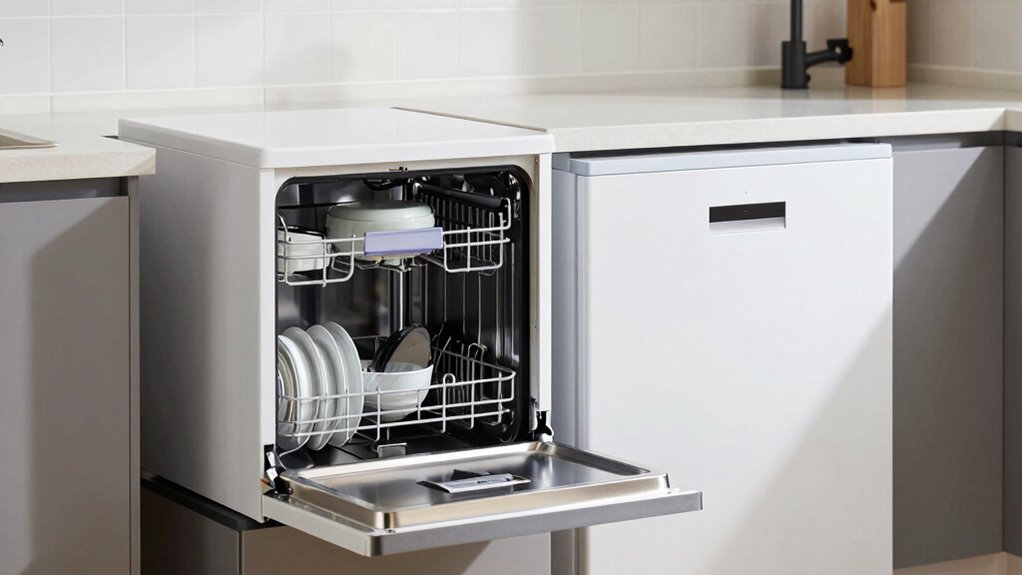
When it comes to choosing a dishwasher for your kitchen, understanding the differences between portable and countertop models can help you make an informed decision. Both options are designed to fit smaller spaces and are ideal for apartments, but they vary significantly in features and performance. One of the most important factors to consider is energy efficiency, as it influences your utility bills and environmental impact. Portable dishwashers generally consume more energy because they often include larger wash cycles and additional features, but they tend to be more efficient than older, built-in models. Countertop dishwashers are usually smaller and more energy-efficient per load, making them a good choice if you want to minimize electricity use. Water consumption is another critical aspect. Portable dishwashers typically use more water per cycle due to their larger size and more intensive wash options. If conserving water is a priority, a countertop model might be better because it generally uses less water per load, especially with shorter cycles.
Portability is a key advantage of both types, but they serve slightly different needs. A portable dishwasher can be moved easily from one location to another, which is perfect if you have a flexible living situation or limited space. You can roll it out when needed and store it away when you’re done, saving space in tight apartments. Countertop dishwashers sit directly on your kitchen counter, so they don’t require storage space elsewhere, but they do take up valuable countertop real estate. If you’re tight on space and need a more permanent setup, a countertop model might be more practical because it fits neatly on your counter without the need for extra mobility. Additionally, considering the installation process can help you decide which option is more suitable for your setup. Proper installation ensures optimal performance and energy efficiency, so following the manufacturer’s guidelines is essential. Moreover, understanding the compatibility with your sink can prevent potential issues during setup and operation. Both types tend to be energy-efficient and water-conscious compared to full-sized dishwashers, but your specific usage habits and space constraints will determine which model suits you best. Being aware of the space requirements can help you plan your kitchen layout more effectively, ensuring your chosen dishwasher fits comfortably. Also, considering the cost differences between models can help you make a budget-conscious decision that aligns with your needs. Ultimately, your choice depends on how much space you have, how often you do dishes, and your priorities regarding water and energy savings.
portable dishwasher for apartment
As an affiliate, we earn on qualifying purchases.
As an affiliate, we earn on qualifying purchases.
Frequently Asked Questions
Can Portable Dishwashers Fit Under Standard Kitchen Cabinets?
Portable dishwashers usually can’t fit under standard kitchen cabinets because of their size and design. You might need to take into account appliance compatibility with your kitchen setup, especially if you want a seamless look. For better kitchen storage and convenience, look for models that are specifically designed to be compact or that can sit on countertops. Keep measurements in mind to make sure your portable dishwasher fits comfortably without obstructing other appliances or cabinets.
Are Countertop Dishwashers Suitable for Large Families?
Countertop dishwashers generally aren’t suitable for large families because they have limited capacity. If you have a large family, you need a dishwasher with large family capacity and advanced dishwasher features that can handle big loads efficiently. While countertop models are compact and convenient, they may require multiple runs per day, making them less practical for frequent, large-scale dishwashing needs. Consider a full-sized or portable unit for your family’s demands.
Do Portable Dishwashers Require Special Plumbing Connections?
Imagine you’re setting up a portable dishwasher in your apartment. You won’t need any special plumbing connections, as they typically connect to your sink faucet with a standard hose. The installation process is straightforward, often involving just attaching the hose and plugging it in. Unlike built-in models, portable dishwashers don’t require modifications to your plumbing, making them a convenient choice for renters or those who want easy setup.
How Energy-Efficient Are Portable Versus Countertop Dishwashers?
Portable dishwashers generally use more energy than countertop models due to their larger size and additional features, but both can be energy-efficient with the right settings. Look for eco-friendly features like eco modes or low water and power consumption options. You’re likely to save energy with a countertop dishwasher if space and capacity suit your needs because they typically consume less energy, especially when you run smaller loads or use eco-friendly cycles.
What Maintenance Is Needed for Both Types of Dishwashers?
You need to regularly clean the filters and run cleaning cycles to maintain both portable and countertop dishwashers. Check water filtration systems, if present, and replace or clean filters as needed to guarantee peak performance. Keep the spray arms free of debris, and wipe down seals to prevent mold. These simple maintenance steps help both types operate efficiently, extend their lifespan, and keep your dishes sparkling clean.
Conclusion
Choosing between a portable and countertop dishwasher really boils down to your space and lifestyle. Whether you opt for the versatility of a portable unit or the compact convenience of a countertop model, you’re making a smart move towards a cleaner, more efficient apartment life. Remember, this decision isn’t just about dishes—it’s about reclaiming your time and transforming your home into a sanctuary. Invest wisely, and you’ll wonder how you ever lived without this tiny powerhouse making your life easier!
Halloween Picks
halloween
As an affiliate, we earn on qualifying purchases.