

To measure a room for a portable air conditioner, use a tape measure to note the length and width in feet, measuring from wall to wall and avoiding corners or irregular shapes. Write down these measurements precisely and multiply them to find the square footage. This helps determine the right size unit for your space. If you want to learn how to account for ceiling height and other factors, keep going for more tips and details.

Prime made for students and young adults
- Fast, free delivery for dorm and study essentials
- Prime Video and Amazon Music included
- Member-only deals
Key Takeaways
- Measure the room’s length and width in feet using a tape measure, avoiding corners or irregular shapes.
- Calculate square footage by multiplying length by width for accurate cooling capacity.
- Measure ceiling height to determine cubic footage, especially if it differs from standard 8 feet.
- Consider room features like windows and sunlight exposure, which affect cooling needs.
- Note any heat sources or insulation factors that may influence the required AC capacity.
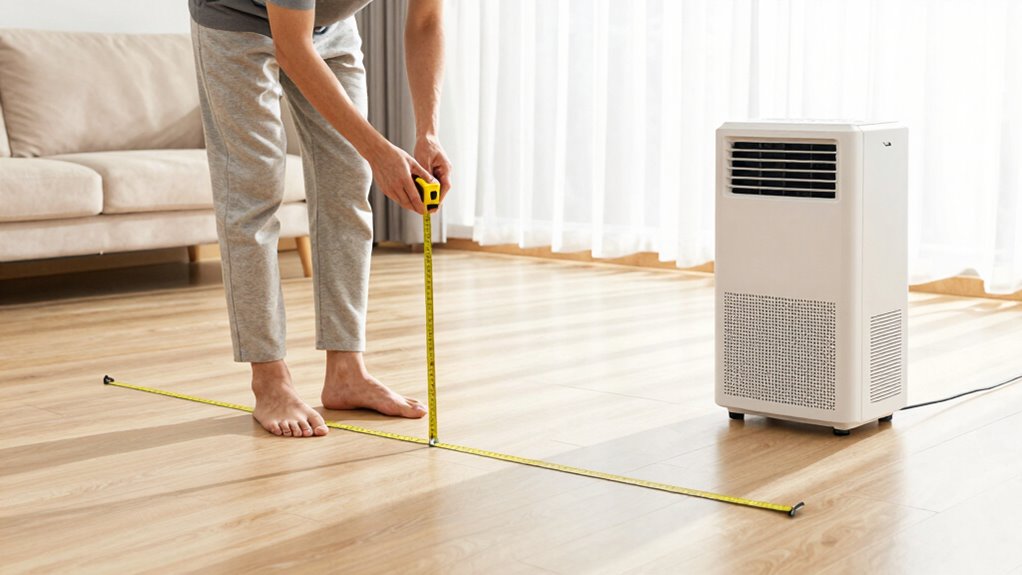
Ever wondered how to guarantee your portable air conditioner will keep your space cool and comfortable? It all starts with measuring your room correctly. Knowing the right size is essential for energy efficiency because an undersized unit struggles to cool the space, wasting energy, while an oversized one cycles on and off too often, also reducing efficiency and increasing wear. To get an accurate measurement, start by noting the length and width of your room in feet. Use a tape measure and be precise—measure from wall to wall, avoiding corners or irregular shapes that can skew your calculation. Once you’ve recorded the length and width, multiply these figures to determine the square footage. For example, a room that’s 12 feet long and 10 feet wide equals 120 square feet.
Next, consider the height of your ceiling. Standard ceilings are about 8 feet tall, but if yours are higher or lower, you’ll need to adjust your calculations accordingly. Multiply the square footage by the ceiling height to get the cubic footage. This step helps determine the cooling capacity needed more accurately. If your room has high ceilings, you may need a slightly more powerful unit to compensate. Remember, choosing a portable air conditioner with the right capacity guarantees maximum energy efficiency; an overly powerful or underpowered unit will consume more energy than necessary. Proper room sizing is crucial for optimal performance. Additionally, room dimensions influence the overall cooling load and should be carefully considered when selecting your unit.
When thinking about installation tips, place your unit in a location that allows for proper airflow. Avoid cramped corners or spots near heat sources like direct sunlight, appliances, or windows that get a lot of sun. Proper placement helps the unit operate at peak efficiency, reducing energy consumption. Be sure to keep the exhaust hose unobstructed and vented outside through a window or wall vent kit, as directed by the manufacturer’s instructions. This prevents warm air from recirculating into the room, which can hamper cooling performance and waste energy. Additionally, understanding ventilation options can further enhance your AC’s efficiency and effectiveness. Being mindful of ventilation also helps to prevent humidity buildup, which can impact comfort and energy use.
Finally, consider the room’s insulation and sun exposure, as these factors influence the cooling load. Well-insulated rooms retain cool air better, requiring less effort from your AC, while rooms with lots of sunlight may need a slightly larger unit. By accurately measuring your space and following these installation tips, you ensure your portable air conditioner works efficiently, saving you money and keeping your space comfortably cool. Proper sizing and smart placement are the key steps to maximizing energy efficiency and enjoying a cool, comfortable environment.
Popular right now

Ninja SP151 Flip Toaster Oven and Air Fryer, 8-in-1, Stainless Steel

Dreame L40 Ultra Gen 2 Robot Vacuum and Mop

Dyson V8 Cyclone Cordless Vacuum
As an affiliate, we earn on qualifying purchases.
Frequently Asked Questions
What Tools Are Best for Measuring a Room Accurately?
You should choose a reliable tape measure or a laser distance meter for measuring a room accurately. A tape measure offers good measuring accuracy for smaller spaces, while a laser distance meter provides quick, precise results for larger rooms. Tool selection depends on your needs. Use a sturdy, easy-to-read tape or a high-quality laser device to guarantee precise measurements, which help you select the right portable air conditioner for your room’s size.
How Do Ceiling Height Variations Affect AC Sizing?
Did you know that every foot of ceiling height above 8 feet can increase your AC’s cooling needs by about 10%? Ceiling height variations impact AC sizing since higher ceilings mean more air volume to cool, often requiring a larger unit. Additionally, airflow obstructions like beams or fans can hinder efficiency. So, measure your ceiling height accurately and clear obstructions to guarantee ideal cooling performance.
Should I Measure Door and Window Dimensions Too?
Yes, you should measure door and window dimensions. Knowing these measurements helps determine if your portable air conditioner can fit through doorways or windows for installation or venting. Accurate door measurements guarantee you select a unit that can pass easily, while window dimensions help you choose the right size for the venting kit. This way, you avoid surprises and ensure proper installation and efficient cooling.
How Do Furniture and Obstructions Impact Cooling Efficiency?
Furniture and obstructions are like roadblocks to your cooling breeze. They block airflow, reducing cooling efficiency, and can cause your portable AC to work harder. Proper furniture placement allows air to circulate freely, avoiding obstruction effects that trap warm air or create hot spots. Keep pathways clear and avoid stacking furniture near vents to maximize your AC’s performance and enjoy a cooler, more comfortable space.
Can I Measure a Room Without Professional Equipment?
Yes, you can measure a room without professional equipment. Use a tape measure to find the length and width, then multiply for square footage. Keep in mind, room insulation and ventilation factors influence cooling needs, so consider how well the space retains heat or airflow. These elements help you choose the right portable air conditioner size, ensuring efficient cooling without needing specialized tools.
Conclusion
Now that you’ve measured your room, think of it as finding the right key to release comfort. Just as a perfectly fitted key opens a door effortlessly, choosing the right portable air conditioner guarantees coolness flows smoothly through your space. Remember, your measurements are the blueprint to a cozy sanctuary—your personal haven from the heat. So, trust in your numbers, and let your new AC be the gentle breeze that turns your home into a invigorating retreat.