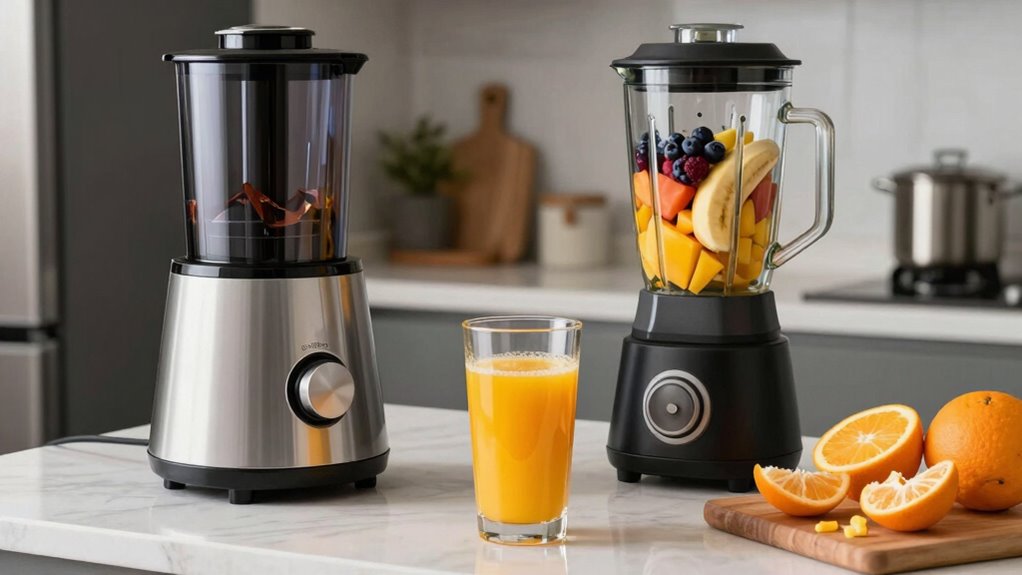

To choose between a juicer and a blender, consider your health goals and preferred textures. Juicers produce concentrated juice with more vitamins but less fiber, ideal for quick nutrient boosts. Blenders blend whole fruits and vegetables, preserving fiber for digestion and fullness, and are more versatile for soups or nut butters. Think about your daily routine and cleaning preferences. If you want to explore more about how each appliance can best fit your lifestyle, there’s plenty to discover ahead.

Prime made for students and young adults
- Fast, free delivery for dorm and study essentials
- Prime Video and Amazon Music included
- Member-only deals
Key Takeaways
- Consider whether you want concentrated juice with maximum nutrient retention or whole fruit smoothies with fiber.
- Decide if versatility for different recipes (soups, nut butters) influences your appliance choice.
- Assess cleaning convenience; blenders are generally easier to maintain than juicers.
- Think about your focus on fiber intake and digestive health—blenders preserve fiber, juicers do not.
- Evaluate your sustainability goals, such as reducing waste and energy use, when selecting your appliance.

Are you torn between choosing a juicer and a blender for your kitchen? It’s a common dilemma, especially when you want to maximize health benefits and suit your lifestyle. The decision largely depends on what you’re looking for in your appliances. If your goal is to extract the most nutrients from your fruits and vegetables, a juicer might be the better fit. Juicers excel at nutrient retention because they separate the juice from the pulp, leaving you with a concentrated drink packed with vitamins and enzymes. This process means you can consume a larger volume of produce quickly, making it easier to boost your daily nutrient intake. However, keep in mind that juicers can be messier and more time-consuming to clean, especially if you opt for a model with multiple parts. The cleanup process can be a downside if you prefer appliances that are quick to maintain.
On the other hand, a blender offers versatility that a juicer can’t match. When you blend, you keep the entire fruit or vegetable, fiber and all, which preserves the natural texture and flavor of your ingredients. This means you get a more filling, hearty drink or smoothie that can serve as a meal replacement or a substantial snack. Since you’re blending the whole produce, nutrient retention is still high, and you benefit from the fiber’s digestive advantages. Plus, blenders tend to be easier to clean, often requiring just a quick rinse or a run through the dishwasher, making them more convenient for everyday use. If you prefer making smoothies, soups, or nut butters, a blender becomes even more appealing. Additionally, choosing the right appliance can contribute to sustainable living practices, reducing waste and energy use in your kitchen. Being mindful of food processing methods can also help you minimize waste and optimize nutrition. Incorporating whole foods into your diet with these appliances can support your overall wellness goals. Furthermore, understanding metaphysical aspects of health can help you approach your wellness journey more mindfully.
Popular right now

De’Longhi All-in-One Espresso and Coffee Maker with 10-Cup Pot and Milk Frother

Dyson Cyclone V10 Origin Cordless Vacuum

Vitamix VX1 Professional-Grade Blender, 64 oz, Black
As an affiliate, we earn on qualifying purchases.
Frequently Asked Questions
Which Appliance Is Easier to Clean?
A blender is generally easier to clean because of its fewer parts and smoother surfaces, making cleaning convenience higher. You can usually rinse or wash its jar quickly. Juicers, on the other hand, often have more components like filters and pulp containers, which require more effort and maintenance. If you prefer minimal maintenance requirements, a blender might be the better choice for you.
Can I Make Hot Soups With a Juicer or Blender?
You can make hot soups with a blender, thanks to its appliance versatility. Blenders can handle hot liquids if you blend carefully and start slowly, allowing the mixture to heat up during blending. Juicers, on the other hand, aren’t suitable for hot soups because they’re designed for cold ingredients and can’t withstand high temperatures. So, for hot soups, a blender is your best choice.
How Much Noise Do These Appliances Produce?
You’ll notice a significant noise difference: blenders typically produce around 80-100 decibels, similar to a vacuum cleaner, while juicers are quieter, often around 60-70 decibels. This noise comparison matters if you value a peaceful environment. When choosing, consider appliance durability too; blenders tend to last longer under frequent use, whereas some juicers may need more careful handling. Your choice impacts both noise levels and long-term appliance durability.
Are There Specific Fruits or Vegetables Better Suited for Each?
You’ll find that citrus fruits like oranges and grapefruits are better suited for juicers, as they yield smooth, pulp-free juice. For vegetables, leafy greens and harder produce like carrots work well in a blender, creating thicker, nutrient-rich smoothies. When considering fruit pairing and vegetable suitability, keep in mind that juicers excel at extracting juice from watery produce, while blenders handle whole fruits and vegetables, preserving fiber and creating more filling drinks.
What Is the Typical Price Range for Each Appliance?
Did you know that juicers typically cost between $100 and $400, while blenders range from $50 to $600? For juicing versatility, expect to pay more for high-end models that extract more nutrients efficiently. Blending textures are generally more affordable, with many good options under $200. Your choice depends on your needs, but understanding these price ranges helps you decide what fits your budget and goals best.
Conclusion
Ultimately, choosing between a juicer and a blender depends on your health goals and taste preferences. For instance, if you want a nutrient-packed glass of fresh juice, a juicer is your best bet. But if you prefer smoothies with fiber and creaminess, a blender suits you better. Imagine Sarah, who switched to a high-powered blender for her morning smoothies and noticed increased energy and better digestion. Pick what fits your lifestyle and enjoy the delicious benefits!