

To choose the best dog food, start by checking the nutrition facts panel to guarantee it meets your dog’s specific needs. Look at the ingredient list to find recognizable whole foods and avoid vague terms like “meat meal” or fillers such as corn and soy. Be cautious of marketing claims and certifications, and verify their credibility. If you keep these tips in mind, you’ll be better prepared to select a healthy, high-quality option—more details can help you make confident decisions.

Prime made for students and young adults
- Fast, free delivery for dorm and study essentials
- Prime Video and Amazon Music included
- Member-only deals
Key Takeaways
- Check the ingredient list for recognizable, whole food sources and avoid vague or filler ingredients.
- Review the nutrition facts panel to ensure the food meets your dog’s specific age, size, and health needs.
- Look for regulated label claims like “complete and balanced” and verify their credibility.
- Be cautious of marketing language and misleading terms such as “grain-free” or “holistic.”
- Prioritize foods with high-quality ingredients and proper nutritional balance over catchy marketing claims.
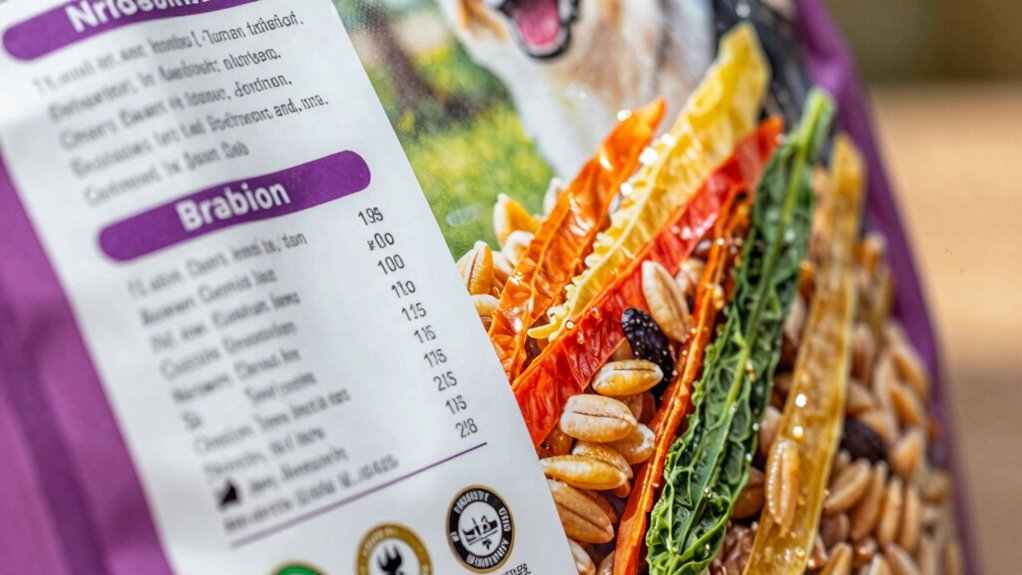
Have you ever looked at a bag of dog food and felt overwhelmed by the confusing labels and ingredient lists? It’s common to feel lost when trying to decipher what’s truly inside your dog’s food, but understanding how to read labels can help you make better choices. The first thing to focus on is the nutrition facts panel, which provides a snapshot of the food’s nutritional profile. This section will tell you the guaranteed analysis, including percentages of crude protein, fat, fiber, and moisture. Keep in mind that higher protein content isn’t always better if the ingredient quality isn’t solid. Look beyond the numbers to see if the food meets your dog’s specific needs, such as age, size, or health conditions. For example, puppies typically require more protein and fat than adult dogs, so check for those details. Recognizing ingredient quality is crucial because it directly impacts your dog’s health and digestion.
Understanding the nutrition facts helps you pick the best food for your dog’s specific needs and health.
Next, pay close attention to ingredient quality. The ingredient list is usually ordered by weight, so the first few items are what the food contains the most of. If you see vague terms like “meat meal” or “animal by-product,” it’s a sign that the ingredients might not be of the highest quality. Instead, look for specific, recognizable ingredients like “chicken,” “salmon,” or “beef,” which indicate better ingredient quality. Whole food sources are preferable over fillers like corn, soy, or wheat, which don’t add much nutritional value and can sometimes cause allergies. The ingredient list can also reveal if artificial preservatives, colors, or flavors are added, which you’ll want to avoid for your pet’s health. Additionally, understanding label terminology can help you better interpret what the packaging is truly indicating about the product. Being familiar with marketing claims can also help you distinguish between genuine quality and misleading advertising.
Another key aspect is understanding the label’s claims and certifications. Terms like “complete and balanced” are regulated and ensure the food meets certain nutritional standards, but it’s still wise to verify the ingredients and nutrition facts yourself. If the label states “grain-free” or “holistic,” research what these terms mean to ensure they align with your dog’s dietary needs. It’s also important to recognize that some labels may use misleading marketing language**, so scrutinizing the details can prevent false assumptions. Familiarizing yourself with regulatory standards** can help you better assess the credibility of the claims made on the packaging. Being aware of how marketing strategies influence perceptions can empower you to make more informed choices for your pet’s diet.
Ultimately, reading dog food labels is about more than just the marketing buzzwords. It’s about scrutinizing the nutrition facts and ingredient quality to choose a food that supports your dog’s health and wellbeing. With a little practice, you’ll become confident in evaluating labels and making informed decisions that benefit your furry friend’s long-term health.
high quality dog food with recognizable ingredients
As an affiliate, we earn on qualifying purchases.
As an affiliate, we earn on qualifying purchases.
Frequently Asked Questions
Are Organic Dog Foods Always Better Than Non-Organic Options?
Organic dog foods aren’t always better, but they often include organic certification and natural ingredients, which can mean fewer pesticides and additives. You should look for these labels to guarantee quality. However, non-organic options can still be nutritious if they meet your dog’s dietary needs. Always read the label carefully, considering ingredients and nutritional value, rather than relying solely on organic claims.
How Can I Tell if a Dog Food Is Hypoallergenic?
You can tell if a dog food is hypoallergenic by checking for limited, carefully chosen ingredients that reduce allergenic potential. Look for labels that specify “hypoallergenic” or “for food intolerance.” Avoid common allergenic ingredients like beef, dairy, soy, and wheat. Opt for foods with novel proteins or hydrolyzed ingredients, which help minimize allergic reactions and food intolerance, making them suitable for sensitive dogs.
What Do All the Different Feeding Guidelines Mean?
Feeding guidelines are like a roadmap guiding your dog’s health journey. They show you how much to feed based on your dog’s weight and activity level, ensuring ingredient clarity and nutritional adequacy. When you see these guidelines, think of them as your map’s key, helping you avoid confusion and keep your pup happy and healthy. Always follow the recommended amounts, adjusting for individual needs, so your dog thrives on the right balance.
How Often Should I Check for Recalls on Dog Food Brands?
You should check for recall notifications regularly, ideally once a month, to stay updated on brand safety. Recalls can happen unexpectedly, so staying vigilant helps protect your dog from potentially harmful products. Subscribe to brand notifications or sign up for recall alerts online. By actively monitoring recall notifications, you guarantee your dog’s food remains safe and avoid feeding contaminated or unsafe products. Staying informed keeps your pet healthy and secure.
Do Ingredient Order or Percentages Indicate Overall Quality?
Think of ingredient order and percentages as a map guiding your choices—higher placement and percentages usually mean more of that ingredient, but they don’t tell the full story. Ingredient transparency is key; some brands use clever marketing claims to hide less desirable fillers. Always check the ingredient list carefully, and don’t rely solely on the order or percentages. Your dog’s health depends on understanding what’s truly in their food.
Conclusion
By mastering how to read dog food labels, you hold the key to choosing the best meal for your furry friend. Think of the label as a map guiding you through a treasure hunt—highlighting the hidden gems and warning signs. When you understand what’s inside, you’re steering your pup toward health and happiness. Remember, a well-informed owner is like a lighthouse—shining bright and guiding their dog safely through the sea of choices.
Fall Picks
fall essentials
As an affiliate, we earn on qualifying purchases.