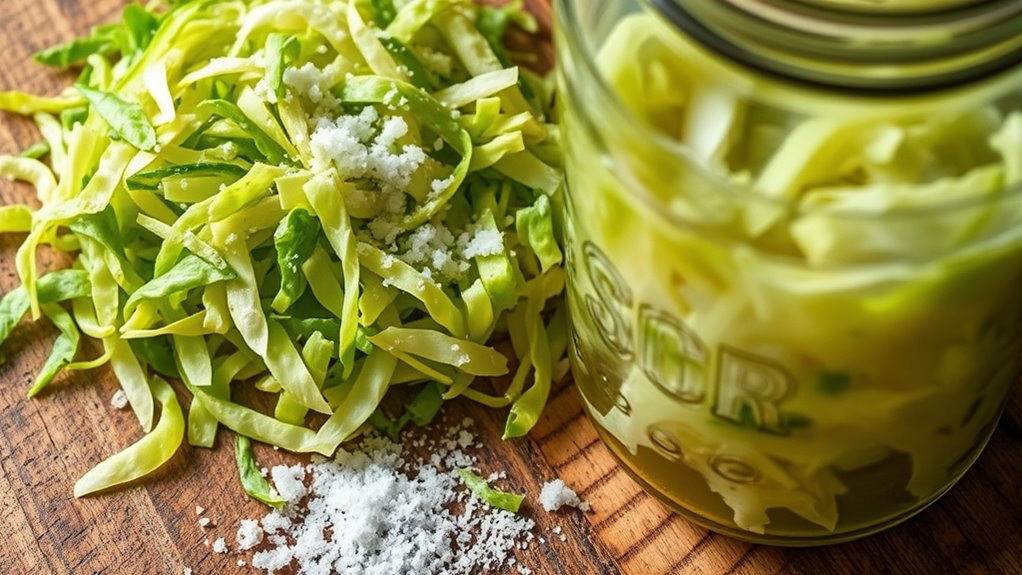

To make sauerkraut, start by choosing a fresh, firm cabbage and removing the outer leaves. Shred the cabbage finely, then sprinkle it generously with salt (about 1-3 tablespoons per head). Massage the salt into the cabbage until liquid begins to form. Pack the mixture tightly into a clean jar, pressing down to eliminate air pockets and keep it submerged under its brine. Cover loosely, store in a cool, dark place, and check daily for bubbles and proper fermentation. If you want to master the process, keep going for more tips.

Prime made for students and young adults
- Fast, free delivery for dorm and study essentials
- Prime Video and Amazon Music included
- Member-only deals
Key Takeaways
- Shred fresh cabbage finely and sprinkle with 1-3 tbsp salt per medium head to draw out moisture.
- Massage salt into cabbage until it releases enough liquid to form a natural brine.
- Pack the salted cabbage tightly into a jar or crock, pressing down to eliminate air pockets and keep submerged.
- Cover the surface with reserved outer leaves and use a weight to maintain pressure during fermentation.
- Store in a cool, dark place and check daily to ensure cabbage remains submerged and gases are released until flavor develops.

Making sauerkraut at home is simple and rewarding. When you start fermenting cabbage, you’re tapping into a process that offers numerous fermentation benefits. Not only does fermentation enhance the nutritional profile of the cabbage by increasing beneficial probiotics, but it also improves digestibility and preserves the vegetable naturally. These probiotics support your gut health, boost your immune system, and can even elevate your mood. Plus, fermenting your own sauerkraut allows you to control the ingredients, avoiding preservatives or additives commonly found in store-bought versions. It’s a straightforward process that anyone can master with a little guidance.
Making homemade sauerkraut boosts gut health, enhances nutrition, and allows ingredient control.
To begin, you’ll want to select fresh, firm cabbage. Remove the outermost leaves and set them aside; you’ll use these later for covering your ferment. Cut the cabbage into quarters and then shred it finely using a sharp knife or a food processor. As you shred, sprinkle salt generously over the cabbage—about 1 to 3 tablespoons per medium head. The salt draws out moisture through osmosis, creating a brine that’s essential for fermentation. As you massage the salt into the cabbage, you’ll notice it begins to release liquid, which forms the brine that will keep the cabbage submerged and create an anaerobic environment for fermentation benefits to flourish. Additionally, the value of fermented foods has been recognized for supporting overall health and well-being.
Next, pack the salted cabbage into a clean fermentation vessel such as a glass jar or crock. Press down firmly with your fist or a tamper to eliminate air pockets and ensure the cabbage stays submerged under the brine. Proper storage techniques are vital here: keep the cabbage below the liquid level at all times to prevent mold or spoilage. You might need to add a little extra salted water if the brine isn’t enough to cover the cabbage completely. Once packed, cover the surface with one of the reserved outer leaves, tucking it around the cabbage to act as a barrier against dust and debris. Place a weight on top—like a fermentation weight or a small jar filled with water—to maintain pressure and keep everything submerged.
Finally, cover your jar loosely with a cloth or a fermentation lid to allow gases to escape while keeping out contaminants. Store your jar in a cool, dark place, ideally between 65-75°F (18-24°C). During the fermentation process, you’ll see bubbles forming, which indicates active fermentation benefits. Check your sauerkraut daily to ensure it remains submerged and to release any built-up gases. With patience, your cabbage will transform into tangy, probiotic-rich sauerkraut within a few weeks. Following proper storage techniques during this process helps prevent spoilage and guarantees your homemade sauerkraut develops its full flavor and health benefits. Once it tastes just right, refrigerate it to slow fermentation, preserving its freshness and probiotic content for weeks to come.
fermentation crock for sauerkraut
As an affiliate, we earn on qualifying purchases.
As an affiliate, we earn on qualifying purchases.
Frequently Asked Questions
Can I Use Other Vegetables Instead of Cabbage?
Yes, you can use alternative vegetables instead of cabbage for sauerkraut. Carrots, kohlrabi, or radishes work well and add unique flavor variations. Just chop them finely and follow the same fermentation process. Keep in mind, these vegetables may ferment differently, so adjust the fermentation time if needed. Experimenting with alternative vegetables gives you a fun way to customize your sauerkraut and enjoy diverse tastes.
How Long Does Homemade Sauerkraut Last?
Think of your homemade sauerkraut as a treasured letter, aging gracefully over time. It typically lasts 4 to 6 months when stored properly. During the fermentation timeline, it develops flavor, but after that, it might lose its zest. Keep it submerged and stored in an airtight container in the fridge to prolong freshness. Proper storage methods guarantee your fermented treasure remains delicious and safe to enjoy for months.
Is It Safe to Taste During Fermentation?
Yes, you can taste your sauerkraut during fermentation to check its progress, but do so with fermentation safety in mind. Use clean utensils to prevent contamination, and only take small tastes. Tasting tips include smelling it for off odors or unusual bubbles, which might indicate spoilage. If it tastes sour and smells fresh, it’s safe to enjoy. Trust your senses, and avoid tasting if anything seems off.
What Signs Indicate My Sauerkraut Has Spoiled?
You’ll know your sauerkraut has spoiled if you notice a foul odor, slimy texture, or off-putting color. During the fermentation timeline, watch for mold, which appears as fuzzy spots in green, black, or white. If you spot mold or smell rotten or sour odors beyond the usual fermentation scent, it’s best to discard it. Trust your senses; when in doubt, throw it out to stay safe.
Do I Need Special Equipment for Fermentation?
Did you know that over 90% of home fermenters use just basic equipment? You don’t need special gear for fermentation—just a clean fermentation vessel, like a jar or crock, and a weight to keep the cabbage submerged. Maintaining the right salt concentration is key to successful fermentation. As long as your equipment is sanitized and you keep the cabbage under the brine, you’re all set for delicious, probiotic-rich sauerkraut.
Conclusion
Now that you’ve mastered the art of making sauerkraut, imagine your kitchen transformed into a bubbling cauldron of flavor, your hands gently coaxing life into simple cabbage. Each crunchy, tangy bite is a demonstration to your patience and skill—proof that even humble ingredients can become something extraordinary. So, embrace the process, savor the journey, and let your homemade sauerkraut tell its story, one delicious forkful at a time. Your culinary adventure has only just begun.
Halloween Picks
halloween
As an affiliate, we earn on qualifying purchases.