

TL;DR
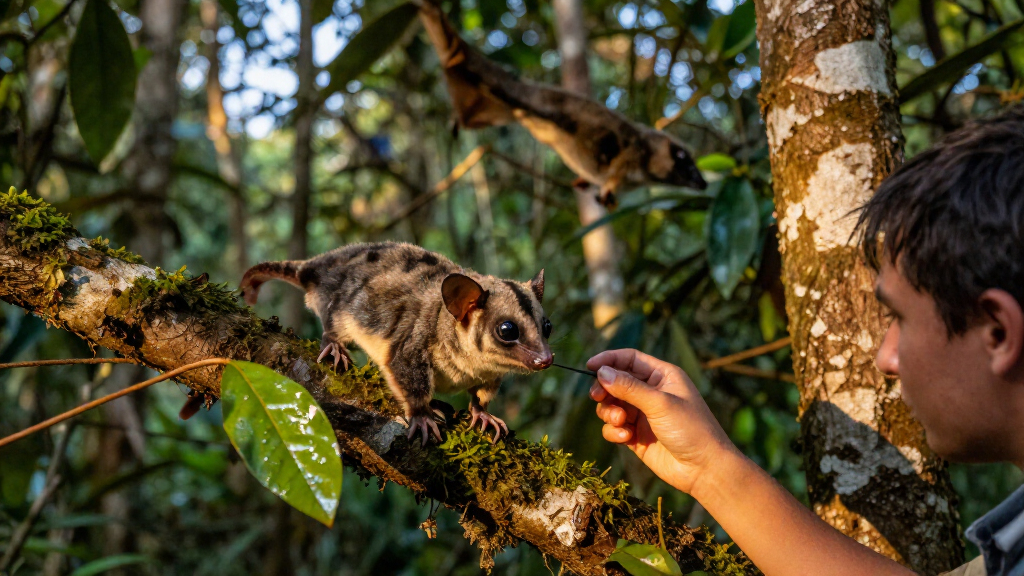
A scientific paper reports that two marsupial species previously thought to have disappeared thousands of years ago are living in remote West Papua: the pygmy long-fingered possum and the ring-tailed glider. Researchers identified them using fossils, photographs, specimens and knowledge shared by local communities; the glider’s forest habitat faces logging pressure.
Researchers have reported that the pygmy long-fingered possum and ring-tailed glider, two marsupials thought to have disappeared around 6,000 years ago, are living in remote rainforests of West Papua. The findings, published Friday in the journal Records of the Australian Museum, draw on fossils, historical photographs and specimens, field visits and information shared by Indigenous communities.

Prime made for students and young adults
- Fast, free delivery for dorm and study essentials
- Prime Video and Amazon Music included
- Member-only deals
The pygmy long-fingered possum is a striped marsupial weighing about 200 grams. Researchers describe its distinctive fourth finger on each hand as roughly twice the length of its other digits. The elongated fingers help it reach and extract wood-boring insect larvae, which are its main food, according to the report.
The second animal, the ring-tailed glider, has a tail capable of grasping branches and lives in hollows in tall trees. The researchers pieced together evidence over time, reviewing decades-old fossil records, rare photographs and museum specimens before travelling to remote locations in New Guinea to investigate.
The work involved scientists including professors Tim Flannery and Kris Helgen, as well as University of Papua researchers and local elders from the Tambrauw and Maybrat clans. Rika Korain, a Maybrat woman and co-author, said local knowledge was necessary to identify the animals. The source report does not specify population numbers or describe a full survey of their range.
Rediscovery Puts Forest Protection in Focus
Finding living populations of animals thought to have vanished for millennia changes what researchers know about their survival and distribution. The report says the possum was understood to have disappeared from Australia during the Ice Age; its presence in New Guinea adds evidence about the persistence of these species beyond the places where earlier records were known.
The discovery also highlights the importance of local expertise in wildlife research. The identification was not based on field observations alone: scientists combined historical material with knowledge from elders in communities familiar with the forests and animals. Korain said that identification would not have been possible without their help.
There is also a conservation concern. Flannery told the BBC that logging increasingly threatens the ring-tailed glider’s habitat. He said scientists and wildlife groups are working to secure native title for forest areas, which could make logging subject to local consent. The report does not establish that any particular protection has already been secured.
Popular right now

Bose QuietComfort Ultra Wireless Noise Cancelling Earbuds, 2nd Gen, with 20W 2-Port Wall Charger

Dyson Airwrap i.d. Multi-Styler with Bluetooth Connectivity

TCL 85-Inch QM6K QLED Mini LED 4K HDR Smart Google TV, 144Hz
As an affiliate, we earn on qualifying purchases.
How Researchers Reconstructed the Evidence
The term “Lazarus taxon” is used for a species that reappears in the record after being presumed extinct. The label describes the gap between earlier evidence and a rediscovery; it does not mean the animals were confirmed extinct through continuous monitoring. In this case, the researchers assembled clues from fossils, photographs and specimens before undertaking visits to remote parts of West Papua.
The fieldwork included conversations with elders from Tambrauw and Maybrat communities. Flannery told the BBC that some elders had only come into contact with the modern world since the 1960s. He also said the glider is regarded as sacred by some local people, who will neither hunt it nor speak its name. The published paper’s reported discovery thus rests on both scientific collections and community knowledge.
Flannery, a co-author known for his work on climate change, described the finding of two presumed-lost species as remarkable. The report says the paper appeared in the Records of the Australian Museum on March 6, 2026. It does not provide a detailed timeline for when each animal was first encountered during the recent research.
“The discovery of one lazarus taxon… is an exceptional discovery. But the discovery of two species, thought to have been extinct for thousands of years, is remarkable.”
— Tim Flannery, professor and co-author, speaking to the BBC
Population Size and Range Still Unknown
The report does not give estimates for the number of possums or gliders found, the size of their populations, or how widely they are distributed. It also does not detail the survey methods or establish whether the animals occur beyond the remote locations researchers visited. Those questions matter for understanding how vulnerable the species may be.
The source describes the species as thought to have disappeared about 6,000 years ago, but does not provide additional detail on the evidence used to set that timescale or on the degree of certainty around it. Further research will be needed to document their ecology, population status and the pressures affecting their habitat.
The report identifies logging as a growing threat to the glider’s forest habitat, but gives no measure of the area affected or a timeline for proposed native-title efforts. It is not clear whether formal protections have been agreed, or what role local communities will have in any future decisions.
Mapping Habitat and Securing Local Consent
Researchers and wildlife groups are seeking to secure native title for forest areas, Flannery told the BBC, with the aim of requiring local consent before logging can take place. The report does not say when decisions are expected or identify a specific legal outcome. Any protection effort will depend on the relevant communities, authorities and land arrangements.
Further field research could clarify where the marsupials live, how many remain and what conditions they need to survive. The publication establishes a reported rediscovery, but the available account does not describe a continuing monitoring program or announce a conservation plan for either species. For now, the next steps are to establish the animals’ status more fully and address the reported logging pressure on their forest habitat.
Key Questions
Which two animals were found in West Papua?
The pygmy long-fingered possum and the ring-tailed glider were reported living in remote West Papuan rainforests.
Why were the animals thought to be extinct?
The researchers describe them as having disappeared from the known record around 6,000 years ago. The source report does not give further detail on how that estimate was established.
How did researchers identify the species?
They combined evidence from fossils, old photographs and specimens with field visits and information shared by local elders from Tambrauw and Maybrat communities.
Are the animals’ populations protected?
The report does not confirm formal protection or provide population estimates. Flannery said wildlife groups and scientists are working to secure native title for forests so logging cannot proceed without local consent.
Source: hn