
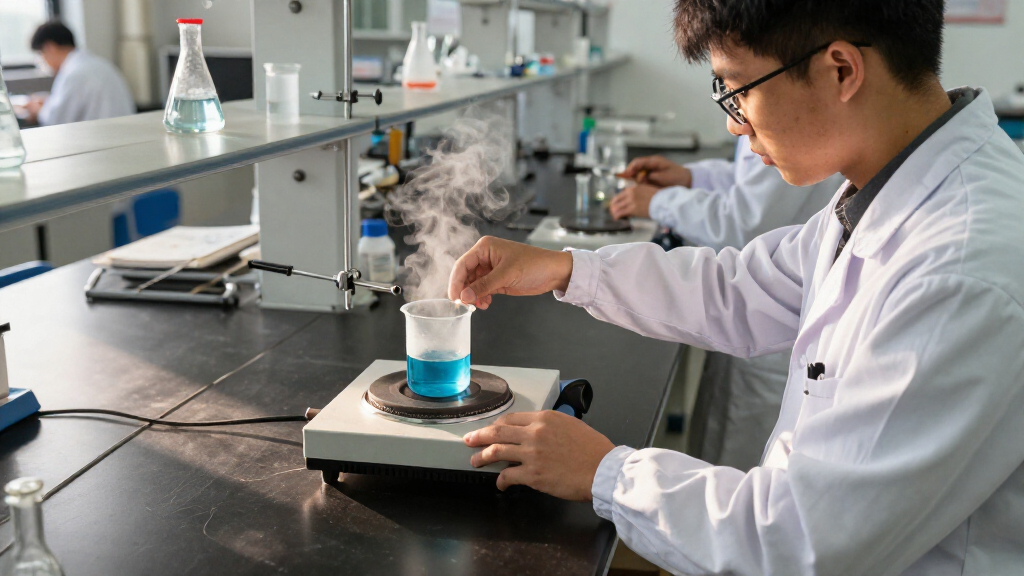
The best electric lab hot plate in this roundup is the Corning PC-600D, a strong fit for buyers who need a large 10 x 10-inch Pyroceram surface and digital control. For smaller setups, the LABHOUSE SHP-1 has a compact footprint, while the LACHOI LCD Magnetic Stirrer Hot Plate adds stirring and a stated 5 L capacity. The main tradeoffs are surface size, voltage compatibility, temperature control, and whether you need integrated magnetic stirring. Check these details against your vessel size and lab power supply before choosing. Read on for the full comparison and guidance on which type of hot plate fits your work.

Prime made for students and young adults
- Fast, free delivery for dorm and study essentials
- Prime Video and Amazon Music included
- Member-only deals
Key Takeaways
- The Corning PC-600D models lead for larger vessels and broader heating coverage: the lineup includes several 10 x 10-inch versions, but buyers must distinguish 120 V units from the listed 230 V model.
- Compact Corning and LABHOUSE options serve different needs: the 5 x 5-inch Corning Scholar PC-170 favors simple heating, while the 4.7 x 4.7-inch LABHOUSE SHP-1 offers digital control in a similarly small footprint.
- Magnetic stirring changes the use case, not just the feature list: NORJIN, ANPOOZ, LACHOI, and Slendor options suit solutions that need agitation; a conventional hot plate may be a better fit for heating alone.
- Published temperature and speed ranges are not enough to compare performance: vessel shape, fill volume, probe placement, and the product’s control method affect real-world results.
- Several listings are near-duplicates or variants: the PC-600D and SHP-1 each appear more than once, so checking voltage, surface details, and included accessories matters more than relying on the product name alone.
| Corning PC-600D Digital Hot Plate, 10 x 10-Inch Pyroceram Top, 230V |  | Best for 230V Labs | Model: 6798-600D | Top plate: 10 x 10 in. glass-ceramic (Pyroceram) | Temperature range: Ambient +5°C to 550°C | VIEW LATEST PRICE | See Our Full Breakdown |
| LABHOUSE SHP-1 Digital Laboratory Hot Plate, 4.7 x 4.7 in, 110 V |  | Best for Compact High-Temperature Work | Model: LHUS-SHP-1 | Heating surface: 4.7 x 4.7 in. (120 x 120 mm), cast iron | Maximum temperature: 500°C | VIEW LATEST PRICE | See Our Full Breakdown |
| NORJIN 85-2 Magnetic Stirrer Hot Plate, 110 V, 2600 RPM, 200 W |  | Best for Low-Temperature Mixing | Model: DG-0047 | Voltage: 110 V | Heating power: 200 W | VIEW LATEST PRICE | See Our Full Breakdown |
| Corning Scholar PC-170 Laboratory Hot Plate, 5 x 5-Inch Porcelain-Coated Stainless Steel Top |  | Best Compact Analog Pick | Model: Scholar PC-170 | Part number: 6795-170 | Top plate: 5 x 5 in. porcelain-coated stainless steel | VIEW LATEST PRICE | See Our Full Breakdown |
| Corning PC-600D Digital Hot Plate with 10 x 10 in. Pyroceram Top |  | Best Overall for 100V Labs | Model: 6797-600D | Top plate: 10 x 10 in. glass-ceramic (Pyroceram) | Temperature range: Ambient to 550°C | VIEW LATEST PRICE | See Our Full Breakdown |
| LABHOUSE SHP-1 Digital Laboratory Hot Plate, 4.7 × 4.7 in, 110 V |  | Best for Precise Single-Station Heating | Model: LH-US-SHP-N-1 | Heating surface: 120 × 120 mm (4.7 × 4.7 in) | Plate material: Cast iron | VIEW LATEST PRICE | See Our Full Breakdown |
| ANPOOZ Magnetic Stirrer Hot Plate with Ceramic-Coated Surface |  | Best Simple Stir-and-Heat Pick | Model: SH-2P | Stirring speed: 100–2000 RPM | Maximum temperature: 520°F (270°C) | VIEW LATEST PRICE | See Our Full Breakdown |
| Corning 6795-600D Top PC-600D Hot Plate with Digital Display, 120V/60Hz |  | Best for High-Temperature Heating | Part number: 6795-600D | Voltage and frequency: 120 V, 60 Hz | Temperature range: 25°C to 550°C (77°F to 1022°F) | VIEW LATEST PRICE | See Our Full Breakdown |
| LACHOI LCD Magnetic Stirrer Hot Plate, 300°C, 5 L Capacity |  | Best for Programmable, Sensor-Guided Mixing | Model: LCH-MSB-HD-WG | Maximum temperature: 300°C | Stirring speed: 100–1600 RPM | VIEW LATEST PRICE | See Our Full Breakdown |
| Slendor Magnetic Stirrer Hot Plate, 1000 mL Capacity, 520°F, 100–2000 RPM |  | Best Starter Stirrer Package | Model: SH-2 | Stirring capacity: 1000 mL | Hotplate dimensions: 5 × 5 inches | VIEW LATEST PRICE | See Our Full Breakdown |
| Magnetic Stirrer Hot Plate with Stir Bar, 100–2000 RPM |  | Best Value Stirring Pick | Brand: ANZESER | Model: SH-2 | Stirring speed: 100–2000 RPM | VIEW LATEST PRICE | See Our Full Breakdown |
| Corning PC-400D Digital Hot Plate, 230V, 5 x 7-Inch Pyroceram Top, Ambient to 550°C |  | Best for 230V Digital Control | Model: 6796-400D | Voltage and frequency: 230V, 50Hz | Temperature range: Ambient +5°C to 550°C | VIEW LATEST PRICE | See Our Full Breakdown |
| Corning Digital Hot Plate, 10 x 10 in, 120 VAC |  | Best for Larger, Steady Heating | Top plate dimensions: 10 x 10 inches | Top plate material: Pyroceram glass ceramic | Voltage: 120 VAC | VIEW LATEST PRICE | See Our Full Breakdown |
| Slendor SH-2 Magnetic Stirrer Hot Plate, 2000 RPM, 520°F, with Thermometer, Stir Bar, and Support Stand |  | Best Stirrer Kit for Temperature Checks | Model: SH-2 | Maximum stirring speed: 2000 RPM | Maximum temperature: 520°F | VIEW LATEST PRICE | See Our Full Breakdown |
| electric lab hot plate | Model | Temperature range | Maximum temperature |
|---|---|---|---|
| Corning PC-600D Digital Hot Pl | 6798-600D | Ambient +5°C to 550°C | — |
| LABHOUSE SHP-1 Digital Laborat | LHUS-SHP-1 | — | 500°C |
| NORJIN 85-2 Magnetic Stirrer H | DG-0047 | — | 100°C (212°F) |
| Corning Scholar PC-170 Laborat | Scholar PC-170 | 25–360°C | — |
| Corning PC-600D Digital Hot Pl | 6797-600D | Ambient to 550°C | — |
| LABHOUSE SHP-1 Digital Laborat | LH-US-SHP-N-1 | Room temperature to 500°C | — |
| ANPOOZ Magnetic Stirrer Hot Pl | SH-2P | — | 520°F (270°C) |
| Corning 6795-600D Top PC-600D | — | 25°C to 550°C (77°F to 1022°F) | — |
| LACHOI LCD Magnetic Stirrer Ho | LCH-MSB-HD-WG | — | 300°C |
| Slendor Magnetic Stirrer Hot P | SH-2 | — | 520°F |
| Magnetic Stirrer Hot Plate wit | SH-2 | — | 520°F |
| Corning PC-400D Digital Hot Pl | 6796-400D | Ambient +5°C to 550°C | — |
| Corning Digital Hot Plate | — | 41–1022°F (5–550°C) | — |
| Slendor SH-2 Magnetic Stirrer | SH-2 | — | 520°F |
More Details on Our Top Picks
Corning PC-600D Digital Hot Plate, 10 x 10-Inch Pyroceram Top, 230V
For a lab that needs a large heating area and uses compatible 230V power, this Corning PC-600D is the strongest fit in this group. Its 10 x 10-inch Pyroceram surface gives larger vessels more room than the compact Corning Scholar PC-170, while the 550°C upper limit covers work beyond the NORJIN 85-2’s 100°C ceiling. The LED readout and 5°C adjustment steps make settings easier to repeat than the Scholar’s 10-position analog knob. A hot-top light that remains active above 60°C after shutdown is a useful surface-temperature warning. The main tradeoff is electrical compatibility: this version uses a 230V supply and CEE7-7 plug, so it is not a plug-and-play choice for many 120V labs. A support rod and external temperature controller are separate purchases.
Pros:- Large 10 x 10-inch Pyroceram surface accommodates larger vessels than the Scholar PC-170.
- Temperature range reaches 550°C, well above the NORJIN 85-2’s 100°C maximum.
- LED readout and 5°C adjustments support more repeatable settings than analog controls.
- Hot-top indicator remains lit above 60°C even when the unit is off.
Cons:- 230V/50Hz power and the CEE7-7 plug limit compatibility with common 120V lab outlets.
- Support rod and external temperature controller are sold separately.
Best for: Laboratories with compatible 230V power that need a broad, high-temperature surface for routine heating.
Not ideal for: Labs with standard 120V outlets or buyers who need an included support rod or external temperature controller.
- Model:6798-600D
- Top plate:10 x 10 in. glass-ceramic (Pyroceram)
- Temperature range:Ambient +5°C to 550°C
- Adjustment steps:5°C
- Display:LED temperature readout
- Power:230V/50Hz
- Plug:CEE7-7
- Hot-top indicator:Activates above 60°C, including when power is off
Our verdict“Choose this PC-600D if your lab has compatible 230V power and needs a large digital hot plate capable of reaching 550°C.”
LABHOUSE SHP-1 Digital Laboratory Hot Plate, 4.7 x 4.7 in, 110 V
The LABHOUSE SHP-1 pairs a small footprint with a 500°C ceiling, making it a practical choice when bench space is scarce but the work still calls for high heat. Its 4.7 x 4.7-inch cast-iron plate is far smaller than the Corning PC-600D surface, so it suits single, modest-sized samples rather than several large vessels. Digital microcomputer control and stated ±1°C stability offer more precise feedback than the Scholar PC-170’s 10-position analog thermostat. The fanless design keeps operation quiet, while three-sided ventilation and heat-resistant borders address heat management around the unit. This is a focused heating tool, not a stirring system like the NORJIN 85-2, and the manufacturer specifically says it is not suitable for PCB reflow soldering.
Pros:- Compact 4.7 x 4.7-inch footprint fits work areas where the 10 x 10-inch PC-600D would take too much room.
- Reaches 500°C for high-temperature tasks in a small format.
- Digital control with stated ±1°C stability gives finer temperature feedback than the Scholar PC-170’s analog settings.
- Fanless operation is quiet, with three-sided ventilation and heat-resistant insulation borders.
Cons:- Small heating area restricts vessel size and batch capacity.
- Single-channel design provides no simultaneous second heating station.
- Not suitable for PCB reflow soldering.
Best for: Lab technicians and materials-testing users who need a compact 110V plate for small samples, glue curing, or mold preheating.
Not ideal for: Users heating large vessels, needing magnetic stirring, or seeking a hot plate for PCB reflow soldering.
- Model:LHUS-SHP-1
- Heating surface:4.7 x 4.7 in. (120 x 120 mm), cast iron
- Maximum temperature:500°C
- Temperature stability:±1°C (stated)
- Power:1000 W
- Voltage:110 V
- Control and display:Digital microcomputer control; digital display
- Cooling:Fanless, three-sided ventilation
- Intended uses:Laboratory heating, glue curing, mold preheating, and material testing; not PCB reflow soldering
Our verdict“Pick the SHP-1 for compact, high-temperature single-sample work, but skip it if you need a larger surface or stirring.”
NORJIN 85-2 Magnetic Stirrer Hot Plate, 110 V, 2600 RPM, 200 W
Unlike the standalone Corning plates, the NORJIN 85-2 combines heating with magnetic stirring, so it makes more sense for mixing liquids than for high-temperature sample preparation. Stepless speed adjustment reaches 2600 rpm, and the included stirring bar, probe, and support stand provide a ready-to-assemble setup. Its 100°C maximum is far below the 360°C ceiling of the Corning Scholar PC-170 and the 550°C PC-600D models, which sharply limits its role to lower-temperature work. An LED temperature display and stated ±0.1°C accuracy add useful monitoring, but the capacity information conflicts: the title says 3000 mL while the description says up to 1000 mL. I would not choose it for a process where that volume limit must be known in advance.
Pros:- Combines magnetic stirring and heating, unlike the standalone Corning PC-170 and PC-600D plates.
- Stepless speed control reaches 2600 rpm for adjustable mixing.
- Includes a stainless steel probe, support stand, and stirring bar.
- LED temperature display, non-slip feet, and overload protection support monitoring and stable placement.
Cons:- 100°C maximum is substantially lower than the 360°C Scholar PC-170 and 550°C PC-600D models.
- Capacity is inconsistent in the product information: 3000 mL in the title versus up to 1000 mL in the description.
- Its 200 W heating power is aimed at modest heating needs rather than high-temperature lab work.
Best for: Researchers who need simultaneous magnetic stirring and gentle heating of small liquid samples, with a supplied probe and support stand.
Not ideal for: Users needing temperatures above 100°C, verified larger-volume capacity, or a standalone high-temperature surface for solid samples.
- Model:DG-0047
- Voltage:110 V
- Heating power:200 W
- Maximum temperature:100°C (212°F)
- Stirring speed:Stepless control up to 2600 rpm
- Temperature display and accuracy:LED; ±0.1°C stated
- Capacity:Conflicting listing: 3000 mL in title; up to 1000 mL in description
- Included components:Support stand, stainless steel probe, and stirring bar
- Safety features:Built-in fuse, non-slip rubber feet, and overload protection
Our verdict“Choose the NORJIN 85-2 for low-temperature liquid mixing, not for high-heat work or a clearly specified large capacity.”
Corning Scholar PC-170 Laboratory Hot Plate, 5 x 5-Inch Porcelain-Coated Stainless Steel Top
The Corning Scholar PC-170 is the straightforward choice for labs that value a compact, simple hot plate over a digital readout or a very high temperature ceiling. Its 5 x 5-inch porcelain-coated stainless steel top takes far less bench space than the Corning PC-600D, but its 360°C maximum also falls short of that model’s 550°C range. The 10-position analog knob is easy to operate, though it does not give the fine, displayed 5°C adjustments found on the PC-600D or the LABHOUSE SHP-1’s digital control. A sealed heating element and dual heat shields help make it a practical everyday option, and the surface is designed for fast cooldown. Its single element and analog control are the tradeoffs for this smaller, simpler format.
Pros:- Compact 5 x 5-inch format takes less bench space than the PC-600D’s 10 x 10-inch top.
- Porcelain-coated stainless steel surface offers corrosion resistance.
- Ten analog heat settings provide simple, direct operation.
- Dual heat shields help keep the outer case cool, and the top is designed for fast cooldown.
Cons:- 360°C maximum is lower than the 550°C range of the PC-600D models and the 500°C LABHOUSE SHP-1.
- Analog knob lacks a digital temperature readout and fine 5°C adjustments.
- Single sealed heating element limits the heating setup to one station.
Best for: Teaching labs and small work areas that need a compact 120V plate for routine heating below 360°C.
Not ideal for: Users who need precise digital settings, temperatures above 360°C, or room for larger vessels.
- Model:Scholar PC-170
- Part number:6795-170
- Top plate:5 x 5 in. porcelain-coated stainless steel
- Temperature range:25–360°C
- Temperature control:Analog knob with 10 settings
- Heating element:One sealed element
- Voltage and frequency:120 V / 60 Hz
- Dimensions:5 x 5 x 4 in.
- Weight:1.3 kg
Our verdict“Choose the Scholar PC-170 for compact, routine heating with simple analog controls, but select a digital model for finer settings or higher temperatures.”
Corning PC-600D Digital Hot Plate with 10 x 10 in. Pyroceram Top
For a lab on compatible 100V/60Hz power that needs a large, high-temperature surface, this Corning PC-600D is the most capable standalone plate in this selection. The 10 x 10-inch Pyroceram top and 550°C maximum match the 230V PC-600D, but this version has a standard US three-prong plug, making it the more convenient of the two for compatible US outlets. Its LED readout and 5°C adjustment steps offer more control than the analog Scholar PC-170, while the hot-top indicator warns when the surface remains above 60°C after shutdown. That larger, more powerful format takes more bench space than the Scholar, and the support rod and external temperature controller are not included. Buyers should also verify their supply: this listing specifies 100V, not the 120V used by many lab outlets.
Pros:- 10 x 10-inch Pyroceram top offers substantially more working area than the Scholar PC-170.
- 550°C maximum supports higher-temperature work than the LABHOUSE SHP-1 and Scholar PC-170.
- LED readout and 5°C adjustments provide more precise setting control than the Scholar’s analog knob.
- Hot-top indicator activates above 60°C even when the unit is off.
Cons:- 100V/60Hz electrical specification may not match a lab’s available supply, despite the US-style plug.
- Large 10 x 10-inch top needs more bench space than compact models.
- Support rod and external temperature controller are sold separately.
Best for: Labs with compatible 100V/60Hz power that need a large Pyroceram surface, digital temperature settings, and heating up to 550°C.
Not ideal for: Labs requiring a 230V or 120V-rated unit, buyers with limited bench space, or users who need an included support rod or external temperature controller.
- Model:6797-600D
- Top plate:10 x 10 in. glass-ceramic (Pyroceram)
- Temperature range:Ambient to 550°C
- Adjustment steps:5°C
- Display:LED temperature readout
- Voltage and frequency:100V/60Hz
- Plug:Standard US three-prong
- Hot-top indicator:Activates above 60°C, including when the unit is off
- Weight:9.9 lb
Our verdict“Choose this PC-600D if your lab’s supply matches its 100V rating and you want a large digital plate that reaches 550°C.”
LABHOUSE SHP-1 Digital Laboratory Hot Plate, 4.7 × 4.7 in, 110 V
The LABHOUSE SHP-1 is the strongest fit here for buyers who need a compact plate and tightly controlled heat rather than integrated mixing. Its room-temperature-to-500°C range and stated ±1°C stability suit repeatable heating tasks, while the cast iron surface provides a sturdy 4.7-inch work area. Compared with the Corning PC-600D, it takes up less bench space but gives up the Corning’s higher 550°C ceiling and hot-surface indicator. It also lacks the stirring function found on the LACHOI and ANPOOZ models, so it is for heating one vessel, not keeping a mixture moving. The fanless, three-sided ventilation design is a practical fit for quieter work, but its single channel and stated unsuitability for PCB reflow limit its reach.
Pros:- Digital control with stated ±1°C temperature stability.
- Reaches 500°C for a broad range of laboratory heating tasks.
- Compact 4.7 × 4.7-inch cast iron plate.
- Fanless design with three-sided ventilation and heat-resistant insulation borders.
Cons:- Single-channel design limits work to one station.
- No built-in magnetic stirring function.
- Not suitable for PCB reflow soldering.
Best for: Lab users who need stable, high-temperature heating on a compact bench and do not need stirring or multiple stations.
Not ideal for: Users preparing mixtures that need continuous stirring, running more than one heating task at a time, or seeking a plate for PCB reflow soldering.
- Model:LH-US-SHP-N-1
- Heating surface:120 × 120 mm (4.7 × 4.7 in)
- Plate material:Cast iron
- Power:1000 W
- Voltage:110 V
- Temperature range:Room temperature to 500°C
- Temperature stability:±1°C
- Display and channels:Digital; 1 channel
- Cooling:Three-sided ventilation; fanless design
Our verdict“Choose the LABHOUSE SHP-1 for compact, stable heating up to 500°C when stirring and multi-station work are not required.”
ANPOOZ Magnetic Stirrer Hot Plate with Ceramic-Coated Surface
The ANPOOZ SH-2P pairs straightforward heating with stirring for small, low-viscosity batches. Separate controls let a user adjust heat and stirring speed independently, which is more flexible than a heating-only unit such as the LABHOUSE SHP-1. Its 100–2000 RPM range and 12 × 12 cm ceramic-coated plate cover routine mixing in vessels up to 1000 mL. The main compromise is temperature feedback: there is no included sensor for closed-loop control, so the selected heat setting does not provide the measured sample temperature that the LACHOI’s external PT1000 sensor can. The stated 270°C maximum is also well below the Corning PC-600D’s 550°C ceiling. I’d pick this for basic mixing and heating, not sensor-led temperature work or thicker mixtures.
Pros:- Independent controls for heating power and stirring speed.
- Adjustable stirring from 100 to 2000 RPM.
- Ceramic-coated surface designed to resist chemical corrosion.
- Includes a stir bar and thermometer stand.
Cons:- No temperature sensor for feedback or closed-loop control.
- Maximum temperature of 270°C is lower than the LABHOUSE and Corning heating-only models.
- Intended for low-viscosity liquids rather than thicker mixtures.
Best for: Students and lab users mixing low-viscosity liquids in batches up to 1000 mL who want independent heat and speed controls.
Not ideal for: Users who need measured, closed-loop sample temperature, higher temperatures, or reliable mixing of viscous liquids.
- Model:SH-2P
- Stirring speed:100–2000 RPM
- Maximum temperature:520°F (270°C)
- Heating plate size:12 × 12 cm
- Maximum capacity:1000 mL
- Plate surface:Chemically resistant ceramic spray coating
- Temperature sensor:Not included
- Item weight:3.36 pounds
- Included components:Main unit, thermometer stand, magnetic stir bar, power cord, fuse, and manual
Our verdict“Choose the ANPOOZ for basic heating and stirring of small, low-viscosity batches when direct temperature feedback is not needed.”
Corning 6795-600D Top PC-600D Hot Plate with Digital Display, 120V/60Hz
For buyers prioritizing heat range and safety cues, the Corning PC-600D leads this group with a stated maximum of 550°C and microprocessor-controlled heating. Its digital display supports temperature setting, while the indicator flashes when the surface exceeds 140°F—even after the unit is switched off—giving users a visible reminder of residual heat. That makes it a more capable heating-only choice than the LABHOUSE SHP-1 at the upper end of its range, though the LABHOUSE is smaller and specifies ±1°C stability. Unlike the LACHOI, this Corning has no stirrer, so it cannot keep a solution mixed during heating. Its heavy, bulky construction also suits a fixed bench better than frequent relocation, and the display may be difficult to read under bright laboratory lighting.
Pros:- 550°C maximum temperature is the highest listed in this batch.
- Microprocessor-controlled heating with a digital display.
- Safety indicator warns when the surface is above 140°F, including when the unit is off.
- Low-profile two-piece cast design deflects spills away from electronics.
Cons:- Heavy and bulky compared with the compact LABHOUSE and magnetic stirrer models.
- No built-in stirrer for mixing during heating.
- Digital display may be difficult to read in bright laboratory lighting.
Best for: Lab teams that need a dedicated 120 V heating plate reaching 550°C, plus a visible warning for residual surface heat.
Not ideal for: Users who need integrated stirring, a compact portable unit, or a specified temperature stability figure such as the LABHOUSE’s ±1°C.
- Part number:6795-600D
- Voltage and frequency:120 V, 60 Hz
- Temperature range:25°C to 550°C (77°F to 1022°F)
- Safety indicator:Blinks when surface temperature exceeds 140°F
- Item weight:9.92 pounds
- Product dimensions:19 × 18 × 8 inches
- Support feature:Built-in support rod mount
- Approvals:UL/CE approved
- Warranty:2 years
Our verdict“Choose the Corning PC-600D for high-temperature, heating-only bench work where its size and lack of stirring are acceptable.”
LACHOI LCD Magnetic Stirrer Hot Plate, 300°C, 5 L Capacity
The LACHOI LCD is the most control-oriented stirrer in this set: its external PT1000 sensor measures temperature beyond the plate, and it can store six programs for repeatable speed, time, and temperature settings. That separates it from the ANPOOZ and Slendor, which provide stirring and heating but do not list this kind of external sensor or program storage. It also supports up to 5 L, substantially more than those 1000 mL models, while staying compact at 10.6 × 7.1 × 3.3 inches. The tradeoff is a lower 300°C maximum than the heating-only Corning PC-600D, and it is intended for low-viscosity liquids and solid-liquid mixtures. Settings cannot be changed while it runs, so it is less suited to experiments that need frequent mid-process adjustments.
Pros:- External PT1000 sensor supports temperature measurement beyond the plate.
- Stores up to six programs for repeatable procedures.
- 5 L maximum mixing capacity exceeds the 1000 mL ANPOOZ and Slendor models.
- Forward and reverse rotation can support more balanced mixing.
Cons:- Maximum temperature of 300°C is below the Corning PC-600D and LABHOUSE SHP-1.
- Designed for low-viscosity liquids and solid-liquid mixtures.
- Speed and timing settings cannot be changed while the unit is running.
Best for: Researchers who routinely repeat mixing protocols, need external sample-temperature sensing, and work with low-viscosity batches up to 5 L.
Not ideal for: Users heating above 300°C, mixing viscous materials, or needing to alter speed and timing while a run is underway.
- Model:LCH-MSB-HD-WG
- Maximum temperature:300°C
- Stirring speed:100–1600 RPM
- Maximum mixing capacity:5 L
- Hot plate size:5.9 × 5.9 inches
- Timer range:1 minute to 99 hours 59 minutes
- Program storage:6 programs
- Temperature sensor:External PT1000
- Motor and rotation:Brushless motor; forward and reverse rotation
Our verdict“Choose the LACHOI for repeatable, sensor-guided mixing of larger low-viscosity batches, not for high-temperature heating or on-the-fly adjustments.”
Slendor Magnetic Stirrer Hot Plate, 1000 mL Capacity, 520°F, 100–2000 RPM
The Slendor SH-2 is a practical entry point for small-scale heating and mixing, with a stir bar and an adjustable thermometer support stand included. Its 100–2000 RPM range matches the ANPOOZ, and both are limited to 1000 mL; the Slendor’s main distinction is its bundled stand and simple setup rather than sensor-led temperature control. Like the ANPOOZ, it reaches 520°F (about 271°C), well below the Corning PC-600D and LABHOUSE SHP-1. The stated capacity and compact 5 × 5-inch plate make it a better fit for small vessels than the 5 L LACHOI. The tradeoffs are a modest maximum batch size, no listed external temperature sensor, and a speed knob that should be turned slowly, which may frustrate users seeking fast adjustments.
Pros:- Heats and stirs at the same time.
- Stirring speed adjusts from 100 to 2000 RPM.
- Includes a Teflon-coated stirring bar.
- Adjustable support stand holds a thermometer.
Cons:- Maximum stated stirring capacity is 1000 mL.
- Speed knob should be turned slowly.
- No external temperature sensor is listed for sample-temperature feedback.
Best for: Students or small labs starting with simultaneous heating and stirring of batches up to 1000 mL who want a thermometer support stand included.
Not ideal for: Users handling larger batches, requiring external temperature feedback, or needing a high-temperature plate for work above 520°F.
- Model:SH-2
- Stirring capacity:1000 mL
- Hotplate dimensions:5 × 5 inches
- Maximum temperature:520°F
- Stirring speed:100–2000 RPM
- Included stirring bar:Teflon-coated
- Included support:Stand with adjustable thermometer holder
- Product dimensions:10 × 6.6 × 7 inches
- Item weight:4.51 pounds
Our verdict“Choose the Slendor SH-2 for small-batch stirring and heating with a useful included thermometer stand, but skip it for larger or sensor-controlled work.”
Magnetic Stirrer Hot Plate with Stir Bar, 100–2000 RPM
The ANZESER SH-2 combines stirring and heating in a compact unit, making it a practical pick for small-volume mixing tasks. Its 100–2000 RPM range lets users adjust agitation for different liquids, while the aluminum surface and 180 W heating output support routine warming up to 520°F. Compared with the Corning Digital Hot Plate, 10 x 10 in, this model adds integrated stirring and takes up less bench space, but it lacks that Corning’s microprocessor temperature feedback. The control adjusts heating power rather than measuring the liquid, so the displayed or selected setting should not be treated as a sample temperature. Its 1000 mL capacity also makes it a small-batch tool, not a choice for larger preparations.
Pros:- Adjustable stirring from 100 to 2000 RPM
- Heats up to 520°F with adjustable power up to 180 W
- Aluminum surface is described as conducting heat quickly and evenly
- Includes a stir bar, power cord, fuse, and support stand
Cons:- Heating control does not measure or maintain the liquid’s temperature
- Maximum stated capacity is 1000 mL
Best for: Researchers and teaching-lab users who need basic heating and magnetic stirring for samples up to 1000 mL.
Not ideal for: Users who need verified liquid-temperature control or routine batches larger than 1000 mL.
- Brand:ANZESER
- Model:SH-2
- Stirring speed:100–2000 RPM
- Maximum temperature:520°F
- Maximum heating power:180 W
- Maximum capacity:1000 mL
- Heating surface:Aluminum
- Weight:3.23 pounds
Our verdict“Choose the ANZESER SH-2 for compact, small-batch heating and stirring when precise liquid-temperature feedback is not required.”
Corning PC-400D Digital Hot Plate, 230V, 5 x 7-Inch Pyroceram Top, Ambient to 550°C
The Corning PC-400D suits labs that need a compact, digitally set heating surface on a compatible 230V supply. Its LED readout and 5°C adjustment steps make temperature settings easier to repeat than the power-only control on the ANZESER SH-2, though the PC-400D does not add magnetic stirring. The Pyroceram top measures 5 x 7 inches and is described as resistant to chemicals and scratches, while a hot-top indicator remains lit when the surface is above 60°C—even after power is off. That warning is a useful safety cue during bench turnover. The main limitation is electrical compatibility: it is not a direct substitute for the 120 VAC Corning Digital Hot Plate, 10 x 10 in. A support rod and external temperature controller must also be sourced separately.
Pros:- LED temperature readout with adjustment in 5°C increments
- Pyroceram glass-ceramic top is described as chemical- and scratch-resistant
- Hot-top indicator warns when the surface exceeds 60°C, including while the unit is off
- Includes BS 1363A and CEE7-7 plugs
Cons:- Requires a compatible 230V electrical system
- Support rod and external temperature controller are sold separately
Best for: Labs with 230V power that want a compact digital hot plate, clear temperature settings, and a persistent hot-surface warning.
Not ideal for: Users on 120V-only circuits or buyers who need built-in stirring or an included external temperature controller.
- Model:6796-400D
- Voltage and frequency:230V, 50Hz
- Temperature range:Ambient +5°C to 550°C
- Temperature adjustment:5°C increments
- Top plate material:Glass-ceramic (Pyroceram)
- Top plate dimensions:7 x 5 inches (17.8 x 12.7 cm)
- Safety indicator:Hot-top light indicates surface temperature above 60°C
- Included plugs:BS 1363A and CEE7-7
Our verdict“Pick this Corning when your lab has 230V power and values digital settings and surface warnings over stirring or a larger top.”
Corning Digital Hot Plate, 10 x 10 in, 120 VAC
For buyers who need a broad surface and more consistent heating, this 120 VAC Corning is the strongest dedicated hot-plate option in this group. Its 10 x 10-inch Pyroceram top gives larger vessels more room than the 5 x 7-inch PC-400D, and microprocessor-controlled feedback helps maintain the selected temperature. A spill trough and sealed electronics add protection around the controls, a practical distinction from simpler units such as the ANZESER SH-2, whose heat control does not measure or maintain liquid temperature. The tradeoff is that this model is a hot plate, not a stirrer; the Slendor SH-2 combines both functions but has a smaller stated capacity and no specified temperature-control accuracy. The LED warning activates above 140°F, so it does not indicate every warm surface.
Pros:- Large 10 x 10-inch Pyroceram surface provides room for larger vessels
- Microprocessor-controlled feedback helps maintain temperature
- Sealed electronics and a spill trough help protect the controls
- External support rod holder can accommodate a thermometer, electrode, or burette
Cons:- Requires a 120 VAC power supply
- No integrated magnetic stirring
- LED surface warning activates only above 140°F (60°C)
Best for: Researchers who use 120 VAC and need a larger heating area with feedback-based temperature maintenance and spill-conscious construction.
Not ideal for: Users who need integrated magnetic stirring, a compact footprint, or a warning light that signals at lower surface temperatures.
- Top plate dimensions:10 x 10 inches
- Top plate material:Pyroceram glass ceramic
- Voltage:120 VAC
- Power:1043 W
- Temperature range:41–1022°F (5–550°C)
- Temperature adjustment:5° increments
- Overall dimensions:15.375 x 11 x 4.833 inches
- Item weight:12.5 lb
Our verdict“Choose this Corning for larger 120V heating tasks where temperature feedback and spill protection matter more than built-in stirring.”
Slendor SH-2 Magnetic Stirrer Hot Plate, 2000 RPM, 520°F, with Thermometer, Stir Bar, and Support Stand
The Slendor SH-2 is the more accessory-ready stirring option here: it pairs heating up to 520°F with stirring up to 2000 RPM and includes a thermometer, PTFE-coated stir bar, and support stand. That bundle gives it an advantage over the ANZESER SH-2, which includes a stir bar and stand but does not list a thermometer. Still, an included thermometer is not the same as integrated temperature control; the product data does not state temperature-control accuracy, so users must monitor readings themselves. Its 180 W heating power and stated operating guidance—up to four hours at high speed or eight at medium speed—make it better suited to shorter or moderate-duration work than unattended, extended runs. This is a useful compact kit, but buyers needing repeatable feedback-based heating should look instead at the Corning Digital Hot Plate.
Pros:- Combines heating and stirring in one unit
- Adjustable stirring speed reaches 2000 RPM
- Includes a thermometer, 1-inch PTFE-coated stir bar, and support stand
- Compact listed dimensions of 8.5 × 4.7 × 3.4 inches
Cons:- Temperature-control accuracy is not specified
- Recommended continuous operation is limited to four hours at high speed
- Heating power is 180 W
Best for: Small-batch lab users who want a combined stirrer and hot plate with a thermometer and basic accessories included.
Not ideal for: Labs requiring specified temperature-control accuracy or continuous high-speed operation beyond the stated four-hour guidance.
- Model:SH-2
- Maximum stirring speed:2000 RPM
- Maximum temperature:520°F
- Heating power:180 W
- Included accessories:Thermometer, 1-inch PTFE-coated magnetic stir bar, support stand
- Dimensions:8.5 × 4.7 × 3.4 inches
- Recommended continuous operation:Up to 4 hours at high speed; up to 8 hours at medium speed
- Color and shape:White; square
Our verdict“Choose the Slendor SH-2 if you want a compact stirring-and-heating kit with a thermometer, but not if your work needs specified temperature accuracy or long high-speed runs.”
How We Picked
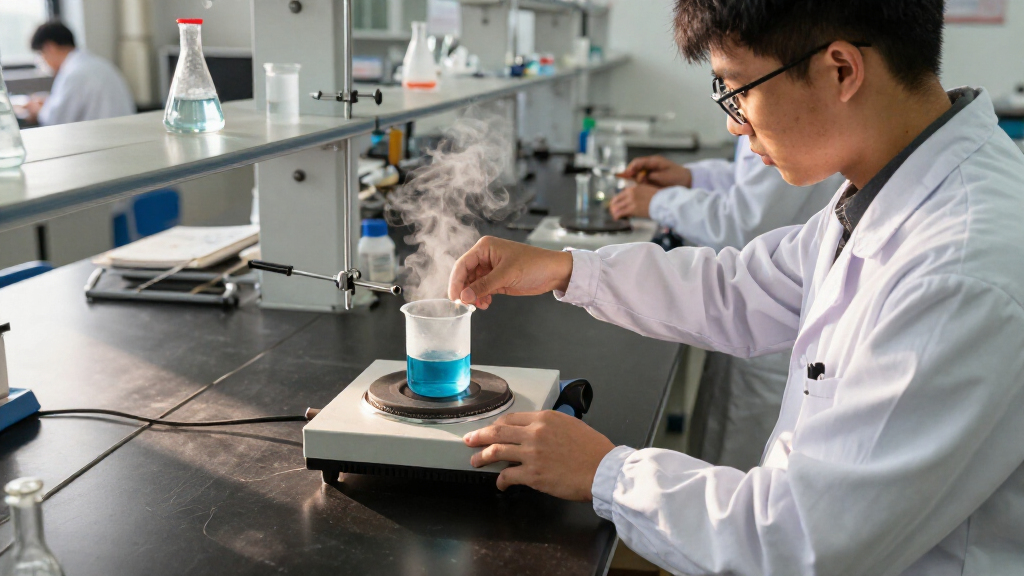
I compared the 14 listed products around the decisions that matter for an electric lab hot plate: heating surface size and material, voltage, control type, temperature range, and stirring capability. I also looked at practical fit, including the stated vessel capacity, included probe or accessories, and whether the listing gives enough information to match the unit to a lab’s power supply and work. Where the provided product details do not establish a specification, I avoid treating it as a proven advantage.
The ranking favors options with a clearer match between stated features and common lab tasks. The Corning PC-600D ranks first for its large Pyroceram surface and digital control, with voltage variants called out as a key purchase check. Compact units and stirring models follow according to their narrower strengths; they rank lower for buyers who need broad, straightforward heating or because the supplied details leave more unanswered questions. Duplicate listings are treated as variants rather than distinct performance wins.
Factors to Consider When Choosing Electric Lab Hot Plates
Before choosing an electric lab hot plate, match the tool to the vessel and procedure rather than comparing headline numbers alone. These broader checks can help avoid a unit that fits the bench but not the work.
Match the heating surface to the vessel footprint
A larger plate can accommodate broader vessels and gives you more flexibility when workflows change, but it also takes more bench space. Compare the vessel’s base—not just its stated volume—with the usable surface area. A vessel that overhangs the plate may heat unevenly, while a small vessel on a large plate may need careful placement and monitoring. Surface material also affects handling and cleanup, so check the manufacturer’s care instructions before using abrasives or exposing the top to sudden temperature changes. Avoid choosing by surface dimensions alone if your vessel has an unusual shape or a narrow base.
Verify voltage, outlet, and electrical setup
Voltage is a compatibility requirement, not a minor specification. This roundup includes Corning PC-600D listings at both 120 V and 230 V, so the shared model name does not mean the units can be swapped freely. Check the voltage and frequency against the power available at the intended bench, then confirm plug and circuit requirements with the product documentation or your facilities team. A voltage mismatch can prevent use or create an unsafe setup. Do not assume an adapter changes a unit’s operating voltage; use only a manufacturer-approved power arrangement.
Choose stirring only when the procedure benefits from it
Magnetic stirring is useful when a solution needs ongoing mixing during heating, but it adds another control and another fit question. The vessel must work with a stir bar, and the bar needs enough clearance to rotate without hitting the bottom or sides. A stated maximum speed does not tell you how well a specific liquid will mix; viscosity, vessel geometry, and fill level all matter. For heating without agitation, a standard hot plate can keep operation simpler. Buyers who need both functions should check how heating and stirring are controlled and whether the supplied accessories suit their vessels.
Treat temperature ranges as limits, not guarantees
A listed maximum temperature describes a stated capability, not necessarily the temperature your sample will reach or maintain. The plate surface, vessel, contents, room conditions, and sensor placement all influence the result. If a procedure depends on the sample temperature, determine whether the unit supports an external probe and whether that probe is included or sold separately. Avoid substituting a plate temperature reading for a liquid temperature reading. For sensitive work, confirm the manufacturer’s control and accuracy specifications rather than relying on a headline maximum alone.
Check capacity claims against your actual batch
Capacity figures, such as a stated 5 L limit, need context: they may describe a supported vessel size rather than a guaranteed mixing or heating result for every liquid. A deep, narrow vessel behaves differently from a shallow one with the same volume. Consider the batch size you run most often, the vessel material, and whether you need room to position a probe or stir bar. Buying far above your usual capacity may use bench space without improving the process. If the listing does not explain how capacity is defined, consult the manufacturer before relying on it for a specified workflow.
Plan for cleaning, wear, and daily handling
Lab benches are easier to maintain when the top can be cleaned using a routine compatible with its material. Ask what spills, solvents, and cleaning agents the manufacturer permits, and avoid assuming that a ceramic-coated or Pyroceram surface is immune to damage. Cooled equipment is generally easier to handle safely, but follow the unit’s instructions for shutdown and cleanup. For magnetic stirrer models, include the stir bar and any probe or support stand in your cleaning routine. A simpler hot plate may be the better long-term fit when extra accessories would add work without serving the protocol.
Frequently Asked Questions
How do I choose between a 120 V and a 230 V electric lab hot plate?
Choose the version that matches the power available at the intended workstation, including the required frequency and connection. This roundup has PC-600D listings in both 120 V and 230 V variants, so the model family alone is not enough to identify the correct unit. Check the product label and manufacturer documentation before ordering or connecting it. Do not rely on a plug adapter to resolve a voltage mismatch. If the bench supply is uncertain, ask your lab or facilities staff to verify it first.
Do I need a magnetic stirrer hot plate if I already have an overhead stirrer?
Not necessarily; the choice depends on the vessel, solution, and mixing task. A magnetic stirrer hot plate can be convenient for smaller vessels and procedures where a stir bar provides adequate mixing while the sample heats. An overhead stirrer may suit viscous samples or workflows that need stronger mechanical agitation, though its setup differs. Consider whether the vessel can accept a stir bar and whether it can sit securely on the plate. If mixing is not part of the protocol, a hot plate without a stirrer may be the simpler choice.
Is a 10 x 10-inch hot plate too large for routine bench work?
It depends on the vessels you use and the space available around the unit. A large surface can support wider vessel bases and more varied setups, but it occupies more bench area and may be excessive for one small flask. Measure the available space with room for controls, cords, and safe handling rather than measuring only the plate. Also compare the vessel base with the heated area, since a larger top does not automatically improve every small-vessel procedure. If your work stays compact, a 4.7 x 4.7-inch or 5 x 5-inch model may be a more practical fit.
Can I use the hot plate’s displayed temperature as my sample temperature?
Do not assume that the display reflects the liquid or material temperature. Depending on the model and setup, it may report a plate or sensor temperature, which can differ from the sample because of vessel material, volume, and heat transfer. For temperature-sensitive procedures, check whether the product supports an external probe and how its reading is used for control. Place and secure any probe according to the manufacturer’s instructions. Validate the setup with an appropriate method before relying on it for a controlled protocol.
What should I verify when two listings share the same hot plate model name?
Compare the full model number, voltage, frequency, heating-top dimensions and material, and included accessories. The roundup contains repeated PC-600D and LABHOUSE SHP-1 listings, as well as several Corning PC-600D variants with different voltage details. Similar names may point to distinct electrical configurations or listing variations. Check the manufacturer’s documentation rather than assuming that a shared name means identical specifications. Confirm the seller’s exact item details before purchase, especially when your lab requires a particular power supply or accessory.
Conclusion
For most buyers seeking broad heating coverage and digital control, I would start with the Corning PC-600D, after confirming the correct voltage variant. The LABHOUSE SHP-1 is my value-oriented pick for compact benches where a small digital unit is a better fit than a large top, while the Corning Scholar PC-170 suits beginners who want a straightforward, smaller hot plate without magnetic stirring. For a premium-style larger setup, choose a Corning 10 x 10-inch PC-600D variant that matches your power supply and workflow. If your procedure needs simultaneous agitation, compare the LACHOI for its stated 5 L capacity or the Slendor models for their listed stirring features, and verify the details that matter to your vessel. The right choice comes down to matching surface, voltage, control, and stirring needs—not choosing the longest feature list.
Evergreen bestsellers Picks

Bose QuietComfort Ultra Wireless Noise Cancelling Earbuds, 2nd Gen, with 20W 2-Port Wall Charger

Ninja Foodi Smart 6-in-1 Indoor Grill and Air Fryer, 4 Qt, FG551

Dyson Airwrap i.d. Multi-Styler with Bluetooth Connectivity
As an affiliate, we earn on qualifying purchases.