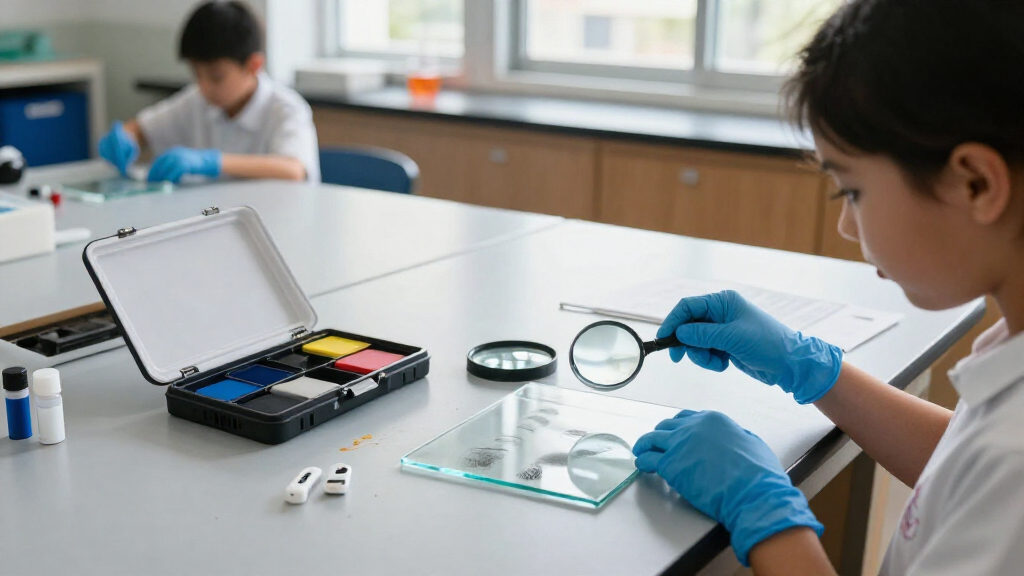
Forensic science kits for students range from hands-on fingerprint tools to structured chemistry labs and story-based investigations. My best overall pick is the Spy Labs Forensic Investigation Kit for students who want a varied introduction to evidence work, while the ALDON Innovating Science Forensic Chemistry Presumptive Blood Test Kit stands out for a focused lab activity and the Crime Scene Forensic Science Mega Kit suits larger groups. The main tradeoff is breadth versus depth: a general detective set offers variety, while a specialized kit can teach one method in more detail. Age, class size, chemical handling, and whether students need a guided case or open-ended experiments also affect the fit. Read on for a side-by-side breakdown of all 15 options and guidance on choosing one for a student, homeschool, or classroom.

Prime made for students and young adults
- Fast, free delivery for dorm and study essentials
- Prime Video and Amazon Music included
- Member-only deals
Key Takeaways
- Broad investigation kits and focused lab kits serve different goals: Spy Labs options cover a wider detective-style experience, while ALDON and Innovating Science chemistry kits focus on specific evidence methods.
- Class size changes the shortlist: The Mega Kit is explicitly packaged for 40 students, and the Eagle Nest Harbor kit is designed for 15 groups; individual kits are a less direct fit for whole-class activities.
- Fingerprint kits offer a narrow, practical activity: Leelosp and TillBio center on latent-print dusting rather than a full case investigation, so they suit students with a clear interest in prints.
- Story-led kits and workbooks trade lab variety for structure: The Missy Hammond cases and Mark Twain workbook can help organize an investigation, but they are not substitutes for a multi-topic laboratory set.
- Age and supervision matter as much as the activity list: The 4M kit is labeled for ages 8–12, while chemistry and presumptive-test activities call for closer attention to directions, materials, and adult or teacher oversight.
| Leelosp Basic Fingerprint Dusting Kit with Bichromatic Powder |  | Best for Repeated Fingerprint Practice | Brand: Leelosp | Number of runs: At least 25 | Powder: Silver and black bichromatic | VIEW LATEST PRICE | See Our Full Breakdown |
| Spy Labs Forensic Investigation Kit |  | Best for Younger Beginners | Brand: Thames & Kosmos | Recommended age: 8 years and up | Manual length: 20 pages | VIEW LATEST PRICE | See Our Full Breakdown |
| ALDON Innovating Science Forensic Chemistry Presumptive Blood Test Kit, 30 Tests |  | Best for Focused Blood-Test Lessons | Test capacity: 30 tests | Recommended age: 13 and older | Supervision: Adult supervision required | VIEW LATEST PRICE | See Our Full Breakdown |
| Crime Scene Forensic Science Kit: Solve the Missy Hammond Murder |  | Best for Case-Based Independent Investigation | Brand: Crime Scene | Recommended age: 16 years and up | Number of players: 1 | VIEW LATEST PRICE | See Our Full Breakdown |
| Crime Scene Forensic Supply Kit for Classrooms |  | Best for Classroom Scene-Collection Demonstrations | Brand: Crime Scene | Model: CSI-CLASSRM | Recommended uses: General forensic investigation and classroom demonstration | VIEW LATEST PRICE | See Our Full Breakdown |
| Forensic Chemistry of Unknown Substances Kit |  | Best for Analytical Chemistry Practice | Brand: ALDON | Manufacturer: Innovating Science | Model: IS1507 | VIEW LATEST PRICE | See Our Full Breakdown |
| TillBio 13-Piece Latent Fingerprint Dusting Kit |  | Best for Fingerprint Evidence Skills | Brand: TillBio | Set name: Latent Fingerprint Kit | Number of pieces: 13 | VIEW LATEST PRICE | See Our Full Breakdown |
| Innovating Science Forensic Lab Kit: Murder at Eagle Nest Harbor, 15 Groups |  | Best for Whole-Class Case Investigations | Brand: ALDON | Manufacturer: Innovating Science | Model: IS9025 | VIEW LATEST PRICE | See Our Full Breakdown |
| Innovating Science Forensic Chemistry of Hair Analysis Kit |  | Best for Classroom Hair Comparison | Brand: ALDON | Model: IS9007-SGL | Sample types: Deer, cat, and human hair | VIEW LATEST PRICE | See Our Full Breakdown |
| Mark Twain Forensic Investigations Workbook: Using Science to Solve High Crimes |  | Best for Low-Equipment Study | Subject: Forensic science | Grade level: Middle school | Activities: DNA and handwriting analysis labs | VIEW LATEST PRICE | See Our Full Breakdown |
| Innovating Science Forensic Chemistry of Blood Typing Lab Kit |  | Best for Blood-Typing Lessons | Brand: ALDON | Model: IS1508 | Theme: Chemistry | VIEW LATEST PRICE | See Our Full Breakdown |
| ALDON Innovating Science Forensic Chemistry Unknown Substances Analysis Kit |  | Best for Group Chemistry Instruction | Brand: ALDON | Set name: Forensic Chemistry: Unknown Substances Analysis Kit | Materials for: 15 groups | VIEW LATEST PRICE | See Our Full Breakdown |
| Crime Scene Forensic Science Mega Kit: The Missy Hammond Case, 40-Student Pack |  | Best for Large Classrooms | Brand: Crime Scene | Case: The Missy Hammond Case | Capacity: 40 students working in groups of four | VIEW LATEST PRICE | See Our Full Breakdown |
| 4M Detective Forensic Science Kit for Kids Ages 8–12 |  | Best for Younger Beginners | Brand: 4M | Recommended age: 8–12 years | Educational focus: STEM and forensic science | VIEW LATEST PRICE | See Our Full Breakdown |
| Spy Labs Master Detective Toolkit V2 Forensic Science Kit |  | Best for Variety of Detective Activities | Brand: Thames & Kosmos | Age range: 8–12 years | Model number: 548001 | VIEW LATEST PRICE | See Our Full Breakdown |
| forensic science kits for student | Brand |
|---|---|
| Leelosp Basic Fingerprint Dust | Leelosp |
| Spy Labs Forensic Investigatio | Thames & Kosmos |
| ALDON Innovating Science Foren | — |
| Crime Scene Forensic Science K | Crime Scene |
| Crime Scene Forensic Supply Ki | Crime Scene |
| Forensic Chemistry of Unknown | ALDON |
| TillBio 13-Piece Latent Finger | TillBio |
| Innovating Science Forensic La | ALDON |
| Innovating Science Forensic Ch | ALDON |
| Mark Twain Forensic Investigat | — |
| Innovating Science Forensic Ch | ALDON |
| ALDON Innovating Science Foren | ALDON |
| Crime Scene Forensic Science M | Crime Scene |
| 4M Detective Forensic Science | 4M |
| Spy Labs Master Detective Tool | Thames & Kosmos |
More Details on Our Top Picks
Leelosp Basic Fingerprint Dusting Kit with Bichromatic Powder
For students who want to repeat one core forensic technique, the Leelosp kit offers a focused set of tools rather than a full pretend investigation. Its silver and black bichromatic powders give learners options for making prints more visible against different light or dark nonabsorbent surfaces, while the reusable brush, extraction tape, and fingerprint cards support a full dust-and-lift practice cycle. With supplies for at least 25 runs, it suits repeated classroom demonstrations better than the single-case format of the Crime Scene Forensic Science Kit: Solve the Missy Hammond Murder. The tradeoff is narrow scope: it teaches latent-print handling, not broader evidence analysis, and its stated surface use excludes absorbent materials. I’d choose it for skill practice, not for students seeking a story-driven case or a range of forensic experiments.
Pros:- Supplies for at least 25 fingerprinting runs support repeated practice.
- Silver and black powders provide contrast options for light and dark surfaces.
- Reusable fiberglass brush stores in an included tube.
- Fingerprint cards and transparent extraction tape support documenting lifted prints.
Cons:- Focused on fingerprinting rather than a broader set of forensic methods.
- Stated powder use is limited to most nonabsorbent surfaces.
Best for: Students or teachers who want to practice dusting, lifting, and documenting fingerprints repeatedly on nonabsorbent surfaces.
Not ideal for: Learners seeking a multi-topic forensic investigation or practice on absorbent materials; this kit centers on fingerprint work and states use on most nonabsorbent surfaces.
- Brand:Leelosp
- Number of runs:At least 25
- Powder:Silver and black bichromatic
- Brush:Reusable fiberglass
- Tape:1 roll of transparent fingerprint extraction tape
- Item weight:1.1 pounds
Our verdict“Choose the Leelosp kit for repeatable fingerprint practice; pick the Missy Hammond case kit if a student needs a guided fictional investigation instead.”
Spy Labs Forensic Investigation Kit
The Spy Labs Forensic Investigation Kit is the most approachable starting point here for children, with a recommended age of 8 years and up and activities spanning fingerprints, liquids, powders, ink, and other evidence. Its lab station, UV flashlight, pH strips, and illustrated instructions give a beginner several ways to explore forensic ideas without requiring the narrower chemical handling of the ALDON presumptive blood test kit, which is intended for ages 13 and older with adult supervision. The 20-page manual pairs experiments with mystery stories, making it easier to turn activities into guided play. That storytelling is also the limit: the cases are make-believe, so students seeking realistic case evidence should look to the Missy Hammond kit. This is a broad introductory activity set, not a rigorous or case-specific study kit.
Pros:- Covers several activity types, including fingerprints, liquids, powders, and ink.
- Includes a lab station and tool holder for organizing activities.
- Illustrated 20-page manual combines experiment instructions with mystery stories.
- Recommended for ages 8 and up.
Cons:- Cases and crimes are make-believe rather than realistic case studies.
- Broad introductory activities offer less focused practice than the Leelosp fingerprint kit or ALDON blood test kit.
Best for: Families with children aged 8 and up who want guided, varied forensic-themed activities and pretend detective play.
Not ideal for: Older students looking for realistic case materials or focused chemical instruction; its mysteries are fictional and its activities are designed as an introduction.
- Brand:Thames & Kosmos
- Recommended age:8 years and up
- Manual length:20 pages
- Included equipment:Lab station, tool holder, filter paper, lab equipment, and lab report pad
- Forensic materials:Fingerprint powder, pH test strips, and horse chestnut bark
- Light source:UV flashlight
Our verdict“Choose Spy Labs for younger learners who benefit from varied, story-led activities, not for students seeking realistic case analysis.”
ALDON Innovating Science Forensic Chemistry Presumptive Blood Test Kit, 30 Tests
When a lesson needs to show how a presumptive blood test works, this ALDON kit is more targeted than the broader Spy Labs Forensic Investigation Kit. It provides materials for 30 tests, and a rapid color change gives students a visible result to discuss rather than relying only on a written explanation. That focus makes it a useful fit for a supervised classroom activity or a structured chemistry lesson for learners aged 13 and older. It does not, however, build a complete crime-scene exercise: unlike the Missy Hammond case kit, it does not include a fictional evidence file, fingerprint work, or a sequence of investigative tasks. Adult supervision is required, and the supplied information identifies instructions and a safety data sheet rather than detailing a wider lab setup. I’d select it for one specific test method, not as an all-purpose forensic kit.
Pros:- Provides supplies for 30 tests.
- Rapid color-change result gives students a visible outcome to interpret.
- Designed for hands-on forensic science learning.
- Includes instructions and a safety data sheet.
Cons:- Adult supervision is required.
- Focuses on presumptive blood testing rather than a broader investigation.
- Does not include the case narrative and multiple evidence activities found in the Missy Hammond kit.
Best for: Science teachers or families supporting students aged 13 and older who want a supervised lesson focused on presumptive blood testing.
Not ideal for: Younger students or buyers seeking a complete case-solving activity with varied evidence types; this is a focused test kit requiring adult supervision.
- Test capacity:30 tests
- Recommended age:13 and older
- Supervision:Adult supervision required
- Included documentation:Instructions and safety data sheet (SDS)
- Test indication:Rapid color change indicates the presence of blood in a swabbed sample
Our verdict“Choose this ALDON kit for a supervised, repeatable lesson on presumptive blood testing; choose a case kit for a broader investigation.”
Crime Scene Forensic Science Kit: Solve the Missy Hammond Murder
The Missy Hammond kit gives older students a fictional case to work through, combining fingerprint supplies, synthetic blood testing, suspect fingerprint exemplars, a latent print, and a fabric sample. That mix creates a more connected investigation than the single-technique Leelosp fingerprint kit, while the online police case file adds context for interpreting the evidence. It is recommended for ages 16 and up, making it a better match for teens ready to follow instructions and weigh clues than for younger children. The case format is the main draw, but it also means the activity is tied to one fictional murder and offers less repeatable practice than kits with larger test counts. Internet access is needed for the online file, and the one-player format is less suited to a classroom group without adaptation.
Pros:- Combines fingerprint work with synthetic blood testing.
- Includes suspect fingerprint exemplars, a latent print, and a fabric sample.
- Online police case file adds investigative context.
- Recommended for students aged 16 and up.
Cons:- Online case-file access requires internet.
- The fictional case format offers less repeatable, open-ended practice than the Leelosp fingerprint kit.
- Designed for one player, so classroom group use may require adaptation.
Best for: Older teen students who want to work through a fictional case using fingerprint and synthetic blood evidence.
Not ideal for: Younger learners, group classes needing supplies for many students, or buyers without internet access for the online case file.
- Brand:Crime Scene
- Recommended age:16 years and up
- Number of players:1
- Educational objective:Science
- Included supplies:Fingerprint dusting brush, fingerprint powder, lifting tape, presumptive blood test, and safety gear
- Case materials:Suspect fingerprint exemplars, latent print, fabric sample, instructions, and online police case file access
- Box dimensions:12 x 9 x 2 inches
Our verdict“Choose the Missy Hammond kit for an older student who wants a guided, evidence-based fictional case and has internet access.”
Crime Scene Forensic Supply Kit for Classrooms
Unlike the Missy Hammond kit, which gives one student a fictional case and testing tasks, the Crime Scene Forensic Supply Kit for Classrooms focuses on how evidence is marked, packaged, and handled at a staged scene. Its 20 numbered markers, more than 50 assorted paper and plastic evidence bags, crime-scene tape, sealing tape, and evidence boxes give teachers enough varied props to organize a group demonstration. Gloves, toe tags, labels, and a lanyard round out the scene-management materials. This makes it the strongest choice here for teaching collection workflow rather than performing chemical analysis or solving a supplied mystery. The tradeoff is that it is a general demonstration kit, not specified for professional use, and it does not provide the test-focused activities found in the ALDON blood test kit.
Pros:- Includes more than 50 paper and plastic evidence bags in assorted sizes.
- Twenty numbered markers support organized scene documentation.
- Crime-scene tape, sealing tape, and evidence boxes support a staged collection exercise.
- Includes gloves, toe tags, labels, and a lanyard for role-based demonstrations.
Cons:- Designed for classroom demonstrations and general investigation, not specified professional use.
- Does not include the focused chemical testing supplied by the ALDON presumptive blood test kit.
- Does not provide a case narrative or mystery-solving sequence like the Missy Hammond kit.
Best for: Teachers staging group exercises on evidence marking, packaging, and scene organization for student investigators.
Not ideal for: Individual students who want experiments or a complete mystery to solve; this is a collection and demonstration supply set rather than a testing kit.
- Brand:Crime Scene
- Model:CSI-CLASSRM
- Recommended uses:General forensic investigation and classroom demonstration
- Crime-scene tape:One 100 ft roll
- Evidence bags:Over 50 assorted paper and plastic bags
- Evidence sealing tape:Two 10 ft rolls
- Evidence markers:20 yellow A-frame markers numbered 1–20
- Evidence boxes:Five small white boxes and one weapon evidence storage box
- Included accessories:One lanyard, one pair of white cotton gloves, five toe tags, and five assorted evidence labels
Our verdict“Choose this classroom supply kit when the lesson centers on marking and packaging evidence, not testing samples or solving a case.”
Forensic Chemistry of Unknown Substances Kit
This kit suits students who want to practice a forensic process rather than follow a story-based case. Students test familiar materials, then use their observations to identify two mystery samples, linking chemical reactions to evidence analysis. The included worksheets and instructions make it more structured than the TillBio Latent Fingerprint Dusting Kit, which focuses on lifting and documenting prints instead of comparing substances. Materials for two groups give partners or a small lab team a shared activity, but this is not a large-classroom pack. Its age recommendation of 18 years and up also makes it a poor fit for younger students, despite the approachable sample set. Choose it for guided chemistry work; skip it if you need a broad crime-scene investigation or materials for many learners.
Pros:- Combines practice tests with identification of two mystery substances
- Includes familiar comparison materials alongside reagents
- Instructions and worksheets support a structured investigation
- Materials are provided for two groups
Cons:- Recommended for ages 18 and up, limiting its fit for school-age students
- Two-group capacity is too small for a full classroom
- Focuses on chemical samples rather than a range of forensic evidence
Best for: Adult students or two small lab groups seeking a guided introduction to chemical testing and unknown-sample identification.
Not ideal for: Younger students and teachers outfitting a full class, since the stated age recommendation is 18+ and supplies cover only two groups.
- Brand:ALDON
- Manufacturer:Innovating Science
- Model:IS1507
- Recommended age:18 years and up
- Group capacity:Two groups
- Contents:Common test substances, two mystery substances, reagents, four reaction plates, and eight scoops
- Dimensions:10 × 6.5 × 4.5 inches
- Weight:12.8 ounces
Our verdict“Choose this for adult learners or a small group ready to connect chemical reactions with unknown-sample identification.”
TillBio 13-Piece Latent Fingerprint Dusting Kit
For students drawn to the hands-on sequence of developing, lifting, and recording prints, this kit offers a more focused practice set than the chemistry-based Forensic Chemistry of Unknown Substances Kit. Its magnetic powder and brush, lifting tape, and 25 FD-258 cards let learners work through several steps of fingerprint documentation, while two-tone powder is intended to suit light and dark surfaces. The water-resistant EVA case gives the tools a dedicated place between sessions, a practical advantage for repeated training. The tradeoff is its narrow scope: it does not cover hair, fiber, or chemical evidence like the Murder at Eagle Nest Harbor classroom kit. At 14 and up, it is better for older students and supervised practice than younger children’s general play.
Pros:- Includes tools for practicing fingerprint lifting and documentation
- Two-tone powder is designed for light and dark surfaces
- Includes 25 FD-258 cards for repeated archiving practice
- Water-resistant hard case helps keep tools organized
Cons:- Limited to fingerprint evidence rather than a range of forensic disciplines
- Not intended for children under 14
- Training-focused setup may be less appealing for casual pretend play
Best for: Students aged 14 and older who want to practice fingerprint development, lifting, and evidence-card documentation.
Not ideal for: Younger children or buyers seeking a broad forensic kit covering multiple evidence types rather than fingerprint work.
- Brand:TillBio
- Set name:Latent Fingerprint Kit
- Number of pieces:13
- Powder volume:30 ml
- Lifting tape:65.6 ft
- FD-258 cards:25
- Gloves:Four pairs of nitrile gloves
- Age range:14 years and up
- Case:Water-resistant EVA hard case
Our verdict“Pick this for older students who want repeated, hands-on practice with the fingerprint evidence workflow.”
Innovating Science Forensic Lab Kit: Murder at Eagle Nest Harbor, 15 Groups
This is the classroom-scale choice in this group: 15 groups can investigate the same simulated case, comparing hair, fiber, and blood evidence as they work toward suspect identification. That makes it a stronger fit for a teacher planning simultaneous team investigations than the Forensic Chemistry of Hair Analysis Kit, which also serves a large class but concentrates on hair and fiber comparisons. Six bottles of simulated blood add a specific evidence source, while the teacher’s manual, student guide copy masters, and safety data sheets support lesson preparation and guided work. The age listing of 0–10 years does not clearly identify the intended classroom level, so teachers should review the activity materials before assigning it. It is also a simulated case kit, not a collection of broad forensic lab exercises.
Pros:- Supports simultaneous investigation by 15 groups
- Uses hair, fiber, and simulated blood evidence
- Includes six simulated blood bottles for comparative testing
- Teacher and student materials support lesson planning and guided activities
Cons:- Listed age range of 0–10 years does not clearly communicate the intended classroom level
- Case-based activity is narrower than a general survey of forensic methods
- Teacher guides and safety data sheets mean instructors need to review and organize the activity
Best for: Teachers who need a guided, team-based simulated crime-scene investigation for up to 15 classroom groups.
Not ideal for: Buyers seeking a clearly age-targeted kit or students wanting focused microscope work on hair samples rather than a multi-evidence case.
- Brand:ALDON
- Manufacturer:Innovating Science
- Model:IS9025
- Groups supported:15
- Simulated blood:Six bottles × 10 mL
- Evidence focus:Hair, fiber, and simulated blood
- Included instructional materials:Teacher’s manual, student study guide copy masters, and safety data sheets
- Recommended age:0–10 years
- Dimensions:11.5 × 8.5 × 3 inches
Our verdict“Choose this when a teacher needs one guided, multi-evidence case activity that can serve 15 groups at once.”
Innovating Science Forensic Chemistry of Hair Analysis Kit
Students who want to compare biological trace evidence get a focused exercise here: they examine crime-scene hair against samples from four suspects and compare human hair with deer and cat hair. The kit supports 15 groups or 30 students, so it suits a class lesson better than the two-group unknown-substances kit. Compared with Murder at Eagle Nest Harbor, it trades a broader hair, fiber, and blood case for more concentrated hair-analysis practice. The included teacher and student guides help structure the activity, but a microscope is required and is not listed among the kit contents. That makes existing classroom equipment a deciding factor; without microscope access, students cannot carry out the intended comparisons as described.
Pros:- Compares crime-scene hair with samples from four suspects
- Includes deer, cat, and human hair for comparative study
- Supports 15 groups or 30 students
- Teacher and student guides help organize the lesson
Cons:- A microscope is required and is not listed as included
- Focuses on hair analysis rather than a broad range of forensic techniques
- Its classroom capacity may exceed the needs of an individual student
Best for: Science teachers with microscope access who want up to 30 students to practice comparing human and animal hair evidence.
Not ideal for: Homeschoolers or classrooms without a microscope, and students seeking a case activity that covers several kinds of forensic evidence.
- Brand:ALDON
- Model:IS9007-SGL
- Sample types:Deer, cat, and human hair
- Class capacity:15 groups or 30 students
- Microscope:Required
- Evidence activity:Compare crime-scene hair with samples from four suspects
- Included guides:Teacher’s manual and student guide
- Dimensions:9 × 6 × 4 inches
Our verdict“Choose this for a class with microscope access that wants a structured, large-group lesson on hair evidence.”
Mark Twain Forensic Investigations Workbook: Using Science to Solve High Crimes
This workbook is the most study-oriented option in the batch, using investigations about DNA and handwriting analysis to introduce forensic reasoning in middle school. Unlike the hands-on TillBio Latent Fingerprint Dusting Kit, it does not ask students to develop and lift physical prints; its appeal is that classroom or homeschool learners can work through the activities without a specialized evidence kit listed in the product data. That makes it easier to fit into a lesson plan with limited lab supplies, though the available details do not specify the number of activities or what materials each one needs. It also cannot match the group investigation scale of Murder at Eagle Nest Harbor. Choose it for guided workbook study, not for students expecting a box of lab tools or a simulated crime scene.
Pros:- Targets middle school learners
- Includes activities on DNA and handwriting analysis
- Can be used in classrooms or homeschool study
- Workbook format can suit lessons with limited access to specialized forensic equipment
Cons:- Product details do not specify included lab materials or activity count
- Does not provide the physical evidence-handling practice offered by the TillBio fingerprint kit
- Workbook format is less suited to collaborative crime-scene simulations
Best for: Middle school teachers and homeschool families seeking a workbook-based introduction to forensic investigations, DNA, and handwriting analysis.
Not ideal for: Students who want physical lab tools, fingerprint lifting practice, or a group-based simulated crime-scene investigation.
- Subject:Forensic science
- Grade level:Middle school
- Activities:DNA and handwriting analysis labs
- Use:Classroom or homeschool
- Format:Workbook
- Product identifier:1580374735
Our verdict“Choose this for middle school students who want a workbook-led introduction rather than a physical forensic lab kit.”
Innovating Science Forensic Chemistry of Blood Typing Lab Kit
This kit is the most focused choice here for teaching how blood typing can inform an investigation. Its ABO/Rh anti-sera and safe simulated blood give students a hands-on way to compare reactions, while supplies for two teams support a small class or paired activity. Unlike the Crime Scene Forensic Science Mega Kit, 40-Student Pack, which combines fingerprinting and synthetic-blood tests into a larger case exercise, this one concentrates on a specific chemistry concept. That focus makes the lesson easier to keep on topic, but limits the variety of forensic activities. The blood is simulated, not biological, and the stated capacity is modest. I’d choose it for a short, structured lab rather than a full classroom investigation with many groups.
Pros:- Includes ABO/Rh reagents for a focused blood-typing activity
- Uses safe simulated blood rather than biological samples
- Provides supplies for two teams
- Compact kit supports a hands-on chemistry lesson
Cons:- Limited to two teams according to the product details
- Simulated blood does not provide experience with real biological samples
- Focuses on blood typing rather than a range of forensic techniques
Best for: Teachers or families seeking a small-group lesson on ABO and Rh blood typing using simulated samples
Not ideal for: Teachers running activities for more than two teams or buyers seeking a broad, multi-activity crime-scene case
- Brand:ALDON
- Model:IS1508
- Theme:Chemistry
- Educational objective:STEM
- Number of items:19
- Teams supported:2
- Included reagents:ABO/Rh anti-sera
- Dimensions:7 x 6 x 4.5 inches
Our verdict“Choose this kit for a small-group blood-typing lesson, but pick the 40-Student Pack for a larger, broader classroom case.”
ALDON Innovating Science Forensic Chemistry Unknown Substances Analysis Kit
For a class learning how forensic chemists identify unknown materials, this kit stands out for its 15-group capacity and included teaching documents. The teacher’s manual and student study guide give the activity more structure than the blood-typing kit, which is designed for just two teams and a narrower topic. Safety data sheets are also included, a useful reference when planning chemical tests and explaining lab procedures. The tradeoff is that this is a chemistry-focused classroom kit, not a general detective set with fingerprinting or a case narrative like the Crime Scene Forensic Science Mega Kit. Its listed age range is Adult, and experiments involve handling chemicals, so I would not choose it as an unsupervised kit for younger students. It suits guided instruction better than casual home play.
Pros:- Includes materials for 15 groups
- Teacher’s manual and student study guide support lesson planning
- Safety data sheets are supplied for chemical handling reference
- Centers activities on observation and forensic chemistry
Cons:- Listed age range is Adult, which may not suit younger students
- Chemical tests call for appropriate supervision and lab practices
- Does not offer the varied fingerprinting and case activities found in the 40-Student Pack
Best for: Science teachers leading supervised unknown-substance investigations for multiple student groups
Not ideal for: Families seeking a child-oriented, low-preparation detective activity or students working without adult lab supervision
- Brand:ALDON
- Set name:Forensic Chemistry: Unknown Substances Analysis Kit
- Materials for:15 groups
- Number of packs:15
- Age range:Adult
- Educational objective:Observation skills
- Model number:IS9006
- Theme:Chemistry
Our verdict“Pick this for a supervised classroom chemistry unit with many groups, not for informal play or a broad crime-scene simulation.”
Crime Scene Forensic Science Mega Kit: The Missy Hammond Case, 40-Student Pack
This is the strongest classroom-scale pick in this group: its materials are organized for 40 students working in groups of four, with ten evidence packets and ten sets of fingerprinting supplies. Students can dust and compare prints, then test fabric samples for synthetic blood, giving the case more variety than the chemistry-only Unknown Substances Analysis Kit. The included case solution packets and instructions help groups work through evidence toward a conclusion rather than treating each test as a standalone demonstration. That scale comes with coordination needs: students must share equipment in teams, and the blood evidence is synthetic. Compared with the compact 4M Detective kit, this is built for a teacher-led class, not one child working independently at home. I’d favor it when group participation matters more than individual ownership of tools.
Pros:- Supplies are planned for up to 40 students in groups of four
- Combines fingerprint comparison with synthetic-blood testing
- Includes ten evidence packets and ten instruction sets
- Case solution packets give groups an investigation goal
Cons:- Students need to work in groups of four and share supplies
- Blood evidence is synthetic
- Classroom-scale contents may be excessive for a single student
Best for: Middle-school science teachers who need structured forensic activities and shared materials for a class of up to 40
Not ideal for: Individual learners or small households wanting a personal kit, or buyers seeking tests with real blood samples
- Brand:Crime Scene
- Case:The Missy Hammond Case
- Capacity:40 students working in groups of four
- Evidence packets:10
- Fingerprint sets:10
- Fingerprinting materials:10 fiberglass brushes, 10 containers of black powder, 10 fingerprint tape pads, and 200 fingerprint storage cards
- Blood tests:50
- Recommended age:12 years and up
Our verdict“Choose this case kit for a large, collaborative classroom investigation; the 4M Detective kit is a better fit for one younger learner.”
4M Detective Forensic Science Kit for Kids Ages 8–12
For younger students starting with forensic ideas, the 4M kit keeps the activities tangible: collect and classify fingerprints, dust for latent prints, and use a battery-powered Identikit projector to build facial composites. That mix gives it more guided variety than the blood-typing kit, while keeping the work aimed at ages 8–12 rather than a supervised chemistry class. Its fingerprint pattern categories offer a simple route into careful observation, and the projector adds an imaginative activity beyond print collection. It is not as case-driven or classroom-scaled as the 40-Student Pack, so it is better for individual or family use than group investigation. The practical catches are the three AAA batteries, which are not included, and the recommendation for adult supervision around dusting powder.
Pros:- Combines fingerprint collection, classification, and latent-print dusting
- Projector supports facial-composite creation
- Introduces arches, loops, whorls, and accidental patterns
- Designed for hands-on, screen-free learning
Cons:- Requires three AAA batteries that are not included
- Adult supervision is recommended when using dusting powder
- Offers less classroom capacity and case structure than the 40-Student Pack
Best for: Families with children ages 8–12 who want screen-free fingerprint activities and a simple facial-composite exercise
Not ideal for: Teachers needing supplies for a full class or older students seeking chemical analysis and a detailed case investigation
- Brand:4M
- Recommended age:8–12 years
- Educational focus:STEM and forensic science
- Fingerprint patterns:Arches, loops, whorls, and accidentals
- Projector:Battery-powered Identikit projector with LED light and focusing lens
- Projector batteries:3 AAA batteries, not included
- Facial feature slide categories:8
- Included components:Fingerprint file and collection cards, adhesive tapes, development pad, dusting powder, ink pad, magnifying lens, brush, detective ID card, and projector parts
Our verdict“Choose this as an approachable first forensic kit for a child, but select the Mega Kit for a teacher-led class investigation.”
Spy Labs Master Detective Toolkit V2 Forensic Science Kit
The Spy Labs Master Detective Toolkit V2 is the broadest activity mix for children in this batch. Alongside fingerprint tools, it includes invisible ink, codebreaking materials, sample containers, plaster-casting materials, and evidence-gathering supplies, so students can move between observation, documentation, and simple investigative tasks. That variety sets it apart from the 4M Detective kit, which puts more emphasis on fingerprint classification and facial composites. It also makes this less focused as a forensic science lesson: some activities are spy-themed puzzles rather than analysis of evidence in a structured case. The product is aimed at ages 8–12, so older students may want the chemistry and group-investigation work of the ALDON Unknown Substances kit or the 40-Student Pack instead. The wide assortment may suit curious beginners, but buyers should not expect one deep forensic unit.
Pros:- Includes fingerprinting, invisible ink, codebreaking, and evidence-collection tools
- Practice cases support observation and problem-solving
- Variety of materials allows several types of hands-on activity
- Includes equipment such as beakers, test tubes, and a UV flashlight
Cons:- Recommended age range of 8–12 may limit appeal for older students
- Broad detective themes make it less focused on forensic analysis than the ALDON chemistry kit
- Product details do not specify group capacity or the number of individual activities
Best for: Children ages 8–12 who want a varied, hands-on introduction to evidence collection, simple tests, and detective puzzles
Not ideal for: Older students or teachers looking for a focused chemistry lab, larger group capacity, or a single case-based curriculum
- Brand:Thames & Kosmos
- Age range:8–12 years
- Model number:548001
- Number of items:1
- Included components:Fingerprint brush, tweezers, UV flashlight, fingerprint powder, invisible ink pen, beakers, test tubes, petri dish, laboratory equipment, and magnifying glass
- Additional activity materials:Plaster casting materials, secret code materials, evidence collection materials, suspect profile cards, and crime scene pad
Our verdict“Choose this for a younger student who values variety over a focused lab lesson or large-class case simulation.”
How We Picked
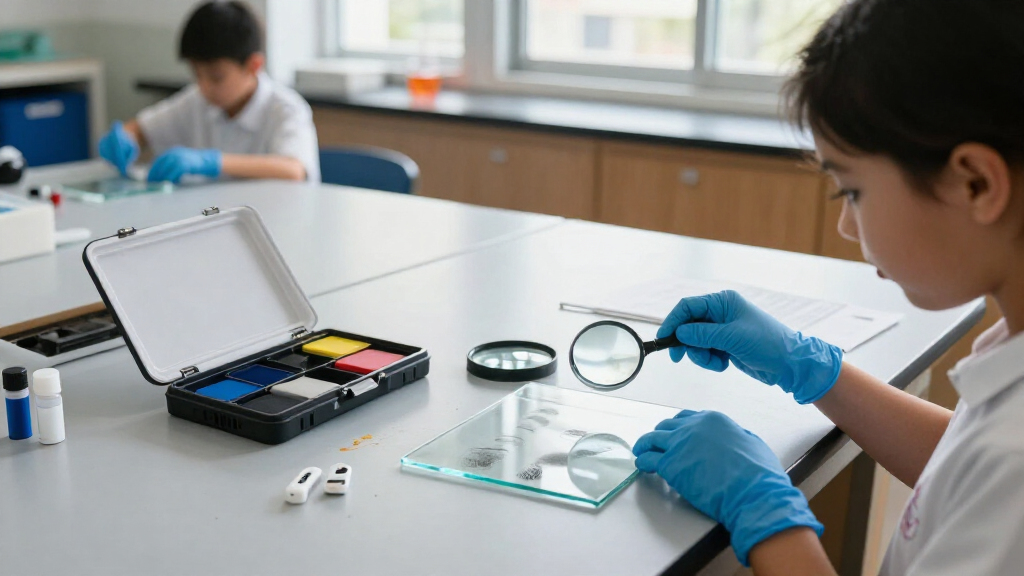
I compared the 15 kits by the kind of student experience they offer: broad evidence gathering, fingerprint practice, a guided case, or a focused chemistry activity. I also looked at audience and setting, including the stated age range, whether a kit is packaged for one learner or multiple groups, and how easily a teacher or caregiver can use it to structure a lesson. Where product names identify a specific method or classroom quantity, I treated that as a meaningful distinction rather than assuming every kit teaches the same skills.
The ranking favors options with a clear use case and a useful balance of hands-on activity, learning structure, and flexibility for students. A broader investigation set ranks ahead of a single-method kit for general use, while specialized chemistry and fingerprint kits rise for buyers seeking those particular activities. Classroom packs rank well for group instruction but are less convenient for one student; workbook and story formats offer structure but less direct lab work. I have not inferred unlisted contents, difficulty levels, or safety details, so buyers should check the current package instructions and age guidance before choosing.
Factors to Consider When Choosing Forensic Science Kits For Students
Before choosing, decide what you want the student to do, not just whether the box says forensic science. The strongest fit depends on the learning goal, the number of participants, and how much adult guidance the activity needs.
Match the kit to the learning goal
Forensic science is a broad label that can mean fingerprint collection, blood-related chemistry, hair analysis, unknown-substance identification, or a narrative case. Pick one or two skills the student wants to practice before comparing activity counts. A kit focused on one method may support a more coherent lesson than a larger set with unrelated tasks. Conversely, a general detective kit can be a better first purchase when the student has not settled on a favorite topic. A common mistake is buying the most specialized kit for a beginner who mainly wants variety. Check whether the listed subject matches the actual lesson you plan to teach.
Choose between open-ended practice and a guided case
Story-based kits give students a reason to collect and interpret evidence, which can help keep a lesson moving. Open-ended or method-focused kits leave more room to repeat a procedure, compare results, or build a teacher-created investigation. Neither format is automatically more educational: the right choice depends on whether the learner benefits from a defined sequence or independent exploration. For a classroom, a case can provide shared context for discussion, while a focused lab may make it easier to assess one skill. Avoid assuming a murder-mystery theme means the kit includes every tool needed for a full investigation. Read the activity scope and plan any missing materials before the session.
Plan for the actual group size
A kit for one student and a classroom pack solve different supply problems. For a class, check the stated number of students or groups and work out whether learners will share stations, rotate, or each handle materials. Sharing can reduce the amount of equipment needed, but it may leave some students watching rather than participating. A multi-student pack can be easier to organize, though it may be excessive for a single learner or a small homeschool group. Do not infer that a classroom label means every student gets an identical individual set. Confirm quantities and any consumable limits against your lesson plan.
Use age guidance and supervision as selection filters
Age labels help narrow the field, but they do not replace a check of the actual activities and instructions. Younger students may need simpler steps and close adult support, while older students may prefer procedures that allow observation, recording, and comparison. Chemistry-oriented kits deserve particular attention to handling directions and any protective equipment or disposal instructions included by the manufacturer. A frequent buying error is treating all kits as equally suitable for unsupervised use. Ask who will set up the activity, explain the procedure, and manage cleanup. If those responsibilities are unclear, choose a more structured option or contact the seller for details.
Weigh reusable tools against consumable activities
Some kits center on tools that can support repeated practice; others are built around tests or prepared investigations that may be limited by included materials. Reusability matters when a student plans to revisit the same skill or when a teacher has several class sessions. Consumables can still be a good choice when they deliver a focused, ready-to-run lesson. Check whether the package description specifies test counts, group quantities, or replacement materials rather than assuming supplies can be replenished. Think about what happens after the first activity: can the learner repeat it, adapt it, or move on to a related method? That answer can matter more than the number of components in the box.
Set expectations for realism and learning value
Student kits are educational activities, not professional crime-scene equipment or substitutes for formal laboratory training. A playful detective set may be the right way to spark interest, while a classroom chemistry kit may better support a lesson with defined learning objectives. Look for a clear connection between each activity and what the student should observe or record. Do not equate a larger kit with more rigorous science; structure, repeatability, and interpretation often matter more than a long list of components. For a school assignment, check whether the kit supports the required topic and level of detail. For casual exploration, prioritize engagement and manageable setup.
Frequently Asked Questions
Which type of kit is a better first choice for a student who has not picked a forensic specialty?
I would start with a broad investigation kit rather than a single-method chemistry or fingerprint set. A general kit can help a student discover whether evidence collection, observation, or case-solving holds their interest. If the student already asks specifically about fingerprints or lab tests, a focused kit may be a better match and can provide more practice in that area. Check the activities and age guidance before choosing, since a broad label does not tell you how involved the procedures are. A workbook or story-led case is another option when the student prefers solving a structured mystery over handling lab materials.
Can I use one of these kits with a whole class, or do I need a classroom pack?
It depends on how many students need hands-on time and whether you can run rotating stations. The Crime Scene Forensic Science Mega Kit is identified as a 40-student pack, and the Eagle Nest Harbor kit is listed for 15 groups, making their stated scale more suited to class planning than an individual set. Even with a classroom pack, confirm what is supplied per student or group rather than assuming every learner receives a complete personal kit. A smaller kit can work for a demonstration or station activity if students take turns. Plan the lesson around the included quantities and the time available for each learner to participate.
Are chemistry-focused forensic kits suitable for younger students?
Age suitability depends on the specific activities, directions, and level of supervision, not just the word “student” in a product name. The 4M Detective Forensic Science Kit is labeled for ages 8–12, while the chemistry-focused kits should be checked individually for handling requirements and age guidance. Read the manufacturer’s instructions before purchase and identify who will supervise setup, use, and cleanup. If a student is young or new to lab activities, a simpler guided kit may be more manageable than a focused chemical procedure. When age guidance or safety details are not clear, ask the seller or choose a kit with better-specified instructions.
Should I choose a fingerprint dusting kit or a complete investigation kit?
Choose a fingerprint kit when latent-print dusting is the specific skill the student wants to practice. Leelosp and TillBio are more focused than the broad Spy Labs investigation kits, so they make less sense if the goal is to explore several kinds of evidence in one purchase. A full investigation kit is a stronger starting point for students who want variety or a case-style activity. Keep in mind that a focused kit may be easier to repeat, while a broader kit may offer more types of activities but less depth on any one method. Match the format to the lesson or interest rather than judging by the word “complete.”
What should I check before choosing a kit for a school assignment?
Start with the assignment’s required topic, grade level, and expected evidence of learning. A blood-typing, hair-analysis, or unknown-substances kit may fit a specific science unit better than a general detective set, while a workbook can help with written investigation and reasoning. Check whether the kit provides enough activities or supplies for the student count and whether the instructions support the level of independent work expected. Also review any material-handling directions and plan for teacher oversight where needed. If the assignment requires a particular method, confirm that the kit explicitly covers it rather than relying on a broad forensic-science label.
Conclusion
For a general student introduction, my best overall recommendation is the Spy Labs Forensic Investigation Kit, while the best value by learning focus is a targeted option such as the Leelosp or TillBio fingerprint kit when prints are the main goal. For a best premium or classroom-scale choice, the Crime Scene Forensic Science Mega Kit stands out for its stated 40-student format; the Eagle Nest Harbor kit is another group-oriented pick for 15 groups. For beginners ages 8–12, the 4M Detective kit has the clearest age label in this lineup. Students who want a specific lab topic should look at the relevant ALDON or Innovating Science chemistry kit, while those who prefer guided reasoning can choose a Missy Hammond case or the Mark Twain workbook. Pick by learning goal, group size, and supervision needs first; the right kit is the one that fits the activity the student will actually do.
Halloween Picks
halloween
As an affiliate, we earn on qualifying purchases.