
Sous vide cooking involves using a precise temperature-controlled water bath to cook your food evenly and perfectly. You seal ingredients in airtight bags, set your immersion circulator to the right temperature, and let it cook without worry of overdoing or undercooking. This method keeps food juicy and tender while making it easy to prepare ahead. If you want to master this technique and explore its full potential, there’s more to discover beyond the basics.

Prime made for students and young adults
- Fast, free delivery for dorm and study essentials
- Prime Video and Amazon Music included
- Member-only deals
Key Takeaways
- Sous vide uses precise temperature control for consistent, evenly cooked, and tender results at home.
- Proper equipment includes an immersion circulator and vacuum-sealed bags for optimal cooking.
- Vacuum sealing enhances flavor infusion and keeps food submerged for even heat transfer.
- Accurate temperature regulation prevents overcooking and maintains food quality.
- It offers flexibility for meal prep, tougher cuts, delicate fish, and finishing touches like searing.

Ever wondered how to achieve perfectly cooked meals every time? That’s where sous vide cooking shines. It’s a method that uses precision temperature control to deliver consistent, restaurant-quality results right in your own kitchen. Instead of relying on timing alone or guesswork, you set your desired doneness with exact temperature settings. This way, your food cooks evenly from edge to center, eliminating overcooking or undercooking worries. The secret lies in maintaining a steady, accurate temperature throughout the process, guaranteeing your meat stays juicy, your vegetables retain their texture, and your fish stays tender.
Achieve perfect, evenly cooked meals every time with precise temperature control using sous vide.
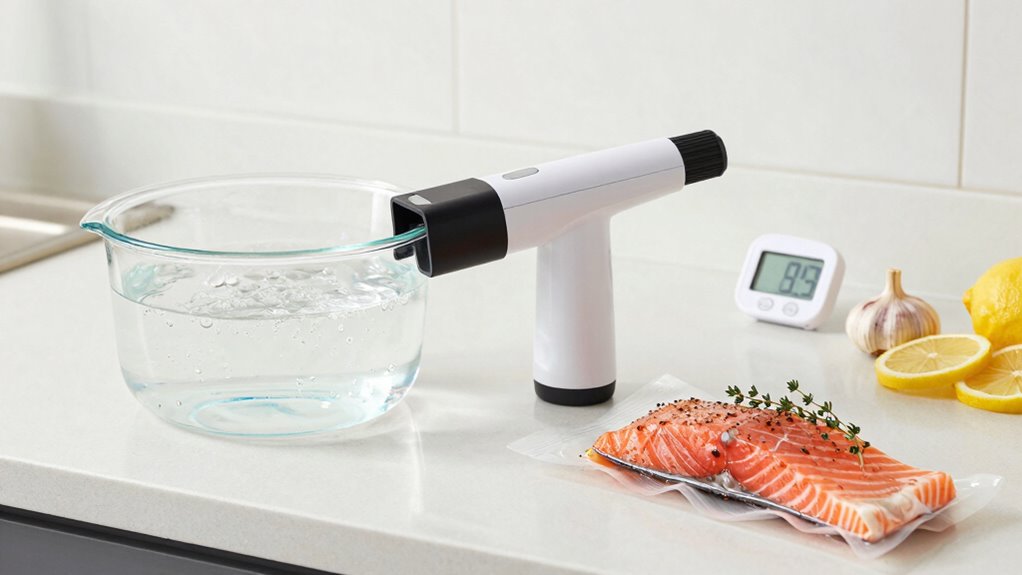
To get started, you’ll need a reliable immersion circulator or sous vide cooker. Once you’ve chosen your device, the key is to set the precise temperature that corresponds to how you want your dish done. For example, if you’re preparing a steak, you might set the water bath to 130°F for medium-rare. The beauty of the method is that once the temperature is dialed in, you can leave your food to cook for a longer period without fear of overdoing it. This flexibility makes sous vide especially convenient for busy schedules or when you’re preparing multiple dishes at once.
Another crucial component of sous vide cooking is vacuum sealing. You want to package your ingredients in a way that removes as much air as possible, creating a tight seal around your food. Vacuum sealing helps heat transfer efficiently and prevents water from seeping into the bag. It also enhances flavor infusion, as seasonings and marinades are tightly packed with the food, intensifying the taste. Using a vacuum sealer is straightforward: you place your seasoned food in the bag, seal it, and then submerge it in the preheated water bath. The vacuum seal ensures that the food stays submerged and evenly cooked. Proper temperature control is essential to achieving desired results and avoiding common pitfalls like overcooking or undercooking. Understanding the precision temperature control offered by modern sous vide devices can help you better tailor your cooking process and optimize outcomes. Additionally, familiarizing yourself with temperature accuracy can help prevent unexpected results and improve consistency. A good understanding of water circulation can also ensure even heat distribution during the cooking process.
With the combination of precision temperature and vacuum sealing, you gain control and consistency that’s hard to match with traditional cooking methods. It’s almost foolproof—you can cook tougher cuts of meat to tender perfection or delicate fish without fear of ruining it. Plus, it allows you to prepare meals in advance, then finish them with a quick sear or broil for added flavor and texture. Understanding the importance of precise temperature control can help you optimize your results and unlock the full potential of sous vide cooking. Once you understand these basics, sous vide becomes an indispensable tool for elevating your home cooking, giving you professional-quality results with minimal effort and maximum accuracy.
Frequently Asked Questions
Can I Cook Desserts Sous Vide?
Yes, you can cook desserts sous vide. It’s perfect for achieving unique dessert textures and perfect consistency. You can create silky custards, creamy cheesecakes, or tender fruit compotes with ease. Plus, sous vide allows you to infuse sweet infusions into desserts, enhancing flavor profiles. Just seal your ingredients, set the right temperature, and let the water bath do its magic. It’s a simple way to elevate your dessert game.
How Do I Prevent Vacuum Seal Leaks?
To prevent vacuum seal leaks, you should regularly check your vacuum sealer for proper vacuum maintenance. Make certain of the seal integrity by cleaning the sealing area and removing any debris or moisture before sealing. Use the correct bag size and avoid overfilling. Test the seal by gently tugging on the bag after sealing; if it stays intact, you’re good to go. Proper maintenance keeps your vacuum seals secure during sous vide cooking.
Is Sous Vide Safe Without Searing?
Yes, sous vide is safe without searing, as long as you maintain proper food safety and temperature control. Ironically, the sear is often more for presentation than safety. While it enhances flavor and appearance, the precise temperature control during cooking guarantees pathogens are destroyed. So, if your main goal is safety and perfectly cooked food, you can skip the sear without compromising on safety—though your dish might not look quite as appealing.
What’s the Best Water Temperature for Eggs?
For perfectly cooked eggs, set your water temperature to 63°C (145°F). This temperature yields a creamy, custard-like egg texture. Keep the eggs in the water for about 45 minutes to achieve this consistency. If you prefer firmer whites and yolks, increase the temperature slightly and extend the cooking duration. Monitoring the temperature carefully guarantees your eggs turn out exactly as you like them, with ideal texture and doneness.
Can I Cook Multiple Ingredients at Once?
Yes, you can cook multiple ingredients at once with sous vide, making it ideal for batch cooking. Just guarantee you use enough bags or a large enough container. For best results, layer ingredients carefully to prevent cross-flavor transfer, and keep similar temperatures for all items. This approach saves time and energy while allowing you to prepare a variety of dishes simultaneously, all while maintaining precise doneness.
Conclusion
Now that you’ve uncovered the secrets of sous vide, you’re armed with a technique that transforms ordinary ingredients into culinary masterpieces. Like a master painter with a palette, you hold the power to craft perfectly cooked dishes with precision and ease. Embrace this method, and let it elevate your cooking adventures from simple to sublime. After all, in the world of flavor, mastery begins with curiosity—and a little bit of patience.
Fall Picks
fall essentials
As an affiliate, we earn on qualifying purchases.