
A wine fridge has different zones to keep each type of wine at the perfect temperature. Reds stay warmer, around 55-65°F, to enhance their flavors. Whites and rosés are cooler, at 45-55°F, for freshness. Sparkling wines need even colder spots, around 40-45°F. This setup helps preserve taste, aroma, and quality over time. Understanding how these zones work will give you better control and guarantee your wines taste their best every time. Keep exploring to learn more.

Get school and study supplies delivered free — and shop member deals
- Fast, free delivery on millions of items
- Access to Prime Big Deal Days deals on October 6–7
- Prime Video, Amazon Music and more included
Key Takeaways
- Different wines need specific temperatures to taste their best and age properly.
- Red wines prefer warmer zones around 55-65°F, whites around 45-55°F, and sparkling even cooler.
- Multiple zones help store each wine at its ideal temperature, preserving flavor and quality.
- Proper temperature control prevents spoilage, cork drying, and mold growth.
- Having separate zones makes it easy to serve wines at the perfect temperature anytime.
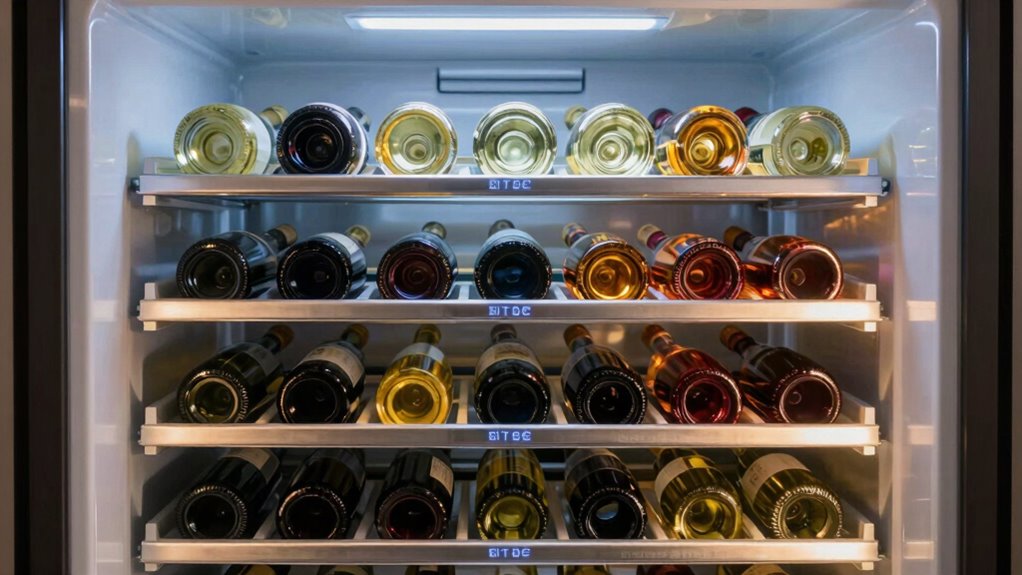
Ever wondered why wine fridges have different temperature zones? It’s because wine storage isn’t a one-size-fits-all situation. Different wines need different conditions to age gracefully and taste their best. That’s where temperature regulation comes into play. When you set up a wine fridge with multiple zones, you’re giving each bottle the environment it needs to stay in peak condition. This way, your collection can mature properly, and every glass you pour will be as enjoyable as it should be.
Multiple temperature zones ensure each wine is stored in the perfect environment for optimal aging and flavor.
In simple terms, the reason for multiple temperature zones is to accommodate the variety of wines you might store. Red wines, for example, are typically best enjoyed slightly warmer, around 55 to 65°F, while white wines prefer a cooler environment, usually between 45 and 55°F. Sparkling wines and Champagne often need even colder temperatures, around 40 to 45°F. If you tried to keep all your wines at one temperature, you might end up compromising their quality. Reds could become overly warm, losing their balance, while whites might be too cold, dulling their flavors. With separate zones, you can fine-tune the temperature for each type, preserving their unique characteristics.
Think about your wine storage setup. When you organize your collection, you want each bottle to age properly and be ready to serve at its best. Proper temperature regulation in different zones helps prevent rapid aging or spoilage. It also reduces the risk of corks drying out or mold developing. Additionally, proper temperature control is essential for maintaining the overall health of your wine collection. Ensuring your wine fridge has multiple zones helps you better manage these conditions and protect your investment. This setup also supports wine preservation, which is crucial for maintaining optimal quality over time. Moreover, understanding the importance of climate control in wine storage can help prevent issues caused by environmental fluctuations. Maintaining consistent temperatures is a key part of proper wine care, which can extend the life of your wines. When your wine fridge has designated zones, it’s easier to keep your collection in ideal condition without constantly adjusting settings or risking damage. It’s like giving each wine its own personalized environment.
Having multiple temperature zones isn’t just about preserving wine; it’s about enhancing your overall wine experience. You can store a variety of wines at their ideal temperatures, ensuring they’re ready to serve whenever you want. Whether you’re opening a bottle for a special dinner or just enjoying a casual evening, knowing your wine is stored correctly makes a difference. You won’t have to worry about sacrificing taste or quality because your fridge took care of the details. Proper wine storage with precise temperature regulation means you get the best from your collection, every time.
In short, the different temperature zones in a wine fridge are designed to give each wine the best environment for storage and aging. They help you control the conditions, so your wines stay fresh, flavorful, and ready when you need them. It’s a smart investment in your wine collection and your enjoyment.
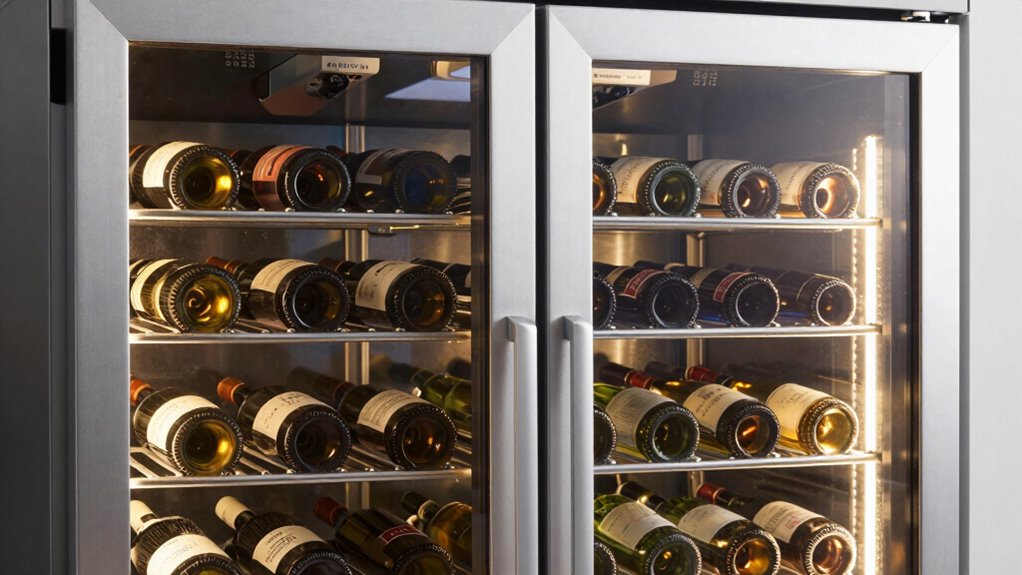
wine fridge with multiple temperature zones
As an affiliate, we earn on qualifying purchases.
As an affiliate, we earn on qualifying purchases.
Frequently Asked Questions
Can I Store Other Beverages in a Wine Fridge?
Yes, you can store other beverages in a wine fridge, but it depends on your fridge’s design and temperature zones. Using it for alternative beverages offers storage versatility, especially for drinks that benefit from a cool, consistent temperature. Just keep in mind that storing non-wine drinks might impact the ideal conditions for your wine. Adjust the temperature if possible, and avoid overcrowding to maintain the quality of all stored beverages.
How Often Should I Recalibrate My Wine Fridge Temperature?
You should recalibrate your wine fridge’s temperature regularly, ideally every 3 to 6 months, to maintain ideal temperature accuracy. Frequent calibration ensures that the fridge keeps consistent temperatures, preventing spoilage or premature aging of your wine. If you notice temperature fluctuations or inconsistent readings, recalibrate sooner. Proper calibration frequency helps you keep control over your wine storage conditions, guaranteeing your beverages stay at their best.
Do Different Wine Types Require Different Storage Temperatures?
Think of your wine collection as a symphony, where each type needs its own tempo. Yes, different wines require specific storage temperatures to age gracefully. Red wines thrive around 65-68°F, while whites prefer a cooler 45-55°F. Maintaining a consistent temperature is key to wine aging and flavor preservation. By tailoring your fridge zones, you guarantee each bottle reaches its full potential, like a well-conducted orchestra.
What Happens if the Temperature Fluctuates Frequently?
Frequent temperature fluctuations can harm your wine by disrupting its aging process. When temperature stability isn’t maintained, fluctuation effects can cause the wine to expand and contract, potentially damaging the cork and letting air in. This can lead to oxidation and spoilage. To protect your wine, guarantee your fridge maintains a consistent temperature, avoiding rapid changes that could compromise quality and flavor.
Are There Any Safety Concerns With Wine Fridges?
Think of a wine fridge as a guardian of your prized collection. Generally, it’s safe, but you should watch for wine shelf stability issues or refrigeration noise, which might indicate a problem. Excessive noise can signal mechanical trouble, and unstable temperatures threaten your wine’s quality. While rare, electrical safety is vital—ensure the unit is properly grounded and maintained. Regular checks keep your wines safe and your fridge functioning smoothly.
Conclusion
Understanding wine fridge temperature zones helps you preserve your collection perfectly, whether you’re a casual sipper or a connoisseur. While some might think all wines can be stored at the same temperature, knowing the nuances ensures each bottle ages ideally and retains its unique character. By paying attention to these zones, you elevate your wine experience, showcasing your commitment to quality without needing to be a sommelier. Cheers to storing your wines with confidence and sophistication!
Halloween Picks
halloween
As an affiliate, we earn on qualifying purchases.