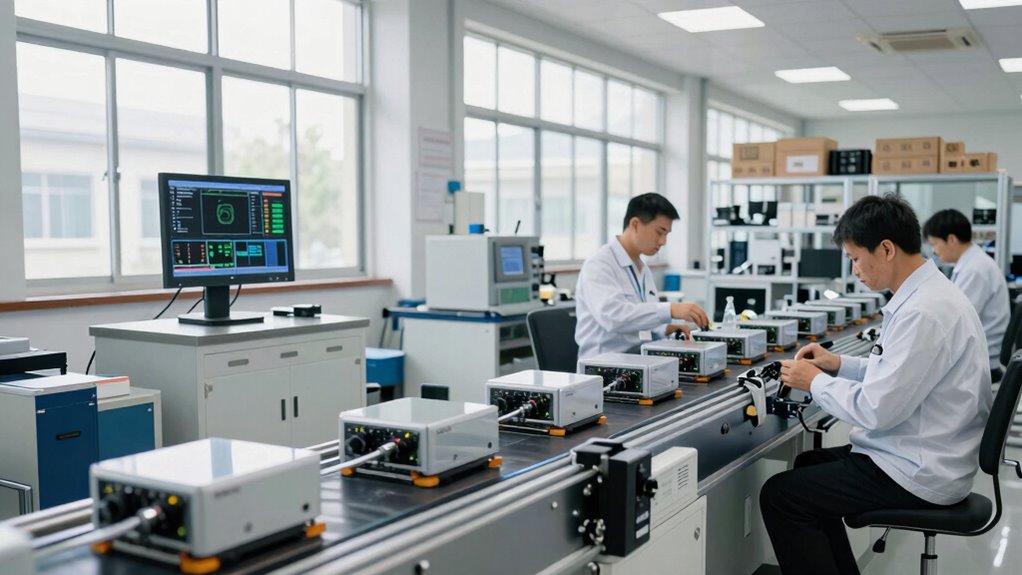
OEM, or Original Equipment Manufacturing, means you work with a manufacturer to create customized products based on your specific design, giving you full control over features and branding. ODM, or Original Design Manufacturing, involves the manufacturer designing and producing products that you can brand, allowing for quicker market entry and lower costs but with limited customization. Understanding these differences helps you choose the right approach for your business goals—there’s more to explore if you keep going.
Key Takeaways
- OEM involves custom product design by the manufacturer, with the buyer owning the design; ODM offers pre-designed products for branding.
- OEM provides high customization and control over product features; ODM mainly allows branding and packaging adjustments.
- OEM production is slower and more resource-intensive due to customized R&D; ODM enables quicker, streamlined manufacturing.
- ODM generally costs less because of existing designs; OEM incurs higher costs from development and bespoke design efforts.
- OEM suits brands seeking full control over product specs; ODM benefits businesses aiming for rapid market entry with minimal R&D.
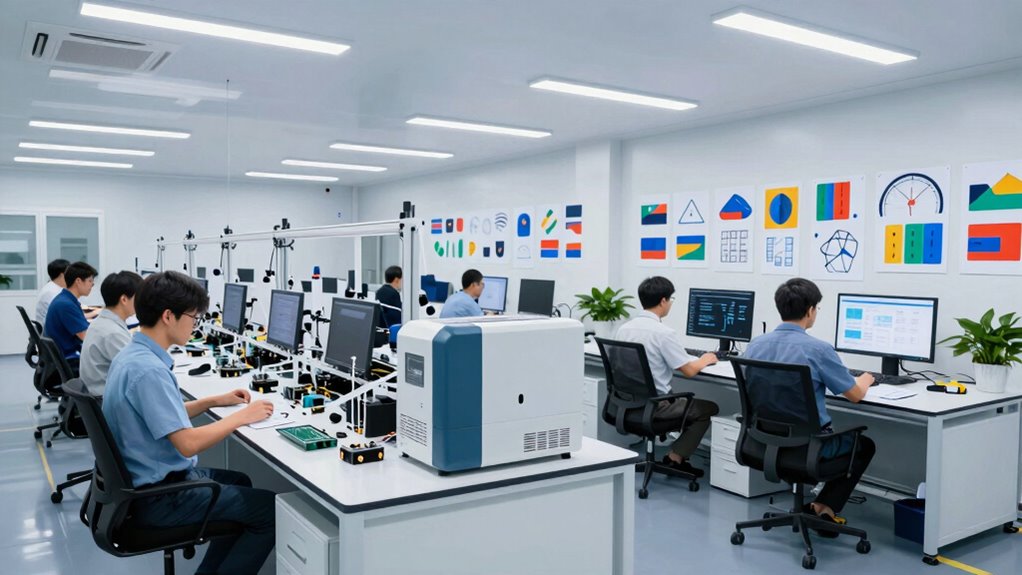
On the other hand, ODM, or Original Design Manufacturer, involves a different approach. In this case, the manufacturer designs and develops the product, and you purchase it to sell under your brand. With ODM, you have less control over the product’s design, but you benefit from the manufacturer’s expertise and existing product lines. The manufacturer creates a product based on their research, market trends, and their manufacturing processes, then offers it to you for branding and resale. Customization options in ODM are generally more limited, often confined to branding elements like logos and packaging. The manufacturing processes are more streamlined because the product design is already established, allowing for quicker production and potentially lower costs. ODM is advantageous if you want to bring a product to market swiftly without investing heavily in R&D or if you lack the resources to develop a product from scratch. Additionally, understanding the product development process involved in OEM and ODM can influence your decision-making when selecting a manufacturing partner. Knowing the manufacturing processes can help you choose the right approach based on your needs and resources. Recognizing the differences between OEM and ODM can also guide you in making more informed choices for your business strategy. Moreover, being aware of the Customization options available in each approach can help you better align your production strategy with your brand goals. Being familiar with these concepts can also help you evaluate the cost implications of each manufacturing method to optimize your investment.

Custom Programmed Door Access Cards Prox – Compatilbe with 26 bit H10301 Format HID 1386 ISOProx II (200)
𝟮𝟬𝟬 𝗣𝗔𝗖𝗞 𝗢𝗙 𝗖𝗔𝗥𝗗𝗔𝗖𝗖𝗘𝗦𝗦 𝗖𝗔𝗥𝗗𝗦: Format H10301, 125 kHz Prox card frequency, replaces 1326 & 1386 HID door…
As an affiliate, we earn on qualifying purchases.
As an affiliate, we earn on qualifying purchases.
Frequently Asked Questions
How Do OEM and ODM Costs Compare?
OEM costs are generally lower because you provide the product design, focusing on manufacturing and product customization, while the OEM handles production. ODM costs are higher since they involve creating new designs, which require more resources and intellectual property rights. With ODM, you benefit from unique products but pay more for design development. Understanding these differences helps you decide based on your budget and how much control you want over product customization.
Can a Company Switch Between OEM and ODM?
Yes, your company can switch between OEM and ODM to enhance brand flexibility and manufacturing flexibility. You might choose OEM to customize products under your brand, then switch to ODM to benefit from existing designs and reduce costs. This adaptability allows you to respond to market demands, optimize production, and strengthen your competitive edge, making it easier to explore new product ideas or access different manufacturing capabilities as your business evolves.
What Industries Primarily Use OEM or ODM Services?
Imagine walking into a bustling electronics factory, where sleek gadgets come to life through OEM and ODM services. You’ll find these services mainly in consumer electronics, fashion, and automotive industries, where product customization and manufacturing flexibility are crucial. Companies use OEM when they want to brand products with their logo, while ODM helps develop new designs. Both industries rely on these services to bring innovative, tailored products to market quickly and efficiently.
How Do Quality Control Processes Differ in OEM Vs ODM?
In OEM, quality control focuses on guaranteeing your product customization meets your specified manufacturing standards, often relying on your detailed guidelines. In ODM, the manufacturer manages quality control, designing products that adhere to general manufacturing standards, which may limit your customization. You have less direct control over quality in ODM, but in OEM, your involvement ensures products align precisely with your quality expectations and standards.
What Are the Main Legal Considerations for OEM and ODM Agreements?
You face a legal battlefield when forming OEM and ODM agreements, and it’s no small feat—these deals are as critical as steering through a maze. You must carefully protect your intellectual property, ensuring your designs and trademarks are secured. During contract negotiations, clearly define ownership rights, confidentiality clauses, and liability limits. Ignoring these legal considerations can lead to costly disputes or IP theft, so be thorough and seek expert advice to safeguard your interests.
ODM branded product supplier
As an affiliate, we earn on qualifying purchases.
As an affiliate, we earn on qualifying purchases.
Conclusion
Understanding the difference between OEM and ODM can help you make smarter manufacturing choices. Imagine you’re launching a new sneaker brand—partnering with an OEM means customizing existing designs, while an ODM could develop a unique product from scratch. For example, a startup successfully used an ODM to create exclusive footwear, giving them a competitive edge. Knowing which route fits your needs guarantees your product stands out and aligns with your vision. Make informed decisions, and watch your brand grow!
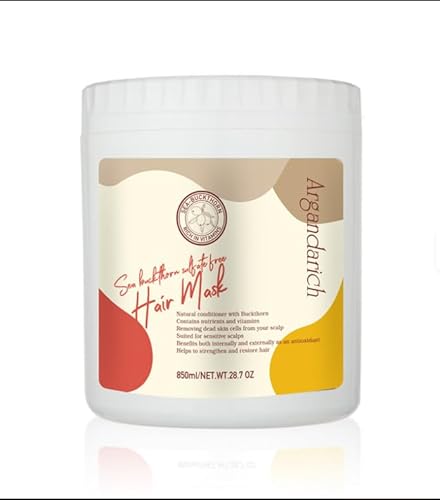
Natural Ultra Repair Hair Keratin for Hair Mask in Hair Treatment
KERATIN TREATMENT: Professional-grade hair mask enriched with keratin protein to restore damaged and weakened hair strands
As an affiliate, we earn on qualifying purchases.
As an affiliate, we earn on qualifying purchases.
ODM ready-made products for branding
As an affiliate, we earn on qualifying purchases.
As an affiliate, we earn on qualifying purchases.