Gaming routers are designed to deliver fast, stable internet connections tailored for online gaming. The best models combine high throughput, low latency, and advanced features like multiple bands and QoS to optimize your gaming experience. The main tradeoffs usually involve balancing speed with coverage, and premium features with price. Choosing the right router depends on your specific gaming needs, home size, and budget. Continue reading for a detailed breakdown of the top options in 2026.

Prime made for students and young adults
- Fast, free delivery for dorm and study essentials
- Prime Video and Amazon Music included
- Member-only deals
Key Takeaways
- The best gaming routers prioritize high throughput and low latency to handle fast-paced online games.
- Tri-band and WiFi 7 models generally offer better performance and future-proofing, but come at a higher cost.
- Coverage range varies significantly; larger homes benefit from mesh-compatible or multi-antenna setups.
- Features like Game Accelerator and Multi-Link Operation (MLO) can provide tangible benefits for dedicated gamers.
- Value isn’t just about price; some mid-range models outperform premium ones in real-world gaming performance.
| TP-Link Archer GE400 Dual-Band WiFi 7 Gaming Router 6.5 Gbps |  | Best Overall for High-Speed Gaming and Coverage | WiFi Standard: WiFi 7 | Total Bandwidth: 6.5 Gbps | Number of Antennas: 6 | VIEW ON AMAZON | See Our Full Breakdown |
| NETGEAR Nighthawk WiFi 7 Router RS90, Up to 2,000 sq ft, 3.6 Gbps |  | Best for Wide Coverage and Multiple Devices at a Moderate Speed | Speed: Up to 3.6 Gbps | Coverage: Up to 2,000 sq ft | Device Capacity: Up to 50 devices | VIEW ON AMAZON | See Our Full Breakdown |
| TP-Link Tri-Band Wi-Fi 7 Gaming Router (Archer GE800) |  | Best for High-End Gaming with Ultra-Fast Speeds | Wi-Fi Speed: up to 19 Gbps | Bands: Tri-band | Antennas: 8 | VIEW ON AMAZON | See Our Full Breakdown |
| MSI Radix AXE6600 WiFi 6E Tri-Band Gaming Router | 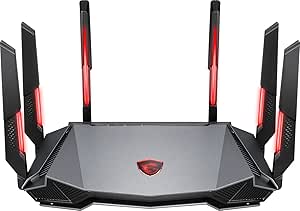 | Best for Cutting-Edge WiFi 6E Gaming and Long-Range Reliability | Tri-band: 2.4GHz + 5GHz + 6GHz | WiFi Standard: WiFi 6E | Maximum Speed: 6.6 Gbps | VIEW ON AMAZON | See Our Full Breakdown |
| TP-Link AXE5400 Tri-Band WiFi 6E Router (Archer AXE75) |  | Best for Seamless Whole-Home WiFi and Future-Proof Speed | WiFi Speed: up to 5400 Mbps | Bands: Tri-band (6 GHz, 5 GHz, 2.4 GHz) | Processor: 1.0 GHz dual-core | VIEW ON AMAZON | See Our Full Breakdown |
| NETGEAR Nighthawk WiFi 7 Router, Up to 2,500 sq ft, 9.3 Gbps |  | Best Overall for Large Homes and High-Speed Coverage | Coverage: 2,500 sq ft | Speed: 9.3 Gbps | Bands: Tri-band (2.4 GHz, 5 GHz, 6 GHz) | VIEW ON AMAZON | See Our Full Breakdown |
| ASUS TUF Gaming BE6500 WiFi 7 Router – Dual-Band, Up to 6.5 Gbps Wireless, Game Accelerator, Multi-Link Operation (MLO), (x4) 2.5GbE Ports, Mesh + VPN Compatible, Subscription-Free Network Security |  | Best for Gamers Who Want Speed and Security without Subscription Hassles | WiFi Standard: WiFi 7 (802.11be) | Max Speed: 6.5 Gbps | Bands: Dual-band | VIEW ON AMAZON | See Our Full Breakdown |
| TP-Link Tri-Band WiFi 7 Router (Archer BE550) |  | Best for Streaming and Whole-Home Coverage | WiFi Standard: WiFi 7 | Speed: 5760 Mbps | Bands: Tri-band | VIEW ON AMAZON | See Our Full Breakdown |
| ASUS ROG Rapture GT-BE98 Pro WiFi 7 Gaming Router – Quad-Band, 30Gbps, Mesh |  | Best for Ultra-High-Speed Gaming and Extensive Coverage | WiFi Standard: WiFi 7 (802.11be) | Max Speed: 30 Gbps | Bands: Quad-band | VIEW ON AMAZON | See Our Full Breakdown |
| NETGEAR Nighthawk WiFi 7 Router RS140, Up to 2,250 sq ft, 5 Gbps |  | Best Budget-Friendly for Moderate Speeds and Coverage | WiFi Standard: WiFi 7 | Max Speed: 5 Gbps | Coverage: 2,250 sq ft | VIEW ON AMAZON | See Our Full Breakdown |
| TP-Link BE6500 Dual-Band WiFi 7 Router (BE400) |  | Best Overall for Large Homes with Multiple Devices | Wi-Fi Technology: Wi-Fi 7 | Bands: Dual-Band | Maximum Speed: up to 5764 Mbps on 5GHz and 688 Mbps on 2.4GHz | VIEW ON AMAZON | See Our Full Breakdown |
| TP-Link AX1800 WiFi 6 Router (Archer AX21 V5) |  | Best Value for Stable Dual-Band WiFi 6 at a Budget | Wi-Fi Standard: 802.11ax | Bands: Dual-band | Total Bandwidth: 1.8 Gbps | VIEW ON AMAZON | See Our Full Breakdown |
| ASUS ROG Strix GS-BE12000 WiFi 7 Gaming Router – Tri-Band, 12Gbps, Mesh |  | Best for Gamers Needing Ultra-High Throughput and Extensive Wired Connectivity | WiFi Standard: WiFi 7 | Bands: Tri-band | Max Throughput: 12 Gbps | VIEW ON AMAZON | See Our Full Breakdown |
| gaming router | Bands | WiFi Standard | Ports |
|---|---|---|---|
| TP-Link Archer GE400 Dual-Band | — | WiFi 7 | — |
| NETGEAR Nighthawk WiFi 7 Route | Dual-band (2.4 GHz and 5 GHz) | WiFi 7 | One 2.5 Gbps WAN, four 1 Gbps LAN |
| TP-Link Tri-Band Wi-Fi 7 Gamin | Tri-band | — | 2×10 Gbps, 4×2.5 Gbps |
| MSI Radix AXE6600 WiFi 6E Tri- | — | WiFi 6E | — |
| TP-Link AXE5400 Tri-Band WiFi | Tri-band (6 GHz, 5 GHz, 2.4 GHz) | — | — |
| NETGEAR Nighthawk WiFi 7 Route | Tri-band (2.4 GHz, 5 GHz, 6 GHz) | — | 2.5 Gig WAN, two 2.5 Gig LAN, two 1 Gig LAN |
| ASUS TUF Gaming BE6500 WiFi 7 | Dual-band | WiFi 7 (802.11be) | 4 x 2.5GbE |
| TP-Link Tri-Band WiFi 7 Router | Tri-band | WiFi 7 | 1 x 2.5G WAN, 4 x 2.5G LAN |
| ASUS ROG Rapture GT-BE98 Pro W | Quad-band | WiFi 7 (802.11be) | 1x 10G, 4x 2.5G |
| NETGEAR Nighthawk WiFi 7 Route | — | WiFi 7 | 1x 2.5 G WAN, 3x 1 G Ethernet LAN |
| TP-Link BE6500 Dual-Band WiFi | Dual-Band | — | 1x 2.5 Gbps WAN/LAN, 1x 2.5 Gbps LAN, 3x 1 Gbps LAN |
| TP-Link AX1800 WiFi 6 Router | Dual-band | — | — |
| ASUS ROG Strix GS-BE12000 WiFi | Tri-band | WiFi 7 | — |
More Details on Our Top Picks
TP-Link Archer GE400 Dual-Band WiFi 7 Gaming Router 6.5 Gbps
The TP-Link Archer GE400 stands out for supporting WiFi 7 with speeds up to 6.5 Gbps, making it a top choice for gamers who demand fast, stable connections. Unlike the NETGEAR RS90, which offers a lower maximum speed but broader device support, the GE400’s focus on high bandwidth and advanced QoS ensures minimal lag during intense gaming sessions. Its six antennas with Beamforming deliver strong, extensive coverage, though it lacks support for the 6 GHz band, which could limit future-proofing. Its multi-gig ports are ideal for wired setups, but the setup process can challenge less tech-savvy users, especially since it isn’t compatible with mesh systems like Deco. Overall, this router balances speed, coverage, and gaming features for dedicated gamers willing to handle a slightly complex setup.
Pros:- Supports WiFi 7 with speeds up to 6.5 Gbps for demanding gaming and streaming
- Six antennas with Beamforming for broad, stable coverage
- Multi-gig WAN and LAN ports for fast wired connections
- Optimized for gaming with dedicated features like QoS and server acceleration
Cons:- Does not support the 6 GHz band, limiting some future WiFi 7 benefits
- Complex setup process may intimidate non-technical users
Best for: Gamers seeking top-tier WiFi 7 speeds combined with comprehensive coverage and multi-gig wired options
Not ideal for: Casual users or those preferring simple plug-and-play setups without advanced configurations
- WiFi Standard:WiFi 7
- Total Bandwidth:6.5 Gbps
- Number of Antennas:6
- CPU:Quad-core 2.0 GHz
- WAN Ports:1x 2.5 Gbps
- LAN Ports:1x 2.5 Gbps, 3x 1 Gbps
- Coverage:up to 2,600 sq. ft.
- Security:TP-Link HomeShield
Our verdict“Ideal for gamers who want premium WiFi 7 performance and extensive coverage, despite a steeper setup curve.”
NETGEAR Nighthawk WiFi 7 Router RS90, Up to 2,000 sq ft, 3.6 Gbps
The NETGEAR Nighthawk RS90 offers a reliable WiFi 7 connection for busy households needing coverage up to 2,000 sq ft and support for up to 50 devices. Compared with the TP-Link Archer GE400, which emphasizes speed and gaming features, the RS90 focuses on providing broad coverage and device capacity, making it suitable for streaming and smart home integration. Its dual-band setup ensures decent performance, but it caps at 3.6 Gbps, which isn’t ideal for ultra-high-speed gaming or large data transfers. It’s easy to set up via the Nighthawk app, though it requires a separate modem for internet access. The security features and device management are solid, but users should be aware that interference or walls can reduce its effective coverage. This router is best for households prioritizing coverage and device capacity over raw speed.
Pros:- Supports WiFi 7 with speeds up to 3.6 Gbps for general use
- Coverage area of 2,000 sq ft suitable for larger homes
- Supports up to 50 devices simultaneously
- User-friendly setup and management via app
Cons:- Requires a separate modem for internet service
- Speed may be insufficient for high-end gaming or large file transfers
Best for: Families or shared living spaces needing dependable WiFi for multiple devices and moderate gaming
Not ideal for: Gamers with high-speed requirements or users seeking cutting-edge WiFi 7 speeds, as it maxes out at 3.6 Gbps
- Speed:Up to 3.6 Gbps
- Coverage:Up to 2,000 sq ft
- Device Capacity:Up to 50 devices
- WiFi Standard:WiFi 7
- Bands:Dual-band (2.4 GHz and 5 GHz)
- Ports:One 2.5 Gbps WAN, four 1 Gbps LAN
- Processor:Quad-core 2.0 GHz
- Security:Advanced Router Protection, NETGEAR Armor (trial)
Our verdict“Great for large households needing reliable, broad WiFi coverage with moderate speed demands.”
TP-Link Tri-Band Wi-Fi 7 Gaming Router (Archer GE800)
The TP-Link Archer GE800 delivers up to 19 Gbps tri-band WiFi 7, making it an excellent choice for gamers who want maximum wired and wireless speeds. Its 8 antennas and 2×10 Gbps ports support intensive gaming setups and seamless streaming. Compared to the MSI Radix AXE6600, which offers WiFi 6E, the GE800’s tri-band WiFi 7 provides higher potential throughput, though at a premium price. Its RGB lighting and mesh compatibility appeal to gamers who value aesthetics and expandable coverage. However, the high cost and complex setup might deter casual users, and its size can be a challenge in smaller spaces. This router excels where raw speed and multiple wired connections are critical, but it’s not for those seeking straightforward, budget-friendly options.
Pros:- Tri-band WiFi 7 with speeds up to 19 Gbps for demanding gaming and streaming
- Multiple 10 Gbps ports for wired connections
- Mesh compatibility for seamless coverage expansion
- Customizable RGB lighting enhances gaming setup aesthetics
Cons:- High price point that may be prohibitive for casual users
- Complex setup process that may challenge less technical users
Best for: Hardcore gamers and streamers needing ultra-fast WiFi 7 with multiple high-speed ports
Not ideal for: Casual users or those with limited space, due to its high price and large footprint
- Wi-Fi Speed:up to 19 Gbps
- Bands:Tri-band
- Antennas:8
- Ports:2×10 Gbps, 4×2.5 Gbps
- Processor:Quad-core
- RAM:2GB
- Lighting:RGB customizable
- Mesh Compatibility:Yes
Our verdict“Best suited for high-end gamers seeking maximum speeds and expandable wired/wireless coverage.”
MSI Radix AXE6600 WiFi 6E Tri-Band Gaming Router
The MSI Radix AXE6600 supports WiFi 6E with speeds up to 6.6 Gbps, offering superior performance for gamers who need lower latency and extensive coverage. Its 1.8 GHz quad-core processor and AI QoS enable automatic prioritization of gaming traffic, similar to the TP-Link GE800 but with the added benefit of the 6 GHz band for less interference. Its RGB Mystic Light adds a gaming aesthetic, yet setup can be demanding for users unfamiliar with advanced networking. Compared with the TP-Link Archer GE400, which is more straightforward but less feature-rich, the MSI offers a more sophisticated and future-proof option. This router is best for serious gamers and tech enthusiasts who want the latest WiFi 6E tech combined with customizable aesthetics.
Pros:- Supports WiFi 6E with speeds up to 6.6 Gbps for low latency gaming
- Tri-band with 6 GHz band for less interference and higher capacity
- Powerful 1.8 GHz quad-core processor for reliable performance
- Customizable RGB lighting for gaming aesthetics
Cons:- Setup may be challenging for beginners unfamiliar with advanced networking
- Premium price that might not suit casual users
Best for: Hardcore gamers and tech-savvy users seeking advanced WiFi 6E features and long-range performance
Not ideal for: Casual or budget-conscious users, due to its complexity and likely higher cost
- Tri-band:2.4GHz + 5GHz + 6GHz
- WiFi Standard:WiFi 6E
- Maximum Speed:6.6 Gbps
- Processor:1.8 GHz quad-core
- Features:AI QoS, RGB Mystic Light
- Streams:8-Stream
Our verdict“Excellent for tech-savvy gamers wanting the latest WiFi 6E technology and extensive range, despite setup complexity.”
TP-Link AXE5400 Tri-Band WiFi 6E Router (Archer AXE75)
The TP-Link AXE5400 offers speeds up to 5400 Mbps across three bands, including the new 6 GHz band for minimal lag and high throughput. Its dual-core CPU and 512 MB high-speed memory support demanding gaming, streaming, and multi-device environments. Unlike the MSI Radix AXE6600, which emphasizes advanced features and aesthetics, the AXE75 prioritizes compatibility and ease of use with features like EasyMesh, making it suitable for larger homes. Its security options with TP-Link HomeShield add peace of mind, but setup and configuring advanced features could be overwhelming for casual users. This router excels in providing a solid, future-ready foundation for homes with many connected devices and high-speed needs.
Pros:- Supports WiFi 6E with 6 GHz band for faster, low-latency connections
- Tri-band design improves device capacity and reduces congestion
- EasyMesh support enables seamless whole-home coverage
- Strong security features with TP-Link HomeShield
Cons:- Requires a modem for most internet services
- Advanced setup options may be complex for casual users
Best for: Homeowners wanting a reliable, future-proof WiFi 6E network with seamless coverage
Not ideal for: Users seeking the highest possible gaming speeds or those with simple setup preferences
- WiFi Speed:up to 5400 Mbps
- Bands:Tri-band (6 GHz, 5 GHz, 2.4 GHz)
- Processor:1.0 GHz dual-core
- Memory:512 MB
- Compatibility:EasyMesh
- Security:TP-Link HomeShield
Our verdict“Best for users wanting a future-proof, large-area WiFi 6E network with easy expansion options.”
NETGEAR Nighthawk WiFi 7 Router, Up to 2,500 sq ft, 9.3 Gbps
This NETGEAR Nighthawk WiFi 7 Router is a strong choice for those needing broad coverage and blazing-fast speeds. Its tri-band setup with a dedicated 6 GHz band supports multiple devices without bottlenecks, making it ideal for large households. Compared to the ASUS ROG GT-BE98 Pro, it offers more straightforward setup and multi-gig wired ports, but it falls short on real-world throughput, which can vary based on device and plan. The extensive coverage of 2,500 sq ft makes it suitable for big homes, though it may require a mesh system for very sprawling spaces. Security features like NETGEAR Armor come with a subscription after a trial period, adding ongoing costs.
Pros:- High-speed WiFi 7 with support for extensive device loads
- Wide coverage of up to 2,500 sq ft
- Easy setup via the Nighthawk app
- Multi-gig wired ports for fast internet
Cons:- Real-world speeds depend heavily on device compatibility and internet plan
- Mesh systems may be needed for full coverage in very large homes
- Security requires a subscription after the trial period
Best for: Large households with multiple high-bandwidth devices seeking reliable, speedy WiFi coverage.
Not ideal for: Small apartments or users on tight budgets, as its size and features may be overkill and cost-prohibitive.
- Coverage:2,500 sq ft
- Speed:9.3 Gbps
- Bands:Tri-band (2.4 GHz, 5 GHz, 6 GHz)
- Ports:2.5 Gig WAN, two 2.5 Gig LAN, two 1 Gig LAN
- Compatibility:Most cable, fiber, DSL, satellite providers
Our verdict“This router is best suited for large homes that demand high-speed, reliable WiFi with extensive coverage capabilities.”
ASUS TUF Gaming BE6500 WiFi 7 Router – Dual-Band, Up to 6.5 Gbps Wireless, Game Accelerator, Multi-Link Operation (MLO), (x4) 2.5GbE Ports, Mesh + VPN Compatible, Subscription-Free Network Security
The ASUS TUF Gaming BE6500 stands out for gamers who prioritize speed and dedicated gaming features. With speeds up to 6.5 Gbps, it offers a stable, low-latency connection ideal for competitive gaming. Unlike the NETGEAR Nighthawk, it includes advanced gaming-specific tech like Game Accelerator and Multi-Link Operation, providing smoother gameplay. Its dual-band setup simplifies setup but may limit total bandwidth compared to tri-band options like the TP-Link Archer BE550. The four 2.5GbE ports allow for fast wired connections, but coverage details are limited, making it less ideal for very large homes. The subscription-free security adds value but could be less comprehensive than mesh-oriented solutions.
Pros:- High-speed WiFi 7 up to 6.5 Gbps for gaming and streaming
- Dedicated gaming features like Game Accelerator
- Multiple 2.5GbE ports for wired devices
- No subscription needed for security
Cons:- Setup can be complex for less technical users
- Limited coverage details, not ideal for large homes
- Lacks the broad coverage of tri-band models like TP-Link BE550
Best for: Serious gamers seeking high-speed, low-latency WiFi with dedicated gaming features and no ongoing security costs.
Not ideal for: Home users needing broad coverage or simple setup, as its gaming focus can complicate configuration and limit coverage.
- WiFi Standard:WiFi 7 (802.11be)
- Max Speed:6.5 Gbps
- Bands:Dual-band
- Ports:4 x 2.5GbE
- Features:Game Accelerator, Multi-Link Operation (MLO), Mesh, VPN, Subscription-Free Security
Our verdict“This router is ideal for gamers prioritizing speed and low latency over extensive home coverage.”
TP-Link Tri-Band WiFi 7 Router (Archer BE550)
The TP-Link Archer BE550 offers impressive speeds up to 5760 Mbps on the 6 GHz band, making it a strong candidate for streaming and gaming. Its tri-band design with EasyMesh support helps extend coverage seamlessly, unlike dual-band routers that can struggle with multiple connected devices. Four 2.5G ports add future-proof wired options, and robust security features with TP-Link HomeShield boost confidence in network safety. Compared to the ASUS ROG GT-BE98 Pro, it provides more straightforward setup and broader coverage potential, but setting it up can still be complex for less experienced users. Its premium features come at a higher price, which might be a barrier for budget-conscious buyers.
Pros:- High-speed tri-band WiFi 7 performance
- Supports seamless whole-home coverage with EasyMesh
- Multiple 2.5G ports for expansion
- Strong security with TP-Link HomeShield
Cons:- Requires a modem for most ISPs, adding complexity
- Setup may be difficult for non-technical users
- Premium price point could be prohibitive
Best for: Home users who want reliable, high-speed WiFi coverage for streaming, gaming, and smart home devices across a large area.
Not ideal for: Those with limited technical skills or on a tight budget, as setup and cost may be challenging.
- WiFi Standard:WiFi 7
- Speed:5760 Mbps
- Bands:Tri-band
- Ports:1 x 2.5G WAN, 4 x 2.5G LAN
- Compatibility:Alexa, Google Assistant, backward compatible
Our verdict“This router offers a compelling mix of speed and coverage for demanding households with a need for reliable, high-performance WiFi.”
ASUS ROG Rapture GT-BE98 Pro WiFi 7 Gaming Router – Quad-Band, 30Gbps, Mesh
The ASUS ROG Rapture GT-BE98 Pro delivers exceptional performance with speeds up to 30 Gbps, making it the ideal choice for hardcore gamers and tech enthusiasts. Its quad-band setup with external antennas ensures broad coverage and stable connections, surpassing dual-band options like the NETGEAR RS140. Features like 4096-QAM and 320MHz channels in the 6 GHz band optimize throughput, while multi-gig ports support multiple high-speed wired devices. The complex setup process may challenge beginners, but for those who can configure it properly, it offers unmatched speed and coverage. Its premium price reflects its high-end features, making it less suitable for casual users.
Pros:- Blazing speeds up to 30 Gbps with WiFi 7
- Excellent coverage with external antennas
- Multiple high-speed wired ports including 10G
- Optimized for gaming with multi-level acceleration
Cons:- Setup can be intimidating for beginners
- High cost may be prohibitive for casual users
- Overkill for small or less demanding homes
Best for: Enthusiast gamers and tech aficionados seeking the highest possible speeds and extensive mesh coverage.
Not ideal for: Average home users or those seeking simple setup and affordable options, as it demands technical knowledge and a significant investment.
- WiFi Standard:WiFi 7 (802.11be)
- Max Speed:30 Gbps
- Bands:Quad-band
- Channels:320MHz in 6 GHz
- Ports:1x 10G, 4x 2.5G
Our verdict“This router is best suited for dedicated gamers and power users demanding maximum speed and coverage with mesh flexibility.”
NETGEAR Nighthawk WiFi 7 Router RS140, Up to 2,250 sq ft, 5 Gbps
The NETGEAR Nighthawk RS140 offers a solid balance of speed and coverage for more budget-conscious buyers. With a maximum of 5 Gbps, it comfortably supports streaming and gaming in homes up to 2,250 sq ft. While not as fast as the higher-end models like the ASUS GT-BE98 Pro, it still provides reliable performance for most users, especially those who do not need ultra-high speeds. Its straightforward setup and compatibility with most modems make it accessible, but security features may require a subscription after trial, adding ongoing costs. Compared to the more premium options, it sacrifices some speed and advanced features but offers excellent value.
Pros:- Good speeds up to 5 Gbps
- Coverage suitable for homes up to 2,250 sq ft
- Supports many devices simultaneously
- Easy setup and management via app
Cons:- Requires a separate modem or gateway
- Security features may need subscription after trial
- Less future-proof compared to higher-end models
Best for: Average-sized homes seeking reliable WiFi with good speed at a more affordable price point.
Not ideal for: Power users or large households with multiple demanding devices, as it may struggle with very high throughput or coverage needs.
- WiFi Standard:WiFi 7
- Max Speed:5 Gbps
- Coverage:2,250 sq ft
- Number of Devices:up to 80
- Ports:1x 2.5 G WAN, 3x 1 G Ethernet LAN
Our verdict“This router offers dependable performance for typical home use without the premium price of flagship models, ideal for moderate needs.”
TP-Link BE6500 Dual-Band WiFi 7 Router (BE400)
The TP-Link BE6500 stands out for delivering the latest WiFi 7 technology, offering high speeds up to 5.7 Gbps on the 5 GHz band. Compared with the ASUS ROG Strix GS-BE12000, it provides a more straightforward, app-based setup, making it accessible for most users, but it lacks the extensive wired ports or gaming-specific features of the ASUS. Its coverage of up to 2,400 sq. ft. and support for 90 devices make it ideal for large households or smart home setups. The absence of mesh compatibility with popular systems like Deco might limit expandability, and it requires a separate modem. Still, its combination of speed, security, and ease of use makes it a well-rounded choice for those needing robust coverage and device capacity.
Pros:- Supports the latest WiFi 7 technology for fast, reliable connections
- Wide coverage up to 2,400 sq. ft. suitable for large homes
- Easy setup via mobile app with robust security features
Cons:- Not compatible with mesh systems like Deco, limiting expandability
- Requires a separate modem for internet connectivity
Best for: Large households with many smart devices and streaming needs who want reliable WiFi 7 coverage.
Not ideal for: Small apartments or users seeking integrated mesh systems, since it doesn’t support mesh like some competitors.
- Wi-Fi Technology:Wi-Fi 7
- Bands:Dual-Band
- Maximum Speed:up to 5764 Mbps on 5GHz and 688 Mbps on 2.4GHz
- Coverage:Up to 2,400 sq. ft.
- Device Capacity:Up to 90 devices
- Ports:1x 2.5 Gbps WAN/LAN, 1x 2.5 Gbps LAN, 3x 1 Gbps LAN
- Security:Advanced cybersecurity, VPN support
Our verdict“Ideal for users seeking high-speed WiFi 7 coverage across large spaces who prioritize security and simple setup.”
TP-Link AX1800 WiFi 6 Router (Archer AX21 V5)
The TP-Link Archer AX21 V5 offers reliable WiFi 6 performance with speeds up to 1.8 Gbps, making it a solid choice for everyday streaming and gaming. Compared with the ASUS ROG Strix GS-BE12000, it is less powerful but much more affordable, suited for users with moderate needs and smaller homes. Its dual-band setup with four high-gain antennas and Beamforming ensures decent coverage and device support, though it doesn’t support WiFi 7 or the 6 GHz band, limiting future-proofing. It requires a separate modem for most ISPs, which is common at this price point, but may be a hassle for some. Overall, it balances speed, security, and affordability for users who don’t need ultra-high throughput or extensive wired options.
Pros:- Fast dual-band WiFi 6 speeds supporting multiple devices
- Good coverage with high-gain antennas and Beamforming
- Includes advanced security features and VPN support
Cons:- Requires a separate modem for most internet providers
- Does not support the newer 6 GHz band, limiting future speeds
Best for: Home users seeking a dependable WiFi 6 router at an affordable price for streaming and casual gaming.
Not ideal for: Gamers or tech enthusiasts wanting WiFi 7 or the fastest possible speeds, as it lacks the latest standards and features.
- Wi-Fi Standard:802.11ax
- Bands:Dual-band
- Total Bandwidth:1.8 Gbps
- Max Speed:1200 Mbps on 5 GHz, 574 Mbps on 2.4 GHz
- Antennas:4 high-gain antennas
- Security:Advanced security, VPN support
Our verdict“A practical choice for budget-conscious households needing reliable WiFi 6 performance without the bells and whistles of high-end models.”
ASUS ROG Strix GS-BE12000 WiFi 7 Gaming Router – Tri-Band, 12Gbps, Mesh
The ASUS ROG Strix GS-BE12000 delivers exceptional performance with WiFi 7 tri-band speeds up to 12 Gbps, surpassing both the TP-Link BE6500 and AX1800 in raw throughput. It features a quad-core CPU and a large array of wired ports, making it perfect for gaming setups that demand both wireless speed and wired stability. Compared to the TP-Link BE6500, it offers a more gaming-centric experience with dedicated ports and higher throughput, but it comes at a steep price and can be complex to configure, especially for beginners. Its large coverage of 3,000 sq. ft. and advanced security make it suitable for serious gamers or households with heavy IoT usage. Nonetheless, its complexity and cost might be barriers for casual users.
Pros:- Supports ultra-fast WiFi 7 with up to 12 Gbps throughput
- Extensive wired connectivity with 7 LAN ports and 1 WAN port
- Large coverage area of up to 3,000 sq. ft. with advanced security
Cons:- Complex setup may be daunting for less tech-savvy users
- Premium price point limits accessibility for casual buyers
Best for: Hardcore gamers and tech enthusiasts who want maximum throughput, wired options, and advanced security features.
Not ideal for: Casual users or small households who don’t need tri-band WiFi 7 speeds or extensive wired connectivity, due to its complexity and cost.
- WiFi Standard:WiFi 7
- Bands:Tri-band
- Max Throughput:12 Gbps
- Channels:320 MHz
- Range:3000 sq. ft.
- Wired Ports:1x 2.5G WAN, 7x 2.5G LAN
- CPU:Quad-core 2.0GHz
Our verdict“Best suited for high-end gaming setups and power users who need top-tier throughput and extensive wired options at a premium cost.”

How We Picked
I evaluated each gaming router based on performance benchmarks, usability, build quality, and additional gaming-specific features. Speed, latency, and coverage were primary factors, but I also considered ease of setup, firmware stability, and security options. The ranking reflects a balance between cutting-edge technology and practical value, ensuring that each pick offers a distinct advantage for different types of gamers and home environments.| gaming router | WiFi Standard | Bands |
|---|---|---|
| TP-Link Archer GE400 Dual-Band | WiFi 7 | — |
| NETGEAR Nighthawk WiFi 7 Route | WiFi 7 | Dual-band (2.4 GHz and 5 GHz) |
| TP-Link Tri-Band Wi-Fi 7 Gamin | — | Tri-band |
| MSI Radix AXE6600 WiFi 6E Tri- | WiFi 6E | — |
| TP-Link AXE5400 Tri-Band WiFi | — | Tri-band (6 GHz, 5 GHz, 2.4 GHz) |
| NETGEAR Nighthawk WiFi 7 Route | — | Tri-band (2.4 GHz, 5 GHz, 6 GHz) |
| ASUS TUF Gaming BE6500 WiFi 7 | WiFi 7 (802.11be) | Dual-band |
| TP-Link Tri-Band WiFi 7 Router | WiFi 7 | Tri-band |
| ASUS ROG Rapture GT-BE98 Pro W | WiFi 7 (802.11be) | Quad-band |
| NETGEAR Nighthawk WiFi 7 Route | WiFi 7 | — |
| TP-Link BE6500 Dual-Band WiFi | — | Dual-Band |
| TP-Link AX1800 WiFi 6 Router | — | Dual-band |
| ASUS ROG Strix GS-BE12000 WiFi | WiFi 7 | Tri-band |
Factors to Consider When Choosing Gaming Routers
When choosing a gaming router, it’s essential to consider several key factors that directly impact your gaming experience. Beyond raw speed, aspects like coverage, latency, and feature set can make a significant difference. Making the right choice involves understanding your network demands, home layout, and budget. Here are the main considerations to keep in mind when shopping for a gaming router.Speed and Bandwidth Capacity
High-speed capabilities are vital for smooth gaming, especially with modern titles that demand large data transfers. Look for routers supporting WiFi 6 or WiFi 7, which deliver faster throughput and better handling of multiple devices. However, keep in mind that actual speeds depend on your internet plan and device compatibility. A router with excessive speed over your plan may not provide additional benefits, so balance your expectations with realistic needs.
Coverage and Range
Large homes or spaces with multiple floors require routers that can cover extensive areas without dead zones. Mesh-compatible models or those with multiple antennas and beamforming technology provide better coverage. Consider your home’s size and layout—if you have a sprawling setup, a single high-powered router might struggle, and a mesh system could be more effective. Prioritize routers with adjustable antennas or mesh support for flexible coverage.
Latency and Stability
Gaming demands minimal latency to prevent lag and disconnections. Features like Quality of Service (QoS) help prioritize gaming traffic over other network uses. Look for routers with low ping times and stable connections, especially if you compete online or stream gameplay. Some models include gaming-specific optimizations like Game Accelerator or MLO, which can reduce lag and improve responsiveness. Avoid routers with unreliable firmware or poor stability, as these can introduce frustrating interruptions.
Future-Proofing and Features
Investing in a router with WiFi 7 support or tri-band capabilities can extend its relevance as your devices and internet plans evolve. Additional features like VPN support, multi-gig Ethernet ports, and advanced security options add value. However, these extras usually come at a premium, so assess whether they align with your long-term needs. For most gamers, prioritizing high throughput and low latency outweighs the appeal of cutting-edge features that might not be immediately necessary.
Ease of Setup and Management
A user-friendly interface and reliable firmware simplify initial setup and ongoing management. Many gaming routers include mobile apps with step-by-step guides and network monitoring. Consider whether the router supports firmware updates and how easily you can customize settings. Complex setups or unstable software can negate the benefits of high performance, especially for users who prefer a straightforward experience. Budget models sometimes lack advanced management features, so weigh convenience against cost.
Frequently Asked Questions
Do I need a WiFi 7 router for gaming?
While WiFi 7 offers significant performance improvements, it’s not strictly necessary for gaming today. WiFi 6 routers already provide low latency and high speeds suitable for most online games. WiFi 7 becomes more relevant if you have multiple devices, future-proof your setup, or want the best possible performance with the latest hardware. Consider your current devices and gaming habits before opting for the newest standard, as WiFi 7 routers tend to be more expensive and may require compatible devices to realize their full benefits.
Is a tri-band router worth it for gaming?
Tri-band routers can provide additional bandwidth and reduce network congestion, which benefits busy households or setups with many connected devices. For dedicated gamers, a tri-band model often offers a dedicated 5 GHz or 6 GHz band for gaming traffic, minimizing lag caused by other devices. However, if your home is small or your device count is modest, a dual-band router may suffice. The extra cost of a tri-band router should be weighed against your specific needs and the number of devices competing for bandwidth.
Should I prioritize multi-gig Ethernet ports?
Multi-gig Ethernet ports are increasingly common in gaming routers and can provide faster wired connections, which are crucial for reducing latency and improving stability. If you have a high-speed internet plan or multiple wired devices, these ports can deliver tangible benefits. However, you’ll need compatible cables and devices to take full advantage. For most casual gamers, a standard gigabit Ethernet port is sufficient, but serious competitive players should consider routers with multi-gig support for the best wired experience.
How important is firmware updates for gaming routers?
Regular firmware updates enhance security, fix bugs, and improve performance, which are all vital for a stable gaming experience. Some routers offer automatic updates or easy-to-use management apps that streamline this process. An outdated firmware can cause connectivity issues or leave your network vulnerable. Therefore, choosing a router with reliable support and frequent updates ensures your gaming setup remains optimized and secure over time.
Can I use a gaming router with a mesh WiFi system?
Yes, many gaming routers are compatible with mesh systems, allowing you to extend coverage without sacrificing performance. Mesh setups are especially useful in large or multi-story homes where a single router might not suffice. Some gaming routers are designed as mesh nodes, offering seamless integration. Be sure to check compatibility before purchase, as not all routers support mesh features, and improper configurations can lead to reduced speeds or increased latency.
Conclusion
For gamers seeking the best overall performance, the ASUS ROG Strix GS-BE12000 offers tri-band connectivity and high throughput, making it ideal for competitive players and tech enthusiasts. Those prioritizing value should consider the TP-Link Archer AX1800, which provides solid WiFi 6 performance at a budget-friendly price. The ASUS TUF Gaming BE6500 fits well for users needing reliable multi-device performance without breaking the bank. If you’re new to gaming routers or want an easy setup, the NETGEAR Nighthawk RS90 provides a straightforward experience with plenty of coverage. Finally, for large homes or advanced setups, models like the ASUS ROG Rapture GT-BE98 Pro or TP-Link Archer GE800 deliver the scalability and features to match demanding gaming environments.
Fall Picks
fall essentials
As an affiliate, we earn on qualifying purchases.