
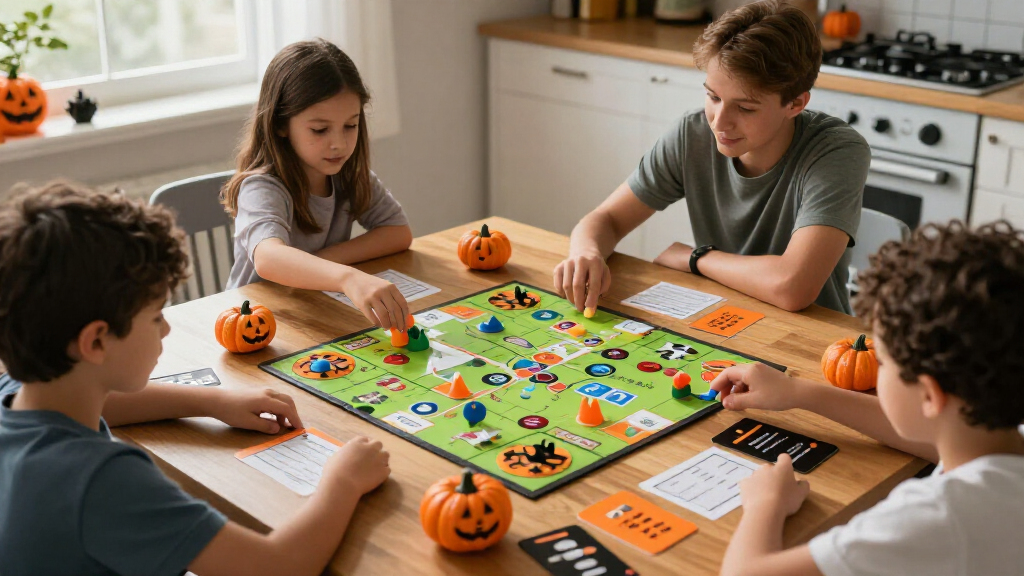

Educational Halloween board games can build observation, communication, memory, and early strategy skills while keeping seasonal play fun. My best overall pick is Peaceable Kingdom Ghost in the Attic for its cooperative play, while Spot It! The Nightmare Before Christmas Edition stands out for quick visual matching and Skillmatics Found It! Halloween for active clue-based searching. The main tradeoff is whether you want a tabletop game with repeatable turns, a simple party activity, or a more physical hunt that gets players moving. Age range, reading demands, and how much learning happens through play also separate these options. Read on for the full breakdown and help matching a game to your group.

Prime made for students and young adults
- Fast, free delivery for dorm and study essentials
- Prime Video and Amazon Music included
- Member-only deals
Key Takeaways
- Cooperation gives Ghost in the Attic the strongest all-around learning fit: players practice shared planning and communication rather than competing for individual wins.
- Spot It! is the clearest quick-play choice: its visual matching makes rounds easy to start, though it offers less variety in learning than games built around stories or group problem-solving.
- Found It! adds movement to the lineup: it suits children who learn well through searching and observation, but it is less suited to buyers seeking a traditional sit-down board game.
- The range of learning is broad, not uniform: charades emphasizes expression and social cues, while Boooo-opoly leans toward turn-taking and basic money concepts.
- Halloween theme does not guarantee age fit: the movie tie-ins and the 1978-themed game may appeal to older fans, while younger children may do better with simpler, more active, or cooperative play.
| Spot It! The Nightmare Before Christmas Edition |  | Best for Quick Visual Learning | Players: 2–8 | Playing time: 15 minutes | Cards: 55 circular cards | VIEW LATEST PRICE | See Our Full Breakdown |
| Halloween 1978 Board Game |  | Best for Older Horror Fans | Players: 2–4 | Recommended age: 14 years and up | Playing time: 60 minutes | VIEW LATEST PRICE | See Our Full Breakdown |
| Halloween Fun Charades for Kids |  | Best for Non-Readers and Group Play | Players: 2–6 | Age range: 6 years and up | Cards: 40 | VIEW LATEST PRICE | See Our Full Breakdown |
| Haunted Halloween: The Trick-or-Treat Board Game |  | Best Family Strategy Pick | Players: 2–5 | Recommended age: 7 years and up | Estimated playing time: 35 minutes | VIEW LATEST PRICE | See Our Full Breakdown |
| Operation: The Nightmare Before Christmas Board Game |  | Best for Solo Fine-Motor Practice | Players: 1 or more | Playing time: 15 minutes | Age recommendation: 6 years and up | VIEW LATEST PRICE | See Our Full Breakdown |
| Late for the Sky Boooo-opoly Halloween Board Game |  | Best for Classic Family Strategy | Players: 2–6 | Recommended age: 8 years and up | Game type: Property trading board game | VIEW LATEST PRICE | See Our Full Breakdown |
| Peaceable Kingdom Ghost in the Attic Cooperative Board Game |  | Best for Cooperative Problem-Solving | Players: 6 | Recommended age: 5 years and up | Game type: Cooperative strategy and deduction | VIEW LATEST PRICE | See Our Full Breakdown |
| Skillmatics Found It! Halloween Scavenger Hunt Game | 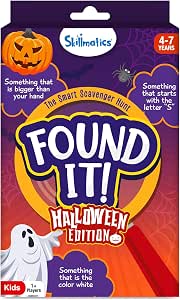 | Best for Preschool Learning | Age range: 4 years and up | Number of players: 1+ | Included components: 50 game cards and instruction manual | VIEW LATEST PRICE | See Our Full Breakdown |
| educational Halloween board game | Players | Included components | Recommended age | Material |
|---|---|---|---|---|
| Spot It! The Nightmare Before | 2–8 | Rules and tin carrying case | 6 years and up | — |
| Halloween 1978 Board Game | 2–4 | — | 14 years and up | Cardboard, paper, plastic |
| Halloween Fun Charades for Kid | 2–6 | Game cards and rules | — | — |
| Haunted Halloween: The Trick-o | 2–5 | — | 7 years and up | — |
| Operation: The Nightmare Befor | 1 or more | Game board, removable parts, Doctor and Specialist cards, instructions | — | — |
| Late for the Sky Boooo-opoly H | 2–6 | Cards, themed tokens, play money, deed cards, event cards, and game board | 8 years and up | Cardboard |
| Peaceable Kingdom Ghost in the | 6 | 1 game board, 1 light-up ghost, 3 haunted manor explorers, 4 camera flash tokens, 1 spinner, and instructions | 5 years and up | Plastic |
| Skillmatics Found It! Hallowee | — | 50 game cards and instruction manual | — | Paper |
More Details on Our Top Picks
Spot It! The Nightmare Before Christmas Edition
Fast visual matching gives this game its educational value: players scan each pair of cards, identify the shared image, and practice visual discrimination and quick recall. Its five ways to play offer more variety than the single core activity in Halloween Fun Charades for Kids, though charades asks players to communicate through movement rather than spot symbols. Rounds take about 15 minutes, and the tin is easy to bring along to a party or trip. The tradeoff is that success depends on quick visual recognition, so players who need more time may find the race frustrating. Its movie artwork also makes it a seasonal-themed choice rather than a broad Halloween learning game.
Pros:- Promotes visual discrimination through repeated image-matching rounds
- Five ways to play add variety beyond a single matching format
- Compact tin and short playing time suit travel and party breaks
- Supports two to eight players
Cons:- Quick recognition is central, which can disadvantage slower-paced players
- The learning focus is narrow and does not teach Halloween facts or academic content
Best for: Families with children ages six and up who enjoy short, repeatable visual challenges and want a portable game for Halloween gatherings
Not ideal for: Players who dislike speed-based visual tasks, or buyers seeking reading, math, or Halloween facts as the main learning activity
- Players:2–8
- Playing time:15 minutes
- Cards:55 circular cards
- Ways to play:5
- Recommended age:6 years and up
- Included components:Rules and tin carrying case
- Language:English
Our verdict“Choose this for compact, lively visual-matching practice, but pick Halloween Fun Charades for Kids if movement and expressive play matter more.”
Halloween 1978 Board Game
Hidden movement and asymmetric roles make this the most deduction-focused option in this batch: one player controls Michael Myers while the others coordinate as Laurie and her friends. The rule that Myers is visible only when players look directly at him asks the group to reason about limited information and communicate their choices. That gives it a sharper strategic challenge than Haunted Halloween: The Trick-or-Treat Board Game, which centers on collecting and protecting candy. The tradeoff is a narrower audience: it is recommended for ages 14 and up, takes about an hour, and needs at least two players. Its horror-film theme may also be too intense for younger children or families looking for gentle Halloween play.
Pros:- Asymmetric roles create distinct goals for the hidden-movement player and the opposing team
- Limited visibility encourages observation, deduction, and group communication
- Movie theme gives horror fans a stronger thematic fit than lighter family games
Cons:- Recommended age of 14 and up rules it out for many family game nights
- About 60 minutes is a longer commitment than the short-form games in this roundup
- Requires at least two players and depends on a group willing to play a horror-themed game
Best for: Teen and adult horror fans who want a longer, team-based deduction game with one player taking the opposing role
Not ideal for: Families with young children, solo players, or groups looking for a short, light Halloween activity
- Players:2–4
- Recommended age:14 years and up
- Playing time:60 minutes
- Game mechanics:Asymmetric, cooperative, hidden movement
- Theme:Horror, movie
- Material:Cardboard, paper, plastic
- Edition:Standard Edition
Our verdict“Pick this for an older group that wants tense hidden-movement deduction, not for a child-friendly or quick Halloween lesson.”
Halloween Fun Charades for Kids
Picture prompts for non-readers make this the most accessible choice here for mixed-age groups: children can join the acting round without first decoding written instructions. The 80 prompts across 40 cards support language expression, gesture, and interpretation, while the no-timer format keeps the activity less pressured than Spot It! The Nightmare Before Christmas Edition, where speed is central. It supports two to six players, but its educational value is informal rather than curriculum-based; it encourages communication rather than teaching facts or academic skills directly. Younger children may also need an adult to model an action or offer a hint. Compared with the strategic Haunted Halloween, this is easier to start, though it offers less tactical depth.
Pros:- Forty pictured prompts let non-readers take part
- Eighty acting prompts provide variety across the card set
- No timer reduces pressure for younger or hesitant players
- Supports group play for two to six players
Cons:- Younger children may need an adult to suggest how to act out a prompt
- Halloween-only prompts may limit use outside the season
- Builds communication through play but does not provide direct academic instruction
Best for: Families, classrooms, and Halloween parties with children ages six and up, especially groups that include non-readers
Not ideal for: Buyers seeking a strategy board game, a structured academic lesson, or an activity that works without acting and group participation
- Players:2–6
- Age range:6 years and up
- Cards:40
- Acting prompts:80
- Pictured prompts:40
- Timer:Not required
- Included components:Game cards and rules
Our verdict“Choose this for inclusive, low-pressure Halloween group play, particularly when some players are not yet reading.”
Haunted Halloween: The Trick-or-Treat Board Game
Family-friendly strategy sets this apart from the simpler prompt and matching games: players choose characters with costume powers, use portals and glowsticks, and compete to collect candy while avoiding the Banshee and her ghosts. Those choices can prompt planning and attention to changing threats, giving it more tactical texture than Halloween Fun Charades for Kids. At roughly 35 minutes for two to five players, it suits a family game night or party better than the hour-long Halloween 1978 Board Game. The tradeoff is that its learning is embedded in play rather than taught directly, and the competitive candy-collection goal may not suit groups that prefer cooperative games. Its strong Halloween theme may also see less use outside the season.
Pros:- Character powers and in-game tools create meaningful tactical choices
- Spooky theme is designed for family play rather than older horror audiences
- Two-to-five-player range fits family nights and small parties
- Three-dimensional pumpkin candy token holder adds a functional themed component
Cons:- Candy collection is competitive, which may not suit players who prefer cooperative goals
- Halloween-specific theme may limit play outside the season
- Strategy supports decision-making but does not directly teach a defined academic subject
Best for: Families with children ages seven and up who want a mid-length Halloween strategy game with character abilities and a party-friendly theme
Not ideal for: Groups seeking cooperative play, a direct educational lesson, or a game they expect to bring to the table year-round
- Players:2–5
- Recommended age:7 years and up
- Estimated playing time:35 minutes
- Genre:Family, strategy
- Included component:3D pumpkin candy token holder
- Dimensions:12.5 × 9.5 × 0.1 inches
- Weight:2.2 pounds
Our verdict“Choose this for a family group that wants Halloween-themed tactical choices, and skip it if cooperative learning is the priority.”
Operation: The Nightmare Before Christmas Board Game
Steady-hand play is the main skill this game invites: players remove 12 custom parts from Oogie Boogie without triggering the board, turning careful hand control into a short, repeatable challenge. Unlike Spot It! The Nightmare Before Christmas Edition, which rewards rapid visual scanning, this version favors patience and precise movement. It supports one or more players, so it can work as a solo activity as well as a group turn-taking game. Five movie-inspired sounds and Doctor and Specialist cards add theme and variation, but the learning remains focused on fine-motor control rather than Halloween knowledge. The board is larger than the portable card games, and the required two AA batteries are not included.
Pros:- Twelve removable parts create repeated fine-motor challenges
- One-player option works for solo play as well as group turns
- Five sounds and themed cards add movie-specific variety
- Six-and-up age recommendation makes it accessible to younger players
Cons:- Requires two AA batteries, which are not included
- Small removable parts may pose a choking hazard
- The 17-by-10-inch board is less portable than the tin-based Spot It! game
Best for: Children ages six and up who enjoy hands-on dexterity games, including families wanting an activity that can be played solo
Not ideal for: Buyers who need a compact travel game, dislike battery-powered sound effects, or want direct educational content beyond hand control
- Players:1 or more
- Playing time:15 minutes
- Age recommendation:6 years and up
- Board dimensions:17 × 10 inches
- Removable parts:12 custom parts
- Sounds:5
- Batteries:2 AA batteries required; not included
- Included components:Game board, removable parts, Doctor and Specialist cards, instructions
Our verdict“Pick this for themed dexterity practice and solo play, but choose Spot It! for a more portable game focused on visual recognition.”
Late for the Sky Boooo-opoly Halloween Board Game
Property trading gives Boooo-opoly more planning and negotiation than Skillmatics Found It! Halloween Scavenger Hunt Game, which centers on observation and quick object-finding. Players buy spooky properties, collect rent, and trade Haunted Houses for Full Moons, so the Halloween theme is woven into familiar board-game choices rather than only the artwork. Simple rules and quick setup make it a reasonable pick for mixed-age family game nights, while event cards and changing dice rolls add variety. The tradeoff is that this is still a luck-influenced property game: dice can outweigh careful decisions, and the recommended age of eight and up leaves younger children out. I’d choose it for a group that wants a traditional, competitive game, not cooperative problem-solving like Peaceable Kingdom Ghost in the Attic.
Pros:- Property buying, rent, and trades create light strategic choices.
- Frightful events and themed components keep the Halloween setting present throughout play.
- Simple rules and quick setup suit casual family gatherings.
- Supports two to six players, making it suitable for small and medium groups.
Cons:- Dice rolls introduce substantial luck, which can blunt strategic decisions.
- The recommended age of eight and up makes it a poor fit for younger children.
- Its property-trading format is competitive rather than cooperative.
Best for: Families with children eight and older who want a familiar, competitive Halloween game with light trading and strategy.
Not ideal for: Households with preschoolers or players who prefer cooperative decisions over dice-driven competition.
- Players:2–6
- Recommended age:8 years and up
- Game type:Property trading board game
- Theme:Halloween and ghosts
- Material:Cardboard
- Included components:Cards, themed tokens, play money, deed cards, event cards, and game board
- Language:English
- Brand:Late for the Sky
Our verdict“Choose Boooo-opoly for an older-child family group that wants a recognizable property-trading game with a Halloween theme.”
Peaceable Kingdom Ghost in the Attic Cooperative Board Game
Shared decision-making is the point here: players work together to keep the ghost from escaping a haunted mansion, rather than competing for property as they do in Late for the Sky Boooo-opoly. Its strategy and deduction give children a chance to discuss moves and solve a problem as a team, making the learning focus more social than in Skillmatics Found It! Halloween Scavenger Hunt Game, which emphasizes observation. The glow-in-the-dark board and light-up ghost add a visual hook that suits Halloween play. The limits matter, though: the listed player count is six, and small parts present a choking hazard. It is aimed at children five and up, so families with younger children need to follow that age guidance. Pick it for group cooperation, not open-ended play for a broad range of player counts.
Pros:- Cooperative play prompts children to discuss choices and work toward a shared goal.
- Strategy and deduction support problem-solving rather than relying only on matching or chance.
- Glow-in-the-dark board and light-up ghost add Halloween atmosphere.
- Includes explorers, camera flash tokens, a spinner, and instructions for structured play.
Cons:- The listed player count is six, limiting flexibility for smaller groups.
- Small parts create a choking hazard and require age-appropriate supervision.
- The five-and-up age guidance excludes younger preschoolers.
Best for: Families or classrooms with six children aged five and up who want cooperative strategy and shared problem-solving.
Not ideal for: Groups that need flexible player counts, or families with children under five who could access small parts.
- Players:6
- Recommended age:5 years and up
- Game type:Cooperative strategy and deduction
- Included components:1 game board, 1 light-up ghost, 3 haunted manor explorers, 4 camera flash tokens, 1 spinner, and instructions
- Material:Plastic
- Color:Multi-color
- Item weight:0.64 kg
- Brand:Peaceable Kingdom
Our verdict“Choose Ghost in the Attic for a six-player group of young children who learn best through cooperation and shared decisions.”
Skillmatics Found It! Halloween Scavenger Hunt Game
Everyday-object prompts make this the most direct early-learning option in this group: children practice observation and reasoning while searching for things around them. Unlike Late for the Sky Boooo-opoly, it doesn’t ask young players to manage property, rent, or trading, and its age range of four and up reaches children below the other two games’ recommended starting ages. Guided play offers adult-led structure, while Fastest Finder Mode adds a quicker, more competitive pace. That flexibility helps it fit home, school, playdates, and travel, though it is a scavenger hunt card game rather than a traditional board game. Guided prompts require an adult to read aloud, and older children may outgrow its straightforward search task sooner than they would a strategy game such as Ghost in the Attic.
Pros:- Prompts encourage observation, reasoning, and early learning through active searching.
- Guided play and Fastest Finder Mode offer different ways to structure a round.
- One or more players can participate, supporting solo play as well as groups.
- Card format suits home, school, playdates, and travel.
Cons:- Guided play requires an adult to read prompts.
- The simple search format is best suited to younger children and may not hold older players’ interest.
- It is a scavenger hunt card game, not a conventional board game.
Best for: Parents and early-years educators seeking a portable Halloween activity for children aged four and up that practices observation and reasoning.
Not ideal for: Older children wanting sustained board-game strategy, or families who need guided play that children can run without an adult reading prompts.
- Age range:4 years and up
- Number of players:1+
- Included components:50 game cards and instruction manual
- Material:Paper
- Game modes:Guided play and Fastest Finder Mode
- Brand:Skillmatics
- Model number:SKILL1317FH
Our verdict“Choose Found It! for younger children who benefit from an adult-guided, portable Halloween search game rather than a traditional strategy board game.”

How We Picked
I compared these eight games on how directly their play supports useful skills, including observation, recall, communication, cooperation, turn-taking, and simple decision-making. I also weighed how readily a family can explain the rules, whether the activity suits different group sizes and attention spans, and how closely the Halloween theme supports the play rather than serving as decoration. The ranking favors games with a clear learning benefit and accessible play, not simply the most recognizable Halloween branding.
Ghost in the Attic ranks highest for combining cooperation with accessible group play. Spot It! and Found It! follow as distinct, easy-to-understand options for visual matching and active observation. The remaining games serve more specific interests: party-style expression, movie fandom, dexterity, or property-game strategy. Those narrower fits can be a plus for the right household, but they make the games less versatile as general educational picks.
| educational Halloween board game | Material |
|---|---|
| Spot It! The Nightmare Before | — |
| Halloween 1978 Board Game | Cardboard, paper, plastic |
| Halloween Fun Charades for Kid | — |
| Haunted Halloween: The Trick-o | — |
| Operation: The Nightmare Befor | — |
| Late for the Sky Boooo-opoly H | Cardboard |
| Peaceable Kingdom Ghost in the | Plastic |
| Skillmatics Found It! Hallowee | Paper |
Factors to Consider When Choosing Educational Halloween Board Games
Choosing among educational Halloween games is less about finding the game with the most rules and more about matching the activity to the players. I recommend weighing the kind of skill you want to encourage against your group’s age, energy, patience, and interest in the theme.
Choose the Skill You Want Play to Practice
Start with the behavior you hope the game will invite, rather than the word “educational” on the box. Matching and scavenger hunts encourage attention to visual details, while charades asks players to interpret gestures and communicate without words. Cooperative games give children a reason to plan together, and property-style games can introduce choices around resources and turn-taking. A common mistake is expecting one game to teach every skill equally well. Pick one or two priorities, then look for rules that make players use those skills repeatedly. This approach also helps distinguish genuine learning through play from a Halloween theme layered onto a familiar game.
Match the Rules and Reading Load to the Players
Age recommendations are a starting point, but reading ability, patience, and familiarity with games matter just as much. Young players may enjoy a game with simple turns but lose interest if they need to read cards independently or wait through long rounds. Older children may find a very direct matching game fun as a warm-up yet want more decision-making for a full game night. If players span several ages, favor rules that let younger children join without an adult translating every move. Before buying, check whether the game depends on reading, counting, or remembering multi-step instructions. A compact skill fit often beats a game that sounds more advanced but leaves some players on the sidelines.
Decide Between Tabletop Play and Active Play
A board game can be a seated activity, but Halloween games also include movement-based searching and performance. Active formats can suit children with energy to spare and make observation part of the room or home, while tabletop formats are easier to run in a small space or during a quiet evening. Think about where the game will be played, how much setup the group will tolerate, and whether adults can supervise movement. A frequent buying mistake is choosing an energetic game for a setting where players must stay seated, or a slow turn-based game for a group that wants to move. For parties, check whether several children can participate at once or whether turns create a queue. The right format can matter more than the theme when deciding whether a game will come off the shelf.
Look Past the Halloween Artwork
Seasonal packaging can make a game feel festive, but the underlying play determines whether it earns repeat use after Halloween. A familiar movie license may attract fans, yet it can also narrow interest among children who do not know the characters. A general Halloween activity may be easier to share across a mixed group, though it may offer less story or character appeal. Consider whether the theme changes the actions players take or mainly changes the illustrations. If you want a game for more than one season, prioritize mechanics your household already enjoys and a theme that does not depend on specific fandom. For a Halloween party, a highly seasonal look may be a benefit rather than a limitation.
Balance Replayability Against Complexity
Repeated play depends on more than having many components or a long rulebook. Fast rounds can make it easy to play again, while varied prompts, group decisions, or changing searches can keep sessions from feeling identical. More rules may add strategic depth but can also slow the first game, especially for younger players or casual guests. Ask whether your group prefers a quick activity that can be repeated between other party games or one longer session with a developing plan. Another common mistake is treating complexity as a measure of educational value; a simple game can exercise attention and recall effectively. Pay more for depth only when players are likely to enjoy learning and using the added rules.
Consider Group Size, Setting, and Adult Support
Check how many people can play comfortably and whether the game works for siblings, a classroom group, or a small family evening. Some activities benefit from a lively group, while others are easier to manage with a few players and an adult nearby. A game that relies on verbal clues or shared planning may need a facilitator for very young children, whereas straightforward matching can often start with less explanation. For classrooms and parties, consider whether everyone stays involved or spends time waiting. Storage and setup matter too: small, easy-to-pack formats travel well, while more involved games need a clear surface and a little preparation. These practical details often determine how often a game gets used.
Frequently Asked Questions
Which of these games is the best choice if I want children to cooperate rather than compete?
Peaceable Kingdom Ghost in the Attic is the most direct fit because cooperation is central to its appeal. A shared goal gives players reasons to talk through choices and help one another, rather than focusing only on individual wins. That makes it a useful choice for siblings or groups where competitive play can become tense. If you want a quicker activity instead, Spot It! offers simple shared play but is less centered on group planning. Check the age guidance and rules before buying to confirm the game suits your players’ reading and attention skills.
Are any of these suitable for a Halloween party with children who have not played board games before?
Spot It!, Halloween Fun Charades for Kids, and Found It! Halloween are natural places to start because their central activities are easy to explain: match, act, or search. The best fit depends on the party setting. Choose matching for a quieter table, charades for a group ready to perform, or a scavenger hunt when there is room to move and an adult can set boundaries. For a mixed-age group, explain one sample turn before starting and keep teams flexible. A longer, more strategic game may suit a smaller group better than guests arriving and leaving throughout the party.
Which game is most likely to work for children who have trouble sitting still?
Skillmatics Found It! Halloween is the strongest match for players who prefer searching and movement over waiting for turns. It turns observation into an active task, which can make participation feel more natural for energetic children. Its format does require an appropriate space and clear expectations about where players may go. If the game must happen around a table, a fast visual-matching option may hold attention better than a slow, strategy-focused session. For younger players, an adult can adapt the search area so the activity stays manageable and safe.
Should I choose a movie-themed game if some children do not know the characters?
A movie license can add appeal for fans, but it should not be the only reason to choose a game for a group. Spot It! and Operation use recognizable Nightmare Before Christmas branding, while their suitability still depends on whether players enjoy the underlying matching or dexterity play. For a mixed group, a general Halloween activity such as charades or a scavenger hunt may be easier to share. If a child is unfamiliar with the film, briefly explain the theme and focus on the rules rather than character references. For a game intended to return each year, consider whether the mechanics will hold interest without fandom.
Which options make sense if I want a game that can come out beyond Halloween?
Games built around familiar mechanics may have more use outside the season than those whose appeal depends heavily on Halloween imagery or a specific film. Spot It! can work as a quick matching activity, while charades can suit other party occasions if the prompts and group are a fit. Boooo-opoly may appeal to players who enjoy property-style turns, though its seasonal theme remains part of the presentation. The best choice depends on whether your household values year-round versatility or a distinctive seasonal tradition. Check the game’s actual prompts and components before assuming they can be used unchanged for other occasions.
Conclusion
For the broadest mix of accessible play and shared skill-building, I recommend Peaceable Kingdom Ghost in the Attic as best overall. My best value in play versatility is Spot It! The Nightmare Before Christmas Edition: its quick visual matching makes it easy to bring out for short rounds, although it is less focused on cooperation. For best for beginners, I’d choose Halloween Fun Charades for Kids when the group enjoys acting, or Spot It! for players who prefer a seated activity. The best premium-style pick for a specific interest is Operation: The Nightmare Before Christmas for fans seeking dexterity play, while Found It! Halloween is my pick for children who need an active scavenger-style game. Choose Boooo-opoly for players drawn to turn-based property strategy, and the 1978-themed game for a group specifically interested in that horror film; these narrower choices are less universal than the cooperative and quick-play options.