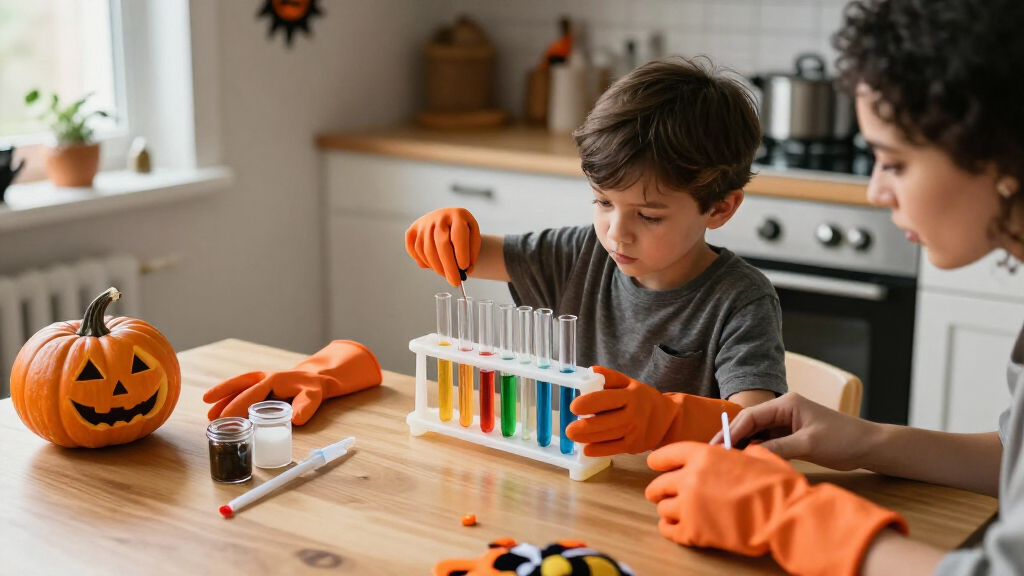

For a Halloween biology activity, I’d match the kit to the kind of science your group wants: anatomy, specimen dissection, or genetics. The Top Secret Toys Dissect-It Mini Labs Salamander Kit is my pick for younger children who want spooky anatomy without a wet lab. For older students seeking traditional dissection, the Apologia Biology Dissection Complete Kit offers several specimens, while the Thames & Kosmos Genetics & DNA Lab brings a more classroom-style set of experiments to a seasonal science night.

Prime made for students and young adults
- Fast, free delivery for dorm and study essentials
- Prime Video and Amazon Music included
- Member-only deals
These kits are not interchangeable. The salamander is a mess-free synthetic model, not a study of a real specimen; Apologia is the most direct route to hands-on dissection but calls for adult planning and suitable supplies; and the DNA lab focuses on cells, inheritance, and DNA rather than Halloween-style anatomy. I ranked them by how clearly each fits a Halloween biology activity, the learning it supports, and the work or supervision it asks of the buyer.
Key Takeaways
- The Top Secret Toys salamander kit is the clearest fit for a younger Halloween activity because it uses a synthetic model and kid-friendly tools rather than animal specimens.
- Apologia offers the broadest anatomy practice across earthworms, frogs, fish, and crayfish, but its course-oriented format calls for planning and does not include detailed instructions.
- Thames & Kosmos shifts the theme from spooky anatomy to genetics, with tomato DNA extraction, a DNA model, and a manual covering 20 experiments.
- Age and comfort with dissection matter more than the Halloween theme: the supplied age guidance ranges from 6+ for the synthetic salamander to 10+ for the genetics lab, while Apologia is aimed at high school biology.
- For a low-mess party activity, choose the synthetic salamander; for a biology course, choose Apologia; for a broader lab-style exploration of heredity, choose Thames & Kosmos.
| Top Secret Toys Dissect-It Mini Labs Salamander Dissection Kit for Kids, Realistic Synthetic Animal Anatomy STEM Toy, Ages 6+ |  | Best Overall for a Kid-Friendly Halloween Anatomy Activity | Age guidance: 6 years and up | Activity: Synthetic salamander anatomy exploration | Model material: Gelatin mini salamander | VIEW LATEST PRICE | See Our Full Breakdown |
| Apologia Biology Dissection Complete Kit |  | Best for High School Specimen Dissection | Intended level: High school biology | Course fit: Designed to complement Apologia Biology | Specimens described: Earthworms, frogs, fish, and crayfish | VIEW LATEST PRICE | See Our Full Breakdown |
| Thames & Kosmos Genetics & DNA Lab |  | Best for DNA Experiments and a Broader Biology Lesson | Age guidance: 10+ | Experiments: Manual describes 20 experiments | Featured activity: Tomato DNA isolation | VIEW LATEST PRICE | See Our Full Breakdown |
| halloween biology experiment kit | ASIN | Age guidance | Manufacturer |
|---|---|---|---|
| Top Secret Toys Dissect-It Min | B0F4RSDS2J | 6 years and up | Top Secret Toys |
| Apologia Biology Dissection Co | B003YWLRH6 | — | — |
| Thames & Kosmos Genetics & DNA | B08TVX8N3K | 10+ | Thames & Kosmos |
More Details on Our Top Picks
Top Secret Toys Dissect-It Mini Labs Salamander Dissection Kit for Kids, Realistic Synthetic Animal Anatomy STEM Toy, Ages 6+
I rank this first for families who want a recognizably spooky biology station without handling a real animal specimen. The kit uses a gelatin mini salamander with a plastic skeleton, giving children a tactile way to explore where organs and bones sit while keeping the activity synthetic and mess-controlled. That makes it a more approachable Halloween pick than Apologia’s multi-specimen dissection kit, which is designed for high school biology and involves a different level of preparation.
The appeal is focused rather than broad. Children get an anatomy activity centered on one animal, with kid-friendly tools and instructions intended to guide the process. For a party or short family project, that narrow scope can be a strength: the salamander gives the activity a clear theme and the synthetic construction avoids the handling and cleanup demands associated with real specimens. The stated 6+ age guidance also makes it the youngest-oriented choice in this lineup; the Thames & Kosmos DNA kit is listed for ages 10 and up.
There are limits. This is not a substitute for comparing several organisms, practicing conventional specimen dissection, or studying genetics. The kit’s learning stays with salamander anatomy, and the supplied description says detailed instructions matter for the best result. I’d plan to read the directions before the activity and have an adult nearby, particularly for younger children using tools. Buyers looking for a full biology lab should choose Apologia or Thames & Kosmos instead; buyers who want contained, themed anatomy will get the most from this option.
Pros:- Synthetic salamander anatomy provides hands-on exploration without a real specimen.
- Kid-friendly tools and a stated age range of 6+ suit younger beginners.
- A distinctive animal theme works naturally for a Halloween science activity.
- The skeleton and organ elements connect the activity to basic anatomy.
Cons:- The activity is limited to salamander anatomy rather than a range of biology topics.
- Following the instructions closely is needed for the intended activity.
Best for: Families with children aged 6 and up who want a contained, hands-on anatomy activity for Halloween, a science party, or a first introduction to dissection concepts.
Not ideal for: Students who need real-specimen practice, a range of organisms, or experiments covering genetics and DNA should skip this single-animal synthetic model.
- Age guidance:6 years and up
- Activity:Synthetic salamander anatomy exploration
- Model material:Gelatin mini salamander
- Skeleton:Plastic skeleton
- Included components:Gelatin mini salamander with plastic skeleton
- Tools:Kid-friendly tools, as described
- Manufacturer:Top Secret Toys
- ASIN:B0F4RSDS2J
Our verdict“I’d choose this synthetic salamander kit for a younger Halloween group that values approachable anatomy and lower-mess handling over real-specimen practice.”
Apologia Biology Dissection Complete Kit
Apologia is the lineup’s clearest choice for a student who wants to move beyond a model and work with real dissection specimens. Its described set covers earthworms, frogs, fish, and crayfish, giving it much more anatomical variety than the single salamander in the Top Secret Toys kit. That breadth makes it the better fit for a high school biology course or a home study plan built around comparing different organisms, not simply hosting a brief Halloween activity.
The course connection matters. This kit is designed to complement Apologia Biology and frames the work around scientific understanding and skill development. Buyers already using that course may appreciate having several specimens and tools gathered in one kit. For a seasonal event, it can make a more serious, lab-like station than the synthetic salamander, but it is not the easiest option to put on a table and start immediately. The supplied information mentions household supplies and optional microscope use, so I would check the course materials and prepare the workspace before scheduling a session.
The main drawback is the gap between its intended breadth and the guidance described. Detailed instructions are not included, which makes this less suitable for a student or adult who expects a self-contained, first-time activity. Product information also notes possible variation in kit quality, so I would inspect the contents before a lesson rather than leave setup until the event. Compared with Thames & Kosmos, Apologia is more focused on anatomy and specimens; compared with the salamander, it asks for more preparation and is aimed at a more advanced learner. Choose it for curriculum-aligned dissection, not a low-effort Halloween craft.
Pros:- Includes several specimen types: earthworms, frogs, fish, and crayfish.
- Designed to complement the Apologia Biology course.
- Offers a more varied dissection experience than the salamander-only kit.
- Includes dissection tools and specimens according to the product description.
Cons:- Detailed instructions are not included, so buyers may need course materials or other guidance.
- The product description notes that basic household supplies may be needed.
- Reported kit quality can vary, making a contents check prudent before a planned lesson.
Best for: High school biology students, homeschoolers, or instructors following Apologia Biology who want to work with several kinds of specimens.
Not ideal for: Young children, casual party hosts, and first-time users seeking a self-guided kit with detailed instructions should look at the synthetic salamander or a manual-led activity instead.
- Intended level:High school biology
- Course fit:Designed to complement Apologia Biology
- Specimens described:Earthworms, frogs, fish, and crayfish
- Kit contents:Dissection tools and specimens, as described
- Household supplies:May be used for experiments
- Microscope:Optional use
- Set name:Apologia Biology Dissection Complete Kit
- Number of items:6
- ASIN:B003YWLRH6
Our verdict“I’d pick Apologia for course-linked, multi-specimen dissection when the buyer can supply guidance and preparation, but not for a simple, younger-child Halloween activity.”
Thames & Kosmos Genetics & DNA Lab
This is the most different choice in the group: rather than dissecting an animal, the Thames & Kosmos Genetics & DNA Lab turns biology into a set of activities about cells, chromosomes, inheritance, and DNA. Its included components support tomato DNA isolation, a DNA model, inheritance activities, and other experiments, with a manual describing 20 experiments. For a Halloween event, I’d use it for a “mystery of life” station rather than advertise it as a dissection kit.
The listed 10+ age guidance puts it between the younger synthetic salamander and Apologia’s high school course orientation. It also has the most explicitly described learning resources: test tubes, a funnel, filter paper, pipette, measuring cup, inheritance worksheet, chromosome puzzle, cell poster, DNA model, and manual. That range can help a buyer plan more than one activity or build a longer lesson, while the salamander provides a simpler single-animal experience. Compared with Apologia, this kit avoids the focus on real specimen dissection and shifts attention to heredity and molecular biology.
It is not the pick for a child whose main goal is to open up a model animal or study organs. Some parts are small or delicate, and the product description calls for adult supervision with younger users; the glass bottle also makes sensible handling part of setup. A manual and many components make the activity more structured, but they do not remove the need to organize materials and guide learners. I rank it third for the Halloween-specific angle because DNA can feel less immediately spooky than anatomy, not because the educational scope is weak. Choose it when genetics is the theme you want and your group is ready for a more varied lab activity.
Pros:- The manual describes 20 experiments, giving buyers a structured set of activities.
- Includes materials for tomato DNA isolation and a physical DNA model.
- Covers genetics concepts including inheritance, mutations, chromosomes, and cells.
- Offers a broader topic range than either anatomy-focused kit.
Cons:- It is a genetics lab, not an animal dissection or anatomy kit.
- The listed age guidance is 10+, and younger users need adult supervision.
- Some included components are small or delicate, and the kit includes a glass bottle.
Best for: Families, educators, or students aged 10 and up who want guided experiments on DNA, inheritance, cells, and chromosomes rather than animal dissection.
Not ideal for: Buyers looking for a realistic anatomy or specimen-dissection activity, or a kit for young children who need large, durable parts, should choose another option.
- Age guidance:10+
- Experiments:Manual describes 20 experiments
- Featured activity:Tomato DNA isolation
- Topics:Cells, chromosomes, DNA, inheritance, mutations, and cloning
- Included learning materials:Inheritance worksheet, cell poster, chromosome puzzle, DNA model, and manual
- Selected lab components:Glass bottle, test tubes, funnel, filter paper, pipette, measuring cup, and petri dish
- Manufacturer:Thames & Kosmos
- Model number:665007
- ASIN:B08TVX8N3K
Our verdict“I’d choose Thames & Kosmos for a guided Halloween science session about DNA and heredity, but not when the main attraction needs to be dissection.”

How We Picked
I compared the three kits against the needs behind the phrase Halloween biology experiment kits: a buyer may want eerie-looking anatomy, a genuine dissection activity, or a science station that feels at home at an autumn event without relying on gore. I gave weight to the type of material students handle, the age and experience implied by the product information, the range of concepts and activities, and how much setup or adult guidance the description suggests.
The order reflects different kinds of usefulness, not a claim that every household should choose the same kit. I placed the synthetic salamander first because its safe, contained format is the most adaptable for a family Halloween activity. Apologia follows for buyers who specifically want specimen dissection and are prepared for its course-style limitations. Thames & Kosmos ranks third for the Halloween angle, not for educational value: it is the strongest DNA-focused option here, but its emphasis is genetics rather than dissection or anatomy.
I also treated missing details as part of the buying decision. Apologia’s supplied description says the kit has tools and specimens but lacks detailed instructions, so I would not assume a first-time learner can start without outside guidance. The salamander kit calls for following its instructions, and the DNA lab lists a substantial manual and components for 20 experiments. I have not inferred that consumables, protective equipment, microscopes, or extra household supplies are included unless the provided product details say so.
All three can support a science activity, but they differ in mess, realism, age fit, and theme. A model can make anatomy accessible without reproducing a real dissection; real specimens provide a different kind of practical study but need more preparation; and DNA work offers a less anatomical way to make biology feel mysterious. Those distinctions drive the recommendations below.
| halloween biology experiment kit | Manufacturer | ASIN |
|---|---|---|
| Top Secret Toys Dissect-It Min | Top Secret Toys | B0F4RSDS2J |
| Apologia Biology Dissection Co | — | B003YWLRH6 |
| Thames & Kosmos Genetics & DNA | Thames & Kosmos | B08TVX8N3K |
Factors to Consider When Choosing Halloween Biology Experiment Kits
I’d choose a Halloween biology kit by deciding what learners will actually do, then checking age fit, supervision, materials, and preparation. The spooky theme can help sell the activity, but the kit’s teaching format determines whether it works for a quick party station, a school lesson, or a planned home lab.Decide whether you want anatomy, dissection, or genetics
The first choice is the subject, because these three kits teach different kinds of biology. The synthetic salamander is anatomy-centered and gives a child a model to explore. Apologia is the most traditional dissection option, with multiple named specimens for students working through a course. Thames & Kosmos focuses on DNA and inheritance, including a tomato DNA activity and a DNA model. A buyer searching broadly for a Halloween activity may find all three relevant, but only the first two put animal anatomy at the center.
For a room full of younger children, I’d lean toward the model because its activity is easier to explain as a contained, tactile exploration. For a high school lesson, the Apologia set makes more sense if the goal is to compare specimens and the instructor already has appropriate guidance. For students drawn to puzzles, molecular biology, or heredity, the DNA kit provides a more varied subject path. Matching the kit to the lesson prevents a mismatch between a child expecting organs and a box built around chromosomes.
Match the age guidance to the actual group
Age labels are useful starting points, not a substitute for adult judgment. The salamander listing states 6 years and up, while Thames & Kosmos lists 10+. Apologia is described as a high school biology kit. Those are meaningfully different audiences: younger learners may want a visible model and short directions, while older students can handle more involved terminology and preparation with suitable support.
I’d also look at fine-motor demands and comfort with the subject. The DNA set contains small components and a glass bottle, and younger users need supervision. A real-specimen dissection session may be unsuitable for a child who dislikes that material, even if the child is old enough for the course. If the group includes several ages, plan an adult-led station and choose the activity whose tools and concepts can be adjusted without changing what the kit is designed to do.
Be realistic about mess, setup, and guidance
Halloween parties often reward activities that are quick to set up and easy to supervise. The synthetic model is the lower-mess direction described here, while a specimen kit calls for more attention to workspace and supplies. The Apologia product information mentions household supplies and optional microscope use, but does not include detailed instructions. I would gather course guidance and confirm what is needed before setting a date for the activity.
Thames & Kosmos provides a manual for 20 experiments, but its range of lab components still takes organization. Check the activity you want to run, rather than assuming every experiment uses the same materials or setup. For all three, I’d read directions ahead of time, place tools where an adult can monitor them, and confirm which items are actually included. The product information supplied here does not establish that protective gear, extra consumables, or microscopes are included unless specifically stated.
Choose realism at the level your learners want
A synthetic model and a real specimen offer different learning experiences; one is not automatically a replacement for the other. The salamander provides a way to discuss organ and skeleton placement without the material demands of a conventional dissection. Apologia lets students work with several animal specimens, which may better serve a course focused on practical anatomy. If a buyer values a first, approachable encounter with the idea of dissection, the model is the more suitable starting point. If the learning objective requires specimens, choose a kit designed for that work and plan appropriate supervision.
For some families, a Halloween theme means theatrical anatomy; for others, the goal is simply memorable science. DNA experiments can fit the latter especially well. A tomato DNA activity offers a surprising biology demonstration without relying on an animal specimen, though it will not satisfy a child specifically asking to explore organs. I’d explain the activity in advance so the spooky styling supports the science instead of promising a different kind of kit.
Check the kit’s scope before buying
Count the topics and activities, not just the pieces in the box. The salamander kit stays on one animal, which keeps its purpose simple but limits variety. Apologia’s four described specimen types support broader comparative anatomy, while the DNA lab lists equipment and learning materials for a set of genetics experiments. Those differences matter if the kit needs to serve a full unit rather than one evening.
For repeated use or a planned course, a manual and clear lesson alignment can save time. Thames & Kosmos is strongest on the supplied experiment guidance; Apologia’s course alignment can be useful to buyers who already have the relevant lesson materials, but the kit description does not promise detailed directions. The salamander is the most straightforward conceptually, yet its single-animal focus means it may be a one-topic activity. I’d buy for the learning goal I can name, not for the longest component list.
Frequently Asked Questions
Which kit is the best fit for a younger child’s Halloween biology activity?
I’d start with the Top Secret Toys salamander kit for children within its stated 6+ age guidance. Its synthetic animal model and kid-friendly tools offer an anatomy activity without using a real specimen, making it a more approachable choice than Apologia’s high school dissection kit. An adult should still review the instructions and supervise tool use, especially with younger children.
Which option includes real animal specimens?
The Apologia Biology Dissection Complete Kit is the option described with real specimens, including earthworms, frogs, fish, and crayfish. It is intended to complement a high school biology course, so I would pair it with appropriate lesson guidance and prepare the workspace in advance. The salamander kit uses a synthetic model, and the Thames & Kosmos kit centers on genetics experiments rather than animal dissection.
Is the Thames & Kosmos Genetics & DNA Lab a dissection kit?
No. It is a genetics and DNA science kit, not an animal anatomy or dissection set. The described activities include isolating tomato DNA, assembling a DNA model, and exploring inheritance and related topics, supported by a manual that outlines 20 experiments. It can suit a Halloween science event with a biology-mystery theme, but buyers seeking organs or specimen work should choose one of the other kits.
Which kit needs the most preparation before an activity?
Apologia calls for careful planning because it is intended for high school dissection, may use household supplies and an optional microscope, and does not include detailed instructions according to the product information. The DNA lab also has multiple components to organize, although its manual describes the experiments. The synthetic salamander is the more contained choice, but I would still read its directions before using the kit with children.
Can these kits work for a Halloween party?
Yes, if the activity suits the group and the host prepares it in advance. The synthetic salamander is the clearest fit for a short, younger-child anatomy station; Thames & Kosmos can support a guided DNA activity for older children; and Apologia is better suited to an organized course-style session than a casual drop-in table. I’d match the kit to the learners’ ages, explain what the activity involves, and plan adult supervision rather than relying on the Halloween theme alone.
Conclusion
My recommendation depends on who will use the kit. For younger children and a lower-mess Halloween activity, I’d choose the Top Secret Toys synthetic salamander. For a high school learner following Apologia Biology who wants to study multiple specimens, I’d choose the Apologia dissection kit and arrange guidance and supplies first. For an older child or family interested in DNA, inheritance, and a set of manual-led experiments, Thames & Kosmos is the stronger match. Each serves a distinct purpose: model anatomy, real specimen dissection, or genetics. Picking the activity that fits your learners is a better route to a memorable science night than choosing by spooky packaging alone.