
For a broad mix of activities, I’d start with the UNGLINGA 272-Experiment STEM Science Kit as the best overall pick; the National Geographic Amazing Chemistry Set stands out for focused chemistry, while Doctor Jupiter My First Science Experiments Kit suits younger beginners. The main tradeoff is breadth versus focus: kits with many experiments can offer more ways to explore, but a chemistry-specific set may provide a clearer introduction to reactions and lab routines. Age guidance, adult help, and how easy it is to repeat activities matter as much as the experiment count. Read on for the full breakdown of all 15 options and which kind of young scientist each suits best.

Prime made for students and young adults
- Fast, free delivery for dorm and study essentials
- Prime Video and Amazon Music included
- Member-only deals
Key Takeaways
- The UNGLINGA 272-Experiment kit is the broadest all-round choice in this lineup, while its wide STEM scope is less chemistry-focused than the National Geographic Amazing Chemistry Set.
- Experiment counts signal variety, not chemistry depth. The 150- and 272-activity kits may span multiple science subjects, so check the activity mix if chemistry is the main goal.
- Age fit changes the shortlist. Doctor Jupiter My First is aimed at ages 4+, while many National Geographic kits and Doctor Jupiter Ultimate are intended for older children.
- Presentation can shape a child’s interest. Gross science and magic-themed kits make theatrical activities their draw; children seeking straightforward chemistry practice may prefer a conventional set.
- Specialized formats trade breadth for a clearer theme. Ooze Labs’ station-style setup and the Junior Chemistry Set’s 50-experiment scope may appeal to families who want a more defined activity experience.
| UNGLINGA 272-Experiment STEM Science Kit for Kids |  | Best for Maximum Variety | Brand: UNGLINGA | Experiments: 272 | Recommended age: 8 years and up | VIEW LATEST PRICE | See Our Full Breakdown |
| National Geographic Mega Science Lab: 75 Experiments for Kids Ages 8+ |  | Best for Science Variety with Specimens | Brand: Blue Marble | Experiments: 75 | Age range: 8 years and up | VIEW LATEST PRICE | See Our Full Breakdown |
| UNGLINGA 70-Experiment Chemistry Science Kit for Kids |  | Best for a More Chemistry-Focused Start | Brand: UNGLINGA | Experiments: 70 | Age range: 8 years and up | VIEW LATEST PRICE | See Our Full Breakdown |
| Kids’ Science Kit with 80 Experiments |  | Best for Younger Beginners | Brand: Kuovei | Experiments: 80 | Recommended age: 6 years and up | VIEW LATEST PRICE | See Our Full Breakdown |
| UNGLINGA 150-Experiment Science Kit for Kids | 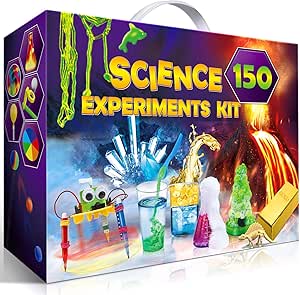 | Best Mid-Range Choice for Broad STEM | Brand: UNGLINGA | Experiments: 150 | Age range: 8 years and up | VIEW LATEST PRICE | See Our Full Breakdown |
| Doctor Jupiter My First Science Experiments Kit for Kids Ages 4+ |  | Best for Preschool Beginners | Age range: 4–8 years | Number of experiments: 50+ | Set name: My First Science Kit | VIEW LATEST PRICE | See Our Full Breakdown |
| National Geographic Junior Chemistry Set with 50 Experiments |  | Best for First Chemistry Experiments | Age range: 4 years and up | Experiments: 50 | Lab tools: 20+ | VIEW LATEST PRICE | See Our Full Breakdown |
| National Geographic Gross Science Kit with 45 Experiments for Kids Ages 8–12 |  | Best for Gross-Out Science Fans | Age range: 8 years and up | Total experiments: 45 | Experiments with included supplies: 15 | VIEW LATEST PRICE | See Our Full Breakdown |
| National Geographic Amazing Chemistry Set, 100+ Experiments for Ages 8+ |  | Best for Broad Chemistry Exploration | Age range: 8 years and up | Total experiments: 100+ | Experiments with included materials: 15 | VIEW LATEST PRICE | See Our Full Breakdown |
| National Geographic Science Magic Kit for Kids, 20 Magic Experiments and 85+ Bonus Experiments |  | Best for Science Shows and Demonstrations | Age range: 8 years and up | Included-material experiments: 20 | Bonus experiments: 85+ using common household items | VIEW LATEST PRICE | See Our Full Breakdown |
| National Geographic Chemistry Set with 45 Experiments for Kids |  | Best for Big, Visual Reactions | Brand: National Geographic | Age range: 8 years and up | Experiments: 45 | VIEW LATEST PRICE | See Our Full Breakdown |
| Doctor Jupiter Ultimate Science Experiments Kit for Kids Ages 8+ |  | Best for the Widest Activity Range | Brand: Doctor Jupiter | Recommended age: 8 years and up | Included experiments: 135+ | VIEW LATEST PRICE | See Our Full Breakdown |
| National Geographic Magic Chemistry Set with 10 Experiments for Kids Ages 8–12 |  | Best for Science-Magic Performances | Brand: Blue Marble | Age range: 8 years and up | Experiments: 10 | VIEW LATEST PRICE | See Our Full Breakdown |
| Ooze Labs Chemistry Station Experiment Set |  | Best for Younger Beginners | Brand: Thames & Kosmos | Age range: 6 years and up | Experiments: Approximately 20 | VIEW LATEST PRICE | See Our Full Breakdown |
| Butterfly EduFields 150+ Science Experiments Kit for Kids |  | Best for Broad Hands-On Variety | Brand: Butterfly EduFields | Age range: 8 years and up | Experiments: 150+ | VIEW LATEST PRICE | See Our Full Breakdown |
| chemistry sets for kid | Age range | Brand | Experiments | Included components |
|---|---|---|---|---|
| UNGLINGA 272-Experiment STEM S | — | UNGLINGA | 272 | — |
| National Geographic Mega Scien | 8 years and up | Blue Marble | 75 | Earth science kit, chemistry kit, science magic kit, and guide to 30 additional experiments |
| UNGLINGA 70-Experiment Chemist | 8 years and up | UNGLINGA | 70 | — |
| Kids’ Science Kit with 80 Expe | — | Kuovei | 80 | Goggles, gloves, reusable chemical bottles, test tubes, measuring tools, droppers, and experiment materials |
| UNGLINGA 150-Experiment Scienc | 8 years and up | UNGLINGA | 150 | Science experiment tools and materials |
| Doctor Jupiter My First Scienc | 4–8 years | — | — | — |
| National Geographic Junior Che | 4 years and up | — | 50 | Test tubes, goggles, and other lab tools |
| National Geographic Gross Scie | 8 years and up | — | — | Gross Science Kit and experiment guide |
| National Geographic Amazing Ch | 8 years and up | — | — | — |
| National Geographic Science Ma | 8 years and up | — | — | Materials for 20 magic experiments, bonus booklet, magic wand, and white gloves |
| National Geographic Chemistry | 8 years and up | National Geographic | 45 | — |
| Doctor Jupiter Ultimate Scienc | — | Doctor Jupiter | — | — |
| National Geographic Magic Chem | 8 years and up | Blue Marble | 10 | Experiment tools, full-color learning guide, magic wand, and gloves |
| Ooze Labs Chemistry Station Ex | 6 years and up | Thames & Kosmos | Approximately 20 | Plastic chemistry station, experiment cards, vessels, syringe, measuring cup, pipette, spatula, tube, petri dish, funnel, chemicals, and manual |
| Butterfly EduFields 150+ Scien | 8 years and up | Butterfly EduFields | 150+ | — |
More Details on Our Top Picks
UNGLINGA 272-Experiment STEM Science Kit for Kids
For families who want a chemistry set that branches well beyond chemistry, this 272-activity kit offers the broadest menu in this group. Children can grow crystals and make a volcano, then move into activities such as holographic projection, rainbow walking water, and physics reactions. Its illustrated, step-by-step guide helps make that variety more approachable for family or classroom use. Compared with the UNGLINGA 70-Experiment Chemistry Science Kit, this set prioritizes breadth over a more focused chemistry identity; that makes it a stronger choice for curious kids with changing interests, but a less direct fit for buyers seeking chemistry practice specifically. The tradeoff is that the lab tools are plastic, and some projects call for adult participation, so the large experiment count should not be read as fully independent play.
Pros:- Offers 272 activities spanning chemistry, physics, and other science topics.
- Includes child-sized plastic lab tools such as test tubes, a beaker, a measuring spoon, and a conical flask.
- Illustrated, step-by-step instructions support guided exploration.
- Activities include crystal growing, a volcano, and holographic projection.
Cons:- Plastic lab tools do not provide the feel or durability of glass laboratory equipment.
- Some activities are intended to be done with an adult.
- Its broad science mix may be less appealing to children who want chemistry experiments only.
Best for: Families with children aged 8 and up who want one kit spanning chemistry, physics, and other STEM activities.
Not ideal for: Buyers seeking a chemistry-focused set or children expected to complete every activity independently, since some projects need adult help.
- Brand:UNGLINGA
- Experiments:272
- Recommended age:8 years and up
- Theme:Chemistry
- Material:Plastic
- Educational objective:STEM
- Dimensions:9.8 x 7.7 x 4 inches
Our verdict“Choose this for an 8-and-up child who wants the widest range of science activities, not a chemistry-only set.”
National Geographic Mega Science Lab: 75 Experiments for Kids Ages 8+
This three-part set is a good match for children who enjoy chemistry but also want something tangible to explore beyond reactions. Its 75 activities span Earth science, chemistry, and science magic, while included rock, mineral, and crystal specimens add a hands-on collection element that the UNGLINGA 70-Experiment Chemistry Science Kit does not specify. A guide to 30 more experiments using household items can extend the activity list, though those projects depend on supplies outside the box. Compared with the UNGLINGA 272-Experiment STEM Science Kit, this kit has fewer listed experiments but a clearer Earth-science component and specimens. That makes it more appealing to kids who like rocks and crystals than to those counting on a large chemistry-only program. It is designed for ages 8 and up, not younger beginners.
Pros:- Combines Earth science, chemistry, and science magic in one set.
- Includes rock, mineral, and crystal specimens for hands-on exploration.
- Provides a guide to 30 additional activities using household items.
- Features familiar projects such as a volcano and crystal growing.
Cons:- Some of the additional experiments require supplies not included in the kit.
- Its three-topic mix offers less chemistry concentration than a chemistry-specific set.
- The recommended age starts at 8, making it a less suitable choice for younger children.
Best for: Children aged 8 and up who enjoy chemistry alongside rocks, minerals, crystals, and science-themed tricks.
Not ideal for: Families wanting a chemistry-centered kit with all materials supplied for every activity, since some bonus experiments use household items.
- Brand:Blue Marble
- Experiments:75
- Age range:8 years and up
- Experiment categories:Earth science, chemistry, and science magic
- Educational objectives:Critical thinking, observation skills, and STEM
- Included components:Earth science kit, chemistry kit, science magic kit, and guide to 30 additional experiments
- Model number:NGMEGASCIKIT
Our verdict“Pick this for an 8-and-up child who wants chemistry plus rock and mineral exploration, rather than the broadest experiment count.”
UNGLINGA 70-Experiment Chemistry Science Kit for Kids
Among the UNGLINGA kits here, this is the clearest pick for a child whose main interest is chemistry rather than a sprawling survey of science. Its 70 hands-on experiments include crystal growing and a volcano, with balloon rockets and fruit circuits adding variety without reaching the scale of the 272-activity UNGLINGA kit. The illustrated manual explains both the steps and the science behind them, giving children a reason to connect an outcome to the process. Compared with the National Geographic Mega Science Lab, this set is more directly framed around chemistry and STEM, while the National Geographic option adds specimens and science-magic activities. One limitation is that the listing does not specify which components are included, so buyers have less clarity about the tools and materials on hand. Some reactions also call for careful adherence to safety directions.
Pros:- Offers 70 activities, including crystal growing, a volcano, balloon rockets, and fruit circuits.
- Illustrated instructions explain steps and introduce the science behind activities.
- Designed to introduce STEM concepts and scientific processes.
- Ingredients are described as safe and child-friendly.
Cons:- The listing does not specify which components are included.
- Some experiments involve chemical reactions and require careful attention to safety instructions.
- Its 70 activities offer less breadth than the 150- and 272-experiment UNGLINGA kits.
Best for: Families with children aged 8 and up who want chemistry-themed experiments and explanations without a very large activity count.
Not ideal for: Buyers who need a detailed inventory of included tools and materials before purchasing, or children who need a set designed for unsupervised use.
- Brand:UNGLINGA
- Experiments:70
- Age range:8 years and up
- Set name:Comprehensive Science Experiment Set
- Educational focus:STEM and chemistry
- Material type:Plastic
- Dimensions:11 x 8.66 x 3.54 inches
Our verdict“Choose this for an 8-and-up child who wants a more chemistry-led set and can follow safety guidance with suitable adult oversight.”
Kids’ Science Kit with 80 Experiments
With a stated starting age of 6 years and up, this kit fills a younger-age niche among the options listed here, most of which start at 8. It includes goggles, gloves, reusable chemical bottles, and tools such as test tubes, droppers, and measuring cups, so families have a more clearly itemized set of basic gear than the UNGLINGA 70-Experiment Chemistry Science Kit listing provides. The 80 guided activities include a rainbow fountain, a volcano, and a balloon inflated by a bottle, offering varied demonstrations rather than a tightly chemistry-only sequence. The tradeoff is that younger children may need an adult nearby for activities involving chemical materials. The listed dimensions of 1 x 1 x 1 inches do not give a useful sense of the package’s actual size, which makes storage planning harder.
Pros:- Recommended for ages 6 and up, younger than the other age-specified kits in this batch.
- Includes goggles, gloves, reusable chemical bottles, test tubes, droppers, and measuring tools.
- Provides instructions and scientific principles for 80 experiments.
- Offers varied activities such as a rainbow fountain and volcano.
Cons:- The stated dimensions of 1 x 1 x 1 inches may not represent the actual package size.
- Some activities use chemical materials, so young children may need adult supervision.
- Its broad science activities are not presented as a chemistry-only program.
Best for: Families introducing hands-on science to children aged 6 and up who value included protective gear and an itemized tool selection.
Not ideal for: Buyers who need reliable package dimensions or want a chemistry-only set with clearly stated experiment materials for every activity.
- Brand:Kuovei
- Experiments:80
- Recommended age:6 years and up
- Included components:Goggles, gloves, reusable chemical bottles, test tubes, measuring tools, droppers, and experiment materials
- Item weight:0.75 kg
- Listed dimensions:1 x 1 x 1 inches
- Material:Plastic
Our verdict“Pick this for a younger beginner who benefits from included protective gear, but verify the kit’s size and plan to supervise chemical activities.”
UNGLINGA 150-Experiment Science Kit for Kids
The 150-experiment count makes this a middle ground between the focused UNGLINGA 70-Experiment Chemistry Science Kit and the much larger 272-activity UNGLINGA set. Its mix covers chemistry, physics, Earth science, and surface tension, so it suits children who want recurring hands-on projects but are not committed to chemistry alone. An illustrated, step-by-step manual gives activities structure, while some projects use common household items—useful for extending play, but less convenient when a family expects every experiment to rely only on box contents. The National Geographic Mega Science Lab also mixes subject areas, though it distinguishes itself with rock and mineral specimens; this UNGLINGA kit instead emphasizes a larger activity count and broad STEM topics. The listing describes tools and materials generally rather than itemizing them, so buyers seeking a specific piece of equipment may want clearer contents.
Pros:- Includes 150 experiments across chemistry, physics, Earth science, and surface tension.
- Illustrated, step-by-step manual supports guided activities.
- Includes tools and materials for hands-on experiments.
- Some projects use common household items to extend the activities.
Cons:- Some projects require household items that are not included.
- The listing does not itemize the specific tools and materials.
- Its broad subject mix may be less suited to children focused on chemistry alone.
Best for: Families with children aged 8 and up who want a sizable mix of chemistry and other STEM activities without the 272-activity kit’s scale.
Not ideal for: Children seeking a chemistry-only sequence, or buyers who want a fully itemized list of included tools and no reliance on household supplies.
- Brand:UNGLINGA
- Experiments:150
- Age range:8 years and up
- Educational objective:Creative skills
- Included components:Science experiment tools and materials
- Material type:Plastic
- Dimensions:11.42 x 8.67 x 3.94 inches
Our verdict“Choose this for an 8-and-up child who wants broad STEM variety and a substantial activity list, while accepting that some supplies come from home.”
Doctor Jupiter My First Science Experiments Kit for Kids Ages 4+
For ages 4–8, this kit favors playful first discoveries over a narrow focus on chemistry. Its 50+ activities include oobleck, volcanoes, and dinosaur squishies, giving young children varied ways to notice changes and practice observation. Compared with the National Geographic Junior Chemistry Set, which is more explicitly chemistry-led and supplies 20+ lab tools, Doctor Jupiter mixes broader science activities with tactile projects. Illustrated, step-by-step instructions can help an adult guide the experiments without needing to invent the setup, though some activities still call for adult assistance. The tradeoff is that the broad, playful format may feel less like a traditional chemistry set, and the supplied components do not mean every activity is ready to start without extra help. It makes the most sense for younger children just beginning hands-on science.
Pros:- Offers more than 50 hands-on activities, including oobleck and volcano experiments.
- Illustrated, step-by-step instructions support adult-child activity sessions.
- Includes tools such as a beaker, test tube, dropper, and funnel.
- Designed for screen-free play and foundational STEM skills.
Cons:- Some experiments may require adult assistance.
- Its broad science mix is less chemistry-focused than the National Geographic Junior Chemistry Set.
Best for: Families introducing children ages 4–8 to hands-on science who want illustrated guidance and a mix of sensory activities.
Not ideal for: Older children seeking more advanced chemistry or kids who need every activity to be independently manageable.
- Age range:4–8 years
- Number of experiments:50+
- Set name:My First Science Kit
- Included tools:Cups, stirring sticks, spatula, beaker, test tube, tray, spray bottle, funnel, and dropper
- Other components:Food essences, food colors, experiment ingredients, mini volcano, dinosaur mould, and instruction manual
- Educational skills:Concentration, critical thinking, exploration, observation, logical thinking, and problem solving
- Safety standard:ASTM F963-17
- Model number:DJ MFSK Starter
Our verdict“Choose this for a young beginner who will enjoy varied, guided science play more than a chemistry-only lab format.”
National Geographic Junior Chemistry Set with 50 Experiments
This is the clearest chemistry-first choice for younger kids in this group. It pairs 50 experiments with 20+ child-safe lab tools, while illustrated instructions and some activities using household staples such as baking soda and vinegar keep the format approachable. Compared with Doctor Jupiter My First Science Experiments Kit, this set has a more focused chemistry identity and more listed lab tools; Doctor Jupiter, by contrast, includes broader activities such as dinosaur squishies. The household-item approach can make the experiments easier to stage with familiar supplies, but it also means the kit does not provide everything needed for every activity. Its age range starts at four, so older children ready for more involved topics may prefer the National Geographic Amazing Chemistry Set, which includes crystal-growing projects. This one prioritizes accessible introductions over advanced challenge.
Pros:- Includes 50 chemistry experiments with illustrated, step-by-step instructions.
- Provides more than 20 child-safe lab tools, including test tubes and goggles.
- Some activities use familiar household materials such as baking soda and vinegar.
- No batteries are required.
Cons:- Some experiments need household items that are not included.
- The introductory age range may not offer enough challenge for older learners.
Best for: Caregivers seeking a chemistry-focused starter set for children ages 4 and up, with basic lab tools and guided activities.
Not ideal for: Older children who want more challenging chemistry concepts or families wanting all experiment materials included.
- Age range:4 years and up
- Experiments:50
- Lab tools:20+
- Included components:Test tubes, goggles, and other lab tools
- Educational objective:STEM
- Dimensions:11 x 4.22 x 9.64 inches
- Weight:0.72 kg
- Battery requirement:No
- Model number:NGJRCHEMT
Our verdict“Pick this for a young child’s first chemistry set if you are comfortable supplying a few household ingredients.”
National Geographic Gross Science Kit with 45 Experiments for Kids Ages 8–12
Gross-out appeal is the hook, but the booklet adds real science context. Made for ages 8 and up, this set covers slime, glowing worms, polymers, chemical reactions, and pH science through illustrated instructions. Its 45 activities are split between 15 with included supplies and 30 using household items, so the headline count does not mean 45 experiments are ready from the box. Compared with the National Geographic Amazing Chemistry Set, this kit leans more toward messy, novelty-driven projects, while the Amazing set points more directly toward crystal growing and classic chemistry tools. That difference makes Gross Science a good fit for kids motivated by unusual textures and reactions, but a weaker pick for someone seeking a conventional lab set or a large collection of provided materials. The household-item requirement also means planning ahead for many activities.
Pros:- Combines 15 supplied-material experiments with 30 additional activities.
- Explores polymers, chemical reactions, and pH through kid-friendly projects.
- Illustrated instructions explain each activity step by step.
- No batteries are needed.
Cons:- The additional 30 activities require household items.
- Only 15 experiments are listed as having included supplies.
- Its gross-science theme may not suit children who prefer conventional chemistry projects.
Best for: Children ages 8–12 who are drawn to slime, gross science, and playful introductions to polymers and pH.
Not ideal for: Families wanting most experiment materials supplied or children looking for a traditional chemistry set with a broader tool selection.
- Age range:8 years and up
- Total experiments:45
- Experiments with included supplies:15
- Additional experiments:30 using common household items
- Concepts:Polymers, chemical reactions, and pH science
- Included components:Gross Science Kit and experiment guide
- Battery requirement:No batteries
- Model number:NGMEGAGRS
Our verdict“Choose this for an older child who enjoys messy, unusual experiments and can use household supplies for the extra activities.”
National Geographic Amazing Chemistry Set, 100+ Experiments for Ages 8+
This set offers the broadest chemistry activity count in the batch, with 15 experiments supplied with materials and 85 additional activities that use common household items. Test tubes, beakers, and pipettes give the included projects a more recognizable lab feel, while crystal growing, color-changing liquids, and chemical reactions offer a range of topics for ages 8 and up. Compared with the National Geographic Gross Science Kit, Amazing Chemistry is less tied to a gross-out theme and more directly suited to children seeking varied chemistry projects. The tradeoff is that the 100+ total can overstate how much is ready to go: most listed activities depend on supplies from home. Families wanting a more theatrical format may prefer the Science Magic Kit, while this one better serves kids who want to explore chemistry concepts without the performance angle.
Pros:- Covers crystal growing, chemical reactions, and color-changing liquids.
- Includes test tubes, beakers, and pipettes for a recognizable lab setup.
- Provides instructions for 100+ activities, including 15 with included materials.
- Compact listed dimensions make the kit easy to store.
Cons:- The 85 bonus activities require common household items.
- Only 15 experiments are listed as coming with included materials.
Best for: Families with children ages 8 and up who want varied chemistry topics and are willing to gather household materials for many activities.
Not ideal for: Buyers who want a large set of experiments fully supplied or children who prefer guided performance-style activities.
- Age range:8 years and up
- Total experiments:100+
- Experiments with included materials:15
- Bonus activities:85 using common household items
- Tools:Test tubes, beakers, and pipettes
- Project topics:Crystal growing, chemical reactions, and color-changing liquids
- Dimensions:8.78 x 3.19 x 11.93 inches
- Weight:1.8 pounds
- Model number:NGMEGACHEMAR
Our verdict“Pick this for an older child who wants a wide range of chemistry ideas and does not mind sourcing ingredients for most of them.”
National Geographic Science Magic Kit for Kids, 20 Magic Experiments and 85+ Bonus Experiments
Performance is the main differentiator here: 20 supplied-material experiments are designed as magic tricks, with a wand and white gloves helping children present each result. An illustrated guide also explains the science behind the effects, so the set can connect showmanship with learning rather than leaving the tricks unexplained. Compared with the National Geographic Amazing Chemistry Set, this kit offers a more playful presentation but fewer experiments with included materials; its 85+ bonus activities also rely on common household items. That makes the large total less useful for families expecting a box full of ready-to-run projects. The format suits a child who enjoys demonstrating experiments to others, but may frustrate someone more interested in a conventional chemistry sequence or hands-on lab tools. The included theatrical accessories are part of the appeal, not a substitute for broader chemistry equipment.
Pros:- Frames 20 included-material experiments as magic tricks.
- Illustrated guide explains the science behind the activities.
- Includes a magic wand and white gloves for presentations.
- Adds 85+ bonus activities using household items.
Cons:- The bonus activities require common household supplies.
- The magic-show format may not suit children looking for conventional chemistry projects.
- The listed included-material count is 20 experiments, fewer than the Amazing Chemistry Set’s stated total activity count.
Best for: Children ages 8 and up who enjoy performing, explaining experiments, and turning science activities into demonstrations.
Not ideal for: Kids seeking a traditional chemistry lab set or families who want the bonus activities supplied with all required materials.
- Age range:8 years and up
- Included-material experiments:20
- Bonus experiments:85+ using common household items
- Educational objective:STEM
- Included components:Materials for 20 magic experiments, bonus booklet, magic wand, and white gloves
- Materials:Metal and paper
- Unit count:1
- Model number:NGMEGAMAGIC
Our verdict“Choose this for a young science enthusiast who wants to perform experiments for an audience, not for a fully stocked chemistry lab.”
National Geographic Chemistry Set with 45 Experiments for Kids
Volcanoes, geysers, and a launched rocket give this National Geographic kit a more theatrical feel than the Ooze Labs Chemistry Station, which puts more emphasis on slime, chromatography, and pH activities. Its 45 hands-on experiments offer a solid range for children who want projects with visible results, while the illustrated guide connects steps to chemical reactions and safe lab practices. That mix makes it a stronger fit for a child ready to follow instructions and learn the reasons behind a reaction, rather than just watch a demonstration. The main drawback is an inconsistency in the product information: one included-components description lists a different experiment count. It is also marked for ages 8 and up, so younger children may need close adult help.
Pros:- Includes 45 hands-on experiments, including volcano, geyser, and rocket activities.
- Illustrated instructions explain experiment steps and chemistry concepts.
- Introduces safe lab practices alongside the activities.
- Does not require batteries.
Cons:- Product information gives conflicting experiment counts in different sections.
- The age recommendation of 8 and up may call for adult guidance for younger users.
- Its focus on reaction-based projects offers less emphasis on a dedicated lab station than Ooze Labs.
Best for: Children aged 8 and up who are drawn to dramatic reaction projects and want instructions that explain the science behind them.
Not ideal for: Families seeking a set for younger children or a clearly reconciled experiment count before choosing.
- Brand:National Geographic
- Age range:8 years and up
- Experiments:45
- Featured activities:Volcano eruption, geyser, rocket, and chemical reactions
- Educational objective:STEM
- Batteries required:No
- Dimensions:8.78 x 3.19 x 11.93 inches
- Weight:2.9 pounds
Our verdict“Choose this National Geographic set for an 8+ child who wants dramatic chemistry projects paired with illustrated explanations.”
Doctor Jupiter Ultimate Science Experiments Kit for Kids Ages 8+
More than 135 included experiments, plus access to over 90 bonus activities, give this Doctor Jupiter kit the broadest stated activity pool in this group. Compared with the National Geographic 45-experiment set, it offers more variety for children who want to keep returning to the kit, including glowing water, color-changing mixtures, and underwater volcanoes. Its included equipment—such as a measuring cylinder, conical flask, and test tube stand—also supports a more lab-like setup than a collection centered mainly on showy reactions. The tradeoff is that the bonus experiments use common household items, so the headline activity count does not mean every project is ready to go from the box. It suits children aged 8 and up who can follow step-by-step directions, not families seeking a simple first kit for younger kids.
Pros:- Provides materials and instructions for more than 135 experiments.
- Adds access to over 90 bonus activities using household items.
- Includes several lab-style tools, including a measuring cylinder, conical flask, and test tube stand.
- Ingredients are packaged in separate leak-proof bottles.
Cons:- Bonus experiments require additional household items.
- The age recommendation is 8 years and up.
- The large activity count may require families to sort through instructions to choose projects.
Best for: Families with an 8+ child who wants many different guided experiments and is comfortable gathering household supplies for bonus activities.
Not ideal for: Buyers who want every advertised activity to use only materials supplied in the kit, or who need a set for children under 8.
- Brand:Doctor Jupiter
- Recommended age:8 years and up
- Included experiments:135+
- Bonus experiments:90+ using household items
- Educational focus:STEM
- Selected equipment:Measuring cylinder, conical flask, spatula, stirring sticks, test tube stand, cups, and funnel
- Selected materials:Glycerin flakes, food essences, food colors, glow powder, baking soda, citric acid, corn starch, vinegar, and crystal powder
- Instruction materials:Instruction manual and bonus experiment booklet
Our verdict“Pick Doctor Jupiter for an 8+ child who values an extensive experiment menu and does not mind supplying some household ingredients.”
National Geographic Magic Chemistry Set with 10 Experiments for Kids Ages 8–12
Ten experiments framed as magic tricks make this a focused pick for children who enjoy performing science for an audience. Activities such as floating a coin, changing liquid colors, and making instant snow have a presentation angle that the Butterfly EduFields 150+ kit does not emphasize; that larger kit is better suited to variety and repeat exploration. Here, the magic wand, gloves, and full-color guide help turn each activity into a small demonstration, while explanations connect the trick to its science. The limitation is scope: ten experiments make this a more specialized choice than Doctor Jupiter’s 135+ activities, and the listed age range starts at 8. Choose it for a child who likes show-and-tell, not one expecting a large chemistry curriculum or a long sequence of new projects.
Pros:- Turns 10 chemistry activities into performance-style magic tricks.
- Includes a magic wand and gloves for demonstrations.
- Full-color guide gives kid-friendly instructions and explains the science.
- Features visually accessible activities such as color changes and instant snow.
Cons:- Only 10 experiments are included, far fewer than Doctor Jupiter’s 135+.
- Its performance theme may not suit children more interested in open-ended lab exploration.
- Recommended for ages 8 and up.
Best for: Children aged 8–12 who enjoy performing short science demonstrations for family or friends.
Not ideal for: Families seeking a broad experiment collection or a kit with enough activities to support an extended series of projects.
- Brand:Blue Marble
- Age range:8 years and up
- Experiments:10
- Educational objective:STEM
- Featured activities:Floating coin, liquid color changes, and instant snow
- Included components:Experiment tools, full-color learning guide, magic wand, and gloves
- Set count:1
- Model number:NGSCIMAGIC
Our verdict“Choose this set for an 8–12-year-old who would rather present a handful of science tricks than work through a large activity collection.”
Ooze Labs Chemistry Station Experiment Set
Ages 6 and up sets Ooze Labs apart from the several kits here that start at 8, including the National Geographic 45-experiment set. Its plastic station keeps equipment and experiment cards together, giving younger beginners a more organized place to work; the cards clip onto the station for quick reference. Around 20 experiments cover slime, fizzing reactions, bubbles, chromatography, and pH, so the activities span more than one kind of chemistry. The kit also specifies non-hazardous chemicals and no borax, an appealing detail for families choosing an introductory set. The tradeoff is that it is a smaller, more contained program than Doctor Jupiter’s 135+ experiments, and activities depend on the supplied chemicals and equipment. Younger children may still need an adult nearby.
Pros:- Recommended for ages 6 and up, younger than the 8+ kits in this batch.
- The station and clip-on cards keep tools and instructions organized during activities.
- Offers around 20 experiments across slime, bubbles, chromatography, and pH.
- Uses non-hazardous chemicals and does not contain borax.
Cons:- Activities are limited by the supplied chemicals and equipment.
- Around 20 experiments provide less breadth than Doctor Jupiter’s 135+ activities.
- Younger children may need adult help with setup and experiment steps.
Best for: Families introducing chemistry to children aged 6 and up who benefit from an organized workstation and easy-to-reference activity cards.
Not ideal for: Older children looking for a large experiment library or families who want activities that can be freely extended with household materials.
- Brand:Thames & Kosmos
- Age range:6 years and up
- Experiments:Approximately 20
- Number of pieces:57
- Included components:Plastic chemistry station, experiment cards, vessels, syringe, measuring cup, pipette, spatula, tube, petri dish, funnel, chemicals, and manual
- Manual:16-page, full-color
- Chemical safety information:Non-hazardous chemicals; no borax
- Manufacturer warranty:1 year against manufacturer defects
Our verdict“Pick Ooze Labs as an organized first chemistry station for a younger child, rather than as a high-volume kit for an experienced young experimenter.”
Butterfly EduFields 150+ Science Experiments Kit for Kids
More than 150 experiments give Butterfly EduFields a broad activity range, with slime-making, bubble science, color reactions, and a volcano project among the examples. Compared with the National Geographic Magic Chemistry Set, this is less about staging a performance and more about trying different kinds of hands-on activities. Its illustrated instructions, safety gloves, and varied materials—including glow-in-the-dark powder and a volcano mold—help make the kit feel ready for guided exploration. Yet the advertised breadth has a practical caveat: some experiments need extra household ingredients, such as baking powder and cornstarch, and some activities call for adult participation. The kit is aimed at ages 8 and up, so it is not the best match for younger children wanting a parent-light introduction. Buyers should be comfortable checking instructions and gathering supplies before starting.
Pros:- Includes materials and instructions for more than 150 experiments.
- Covers varied activities such as slime, bubble science, color reactions, and a volcano project.
- Illustrated, step-by-step instructions support guided experimentation.
- Includes safety gloves and a range of experiment materials.
Cons:- Some activities require ingredients such as baking powder and cornstarch that are not included.
- Adult participation is needed for some experiments.
- Recommended for ages 8 and up.
Best for: Families with children aged 8 and up who want many types of guided activities and can help gather extra ingredients when needed.
Not ideal for: Buyers who want a fully self-contained kit for independent use or a chemistry set aimed at children under 8.
- Brand:Butterfly EduFields
- Age range:8 years and up
- Experiments:150+
- Language:English
- Selected included components:Test tube, measuring spoon, stirring stick, measuring cups, tray, safety gloves, and volcano mold
- Selected experiment materials:Food colors, food additives, snow powder, glow-in-the-dark powder, bubble solution, and gum arabic
- Educational objectives:Concept development, critical thinking, exploratory skills, observation, and STEM
- Safety standard:Meets U.S. ASTM standards
Our verdict“Choose Butterfly EduFields for an 8+ child who wants broad activity variety and has an adult available to help with extra supplies and supervision.”
How We Picked
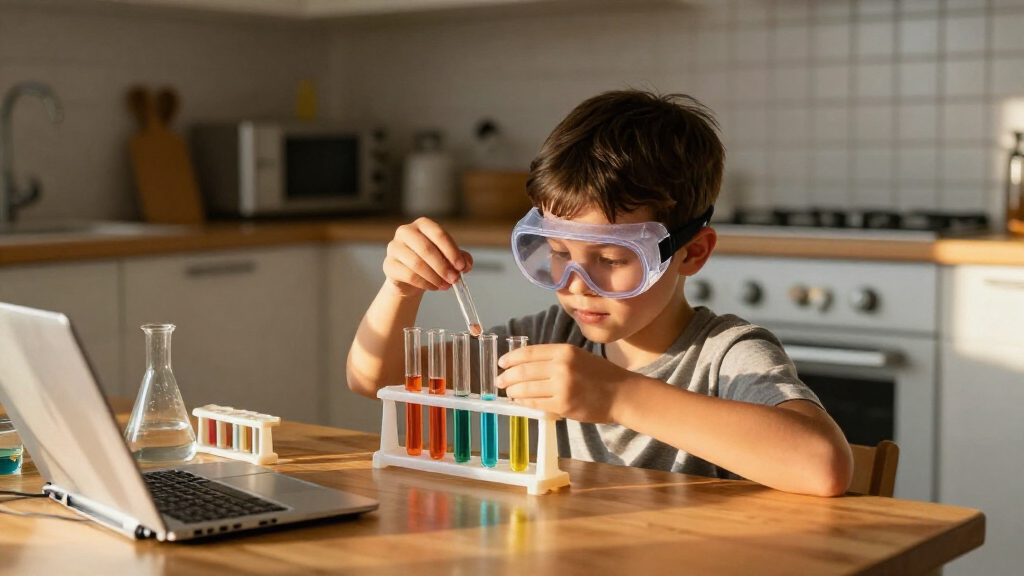
I compared these chemistry sets for kids on the factors that affect how useful they are at home: age fit, chemistry emphasis, range of activities, setup demands, and how clearly a kit’s theme supports learning. Experiment count was treated as a clue to potential variety, not proof of depth or quality; a large number can include activities from several STEM subjects rather than chemistry alone. I also looked at whether each option appears aimed at first-time explorers, children ready for more involved projects, or families drawn to a distinctive format such as magic, gross science, or a dedicated station.
The ranking favors versatility with a clear audience over headline counts alone. Broad kits rise when they appear suited to repeated family use, while focused chemistry sets earn their place for buyers who want a more direct subject connection. Beginner-friendly options rank well for younger children, but are not substitutes for age-appropriate kits for older kids. Since the product list does not provide full details on included materials, replenishment needs, or adult supervision for each activity, I avoid assuming that a high activity count means everything needed for every experiment is in the box.
Factors to Consider When Choosing Chemistry Sets For Kids
Before choosing a kit, decide what you want the child to get from it: an easy first encounter with science, a sustained set of activities, or a themed experience that makes experiments feel like a performance. These broader checks help match the kit to your home, not just to its activity count.
Match the Age Label to the Child’s Independence
Age guidance is a starting point, not a promise that a child can complete activities alone. A younger child may enjoy watching a reaction and making simple observations but still need an adult to measure, pour, or read instructions. Older children may want more choice and less step-by-step help, so a kit aimed at ages 8+ can be a better fit even when a younger sibling is curious. A common mistake is buying for the child’s future ability rather than the activities they can enjoy now. If siblings will share one kit, plan for adult participation and choose activities that let both children take part safely. Check the manufacturer’s activity-specific directions before beginning, especially where household materials or extra equipment may be involved.
Choose Chemistry Focus or Broad STEM Variety
A chemistry-labeled box does not always mean every activity explores chemistry. Large science kits can cover several areas, which can keep interest alive but may offer less time on reactions, mixtures, and chemical change. A focused set can be a better match when a child has already shown a strong interest in chemistry or has a related school project. Broad kits make more sense when the child is still exploring what they like. Compare the activity descriptions, not just the number printed on the front. If the listing does not make the subject balance clear, treat the kit as general science until you confirm its contents.
Think About Repeat Use and Refill Needs
A kit can list many experiments but still have activities that depend on ingredients or supplies that run out. Before buying, check which materials are included, which are ordinary household items, and whether any components are intended for one-time use. This affects the real value of a kit more than the headline activity count. Reusable tools and experiments that can be repeated with common materials may support longer-term play, while specialized consumables can make an impressive first session harder to repeat. Families with limited storage may also prefer a smaller set of durable tools over a large collection of pieces. Keep instructions and small components together so later activities do not become a search for missing parts.
Account for Adult Time and Workspace
Some experiments are better treated as shared projects than independent play. A child may need help interpreting instructions, setting up materials, or cleaning the work area, even when the activity itself is simple. Consider whether you can supervise at a kitchen table and whether the kit’s activities suit the surfaces and cleanup routine available at home. A large collection can add variety, but it can also mean more sorting and storage between sessions. Avoid assuming that a “kids” label means no adult involvement; read the instructions and safety guidance for each activity. If you want a quick after-school activity, favor clear, short experiments over a box chosen solely for its total count.
Use Themes to Motivate, Not as a Substitute for Fit
Magic and gross-science themes can draw in children who might not choose a conventional chemistry activity, while a station-style set can make the work area feel more like a lab. The theme matters most when it helps a particular child start and stay engaged. It should not outweigh age suitability, the type of activities, or the amount of help required. A child who likes dramatic demonstrations may be delighted by a theatrical kit but less interested in a quieter set of structured experiments. Conversely, children who want to understand what caused a result may prefer activities with clear explanations rather than a trick-centered presentation. Pick the theme that fits the child’s interests while checking that the underlying activities match the learning goal.
Pay More for the Right Kind of Upgrade
A bigger box or a higher experiment count is not automatically a better fit. The meaningful upgrade may be a stronger chemistry focus, a more suitable age range, a distinctive activity format, or enough variety to hold a child’s attention across several sessions. For a first-time explorer, a simpler kit can be a wiser choice than an ambitious collection that needs substantial adult help. For a committed young scientist, paying for more activities may make sense only if those activities are genuinely varied and the included materials support them. Compare what the kit asks your family to supply and how much setup it takes, not just how impressive the packaging sounds. The best choice is the one the child will use, with a level of support your household can sustain.
Frequently Asked Questions
Is a kit with more experiments always a better buy?
No. A high activity count can include several branches of science, so it may not provide more chemistry practice than a smaller, focused set. Some activities may also rely on household supplies or be less repeatable than the number suggests. I’d compare the experiment descriptions and the included materials before using count as a deciding factor. Choose breadth for a child whose interests are still developing, and subject focus for one already keen on chemistry.
Can a chemistry set be a good choice for a child under eight?
It can be, provided the kit is explicitly intended for that age range and an adult is ready to participate. The Doctor Jupiter My First kit is listed for ages 4+, which makes it a more age-aligned starting point in this lineup than the many sets marked for older children. A young child’s role may be observing, making predictions, and helping with simple steps rather than handling every material independently. Read the directions and safety notes for each activity rather than assuming every experiment suits every age. If the child loses interest when an adult leads most of the process, a simpler activity format may work better.
What should I check if I want a kit focused on chemistry rather than general science?
Look past the product name and read the activity list for the kinds of experiments included. Some kits in this roundup advertise large totals but are framed as broad STEM or science collections, while others are more directly presented as chemistry sets. Check whether the activities explain what is happening, rather than only offering a visual result. Also confirm whether the kit includes the materials needed or expects household supplies. A smaller set with a clear chemistry emphasis may suit a focused learner better than a larger, mixed-subject collection.
Will I need to buy extra supplies after opening a kit?
That depends on the kit and the particular activities, so check the product’s included-materials list before purchasing. Some science activities commonly use household items, while others may depend on components supplied with the set. A large experiment count does not confirm that every activity can be repeated using only what comes in the box. Look for details about consumables, refill availability, and any household materials required. If those details are missing, plan for the possibility that the kit will call for additional supplies.
Which type of kit works best when siblings have different ages?
There is no single format that removes the age gap, so choose based on the youngest child’s safe participation and the older child’s need for challenge. A broad kit may offer different activities for different interests, but it can also leave the adult coordinating more steps. A younger-child option may be accessible yet feel too basic to an older sibling. Consider running activities as a shared project, with the older child reading instructions and the younger one observing or helping with suitable tasks. Check each activity’s age guidance, since one box may not be appropriate for both children in the same way.
Conclusion
For the broadest all-around choice, I’d pick the UNGLINGA 272-Experiment STEM Science Kit, with the caveat that its wide STEM scope may be less chemistry-centered than a dedicated set. The National Geographic Amazing Chemistry Set is my choice for a more direct chemistry theme, while the National Geographic Mega Science Lab is a strong alternative for families who want a sizable mix of activities. For beginners, especially younger children, the Doctor Jupiter My First Science Experiments Kit is the clearest age-listed starting point. The lineup does not provide enough information to name a definitive best-value option based on included supplies or repeat-use costs; compare those details before choosing. For a specific interest, look at National Geographic Gross Science for a gross-out theme, National Geographic Science Magic or the Magic Chemistry Set for theatrical activities, and Ooze Labs Chemistry Station for a station-style setup. Match the kit to the child’s age, chemistry interest, and the amount of adult help your household can provide.