
For most families, the National Geographic Mega Science Lab is the best overall home science lab kit in this lineup, pairing 75 experiments with a broad mix of activities. The Thames & Kosmos CHEM C3000 suits older learners who want a more involved chemistry path, while the UNGLINGA 272-Experiment Science Kit emphasizes sheer activity variety. The tradeoff is between broad exploration, focused chemistry, and how much adult help a child may need. Age range, workspace, and interest in repeating experiments matter as much as the experiment count. Read on for how the 13 kits differ and which kind of learner each best fits.

Prime made for students and young adults
- Fast, free delivery for dorm and study essentials
- Prime Video and Amazon Music included
- Member-only deals
Key Takeaways
- The Mega Science Lab is the broadest all-around starting point: its 75 experiments offer more variety than a chemistry-only set without leaning on a single theme.
- CHEM C3000 is the clear older-learner outlier: its 333+ experiments and age 12+ positioning suggest a longer, more chemistry-focused commitment than the kids’ kits.
- Experiment count does not settle the choice: UNGLINGA‘s 272 experiments promise breadth, while smaller focused sets may be easier to approach when a child has one strong interest.
- National Geographic dominates the themed choices: its lineup ranges from earth science and junior chemistry to science magic, so families can match a kit to a particular curiosity.
- Age and adult involvement should shape the shortlist: several kits are aimed at ages 8+, while CHEM C3000 is aimed at ages 12+; the youngest or least independent child may benefit from a more guided format.
| National Geographic Earth Science Kit for Kids | 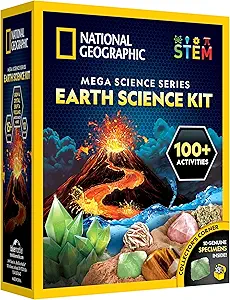 | Best for Earth Science Exploration | Brand: Blue Marble | Age Range: 8 years and up | Activities: More than 15 experiment activities | VIEW LATEST PRICE | See Our Full Breakdown |
| National Geographic Chemistry Set with 45 Experiments for Kids Ages 8+ |  | Best Overall | Brand: National Geographic | Age Range: 8 years and up | Number of Experiments: 45 | VIEW LATEST PRICE | See Our Full Breakdown |
| UNGLINGA 272-Experiment Science Kit for Kids |  | Best Value for Experiment Volume | Number of Experiments: 272 | Included Tools: Test tube, measuring spoon, beaker, and conical flask | Tool Material: Plastic | VIEW LATEST PRICE | See Our Full Breakdown |
| Discovery Super Reactions Science Kit for Kids, 66 Experiments, Ages 8+ |  | Best for Guided Plus DIY Learning | Experiment Count: 66 (26 guided and 40 DIY) | Recommended Age: 8+ | Included Items: Volcano mold, test tubes, measuring cups, slime powder, citric acid, balloons, and manual | VIEW LATEST PRICE | See Our Full Breakdown |
| Thames & Kosmos Ooze Labs Chemistry Station Science Experiment Kit |  | Best Premium Lab Station | Brand: Thames & Kosmos | Age Range: 6 to 25 years (72 to 300 months) | Experiments: Approximately 20 | VIEW LATEST PRICE | See Our Full Breakdown |
| National Geographic Mega Science Lab – 75 Experiments for Kids |  | Best for Earth Science Variety | Brand: Blue Marble | Sub-brand: National Geographic | Model number: NGMEGASCIKIT | VIEW LATEST PRICE | See Our Full Breakdown |
| National Geographic Science Magic Kit for Kids, 100+ Experiments |  | Best for Science Magic | Brand: Blue Marble | Age range: 8 years and up | Experiments: 20 included magic experiments plus 85+ additional booklet experiments | VIEW LATEST PRICE | See Our Full Breakdown |
| UNGLINGA 150-Experiment Science Kit for Kids | 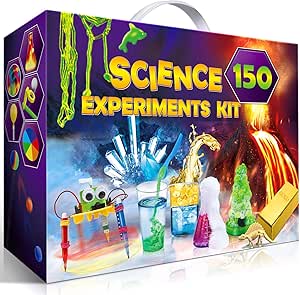 | Best for Broad Topic Coverage | Brand: UNGLINGA | Experiments: 150 | Recommended age: 8 years and up | VIEW LATEST PRICE | See Our Full Breakdown |
| National Geographic Junior Chemistry Set with 50 Experiments |  | Best for Young Beginners | Brand: Blue Marble | Sub-brand: National Geographic | Age range: 4 years and up | VIEW LATEST PRICE | See Our Full Breakdown |
| Thames & Kosmos CHEM C3000 Chemistry Set, 333+ Experiments, Ages 12+ |  | Best for Advanced Home Chemistry | Experiments: More than 333 | Chapters: 27 | Recommended age: 12 years and up | VIEW LATEST PRICE | See Our Full Breakdown |
| National Geographic Amazing Chemistry Set – 100+ Science Experiments for Kids Ages 8-12 |  | Best for Repeat Chemistry Play | Brand: Blue Marble | Sub-brand: National Geographic | Recommended age: 8 years and up | VIEW LATEST PRICE | See Our Full Breakdown |
| UNGLINGA Science Experiment Kit for Kids, 70 Experiments |  | Best for Guided Variety | Brand: UNGLINGA | Experiments: 70 | Recommended age: 8 years and up | VIEW LATEST PRICE | See Our Full Breakdown |
| Kuovei Science Kit for Kids with 80 Experiments |  | Best for Supplied Lab Accessories | Brand: Kuovei | Experiments: 80 | Recommended age: Over 6 years | VIEW LATEST PRICE | See Our Full Breakdown |
| home science lab kit | Brand | Experiments | Model Number |
|---|---|---|---|
| National Geographic Earth Scie | Blue Marble | — | NGMEGAEARTH |
| National Geographic Chemistry | National Geographic | — | NGMEGACHEMX |
| UNGLINGA 272-Experiment Scienc | — | — | — |
| Discovery Super Reactions Scie | — | — | — |
| Thames & Kosmos Ooze Labs Chem | Thames & Kosmos | Approximately 20 | — |
| National Geographic Mega Scien | Blue Marble | 75 total: 45 in the kit and 30 in a bonus guide | NGMEGASCIKIT |
| National Geographic Science Ma | Blue Marble | 20 included magic experiments plus 85+ additional booklet experiments | NGMEGAMAGIC |
| UNGLINGA 150-Experiment Scienc | UNGLINGA | 150 | — |
| National Geographic Junior Che | Blue Marble | 50 | NGJRCHEMT |
| Thames & Kosmos CHEM C3000 Che | — | More than 333 | — |
| National Geographic Amazing Ch | Blue Marble | 100+ total: 15 with included materials and 85 using household items | NGMEGACHEMAR |
| UNGLINGA Science Experiment Ki | UNGLINGA | 70 | HZDZKH030 |
| Kuovei Science Kit for Kids wi | Kuovei | 80 | — |
More Details on Our Top Picks
National Geographic Earth Science Kit for Kids
Most kits in this roundup lean heavily on chemical reactions, but this one takes a different path with volcanoes, crystal growing, and geologic digs — a genuinely distinct focus for kids who are more curious about rocks and Earth processes than fizzing liquids. Compared with the National Geographic Stunning Chemistry Set, it trades reaction spectacle for variety across scientific disciplines, which keeps interest alive longer for kids with broad curiosity. The full-color learning guide is a step above typical throwaway manuals and does real teaching work. The tradeoff is confusing messaging: the box references 100+ activities while the core count is closer to 15 fully guided experiments, so buyers expecting massive volume should temper expectations. This pick makes the most sense for families who value thematic depth over experiment count.
Pros:- Unique Earth science focus that stands apart from chemistry-heavy kits
- Full-color guide that explains the science behind each activity
- Well suited to group activities with family, friends, or classmates
- Includes high-appeal projects like volcano building and crystal growing
Cons:- Conflicting experiment counts (15 guided vs. 100+ advertised) may disappoint
- Fewer chemistry fundamentals than dedicated chemistry sets in this roundup
Best for: Kids ages 8 and up who are fascinated by rocks, volcanoes, and crystals rather than pure chemistry
Not ideal for: Families prioritizing maximum experiment count — the UNGLINGA 272-experiment kit delivers far more activities for similar effort
- Brand:Blue Marble
- Age Range:8 years and up
- Activities:More than 15 experiment activities
- Included Components:100+ science experiments and activities
- Educational Objective:STEM
- Model Number:NGMEGAEARTH
- UPC:816448027611
Our verdict“Choose this kit when your child’s curiosity runs toward geology and Earth science rather than test-tube reactions.”
National Geographic Chemistry Set with 45 Experiments for Kids Ages 8+
This is the pick I would point most families toward first. It nails the balance that separates it from the pack: 45 real chemistry experiments with crowd-pleasing moments like geysers and rocket launches, paired with an illustrated guide that teaches the scientific method, not just the steps. Compared with the Discovery Super Reactions Kit, fewer of its activities depend on scavenging household supplies, so more of what arrives in the box is immediately usable. Against the Thames & Kosmos Ooze Labs, it sacrifices some equipment polish but wins on volume and range. The notable drawback is inconsistent experiment counting in the product information — some listings cite 100+ — so the true guided experience sits closer to 45. That’s still a strong value for an entry point into chemistry.
Pros:- High-appeal experiments including volcano, geyser, and rocket activities
- Illustrated guide that introduces chemistry fundamentals and safe practices
- Most materials included in the box rather than sourced from the kitchen
- Teaches the scientific process alongside the fun
Cons:- Conflicting experiment counts (45 vs. 100+) in product descriptions
- Basic lab equipment compared with dedicated station-style kits
Best for: Families wanting a well-rounded first chemistry kit with genuine teaching value and immediate playability
Not ideal for: Parents who want a precise, verified experiment count before buying — the conflicting numbers create uncertainty
- Brand:National Geographic
- Age Range:8 years and up
- Number of Experiments:45
- Educational Objective:STEM
- Set Name:Stunning Chemistry Set
- Model Number:NGMEGACHEMX
- UPC:816448029363
Our verdict“The strongest all-around starting point for kids ready to move beyond single-topic kits into real chemistry.”
UNGLINGA 272-Experiment Science Kit for Kids
If raw activity count is the priority, nothing else in this lineup comes close — 272 experiments dwarfs the 66 in the Discovery Super Reactions Kit and nearly doubles the 150-experiment UNGLINGA sibling kit. This option stands out for including child-sized lab tools (test tubes, beakers, a conical flask, measuring spoon), which most budget kits omit, giving kids the feeling of working at a real bench rather than following a craft project. The tradeoff is depth: many experiments are quick demonstrations like rainbow walking water rather than the structured chemistry lessons in the National Geographic Stunning Chemistry Set, and quality control across 272 activities inevitably varies. Adult supervision is needed for some experiments too. This model is better suited for volume and variety seekers than for structured learning.
Pros:- Largest experiment count in the roundup by a wide margin
- Includes child-sized lab tools like test tubes, beakers, and a conical flask
- Illustrated step-by-step manual that kids can follow with minimal help
- Excellent for sharing among siblings, friends, or classmates
Cons:- Experiment depth and polish vary across such a large activity list
- Adult supervision may be required for some experiments
Best for: Budget-minded families, classrooms, or homeschool co-ops that need many activities to stretch across weeks or multiple kids
Not ideal for: Buyers who want polished, in-depth instruction per experiment — breadth here comes at the cost of depth
- Number of Experiments:272
- Included Tools:Test tube, measuring spoon, beaker, and conical flask
- Tool Material:Plastic
- Instruction Manual:Illustrated, step-by-step experiment guide
- Signature Activities:Volcano, crystal growing, rainbow walking water
- Group Use:Designed for family, friends, or classmates
Our verdict“The clear choice when quantity matters most and each experiment doesn’t need to be a showstopper.”
Discovery Super Reactions Science Kit for Kids, 66 Experiments, Ages 8+
This kit splits its 66 activities into 26 fully guided experiments with included materials and 40 DIY projects built from household items — a structure no other pick in this roundup offers. That blend is a genuine differentiator: compared with the UNGLINGA 272-Experiment Kit, the Discovery approach teaches kids to extend science beyond the box, which is arguably closer to how real scientists work. The included hardware — a volcano mold, test tubes, and measuring cups — gives it a more complete feel than the paper-and-powder approach of smaller sets. The downside is that nearly two-thirds of the experiments require you to supply ingredients yourself, so the out-of-box experience is smaller than the headline number suggests. Adult supervision is recommended throughout. This pick makes the most sense for kitchen-table scientists with a parent nearby.
Pros:- Thoughtful split between 26 guided experiments and 40 DIY extensions
- Includes real equipment like a volcano mold, test tubes, and measuring cups
- Encourages continuing science experiments beyond the supplied materials
- Covers popular themes including slime, volcanoes, and chemical reactions
Cons:- Majority of the 66 activities require additional household items
- Adult supervision recommended for essentially all experiments
Best for: Parents who want a mix of ready-to-go experiments and open-ended DIY projects using pantry staples
Not ideal for: Households wanting everything included — the 40 DIY activities require sourcing household items first
- Experiment Count:66 (26 guided and 40 DIY)
- Recommended Age:8+
- Included Items:Volcano mold, test tubes, measuring cups, slime powder, citric acid, balloons, and manual
- Subject:Chemistry and STEM
- Instruction Format:Step-by-step manual
- Supervision:Adult supervision recommended
Our verdict“A smart middle ground for families who see household-item experiments as a feature, not a chore.”
Thames & Kosmos Ooze Labs Chemistry Station Science Experiment Kit
Where the other kits here are essentially boxes of supplies, this one is a physical chemistry station — a 57-piece setup with clip-on experiment cards that makes the whole package feel like a real laboratory bench. Compared with the National Geographic Stunning Chemistry Set, the Ooze Labs trades experiment count (about 20 versus 45) for equipment quality and instructional design, which is the right call for kids who want the experience of being a scientist. Two details stand out: the chemicals are non-hazardous and borax-free, easing safety concerns that surround slime-making kits, and the clip-on cards keep instructions visible mid-experiment instead of buried in a booklet. The compromises are real, though — the chemical supply is finite, and once it runs out the station has less purpose. Better suited to focused learners than volume hunters.
Pros:- Dedicated chemistry station with 57 pieces of lab equipment
- Non-hazardous, borax-free chemicals for safer slime and fizz experiments
- Clip-on experiment cards plus a 16-page full-color manual
- Covers varied techniques including chromatography, not just reactions
Cons:- Lowest experiment count among mainstream picks in this roundup
- Finite chemical supply limits replay value once consumables run out
Best for: Parents prioritizing safety, build quality, and an immersive lab experience over experiment quantity
Not ideal for: Kids who burn through activities quickly — roughly 20 experiments with finite chemicals won’t last long
- Brand:Thames & Kosmos
- Age Range:6 to 25 years (72 to 300 months)
- Experiments:Approximately 20
- Pieces:57
- Manual:16-page, full-color
- Chemicals:Non-hazardous; borax-free
- Educational Objective:Science
Our verdict“The kit for a young scientist who wants authentic lab equipment and safe chemistry more than sheer activity volume.”
National Geographic Mega Science Lab – 75 Experiments for Kids
Three science kits in one give this set a wider home-lab mix than the chemistry-focused National Geographic Chemistry Set with 45 Experiments for Kids Ages 8+. Its 45 supplied activities span Earth science, chemistry, and science magic, with real rock, mineral, crystal, and fossil specimens that make geology more tangible than a set built mainly around reactions. A bonus guide adds 30 activities using household items, so the experiment count extends beyond the supplied materials. That flexibility comes with a preparation tradeoff: some bonus projects need items gathered separately. The 8–12 focus also makes it less suitable for younger children or teens looking for more advanced chemistry. I’d choose it for families who want varied, specimen-based projects rather than a concentrated chemistry course.
Pros:- Combines Earth science, chemistry, and science magic in one kit
- Includes real rock, mineral, crystal, and fossil specimens
- Adds 30 household-item experiments in a bonus guide
- Offers more subject variety than the National Geographic Chemistry Set with 45 Experiments for Kids Ages 8+
Cons:- Some bonus activities require household supplies that are not included
- The age range is focused on children ages 8–12
- Its broad mix offers less chemistry depth than a dedicated chemistry set
Best for: Families with children ages 8–12 who want a mix of geology, chemistry, and science magic at home
Not ideal for: Younger children, older teens seeking advanced chemistry, or buyers who want every activity’s materials included
- Brand:Blue Marble
- Sub-brand:National Geographic
- Model number:NGMEGASCIKIT
- Age range:8 years and up
- Experiments:75 total: 45 in the kit and 30 in a bonus guide
- Included kits:Earth science, chemistry, and science magic
- Educational objectives:Critical thinking, observation skills, and STEM
Our verdict“Choose this set for ages 8–12 when real specimens and varied science activities matter more than a deep chemistry sequence.”
National Geographic Science Magic Kit for Kids, 100+ Experiments
Science demonstrations with a performance angle set this kit apart from the more specimen-led National Geographic Mega Science Lab – 75 Experiments for Kids. It supplies materials for 20 magic experiments and adds a booklet with more than 85 further activities, giving children a large menu while keeping the central appeal on tricks they can show others. That makes it a natural choice for a child who is more excited by surprising an audience than by sorting minerals or following a long chemistry sequence. The tradeoff is that the listed materials cover the 20 magic experiments; the additional booklet activities may call for supplies beyond the kit. Compared with the UNGLINGA 150-Experiment Science Kit for Kids, this option puts more emphasis on presentation and science-based tricks than broad topic coverage.
Pros:- Includes materials for 20 science magic experiments
- Booklet adds more than 85 additional experiment ideas
- Combines performance-friendly tricks with hands-on STEM activities
- Has a distinct magic focus compared with the National Geographic Mega Science Lab – 75 Experiments for Kids
Cons:- Materials are specified for 20 magic experiments, not for every booklet activity
- The supplied information does not detail the additional experiment topics or required materials
Best for: Children age 8 and up who enjoy performing tricks and want science activities they can share with family
Not ideal for: Buyers seeking a clearly documented, fully supplied set of broad chemistry or Earth science equipment
- Brand:Blue Marble
- Age range:8 years and up
- Experiments:20 included magic experiments plus 85+ additional booklet experiments
- Included components:Experiment materials and bonus booklet
- Set name:Mega Science Kit
- Model number:NGMEGAMAGIC
Our verdict“Pick this for an 8-and-up child who is drawn to science tricks and demonstrations more than a broad, equipment-heavy lab.”
UNGLINGA 150-Experiment Science Kit for Kids
Four subject areas and 150 listed experiments make this the broadest topic sampler in this group. Chemistry, physics, Earth science, and surface tension give curious children more ways to follow their interests than the focused National Geographic Junior Chemistry Set with 50 Experiments, which is aimed at younger starters and chemistry basics. An illustrated, step-by-step manual can help children work through activities with less guesswork, while included tools and materials support hands-on projects. The count alone does not mean every activity is ready to begin: some use common household items, so families should expect occasional gathering and setup. The supplied product data also gives fewer specifics about the tools and experiments than the Thames & Kosmos CHEM C3000 Chemistry Set, making this a better fit for variety than detailed chemistry study.
Pros:- Lists 150 activities across chemistry, physics, Earth science, and surface tension
- Illustrated step-by-step manual supports independent activity following
- Includes experiment tools and materials for hands-on learning
- Covers more subject areas than the National Geographic Junior Chemistry Set with 50 Experiments
Cons:- Some activities require additional household items
- Product details do not specify individual tools or how materials are divided among the experiments
- Its broad subject coverage is less focused than a dedicated chemistry set
Best for: Families with children age 8 and up who want to sample several science subjects through guided activities
Not ideal for: Buyers who want a clearly itemized collection of real chemistry equipment or a kit where every experiment uses included materials
- Brand:UNGLINGA
- Experiments:150
- Recommended age:8 years and up
- Topics:Chemistry, physics, Earth science, and surface tension
- Educational objective:Creative skills
- Included components:Science experiment tools and materials
- Number of packs:1
Our verdict“Choose this for an 8-and-up child who wants a wide-ranging science sampler and can handle occasional household-supply prep.”
National Geographic Junior Chemistry Set with 50 Experiments
Age guidance starting at 4 makes this the clearest entry point for younger children in this batch. More than 20 child-friendly lab tools, including test tubes and goggles, give early activities a recognizable lab feel, while illustrated step-by-step instructions help families guide each project. The National Geographic Science Magic Kit for Kids, 100+ Experiments offers more activities and a performance theme, but this Junior set has a simpler chemistry focus and an age range that begins earlier. That focused approach also limits its reach for older learners who may want broader subject coverage or more challenging procedures. Some activities call for household items, so the included kit does not remove all preparation. I’d favor it as a supervised first chemistry set, especially for families who value age accessibility over a large experiment count.
Pros:- Age guidance starts at 4 years
- Includes more than 20 lab tools, including test tubes and goggles
- Illustrated step-by-step instructions support guided activities
- Offers a more age-accessible starting point than the National Geographic Science Magic Kit for Kids, 100+ Experiments
Cons:- Some activities require additional household items
- Its chemistry focus offers less subject variety than the National Geographic Mega Science Lab – 75 Experiments for Kids
- The supplied information does not specify adult supervision guidance
Best for: Families introducing children age 4 and up to simple, supervised chemistry activities with child-friendly tools
Not ideal for: Older children seeking advanced chemistry, a wide range of science subjects, or projects that need no extra household supplies
- Brand:Blue Marble
- Sub-brand:National Geographic
- Age range:4 years and up
- Experiments:50
- Lab tools:20+
- Educational objective:STEM
- Included components:Test tubes, goggles, and other lab tools
- Model number:NGJRCHEMT
Our verdict“Choose this as a supervised first chemistry kit for a young child who is ready for simple activities and basic lab tools.”
Thames & Kosmos CHEM C3000 Chemistry Set, 333+ Experiments, Ages 12+
Real lab equipment and 333+ experiments make the CHEM C3000 the most chemistry-intensive option here. Its 27 chapters cover inorganic, electrochemical, and organic chemistry, a deeper progression than the broad sampler in the UNGLINGA 150-Experiment Science Kit for Kids or the beginner-oriented National Geographic Junior Chemistry Set with 50 Experiments. The 192-page illustrated manual connects procedures with scientific concepts, and the included safety, first-aid, labeling, and waste-disposal guidance supports a more structured home lab. This depth asks more of the household: adult supervision is required throughout, and some activities need extra common materials. With an age recommendation of 12+, glassware, chemicals, and an alcohol burner, it is suited to families prepared to supervise closely, not casual or unsupervised play.
Pros:- More than 333 experiments across 27 chapters
- Covers inorganic, electrochemical, and organic chemistry
- Includes glass laboratory equipment, 16+ chemicals, and a 192-page illustrated manual
- Provides safety, first-aid, labeling, and waste-disposal guidance
Cons:- Adult supervision is required throughout
- Some activities need additional common household materials
- Glass equipment, chemicals, and an alcohol burner call for careful setup and handling
Best for: Families with learners age 12 and up who want a structured chemistry course and can provide adult supervision throughout
Not ideal for: Young children, unsupervised learners, or households seeking a quick, low-preparation science sampler
- Experiments:More than 333
- Chapters:27
- Recommended age:12 years and up
- Chemicals:16+
- Manual:192-page, full-color illustrated experiment manual
- Included equipment:Glass test tubes, beakers, Erlenmeyer flask, tripod stand, alcohol burner, evaporating dish, pipettes, syringe, funnel, tubing, electrodes, wires, light bulb and socket, safety goggles
- Safety standard:EN 71-4
- Adult supervision:Required throughout
Our verdict“Choose the CHEM C3000 for a supervised learner age 12 or older who wants sustained chemistry study and can manage a more involved home setup.”
National Geographic Amazing Chemistry Set – 100+ Science Experiments for Kids Ages 8-12
National Geographic Amazing Chemistry Set earns its place for families who want a chemistry-focused kit that can keep going after the supplied materials are used. It comes with materials for 15 core experiments, along with test tubes, beakers, and pipettes; a guide adds 85 more activities using household items. That makes it a more chemistry-specific pick than the broad-topic UNGLINGA Science Experiment Kit for Kids, 70 Experiments, while the latter may suit buyers seeking a wider mix of activities. The headline count needs context: most of the 100-plus experiments do not come with their materials. The kit is recommended for ages 8 and up, so younger children need close adult help. Choose it for its lab tools and extended idea list; skip it if you want supplies included for every activity.
Pros:- Includes materials for 15 core chemistry experiments
- Provides test tubes, beakers, and pipettes for hands-on activities
- Adds 85 household-item experiments for continued use
- Recommended for ages 8 and up
Cons:- Only 15 experiments include supplied materials
- The additional activities depend on having suitable household items
- Younger children need adult supervision
Best for: Families with children ages 8–12 who want reusable chemistry tools and are happy to gather household supplies for extra activities
Not ideal for: Buyers who want every advertised experiment to come with its materials, or families looking for a kit suited to younger children without close supervision
- Brand:Blue Marble
- Sub-brand:National Geographic
- Recommended age:8 years and up
- Educational objective:STEM
- Experiments:100+ total: 15 with included materials and 85 using household items
- Included tools:Test tubes, beakers, and pipettes
- Model number:NGMEGACHEMAR
Our verdict“Choose this kit for an older child who wants chemistry tools and many follow-on ideas, provided you are comfortable sourcing supplies for most of them.”
UNGLINGA Science Experiment Kit for Kids, 70 Experiments
The UNGLINGA 70-Experiment Kit suits families who want a guided sampler across several kinds of science. Its activities include crystals, a volcano, a balloon rocket, and fruit circuits, while the illustrated guide explains both the steps and the science behind them. Compared with the chemistry-centered National Geographic Amazing Chemistry Set, this kit’s examples point to broader topic variety. That range can help a child discover what holds their interest, though the supplied product details do not specify which components are included. Buyers may need to check the package contents before counting on particular experiments being ready to run. It is recommended for ages 8 and up, and some activities call for adult supervision. This makes sense for curious children who enjoy trying different types of projects; it is a weaker fit for parents who need a clearly itemized materials list.
Pros:- Lists 70 hands-on experiments across varied topics
- Illustrated instructions guide children through each activity
- Guide explains the science behind the procedures
- Includes examples such as crystals, a volcano, a balloon rocket, and fruit circuits
Cons:- Product details do not clearly identify the included components
- Some activities may require adult supervision
- The supplied information does not clarify how many experiments have all materials included
Best for: Families with children ages 8 and up who want illustrated instructions and a mix of chemistry, earth science, and simple engineering activities
Not ideal for: Caregivers who need a verified list of included supplies before buying or children who need every experiment to be fully independent
- Brand:UNGLINGA
- Experiments:70
- Recommended age:8 years and up
- Set name:Comprehensive Science Experiment Set
- Number of packs:1
- Model number:HZDZKH030
Our verdict“Pick this for a school-age child who wants guided variety, but verify the included components if specific experiments matter to you.”
Kuovei Science Kit for Kids with 80 Experiments
Kuovei Science Kit stands out for the breadth of equipment listed alongside its 80 experiments: goggles, gloves, test tubes, petri dishes, measuring tools, and droppers. For families who want visible lab accessories in the box, that list is more reassuring than the unspecified components for the UNGLINGA 70-Experiment Kit. The activities include rainbow rain and volcanoes, with step-by-step cards introducing scientific ideas. The stated age guidance is inconsistent: one field says over 6 years, while another gives a range of 36 months to 12 years. That ambiguity matters when deciding how much adult involvement a child needs, particularly because some activities use chemical materials that require careful handling. Choose Kuovei for its listed gear and broad activity count; look elsewhere if you need clear age guidance or a chemistry set aimed at older learners.
Pros:- Lists supplies for 80 experiments
- Includes goggles and gloves among the listed equipment
- Provides test tubes, petri dishes, measuring cups, droppers, and spoons
- Step-by-step cards introduce procedures and scientific principles
Cons:- Age guidance conflicts between over 6 years and 36 months–12 years
- Chemical materials require careful handling
- The listed age range does not clarify which activities need adult supervision
Best for: Families seeking a broad activity kit with listed protective gear, measuring tools, and experiment supplies for a child over 6
Not ideal for: Caregivers who need consistent age guidance, or buyers seeking a clearly advanced chemistry curriculum for teenagers
- Brand:Kuovei
- Experiments:80
- Recommended age:Over 6 years
- Manufacturer recommended age:36 months–12 years
- Included components:Goggles, chemical materials, petri dishes, measuring cups, test tubes, gloves, droppers, measuring spoons, balloons, and other experiment supplies
- Number of packs:1
Our verdict“Choose Kuovei if a wide selection of listed lab accessories matters most, and plan to supervise activities involving chemical materials.”

How We Picked
I compared these kits by how well their stated age range, subject focus, experiment variety, and format suit home learning. I gave more weight to a clear fit for a particular learner than to a large experiment count alone: a chemistry set, an earth science kit, and a magic-themed set serve different interests even if their activity totals differ. I also considered how readily the kit could support continued exploration, since a home lab works best when children can follow instructions and revisit ideas with adult support suited to their age.
The ranking favors kits with a strong balance of breadth, a legible purpose, and a useful fit for families choosing one main kit. That puts the Mega Science Lab first as a versatile option, while the CHEM C3000 ranks for older learners seeking depth and the UNGLINGA 272-Experiment kit stands out for activity volume. More specialized or age-specific sets rank well for their intended audience, but lower as default choices for a household with varied interests. Product descriptions supplied here do not specify every material, refill need, or level of adult supervision, so buyers should check those details before ordering.
| home science lab kit | Brand |
|---|---|
| National Geographic Earth Scie | Blue Marble |
| National Geographic Chemistry | National Geographic |
| UNGLINGA 272-Experiment Scienc | — |
| Discovery Super Reactions Scie | — |
| Thames & Kosmos Ooze Labs Chem | Thames & Kosmos |
| National Geographic Mega Scien | Blue Marble |
| National Geographic Science Ma | Blue Marble |
| UNGLINGA 150-Experiment Scienc | UNGLINGA |
| National Geographic Junior Che | Blue Marble |
| Thames & Kosmos CHEM C3000 Che | — |
| National Geographic Amazing Ch | Blue Marble |
| UNGLINGA Science Experiment Ki | UNGLINGA |
| Kuovei Science Kit for Kids wi | Kuovei |
Factors to Consider When Choosing Home Science Lab Kits
Experiment totals can make kits look easy to compare, but the right home lab depends on a child’s interests, independence, and the space your household can give it. I would use these broader checks to narrow the field before choosing a particular set.
Match the kit to the child’s kind of curiosity
Start with the subjects a child chooses when nobody assigns the activity. A learner who collects rocks or asks about volcanoes may stay engaged longer with earth science than with a chemistry set, even if the latter lists more experiments. A child drawn to surprising demonstrations may prefer science magic or reaction-based activities. Mixed-interest households can benefit from a broad kit, but breadth may mean less depth in any one subject. Ask whether the child wants to watch a striking result, follow a sequence, or understand why a process happens. Choose the format that matches that motivation instead of trying to predict which kit sounds most educational to an adult.
Read the age label as a starting point
Age guidance offers a useful first screen, though it cannot capture every child’s reading ability, patience, or comfort with careful steps. An eight-year-old who likes instructions may manage a more involved activity than an older child who prefers quick demonstrations. Check whether the directions appear designed for independent reading or shared adult guidance, since that changes how often a kit can come out on a busy evening. For a younger child, plan to be present even when an activity seems simple; supervision depends on the materials and procedure, not just the age printed on the box. An older beginner may still prefer a junior set if confidence and clear pacing matter more than advanced scope. Buying for the child in front of you is more reliable than buying for an age milestone.
Look past the experiment count
A high activity total can signal variety, but it does not tell you how long each activity takes, whether steps repeat, or how much explanation accompanies the result. Some families will value many short experiments that can fit into small pockets of time. Others will get more from a smaller set of activities that build concepts in a clear progression. Scan product details for examples of experiments and the subjects they cover, rather than treating the headline number as a measure of learning. Also check whether the count includes variations on the same setup. The best comparison is how many activities your child would actually want to complete and revisit.
Plan for supplies, cleanup, and workspace
A home lab needs a stable surface, room for tools, and a plan for cleanup. Before choosing, check the kit contents and product guidance for any household materials, consumables, or protective equipment that may be needed separately. A kit that fits neatly in a cupboard can be easier to use regularly than a larger collection that takes over a table. Consider where liquids, powders, or small components will be stored between sessions, especially in a home with younger siblings or pets. Cleanup is part of the activity, so a nearby sink and washable work area can make experiments easier to repeat. These practical details often matter more to sustained use than a long list of activities.
Decide how much adult participation works
Some families want a kit a child can explore with occasional check-ins; others welcome a shared project. Look for instructions that make the steps and safety guidance clear, then compare that with the time an adult can realistically give. If the child needs regular help measuring, reading, or setting up, an impressive kit may sit unused when schedules get busy. On the other hand, adult participation can turn a simple demonstration into a conversation about observation and cause. Agree on a routine before buying: who prepares the space, who supervises, and who resets the materials. That expectation helps avoid confusing a child’s independent toy with a family science activity.
Pay more for depth only when it will be used
A larger or more advanced chemistry set can make sense when a learner already asks for more challenging, connected experiments. CHEM C3000 is explicitly aimed at ages 12+ and lists 333+ experiments, which makes it a different commitment from the younger kits. A beginner who has not yet shown interest in chemistry may be better served by a broad or themed starter set. Think about whether the child will work through activities over months, or whether a few memorable sessions would be enough. Also check refill and replacement information before choosing a kit intended for repeated use. Depth is valuable when it matches lasting curiosity, not simply because the box contains more components.
Frequently Asked Questions
Which kit makes the most sense if I am buying just one for a child with several interests?
I would start with the National Geographic Mega Science Lab because its 75 experiments make it the lineup’s broad all-around pick. It is a more flexible starting point than an earth-science-only or chemistry-only kit when a child’s interests keep shifting. If you already know the child wants chemistry, a focused chemistry set may hold attention better. Compare the included experiment examples and materials before deciding, since the stated total alone does not show how varied the activities are. Pick for the subjects the child returns to, not the number printed on the box.
Is the kit with the most experiments automatically the best value for a family?
No. A large count, such as the 333+ activities listed for CHEM C3000 or 272 for the UNGLINGA kit, does not tell you how many activities are distinct, how much setup they require, or whether they match the child’s interests. A smaller kit used repeatedly can be a better fit than a large one that is hard to store or supervise. Check whether the instructions encourage repeatable experiments and whether extra household supplies are needed. Think about likely use over time, rather than counting activities in isolation.
Can I choose an age 8+ kit for a child who is younger than eight?
The listed age range should guide your shortlist, but it is not a substitute for checking the actual instructions and safety information. A younger child may need an adult to read directions, handle setup, or supervise every step. Ask the manufacturer about specific materials and age restrictions if those details are not clear in the product listing. Consider whether the child can follow directions and wait through a sequence without handling materials unsafely. If that is uncertain, choose a kit explicitly designed for a younger audience or plan to make it a closely supervised family activity.
Should I choose a chemistry set or an earth science kit as a first home lab?
Choose by the questions the child already asks. A child interested in rocks, minerals, or natural processes may connect more quickly with the National Geographic Earth Science Kit, while a child who enjoys mixing and observing reactions may prefer one of the chemistry sets. A broader set like the Mega Science Lab can suit a child whose interests are not yet settled. Check the experiment examples to see whether the kit offers the kind of activity the child enjoys, such as collecting observations or following a procedure. The strongest first kit is one the child will want to open again.
When is an advanced set like CHEM C3000 the right choice?
CHEM C3000 is the standout for an older learner who is ready to spend sustained time on chemistry; it is labeled for ages 12+ and lists more than 333 experiments. It makes less sense as a default first kit for a young beginner or a child whose interests span several science subjects. Before choosing it, review the required materials, supervision guidance, workspace needs, and instruction level in the full product details. Consider whether the learner wants a long sequence of chemistry activities rather than occasional demonstrations. If the answer is yes, its depth may be more useful than the broader, younger-audience kits.
Conclusion
For a single flexible pick, I recommend the National Geographic Mega Science Lab as best overall. The UNGLINGA 150-Experiment Science Kit is my best value-style choice for families seeking a substantial activity count without making the most advanced kit the default. For beginners, consider the National Geographic Junior Chemistry Set and confirm its age fit and guidance in the product details. The Thames & Kosmos CHEM C3000 is best for an older learner ready for a deeper chemistry commitment. For specific interests, choose the National Geographic Earth Science Kit for earth science or the Science Magic Kit for performance-minded experiments; matching the subject to the child is the simplest way to close the choice.
Halloween Picks
halloween
As an affiliate, we earn on qualifying purchases.