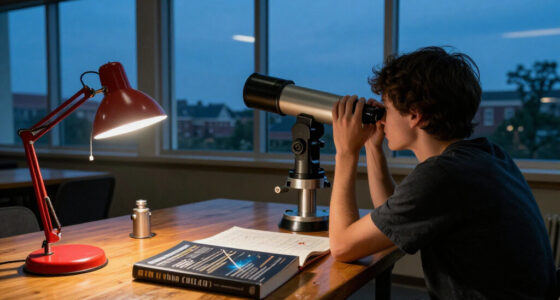

Science microscope kits range from toy-grade plastic models under a child’s first budget to genuinely capable compound instruments that can carry a student through real biology work. The AmScope M30-ABS-KT51 52-Piece Kit stands out as the best overall pick because it pairs a metal-bodied compound scope with a genuinely useful accessory set at a mid-tier price. For younger children, the National Geographic Dual LED Microscope Kit is easier to use and more durable, while the 100X-2000X Metal STEM Kit offers the most magnification headroom for serious students. The core tradeoff in this category is simple: magnification numbers are often inflated on cheap kits, and build quality matters far more than the “1200X” printed on the box. Read on for the full breakdown of what each kit actually delivers and who it suits best.

Prime made for students and young adults
- Fast, free delivery for dorm and study essentials
- Prime Video and Amazon Music included
- Member-only deals
Key Takeaways
- Metal-bodied compound scopes (AmScope M30-ABS-KT51, PalliPartners, 100X-2000X Metal STEM Kit) consistently delivered sharper, more usable images than the 100X-1200X plastic kids‘ kits, despite similar claimed magnification.
- Magnification claims above 400X-500X are where cheap kids’ kits fall apart — image quality degrades long before the advertised maximum, so parents should judge kits by objective quality and focus mechanics, not the number on the box.
- Accessory count varies wildly (from a handful of pieces to 67), but prepared slides matter far more than brine shrimp eggs or plastic tools; the National Geographic Dual LED and AmScope kits curate their accessories best.
- Handheld digital models like the 1000X IPS-screen scope serve a completely different use case — exploring surfaces and objects in place — and shouldn’t be compared head-to-head with slide-based compound microscopes.
- Dual LED illumination (top and bottom, as on the National Geographic Dual LED) is a quiet differentiator: it lets kids examine both prepared slides and solid objects like leaves and coins without extra equipment.
| Kids Digital Microscope STEM Kit |  | Best Portable Pick | Magnification: 200X–1000X, five levels | Storage: 32GB memory card | Battery Life: Approximately 2.5 hours | VIEW LATEST PRICE | See Our Full Breakdown |
| 100X-2000X Metal STEM Microscope Kit for Adults and Students |  | Best Overall | Magnification: 100X–2000X (6 levels) | Eyepiece: WF25X wide field | Barlow Lens: 2X | VIEW LATEST PRICE | See Our Full Breakdown |
| Uarzt 58-Piece Kids Microscope Kit – 100X-1200X Magnification with LED Light and Carrying Box |  | Best for Young Beginners | Magnification: 100X–1200X | Pieces Included: 58 | Prepared Specimens: 13 | VIEW LATEST PRICE | See Our Full Breakdown |
| PalliPartners Compound Microscope for Adults & Students, White |  | Best Value Full-Size Kit | Magnification Range: 100X–2000X | Objective Lenses: 4X, 10X, 40X | Eyepiece: WF25X with 2X magnification lens | VIEW LATEST PRICE | See Our Full Breakdown |
| AmScope M30-ABS-KT2-W Beginner Microscope STEM Kit, White |  | Best Classic Starter Kit | Microscope Type: Compound | Viewing Head: Monocular | Magnification: 300X, 600X, 1200X | VIEW LATEST PRICE | See Our Full Breakdown |
| National Geographic Junior Microscope Science Kit with 250x Magnification |  | Best for the Youngest Scientists | Brand: Blue Marble (National Geographic) | Magnification: 50x-250x zoom | Lighting: Upper and lower lights | VIEW LATEST PRICE | See Our Full Breakdown |
| 1000X Handheld Digital Microscope for Kids with 2.0″ IPS Screen |  | Best Digital Screen Pick | Magnification: Up to 1000X (optical + digital) | Screen: 2.0″ IPS display | Camera: 2MP photo and AVI video | VIEW LATEST PRICE | See Our Full Breakdown |
| Mileonaim Kids Microscope Kit with Slides, 100X–1200X Magnification |  | Best Kit for Group and On-the-Go Use | Brand: Mileonaim | Magnification: 100X, 400X, 1200X | Set Size: 61 pieces | VIEW LATEST PRICE | See Our Full Breakdown |
| National Geographic Microscope Kit for Kids, Up to 400x Magnification |  | Best Guided Learning Experience | Maximum Magnification: 400x (3 levels) | Lighting: Upper and lower lights | Prepared Specimens: 6 plant slides, 6 rocks and minerals | VIEW LATEST PRICE | See Our Full Breakdown |
| AmScope M30-ABS-KT51 52-Piece STEM Microscope Kit with Case, Monocular, Black |  | Best Traditional Starter Value | Model: M30-ABS-KT51 | Magnification: 120X-1200X (6 settings) | Viewing Head: Monocular | VIEW LATEST PRICE | See Our Full Breakdown |
| National Geographic Dual LED Microscope Science Kit for Kids |  | Best for 3D Specimen Exploration | Magnification: 20x and 50x | Lighting: Upper and lower LED lights | Included accessories: More than 50, including 10 prepared slides, blank slides, covers, tweezers, eye-dropper, and mini geode | VIEW LATEST PRICE | See Our Full Breakdown |
| WEACFUS Microscope for Kids, 63-Piece STEM Science Kit (Model BG006) |  | Best Value All-in-One Kit | Magnification: 100×, 400×, 1200× | Pieces included: 63 | Prepared slides: 13 | VIEW LATEST PRICE | See Our Full Breakdown |
| Xelabrion Kids Microscope Science Kit, 67 Pieces, 100X–1200X Magnification |  | Best for Young Specimen Collectors | Magnification: 100X–1200X | Pieces included: 67 | Prepared slides: 12 | VIEW LATEST PRICE | See Our Full Breakdown |
| science microscope kit | Magnification |
|---|---|
| Kids Digital Microscope STEM K | 200X–1000X, five levels |
| 100X-2000X Metal STEM Microsco | 100X–2000X (6 levels) |
| Uarzt 58-Piece Kids Microscope | 100X–1200X |
| PalliPartners Compound Microsc | — |
| AmScope M30-ABS-KT2-W Beginner | 300X, 600X, 1200X |
| National Geographic Junior Mic | 50x-250x zoom |
| 1000X Handheld Digital Microsc | Up to 1000X (optical + digital) |
| Mileonaim Kids Microscope Kit | 100X, 400X, 1200X |
| National Geographic Microscope | — |
| AmScope M30-ABS-KT51 52-Piece | 120X-1200X (6 settings) |
| National Geographic Dual LED M | 20x and 50x |
| WEACFUS Microscope for Kids | 100×, 400×, 1200× |
| Xelabrion Kids Microscope Scie | 100X–1200X |
More Details on Our Top Picks
Kids Digital Microscope STEM Kit
Most kits in this roundup are tabletop compound microscopes, but this model takes a completely different approach: it’s a handheld digital microscope that captures photos and video to a 32GB memory card. That makes it the clear choice for kids who want to explore the backyard rather than sit at a desk — something the AmScope M30-ABS-KT2-W, with its hard case and tabletop design, simply can’t do. At 0.34 lb with a neck strap, it travels easily. The tradeoff is depth: compared with the 100X-2000X Metal STEM Microscope, its 200X–1000X range is more limited, and manual focus plus lighting adjustments demand patience from younger kids. The rechargeable battery lasts about 2.5 hours per charge, which is fine for an afternoon but will need planning for longer outings.
Pros:- Highly portable at 0.34 lb with neck strap and EVA carrying case
- 32GB memory card stores photos and videos for later review
- Five prepared glass slides and case included out of the box
- USB Type-C rechargeable battery avoids disposable batteries
Cons:- Roughly 2.5 hours of battery life limits longer sessions
- Manual focus and lighting/distance adjustments can frustrate younger users
Best for: Curious kids and families who want a take-anywhere microscope for outdoor exploration and photo capture
Not ideal for: Students who need serious magnification or prepared-slide work at a desk — the range and ergonomics favor casual discovery
- Magnification:200X–1000X, five levels
- Storage:32GB memory card
- Battery Life:Approximately 2.5 hours
- Charging:USB Type-C
- Weight:0.34 lb
- Slide Slot Width:3 mm
- Included Accessories:EVA case, 5 prepared glass slides, Type-C cable, neck strap, manual
Our verdict“Pick this if your young scientist wants to document discoveries outdoors; choose a compound model for lab-style learning at home.”
100X-2000X Metal STEM Microscope Kit for Adults and Students
This is the most capable optical instrument in the batch, and that’s why it earns the top spot. With achromatic metal objective lenses, a WF25X wide-field eyepiece, a 2X Barlow lens, and six magnification levels up to 2000X, it delivers a level of optical quality the Uarzt 58-Piece Kit and AmScope M30 can’t approach at their lower ranges. Dual adjustable LED illumination handles both translucent and opaque specimens, and the co-axial coarse/fine focus on an all-metal frame gives the precision serious students need. The 360° rotatable head and 38° tilting eyepieces also make shared viewing far more comfortable than fixed-head beginner models. The tradeoffs: it’s a bigger investment, it needs 3 AA batteries (not included) for portable use, and it’s overkill for a five-year-old who just wants to look at leaves.
Pros:- Six magnification levels from 100X to 2000X with achromatic objectives
- Dual top/bottom LED illumination for opaque and translucent specimens
- All-metal frame with precise co-axial coarse and fine focus
- Rotatable head and 38° tilting eyepieces for comfortable shared use
Cons:- Requires 3 AA batteries that aren’t included
- Higher magnification settings demand careful focusing skill and patience
Best for: Middle school through college students and hobbyists who want lab-grade magnification and durable construction
Not ideal for: Young children under about 10 — the complexity and precision exceed what beginner explorers need
- Magnification:100X–2000X (6 levels)
- Eyepiece:WF25X wide field
- Barlow Lens:2X
- Objective Lenses:4X, 10X, 40X achromatic metal
- Illumination:Dual adjustable LED (top and bottom)
- Power:AC adapter (included) or 3 AA batteries (not included)
- Focus:Co-axial coarse and fine
- Frame:All-metal
Our verdict“If only one microscope in this roundup survives years of serious STEM study, this is the one to buy.”
Uarzt 58-Piece Kids Microscope Kit – 100X-1200X Magnification with LED Light and Carrying Box
Where the 100X-2000X Metal STEM Microscope is built for growing skills, the Uarzt kit is built for day-one engagement. It arrives with 13 prepared specimens, 31 blank slides, and lab tools like tweezers, a dropper, and a scalpel, plus a colorful guide — a genuinely complete package for a child who has never touched a microscope. The 100X–1200X range is generous on paper, but the optics are beginner-grade, so expect softer images at the top end compared with the AmScope or the 2000X models. What it does better than almost anything here is remove friction: a metal body (not plastic), a carrying box, and an age range starting at five. The downside for parents is the same as most kids’ kits — batteries aren’t included, and a curious five-year-old will burn through activities faster than a 12-year-old.
Pros:- 58 pieces including 13 prepared specimens and 31 blank slides
- Metal body rather than all-plastic construction
- Includes lab tools (tweezers, dropper, scalpel) and a starter guide
- Carrying box makes storage and travel simple
Cons:- Requires 2 AA batteries that aren’t included
- Beginner-level optics limit image detail at the highest magnifications
Best for: Parents of kids ages 5–12 who want a complete, screen-free starter kit that works right out of the box
Not ideal for: Teens or adults — beginner optics won’t deliver the detail or precision they’ll quickly want
- Magnification:100X–1200X
- Pieces Included:58
- Prepared Specimens:13
- Blank Slides:31
- Body Material:Metal
- Illumination:LED light
- Batteries Required:2 AA (not included)
- Recommended Age:5–12 years
Our verdict“The easiest first microscope to gift — complete, durable, and ready on day one, as long as expectations stay age-appropriate.”
PalliPartners Compound Microscope for Adults & Students, White
This model occupies a smart middle ground: it matches the 100X-2000X Metal STEM Microscope on headline specs — same 4X/10X/40X objectives, WF25X eyepiece, 2X lens, and dual LED illumination — while throwing in accessories the pricier pick doesn’t include. The standout is the phone clip adapter with Bluetooth remote shutter, which lets students document specimens the way the Kids Digital Microscope STEM Kit does, but through better glass. Add 28 slides (10 prepared, 18 blank), a power adapter, and SGS safety certification, and it’s a compelling package for teens. The compromises are real, though: entry-level optics mean the 2000X setting demands careful focusing and won’t rival professional instruments, and younger kids will still need adult supervision despite the certification.
Pros:- Full 100X–2000X magnification range at an accessible price point
- 28 slides plus phone clip adapter and Bluetooth shutter included
- Dual adjustable top/bottom LED illumination
- SGS safety certified for supervised use by kids and teens
Cons:- Entry-level optics can’t match professional compound microscopes
- Highest magnification settings require patient, careful focusing
Best for: Budget-conscious families with students ages 8–18 who want 2000X-class magnification plus photo documentation accessories
Not ideal for: Anyone expecting lab-grade image clarity — the entry-level optics show their limits at the top magnifications
- Magnification Range:100X–2000X
- Objective Lenses:4X, 10X, 40X
- Eyepiece:WF25X with 2X magnification lens
- Slides Included:28 (10 prepared, 18 blank)
- Illumination:Adjustable top and bottom LED
- Focus:Coaxial coarse and fine knobs
- Accessories:Phone clip, Bluetooth remote, power adapter
- Recommended Age:8–18 years
Our verdict“The best bang-for-buck choice for a student who wants maximum range and photo accessories without the premium price.”
AmScope M30-ABS-KT2-W Beginner Microscope STEM Kit, White
The AmScope M30 is the traditional entry point of this lineup: a 52-piece kit with slides, specimen tools, and — uniquely here — brine shrimp eggs and a hatchery, which turns the microscope into an ongoing biology project rather than a one-afternoon toy. Its 300X/600X/1200X settings cover the same practical territory as the Uarzt 58-Piece Kit, and unlike most competitors, the batteries are actually included. The LED-plus-mirror illumination and color filter wheel also teach kids how lighting affects what they see. But this is clearly the old-school option: a single monocular eyepiece with coarse-only focus means less precision than the coaxial fine-focus systems on the PalliPartners or 2000X metal models, and image quality tops out well below them.
Pros:- 52-piece kit includes brine shrimp eggs and hatchery for ongoing experiments
- Batteries included, ready to use immediately
- LED and mirror illumination plus color filter wheel teach lighting basics
- Hard-sided carrying case protects the kit between sessions
Cons:- Coarse focus only — less precision than coaxial fine-focus models
- Single monocular eyepiece limits comfort during longer sessions
Best for: Families wanting a proven, affordable first microscope with a long-term activity built in via the brine shrimp hatchery
Not ideal for: Students progressing past beginner level — coarse focus and one eyepiece cap how much they can grow
- Microscope Type:Compound
- Viewing Head:Monocular
- Magnification:300X, 600X, 1200X
- Illumination:LED and mirror
- Focus:Coaxial coarse, rack-and-pinion
- Frame:White metal
- Power:2 AA batteries (included)
- Kit Size:52 pieces
Our verdict“A dependable, battery-included starter kit whose brine shrimp hatchery keeps kids coming back — just don’t expect it to carry them into advanced work.”
National Geographic Junior Microscope Science Kit with 250x Magnification
This kit earns its place as the gentlest entry point in the lineup, aimed squarely at early-elementary kids rather than tweens. The 50x-250x zoom range is deliberately modest, and that restraint works in its favor: young children get satisfying, bright views of prepared slides at low magnification without the frustration of hunting for a specimen at 1200x. Compared with the AmScope M30-ABS-KT51, which offers six magnification settings up to 1200x, this National Geographic junior kit trades range for simplicity, and its upper and lower lights make both slides and solid objects easy to light properly. The bundled lab guide teaches actual observation skills rather than just unboxing excitement. The tradeoff is real, though — a curious ten-year-old will outgrow 250x quickly, and the all-plastic build reflects its price tier.
Pros:- Simple zoom design that young kids can operate without help
- Both upper and lower illumination for slides and solid objects
- Balanced mix of prepared and blank slides with real lab tools
- Activity guide that teaches observation skills, not just toy play
Cons:- 250x ceiling limits what older kids can discover
- Plastic body and optics typical of beginner kits
Best for: Parents of kids ages 5-8 who want a frustration-free first microscope with guided activities
Not ideal for: Older or science-obsessed kids who want to see cell detail — 250x maxes out well below what a 400x or 1200x model can show
- Brand:Blue Marble (National Geographic)
- Magnification:50x-250x zoom
- Lighting:Upper and lower lights
- Slides Included:12 (6 prepared, 6 blank)
- Accessories:Tweezers, pipette, slide covers, sticker sheet, lab guide
- Model Number:RTMICROJR
Our verdict“This is the pick for a first microscope at the youngest ages, where ease of success matters more than magnification numbers.”
1000X Handheld Digital Microscope for Kids with 2.0″ IPS Screen
Where every other kit here uses a traditional eyepiece, this handheld takes a fundamentally different approach: a built-in 2.0-inch IPS screen that lets kids view, photograph, and record specimens without squinting through a lens. That single design choice makes microscopy shareable and social — siblings can look at the same image together, and photos export to Windows or Mac over USB for school projects. The claimed 1000X magnification blends optical and digital zoom, so it won’t match the optical clarity of a compound scope like the AmScope M30-ABS-KT51 at its best settings, but for a child ages 3-12 the screen-first experience removes the biggest beginner obstacle: focusing through an eyepiece. The rugged rubberized casing is genuinely kid-tough. Tradeoffs include a 2-hour battery limit and just 32MB of internal storage, so serious documenting means frequent USB offloads.
Pros:- Built-in screen eliminates eyepiece frustration for young children
- Captures photos and video with USB export for school projects
- Shock-absorbent rubberized build survives drops and outdoor use
- Pocket-sized and cordless for field exploration
Cons:- Around 2 hours of battery per charge cuts long sessions short
- 32MB internal storage fills quickly and requires frequent transfers
- Manual focus demands patience from the youngest users
Best for: Families who want a screen-based, take-anywhere microscope that young kids can share and photograph with
Not ideal for: Students who need true optical clarity for lab-style work — digital zoom softens detail at high magnification
- Magnification:Up to 1000X (optical + digital)
- Screen:2.0″ IPS display
- Camera:2MP photo and AVI video
- Illumination:8 adjustable LEDs, 3 brightness modes
- Battery:600mAh, ~2 hours, USB-C rechargeable
- Storage:32MB internal (200+ photos)
- Weight:200g
- Recommended Age:3+ years
Our verdict“Choose this when a shared screen and photo capture matter more than traditional optical performance.”
Mileonaim Kids Microscope Kit with Slides, 100X–1200X Magnification
This is the roundup’s most accessorized kids’ kit, and its 61-piece set changes how a family actually uses it. With 32 blank slides plus 12 prepared ones, a mixing plate, scalpel, dropper, and a proper carrying case, there’s enough material here for siblings, classrooms, or a scout troop to run multiple experiments without fighting over supplies — something the smaller National Geographic Junior kit can’t manage with its dozen slides. The phone holder is a quietly clever inclusion, letting kids document findings through the eyepiece with a device most families already own. The 100X-1200X range matches the AmScope M30 on paper, though Mileonaim publishes little about lens quality or focusing smoothness, so buyers are taking image clarity somewhat on faith. That sparse documentation is the main reason this sits mid-pack rather than higher: hardware quantity is well proven, optical performance less so.
Pros:- 61-piece set with 44 total slides supports extended and shared use
- Phone holder enables easy photo documentation through the eyepiece
- Carrying case keeps the large accessory set organized and travel-ready
- Three magnification levels cover both overview and detail work
Cons:- Little manufacturer detail on image clarity or focus mechanism quality
- A 61-piece set means more small parts to lose or misplace
Best for: Families or small groups who need enough slides and tools for multiple kids and want everything portable
Not ideal for: Buyers who prioritize verified optical quality — specs on lens clarity and focusing are thin compared with established brands
- Brand:Mileonaim
- Magnification:100X, 400X, 1200X
- Set Size:61 pieces
- Slides:12 prepared, 32 blank
- Lighting:LED
- Notable Accessories:Phone holder, tweezers, dropper, scalpel, mixing plate, carrying case
- Recommended Age:6-12 years
- Warranty:2 years
Our verdict“The strongest choice when quantity of supplies and portability drive the decision, provided you accept unverified optics.”
National Geographic Microscope Kit for Kids, Up to 400x Magnification
What separates this kit from the crowd isn’t magnification — 400x sits below the Mileonaim and AmScope M30 on paper — but the structure around the hardware. The inclusion of rocks and minerals alongside prepared plant slides pushes kids beyond the standard pond-water-and-onion-skin routine, and the lab guide with structured activities plus merit badge stickers gives the set a curriculum-like feel that standalone kits lack. Ergonomically, the large focus knobs and soft-touch eyepiece are thoughtful touches for smaller hands, addressing the fiddly-focus problem that frustrates kids on cheaper scopes. The adjustable platform with dual lighting handles both slides and three-dimensional specimens well. The honest limitation: this is a guided play-and-learn kit, not a scientific instrument, and a middle-schooler doing real biology homework will want more magnification and better optics than 400x and plastic lenses provide.
Pros:- Rocks, minerals, and plant slides provide varied specimen types beyond typical kits
- Lab guide with activities and merit badges creates a real learning progression
- Large focus knobs and soft eyepiece suit small hands
- Dual upper and lower lights handle both slides and solid objects
Cons:- 400x ceiling trails the 1200x-class kits in this roundup
- Focused on guided play rather than serious specimen study
Best for: Parents who want a structured, activity-driven science experience rather than just a box of parts
Not ideal for: Middle-school students with school assignments — 400x and plastic optics fall short of classroom requirements
- Maximum Magnification:400x (3 levels)
- Lighting:Upper and lower lights
- Prepared Specimens:6 plant slides, 6 rocks and minerals
- Blank Slides:6
- Accessories:Pipette, specimen dish, tweezers, lab guide, merit badge stickers
- Focus Features:Large focus knobs, soft-touch eyepiece, adjustable platform
Our verdict“This makes the most sense for families who value guided activities and varied specimens over raw magnification.”
AmScope M30-ABS-KT51 52-Piece STEM Microscope Kit with Case, Monocular, Black
For buyers who want a conventional compound microscope rather than a toy or a gadget, this AmScope is the baseline that other kits here should be measured against. Its six magnification settings from 120X to 1200X give it more zoom flexibility than the National Geographic 400x kit, and the rotating color filter wheel is a feature normally found on proper lab scopes — it genuinely helps when viewing transparent specimens by boosting contrast. The 52-piece loadout with a hard ABS case makes it a complete workstation out of the box, closer in spirit to the Mileonaim set but from a company that specializes in microscopy. Manage expectations on the top end, though: like all entry-level scopes, the 1200x setting produces dim, soft images, and most rewarding viewing happens at 120x-400x. The plastic construction also means it deserves careful handling compared with metal-bodied student scopes.
Pros:- Six magnification settings offer the widest zoom range among traditional kits here
- Rotating color filter wheel improves contrast on clear specimens
- 52-piece set with a hard ABS case functions as a complete portable lab
- From a dedicated microscope manufacturer rather than a general toy brand
Cons:- Highest magnification settings produce dim, low-quality images typical of entry-level optics
- Plastic construction is less durable than metal student microscopes
Best for: Kids and tweens ready for a traditional compound microscope with room to grow across multiple magnification settings
Not ideal for: Anyone expecting crisp images at maximum zoom — the top settings are dim and soft, and the plastic body needs gentle treatment
- Model:M30-ABS-KT51
- Magnification:120X-1200X (6 settings)
- Viewing Head:Monocular
- Illumination:LED
- Special Feature:Rotating color filter wheel
- Set Size:52 pieces including slides, tools, hard ABS case
- Intended Users:Kids / STEM education
Our verdict“The default choice for a first real compound microscope, as long as buyers judge it by its mid-range settings rather than its 1200x claim.”
National Geographic Dual LED Microscope Science Kit for Kids
What sets this National Geographic kit apart from magnification-focused competitors like the WEACFUS BG006 is its dual LED lighting system. The lower light handles traditional prepared slides, while the upper light illuminates solid 3D objects — meaning a child can jump from examining a prepared slide to inspecting a rock, leaf, or the included mini geode without switching equipment. That flexibility makes science feel open-ended rather than slide-bound. The tradeoff is real, though: magnification caps at 50x, while the WEACFUS and Xelabrion kits reach 1200x. For a child who wants to see cell structure or bacteria, this kit will fall short. But for hands-on exploration of the physical world, the prepared slides, blank slides, and specimen tools make this the more versatile starter setup.
Pros:- Dual upper and lower LED lighting supports both slides and 3D objects
- Over 50 accessories including 10 prepared slides, tools, and a mini geode
- Simple operation well-matched to the 8–12 age range
- Trusted National Geographic science branding with curated educational content
Cons:- Magnification limited to 20x and 50x — far below the 1200x of competing kits
- No phone holder or digital viewing option for sharing discoveries on screen
Best for: Curious kids aged 8–12 who want to examine rocks, leaves, and solid objects alongside slides, not just magnify prepared specimens
Not ideal for: Older students or serious young biologists who need high magnification for cells and microorganisms — 20x and 50x won’t reveal that detail
- Magnification:20x and 50x
- Lighting:Upper and lower LED lights
- Included accessories:More than 50, including 10 prepared slides, blank slides, covers, tweezers, eye-dropper, and mini geode
- Viewing modes:Slides (lower light) and 3D objects (upper light)
- Recommended age:8–12 years
- Brand:National Geographic
Our verdict“Buy this if your young scientist is more excited by rocks, bugs, and leaves than by high-magnification cell study.”
WEACFUS Microscope for Kids, 63-Piece STEM Science Kit (Model BG006)
The WEACFUS BG006 delivers the most complete package-per-dollar proposition in this batch. With 13 prepared slides and 31 blank slides, plus tweezers, a dropper, and even a scalpel, it covers both day-one exploration and months of independent specimen making. The 100x–1200x magnification range matches the Xelabrion kit, but the WEACFUS adds a phone holder — a genuinely useful feature that lets kids photograph and share their finds, which neither the National Geographic Dual LED kit nor the Xelabrion offers. Its ABS construction is burr-free and safe for the younger end of its 6–12 range. The honest caveat: like most budget kids’ microscopes, the 1200x setting strains optical clarity, and you’ll need to supply 2 AA batteries yourself. Compared with the metal AmScope M30 kits, the plastic build is less durable but friendlier for small hands.
Pros:- 63-piece set includes 13 prepared slides, 31 blank slides, and full lab tools
- Phone holder lets kids capture and share images on screen
- Wide 100x–1200x magnification range with LED illumination
- Safe, burr-free ABS plastic suitable for children as young as 6
Cons:- Batteries (2 AA) are not included, so it’s not usable out of the box
- Highest magnification levels produce dim, soft images typical of budget optics
Best for: Budget-conscious parents of 6–12 year olds who want a complete, ready-to-go kit with both prepared specimens and tools for making new ones
Not ideal for: Teens or hobbyists expecting crisp high-magnification images — the 1200x setting is more of a marketing ceiling than a usable viewing mode
- Magnification:100×, 400×, 1200×
- Pieces included:63
- Prepared slides:13
- Blank slides:31
- Accessories:Phone holder, tool storage box, tweezers, dropper, scalpel
- Material:Eco-friendly ABS plastic
- Power:2 AA batteries (not included)
- Recommended age:6–12 years
- Warranty:1 year
Our verdict“This pick makes the most sense for families who want maximum accessories and phone-based viewing without paying for premium optics.”
Xelabrion Kids Microscope Science Kit, 67 Pieces, 100X–1200X Magnification
The Xelabrion kit is built for the child who doesn’t just want to look — they want to collect, culture, and prepare. Its 67 pieces include 45 blank slides, 4 collection bottles, and a culture dish, giving it the deepest specimen-making toolkit of the three kits here. Compare that to the WEACFUS BG006, which offers 31 blank slides but no culture dish or collection bottles — the Xelabrion pushes further into genuine at-home experimentation. The seven-color LED lighting is a fun differentiator, letting kids experiment with contrast on different specimens, though it’s more novelty than science compared with the National Geographic’s purpose-built dual lighting. Be aware that the viewing angle takes patience to adjust, which may frustrate younger children in the 6–8 range working without adult help.
Pros:- 45 blank slides plus collection bottles and a culture dish encourage original experiments
- Seven-color LED lighting adds contrast options for different specimens
- Full 100X–1200X magnification range matches more expensive kids’ kits
- Lightweight, portable ABS build works at home, in class, or outdoors
Cons:- Adjusting the microscope angle can be finicky and frustrating
- Only 12 prepared slides, so there’s less ready-to-view content than the WEACFUS kit
Best for: Elementary and middle-grade kids who enjoy collecting pond water, leaves, and insects and preparing their own slides from scratch
Not ideal for: Impatient younger kids or parents wanting instant gratification — the fiddly angle adjustment and blank-slide focus mean adult setup help is often needed
- Magnification:100X–1200X
- Pieces included:67
- Prepared slides:12
- Blank slides:45
- Cover slides:5
- Lighting:Seven-color LED
- Included tools:Plastic tweezers, dropper, 4 collection bottles, culture dish, storage box
- Material:ABS plastic
Our verdict“Choose this one for a young collector ready to move beyond prepared slides and start running their own specimen experiments.”

How We Picked
I evaluated each kit against four buyer-relevant criteria: optical performance (glass vs. plastic lenses, real usable magnification, focus precision), build quality (metal vs. plastic bodies, stage stability, durability for the intended age group), accessory value (whether slides, stains, and tools actually support exploration or just pad the piece count), and usability for the target user — a six-year-old and a high school student need very different instruments. I also weighed how well each kit holds interest over months, not just the first afternoon.
The ranking logic follows this order: kits that combine a metal frame, glass optics, and genuinely useful accessories sit at the top because they’re the ones kids don’t outgrow. Mid-tier picks earn their place by balancing ease of use and durability for younger children, where forgiving design beats raw magnification. The handheld digital option is ranked within its own niche rather than forced into direct comparison with compound scopes, since it solves a different problem entirely.
Factors to Consider When Choosing Science Microscope Kits
Before choosing a kit, it helps to understand what actually separates a microscope that gets used weekly from one that ends up in a closet by February. These are the factors that shaped my rankings and the mistakes I’d avoid as a buyer.Magnification Claims vs. Real Image Quality
The single biggest trap in this category is the magnification number on the box. A kit advertising 1200X with plastic lenses will produce a dim, blurry disc at that power — usable magnification depends on lens quality and illumination, not arithmetic. For kids under ten, anything beyond 400X is rarely practical; for students doing real biology work, a scope with two or three quality objective lenses (typically 40X-1000X range) beats a single high-magnification eyepiece trick. A good rule: trust kits that list their objective and eyepiece magnifications separately, and be skeptical of round-number claims like 2000X on budget instruments.
Build Material: Metal vs. Plastic
A metal body isn’t about luxury — it’s about stability. Focus at high magnification放大 the tiniest wobble, and a plastic-framed scope with a loose stage makes focusing frustrating to the point of abandonment. Metal-framed compound scopes like the AmScope models hold focus, survive being knocked, and feel like real scientific instruments, which matters for keeping a child engaged. Plastic has a legitimate place for preschoolers, where lightweight and drop-tolerant beats precise. The mistake to avoid is buying plastic construction for a child over eight or nine, when they’re ready for the real thing.
Illumination Type and Power Source
Cheaper kits use mirrors or a single bottom light; better ones offer dual LED illumination — a bottom light for translucent slides and a top light for opaque objects like insects, leaves, and fabric. This single feature dramatically expands what a child can actually explore without preparing slides. Also check the power source: battery-powered LED lights allow field use, while USB-rechargeable models save money on batteries but tether you indoors. kits with adjustable brightness give far better results than fixed-intensity lights, especially at higher magnifications where lighting makes or breaks the image.
Accessories: What’s Actually Useful
Piece counts from 52 to 67 sound generous, but the composition matters more than the total. Prepared slides are the highest-value accessory — they deliver instant, satisfying results on day one before a child learns to make their own. Blank slides, coverslips, and stains support the next stage of learning. Brine shrimp eggs, tweezers, and petri dishes are nice-to-haves; cheap plastic scalpels and stirring rods are filler. A sturdy carrying case is genuinely valuable for families who travel or store the kit between uses, but only if the case actually fits everything back inside.
Age Appropriateness and Frustration Threshold
Match the instrument to the child’s patience, not their intelligence. A precise compound scope with fine-focus knobs will frustrate a six-year-old who just wants to see a bug up close — for that user, a fixed-focus junior scope or a handheld digital model is the better fit. Conversely, an eight-year-old given a toy microscope may declare science “boring” when the image is foggy and dim. The sweet spot for most families is a dual-illumination compound scope with coarse focus only, introduced around ages seven to nine, then upgraded when genuine interest appears.
Compound vs. Digital: Two Different Tools
Compound microscopes view thin, translucent specimens on slides; handheld digital microscopes view solid objects in place — circuit boards, coins, skin, leaves. Neither replaces the other, and the kits in this roundup cover both. If the goal is classic biology learning with slides and staining, choose compound. If the goal is curiosity-driven exploration of everyday objects with instant screen viewing (great for sharing discoveries), the handheld digital route wins. Some families genuinely benefit from owning both, since a handheld model costs far less than a quality compound scope.
Frequently Asked Questions
Is 1200X magnification in kids’ microscope kits real, or just marketing?
Mostly marketing. Many budget kids’ kits reach their claimed magnification by combining a high-power eyepiece with a single zoom objective, which produces a large but dim, soft image well before the maximum setting. Practically, image clarity usually degrades past 300X-400X on plastic-lens kits, regardless of what the box says. Metal-framed kits with separate glass objectives (like the AmScope models) deliver genuinely usable images up to 1000X and beyond. If your child wants to see cell structures or protozoa clearly, lens and illumination quality matter far more than the headline number.
What’s the best age to move from a toy microscope to a real compound scope?
Around seven to nine is the typical transition point, driven less by age than by fine motor control and attention span. A child who can patiently adjust a focus knob and handle glass slides without forcing them is ready for a metal compound scope with coarse focus. Before that stage, fixed-focus junior scopes like the National Geographic Junior kit deliver immediate wins without frustration. Waiting too long carries its own risk: a capable ten-year-old stuck with a foggy toy scope may lose interest in science entirely, so err toward upgrading when genuine curiosity shows up.
Are handheld digital microscopes a good substitute for slide microscopes?
They’re a complement, not a substitute. Handheld models like the 1000X IPS-screen scope excel at examining solid objects in place — leaves, coins, insects, textiles — and the screen makes sharing discoveries easy, which is great for group settings and younger kids. But they can’t match a compound scope for viewing thin translucent specimens like cells or pond water, which is the core of biology education. If budget allows only one and your child is school-age, choose the compound scope first; add a handheld later for everyday exploration.
Do I need dual LED illumination, or is a single bottom light enough?
A bottom light alone covers prepared slides, which is fine for the first weeks of use. Dual illumination adds a top light for opaque objects, letting a child examine a leaf, a feather, or an insect wing with zero slide preparation — and unprepared exploration is what sustains long-term interest. In my rankings, the National Geographic Dual LED kit earns a top spot for beginners largely because of this feature. If you’re choosing between two similarly priced kits, dual illumination is one of the few features genuinely worth paying a little extra for.
How important are prepared slides in the accessory set?
Very — they’re often the difference between an exciting first week and immediate disappointment. Prepared slides let a child see real specimens (onion cells, insect legs, textile fibers) within minutes of opening the box, before they’ve learned any slide-making technique. Kits that include five or more quality prepared slides, like the AmScope and National Geographic sets, front-load success and build confidence for making original slides later. When comparing kits, count the prepared slides specifically and discount the filler tools that inflate piece counts.
Conclusion
The right pick depends almost entirely on who’s holding the eyepiece. For best overall, the AmScope M30-ABS-KT51 52-Piece Kit balances metal construction, glass optics, and a well-curated accessory set that grows with a child for years. The 100X-2000X Metal STEM Kit is my best premium pick for students and adults who need maximum magnification headroom, while the PalliPartners Compound Microscope offers a clean, capable alternative at a more accessible point. For best value, the AmScope M30-ABS-KT2-W delivers the same core optics with a leaner accessory bundle. Younger beginners are best served by the National Geographic Dual LED Kit (best for beginners ages 6-9) or the simpler National Geographic Junior Kit for the youngest scientists. For a specific need — screen-based, shared exploration of everyday objects — the 1000X Handheld Digital Microscope is the clear choice, and the Uarzt, WEACFUS, Xelabrion, and Mileonaim kids’ kits round out the budget end where gift-giving and light use are the priority. Match the instrument to the child, not the box numbers, and the kit will get used for years instead of weeks.
Fall Picks
fall essentials
As an affiliate, we earn on qualifying purchases.