


Finding the right science reference book for a student comes down to one question: does the format match how the student actually studies? A fourth grader needs visuals and simple definitions, a middle schooler needs curriculum-aligned homework support, and a high school or college student needs dense, exam-ready summaries. My best overall pick is the National Geographic Kids Science Encyclopedia, because it covers the widest range of topics with enough depth to serve students from roughly ages 8 through 14 — the longest useful lifespan of any single book here. Close behind are the Knowledge Encyclopedia Science! 2nd Edition for visual learners who want DK-style depth, and the QuickStudy laminated guides for older students who need fast facts during revision rather than reading material. The main tradeoff in this category is breadth versus depth: encyclopedias cover everything at a surface level, while subject-specific references go deeper but serve a narrower purpose. Keep reading for the full breakdown, including where budget picks beat premium ones and which books to skip entirely for certain age groups.

Prime made for students and young adults
- Fast, free delivery for dorm and study essentials
- Prime Video and Amazon Music included
- Member-only deals
Key Takeaways
- Encyclopedias dominated the top of my ranking because they stay useful for 5+ years, while grade-specific workbooks like the Spectrum Grade 6 book lose relevance the moment the school year ends.
- The QuickStudy laminated guides were the only picks suited to high school and college students — everything else in this lineup tops out around 8th grade level.
- Visual density separated the winners: the DK Knowledge Encyclopedia Science! and National Geographic titles won on illustration quality, while text-heavier picks like A Student’s Guide to Natural Science demand stronger reading skills than most middle schoolers have.
- The six-book box set delivers the lowest cost per topic of any option here, but its value collapses if the student is only interested in one or two science disciplines.
- Two products serve narrow, specific needs rather than general reference: the Everything You Need to Know About Science Homework desk reference mirrors the 4th–6th grade curriculum, and the Illustrated Elementary Science Dictionary is purely a vocabulary tool for ages 7–10.
| Everything You Need To Know About Science Homework: A Desk Reference for Students and Parents – 4th to 6th Grades |  | Best for Homework Help | Format: Paperback desk reference | Grade Level: 4th – 6th grades | Audience: Students and parents | VIEW LATEST PRICE | See Our Full Breakdown |
| Illustrated Elementary Science Dictionary: An Essential Reference for Kids (Ages 7-10) |  | Best for Young Beginners | Format: Illustrated dictionary | Age Range: 7-10 years | Content Focus: Science vocabulary and key concept definitions | VIEW LATEST PRICE | See Our Full Breakdown |
| Earth Science: A QuickStudy Laminated Reference Guide |  | Best Cram Session Pick | Format: Laminated reference guide (6-page chart) | Subject: Earth science | Audience: Middle school through adult students | VIEW LATEST PRICE | See Our Full Breakdown |
| Microbiology: A QuickStudy Laminated Reference Guide |  | Best for College-Level Quick Reference | Format: Laminated reference guide (6-page chart) | Subject: Microbiology | Audience: Undergraduate, nursing, and pre-health students | VIEW LATEST PRICE | See Our Full Breakdown |
| National Geographic Kids Science Encyclopedia: Atom Smashing, Food Chemistry, Animals, Space, and More! |  | Best for Curious Readers | Format: Hardcover/paperback encyclopedia | Audience: Children, roughly ages 7-12 | Visual Features: Full-color photography and illustrations | VIEW LATEST PRICE | See Our Full Breakdown |
| Knowledge Encyclopedia Science! 2nd Edition |  | Best Visual Encyclopedia for Middle Graders | Format: Hardcover encyclopedia | Edition: 2nd Edition | Audience: Students, roughly ages 9–14 | VIEW LATEST PRICE | See Our Full Breakdown |
| Spectrum Grade 6 Science Workbook |  | Best Workbook for Curriculum Practice | Format: Paperback workbook | Grade level: 6th grade | Subjects covered: Natural science, earth science, life science | VIEW LATEST PRICE | See Our Full Breakdown |
| Biology: A QuickStudy Laminated Reference Guide | 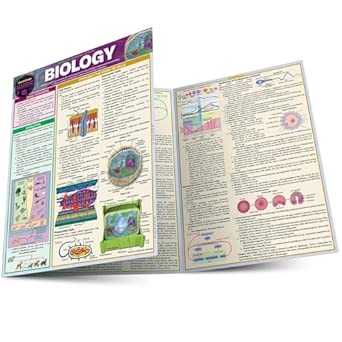 | Best Portable Quick Reference | Format: Laminated fold-out reference guide | Subject: Biology | Audience: High school and introductory college students | VIEW LATEST PRICE | See Our Full Breakdown |
| Science Knowledge Encyclopedia for Children: Collection of 6 Books (Box Set) |  | Best Box Set for Young Learners | Format: Boxed set of 6 books | Audience: Children (age range unspecified) | Subjects covered: General introductory science across six volumes | VIEW LATEST PRICE | See Our Full Breakdown |
| A Student’s Guide to Natural Science |  | Best for College-Bound Beginners | Format: Paperback guide | Audience: High school seniors and college-level beginners | Subjects covered: Foundations, disciplines, and methods of natural science | VIEW LATEST PRICE | See Our Full Breakdown |
| Knowledge Encyclopedia: Science for Children |  | Best for Visual Learners in Early Grades | Format: Print children’s encyclopedia | Audience: Young learners (age range not specified) | Content Style: Illustrated, simplified explanations | VIEW LATEST PRICE | See Our Full Breakdown |
| science reference books for student | Format | Audience |
|---|---|---|
| Everything You Need To Know Ab | Paperback desk reference | Students and parents |
| Illustrated Elementary Science | Illustrated dictionary | — |
| Earth Science: A QuickStudy La | Laminated reference guide (6-page chart) | Middle school through adult students |
| Microbiology: A QuickStudy Lam | Laminated reference guide (6-page chart) | Undergraduate, nursing, and pre-health students |
| National Geographic Kids Scien | Hardcover/paperback encyclopedia | Children, roughly ages 7-12 |
| Knowledge Encyclopedia Science | Hardcover encyclopedia | Students, roughly ages 9–14 |
| Spectrum Grade 6 Science Workb | Paperback workbook | — |
| Biology: A QuickStudy Laminate | Laminated fold-out reference guide | High school and introductory college students |
| Science Knowledge Encyclopedia | Boxed set of 6 books | Children (age range unspecified) |
| A Student’s Guide to Natural S | Paperback guide | High school seniors and college-level beginners |
| Knowledge Encyclopedia: Scienc | Print children’s encyclopedia | Young learners (age range not specified) |
More Details on Our Top Picks
Everything You Need To Know About Science Homework: A Desk Reference for Students and Parents – 4th to 6th Grades
This desk reference earns its place by solving a problem the other picks don’t address: helping parents and students work through science homework together. Where the National Geographic Kids Science Encyclopedia is built for browsing and curiosity, this one is organized around the actual topics assigned in grades 4 through 6, so explanations map directly to worksheets and test prep. The parent-facing tips are the real differentiator — adults who haven’t touched science class in decades can explain concepts without guesswork. The tradeoff is that it feels like a utility rather than something a child will pick up voluntarily. Compared with the Illustrated Elementary Science Dictionary, coverage is broader, but the presentation is drier, and there’s less visual appeal to hook reluctant readers.
Pros:- Curriculum-aligned for grades 4-6, matching common homework topics
- Includes guidance specifically for parents assisting with assignments
- Covers a wide span of science topics in one volume
- Explains concepts at an age-appropriate level without oversimplifying
Cons:- Dry, utilitarian presentation that won’t attract self-directed reading
- Sparse product details and no user ratings make it harder to vet before buying
Best for: Parents of 4th-6th graders who regularly help with science homework and need curriculum-aligned explanations
Not ideal for: Independent learners or kids seeking an engaging read — the format is reference-first, with little to draw a child in on its own
- Format:Paperback desk reference
- Grade Level:4th – 6th grades
- Audience:Students and parents
- Content Focus:Science homework topics and explanations
- Parent Features:Tips for assisting with homework
- Subject Coverage:General science across elementary curriculum
Our verdict“Buy this if homework support is the mission; skip it if you want a book a child will explore for fun.”
Illustrated Elementary Science Dictionary: An Essential Reference for Kids (Ages 7-10)
Vocabulary is the foundation of science literacy, and this dictionary targets that gap better than anything else here. Aimed at ages 7-10, it sits below the reading level of the Everything You Need To Know About Science Homework reference, making it the right first stop for younger siblings or early readers who find encyclopedias overwhelming. The illustrations do real work — they anchor abstract terms like evaporation or habitat in something a child can picture. Compared with the National Geographic Kids Science Encyclopedia, it’s less about narrative exploration and more about quick, confidence-building definitions. The tradeoff is scope: this covers foundational terms only, so a student preparing for tests on deeper processes will outgrow it quickly, and it offers no experiments or extended explanations.
Pros:- Illustrations paired with definitions make abstract concepts concrete
- Age-appropriate language for young readers without adult help
- Builds confidence by demystifying science terminology early
- Quick lookup format suits short attention spans
Cons:- Limited to basic concepts with no extended explanations
- Will be outgrown within a couple of years of regular use
Best for: Parents of early elementary kids (ages 7-10) building science vocabulary and confidence from scratch
Not ideal for: Upper elementary or middle school students — the basic-concept depth won’t support advanced coursework
- Format:Illustrated dictionary
- Age Range:7-10 years
- Content Focus:Science vocabulary and key concept definitions
- Visual Features:Illustrations accompanying definitions
- Reading Level:Early elementary independent reading
- Subject Coverage:Foundational general science terms
Our verdict“The right first science reference for young readers; older students should move up to a fuller encyclopedia.”
Earth Science: A QuickStudy Laminated Reference Guide
When an exam is tomorrow and a textbook chapter is forty pages long, this laminated guide is what a student actually reaches for. Condensed charts and diagrams compress plate tectonics, rock cycles, and atmospheric systems into a format that fits in a binder — something no full book in this lineup can do. Its sibling guide, Microbiology: A QuickStudy Laminated Reference Guide, serves the same purpose for a different subject, but earth science is the more broadly useful pick for middle and high schoolers since it appears in nearly every standard curriculum. The lamination survives backpack abuse and spilled drinks. The obvious cost: this is a review tool, not a learning tool. Anyone encountering the material for the first time will need the depth that the Knowledge Encyclopedia Science! provides.
Pros:- Extremely portable — slips into any binder or backpack
- Laminated pages resist wear from heavy student use
- Well-organized charts make scanning fast during review sessions
- Cheaper and faster than re-reading textbook chapters
Cons:- No narrative explanations — assumes prior familiarity with concepts
- Cannot substitute for a textbook or full reference on any topic
Best for: Middle and high school students who need rapid review before tests in earth science courses
Not ideal for: Students learning earth science from scratch — there’s no explanatory depth for first-time exposure
- Format:Laminated reference guide (6-page chart)
- Subject:Earth science
- Audience:Middle school through adult students
- Durability:Laminated, spill-resistant pages
- Portability:Fits standard three-ring binders
- Content Style:Concise charts, diagrams, and key-term summaries
Our verdict“A supplement for test-week efficiency, not a standalone study resource.”
Microbiology: A QuickStudy Laminated Reference Guide
This is the most specialized pick in the batch, and that’s exactly its value. Microbiology is a course where dense terminology — bacterial structures, staining techniques, viral replication — defeats students who rely on lecture notes alone. Like the Earth Science QuickStudy guide, it condenses a subject into a durable laminated format, but it targets a more advanced audience: undergraduates and healthcare students rather than the K-6 crowd most of this roundup serves. Its density is a feature for someone who already knows the material and just needs it organized, but a genuine drawback for anyone else — there’s little hand-holding. It also assumes lab-course context that general references like the Knowledge Encyclopedia Science! never touch, which is why both can coexist on a shelf.
Pros:- Covers high-yield microbiology topics in a scannable layout
- Laminated format holds up to lab environments and travel
- Ideal for last-minute review before exams in health-science courses
- More focused than textbook summaries on testable details
Cons:- Too dense for beginners or casual learners
- No practice questions or supplementary learning resources included
- Depth is insufficient for upper-level or graduate coursework
Best for: College and pre-health students needing a rapid-review aid for microbiology lectures and labs
Not ideal for: Younger students or curious general readers — the terminology and density assume college-level background
- Format:Laminated reference guide (6-page chart)
- Subject:Microbiology
- Audience:Undergraduate, nursing, and pre-health students
- Durability:Laminated pages
- Portability:Binder-compatible compact size
- Content Style:Concise topical summaries and reference tables
Our verdict“Narrow but excellent — get it for a microbiology course, not for general science curiosity.”
National Geographic Kids Science Encyclopedia: Atom Smashing, Food Chemistry, Animals, Space, and More!
If the goal is making a child want to open a science book, this is the strongest contender here. National Geographic’s photography and layout give it a visual authority that the Illustrated Elementary Science Dictionary can’t match, and its topic range — from food chemistry to space — invites browsing rather than lookup. Compared with the Everything You Need To Know About Science Homework reference, it trades curriculum alignment for engagement: a student will remember the atom-smashing spread long after they’ve forgotten a homework chapter. The tradeoff runs the other way too. Explanations are intentionally light, so middle schoolers working through assignments or preparing for tests will find it inspirational rather than instructional. Think of it as the gateway book that sits beside a more rigorous reference, not in place of one.
Pros:- Striking photography and colorful layouts that sustain interest
- Broad topic coverage spanning chemistry, biology, and space
- Encourages self-directed exploration of science
- Trusted National Geographic Kids editorial quality
Cons:- Explanations stay surface-level, leaving older students wanting more
- Not organized around school curricula, so it rarely matches homework needs
Best for: Elementary and early middle school kids who browse science books for fun and need engaging visual content
Not ideal for: Students needing assignment support or test preparation — explanations lack the depth and curriculum alignment required
- Format:Hardcover/paperback encyclopedia
- Audience:Children, roughly ages 7-12
- Visual Features:Full-color photography and illustrations
- Topic Coverage:Chemistry, biology, physics, space, animals, food science
- Content Style:Fact-driven entries and visual spreads
- Publisher:National Geographic Kids
Our verdict“The best pick for sparking curiosity; pair it with a curriculum-aligned reference when schoolwork gets serious.”
Knowledge Encyclopedia Science! 2nd Edition
This edition stands out as the richest visual reference in this lineup, pairing detailed explanations with illustrations that do real teaching work rather than decoration. Compared with the National Geographic Kids Science Encyclopedia, it goes deeper on the mechanics of each topic, which matters for students in grades 5 through 9 who need more than fun facts for reports and studying. It also covers more ground than the narrower Spectrum Grade 6 Science Workbook, though it lacks that book’s built-in exercises. The tradeoff is weight and price: this is a substantial hardcover built for a desk or shelf, not a backpack. It works best as the anchor of a student’s reference collection, supplemented by something with practice problems or a quick-reference guide like the Biology QuickStudy chart.
Pros:- Detailed, curriculum-relevant coverage across multiple science disciplines
- Vivid illustrations that clarify complex concepts for visual learners
- Updated second-edition facts and imagery
- Durable enough to serve multiple kids across several school years
Cons:- Bulky hardcover format is impractical for carrying to class
- No practice questions or assessment activities
- Higher price point than workbooks or laminated guides
Best for: Middle school students and families building a durable home science reference library with strong visuals
Not ideal for: Students who need drill-and-practice material or a portable reference — this is a sit-down encyclopedia, not a workbook
- Format:Hardcover encyclopedia
- Edition:2nd Edition
- Audience:Students, roughly ages 9–14
- Subjects covered:Physics, chemistry, biology, earth and space science
- Visual content:Full-color illustrations and diagrams throughout
- Use case:Home reference, reports, and independent reading
Our verdict“Buy this as the visual backbone of a middle schooler’s science shelf if budget and shelf space allow; skip it if you need exercises or portability.”
Spectrum Grade 6 Science Workbook
While most picks in this roundup are references to look things up in, this one is built for active practice — that’s its whole reason for being here. Compared with the Knowledge Encyclopedia Science!, it offers far less breadth and visual polish, but its research activities and structured lessons turn passive reading into retained skills. It aligns with the same grade band as Everything You Need To Know About Science Homework, yet the Spectrum book leans harder into hands-on scientific inquiry rather than homework explanations, making it the stronger pick for homeschool families who need a spine for the year. The tradeoff: it serves one grade level only, so it won’t grow with a student the way an encyclopedia does, and classroom teachers may find the pacing rigid.
Pros:- Covers natural, earth, and life science in one grade-level package
- Includes scientific research activities that build inquiry skills
- Works equally well for classroom and homeschool use
- Structured progression that supports a full school year
Cons:- Limited to 6th grade content, so no long-term reuse value
- Consumable format means repurchasing for each student
- Thin on the rich visuals that make encyclopedias engaging
Best for: Homeschool parents and teachers of 6th graders who need structured lessons with research activities
Not ideal for: Families wanting a multi-year family reference — this is grade-specific and consumable, not a keeper
- Format:Paperback workbook
- Grade level:6th grade
- Subjects covered:Natural science, earth science, life science
- Activities:Scientific research and inquiry exercises
- Settings:Classroom and homeschool
- Use case:Daily practice and skill reinforcement
Our verdict“This makes the most sense for a 6th grader who needs to practice science, not just read about it; choose an encyclopedia instead if reference value matters more than exercises.”
Biology: A QuickStudy Laminated Reference Guide
This is the cheapest, most portable option in the roundup, and it earns its slot by solving a different problem than everything else here. Where the Knowledge Encyclopedia Science! explains biology richly at a desk, this laminated chart condenses key concepts into a format that survives a backpack, a binder, and an exam-week cram session. It pairs naturally with the Earth Science and Microbiology QuickStudy guides as a modular set — buy only the subject you’re taking. The obvious tradeoff is depth: definitions and diagrams replace explanations, so a student who doesn’t already understand a concept won’t learn it here. Think of it as a memory aid and review tool, best used alongside a textbook rather than instead of one.
Pros:- Laminated pages withstand heavy handling and spilled drinks
- Fits in a binder or backpack for instant access
- Distills a full biology course onto a compact reference
- Very low cost compared with books in this lineup
Cons:- No narrative explanations — outlines only
- Too limited for advanced coursework or report writing
- Biology alone; other sciences require separate guides
Best for: High school and early college students who need durable, on-the-go review material for biology exams
Not ideal for: Learners seeking explanations from scratch — the outline format assumes some prior exposure to the material
- Format:Laminated fold-out reference guide
- Subject:Biology
- Audience:High school and introductory college students
- Durability:Water-resistant lamination
- Portability:Fits standard three-ring binders
- Use case:Exam review and quick lookup
Our verdict“Grab this if you need to review biology fast and cheap right before a test; pick an encyclopedia if you need to actually learn the material.”
Science Knowledge Encyclopedia for Children: Collection of 6 Books (Box Set)
Where the Knowledge Encyclopedia Science! packs everything into one heavy volume, this set splits science across six separate books, and that format choice changes who it’s for. Younger readers can hold, carry, and finish one slim book at a time — a genuine advantage for building reading confidence that a single encyclopedic tome can’t match. Compared with the Illustrated Elementary Science Dictionary, this set teaches through connected reading rather than lookups, making it better for curiosity-driven browsing than for answering a specific homework question. The real tradeoff is uncertainty: with no stated age range or topic list, buyers are gambling on fit, and the set costs more than any single volume here. It rewards families who want a gift-worthy science library, not precision shoppers.
Pros:- Six-book format lets kids finish one book at a time
- Encourages independent, curiosity-driven reading
- Attractive gift-worthy presentation
- Broader coverage than a single-subject title
Cons:- No stated age range or topic breakdown for each book
- No reviews or ratings to verify quality before buying
- More expensive than a single-volume encyclopedia
Best for: Parents building an engaging starter science library for curious elementary-aged children
Not ideal for: Buyers who need to verify grade level or specific topics before purchasing — the vague product details make it a risk
- Format:Boxed set of 6 books
- Audience:Children (age range unspecified)
- Subjects covered:General introductory science across six volumes
- Reading style:Narrative, curiosity-driven learning
- Use case:Home browsing and independent reading
Our verdict“A solid gift-style purchase for young science fans if you’re comfortable with the unclear age guidance; skip it if you need a verified curriculum match.”
A Student’s Guide to Natural Science
This is the only pick in the roundup aimed at older students thinking about science as a discipline, not just a subject to pass. Rather than listing facts like the Knowledge Encyclopedia Science! or drilling them like the Spectrum Grade 6 Workbook, it explains how natural science works — its fields, methods, and foundations — which is exactly the orientation a first-year college student or motivated high schooler needs. Compared with the Biology QuickStudy guide, it offers genuine narrative depth at the cost of instant lookup speed. The tradeoffs are real, though: it’s not a fact reference, it won’t help with a specific homework question, and the lack of edition information makes currency hard to judge. It’s a conceptual on-ramp, best paired with a traditional reference.
Pros:- Explains the foundations and methods of natural science, not just facts
- Accessible entry point for beginners at a college reading level
- Compact enough to read cover to cover before classes begin
- Fills a conceptual gap no other title in this roundup covers
Cons:- Too shallow for advanced coursework in any single discipline
- No clear edition or publication date to confirm currency
- Not structured for quick reference or lookup
Best for: College freshmen and ambitious high schoolers who want to understand how science works as a field of study
Not ideal for: Students who need facts, definitions, or homework answers — this teaches concepts and context, not lookup content
- Format:Paperback guide
- Audience:High school seniors and college-level beginners
- Subjects covered:Foundations, disciplines, and methods of natural science
- Reading style:Narrative introduction, meant to be read through
- Use case:Orientation and conceptual preparation
Our verdict“Choose this as a conceptual primer before college science courses begin, and pair it with an encyclopedia or QuickStudy guide for actual reference needs.”
Knowledge Encyclopedia: Science for Children
Among the encyclopedias in this roundup, this one stands out for putting visual storytelling first. Where the Knowledge Encyclopedia Science! 2nd Edition targets older readers with denser text, this edition leans on colorful illustrations and simplified explanations, which makes abstract ideas like weather systems or the human body feel approachable for younger students. Compared with the Illustrated Elementary Science Dictionary, it covers far more ground as a browse-and-explore volume rather than a lookup tool.
The tradeoff is depth. A middle schooler writing a report will find more usable detail in the National Geographic Kids Science Encyclopedia, and this book offers nothing for homework-specific reference the way the Everything You Need To Know About Science Homework desk reference does. There’s also no stated age range, so parents are left guessing about reading level. This pick makes the most sense as a curiosity-sparking companion volume, not a primary study resource.
Pros:- Illustration-heavy layout keeps reluctant readers engaged
- Simplifies complex science concepts for early learners
- Broad topical coverage across multiple science fields in one volume
- Encourages self-directed exploration rather than forced study
Cons:- Lacks the technical depth older students need for school assignments
- No stated age range, making it hard to match to a child’s reading level
- Functions poorly as a quick-lookup reference compared to dictionaries and laminated guides
Best for: Parents of roughly 6-10 year olds who want a visually rich book that encourages independent browsing and science curiosity outside of schoolwork
Not ideal for: Students in grades 5 and up who need detailed, citable information for reports or test prep — the simplified text will feel thin compared to reference-grade encyclopedias
- Format:Print children’s encyclopedia
- Audience:Young learners (age range not specified)
- Content Style:Illustrated, simplified explanations
- Subject Coverage:General science, multiple topics
- Purpose:Browsing and curiosity-building, not homework lookup
- Visual Elements:Full-color illustrations throughout
Our verdict“A great second book for young visual learners building science curiosity, but not substantial enough to serve as an older student’s main reference.”

How We Picked
I evaluated each book against four criteria, weighted for how students actually use reference material. Age-appropriateness came first: a book that is too advanced will sit unread, and one that is too basic becomes condescending within a year, so I checked reading level, visual complexity, and topic coverage against stated age ranges. Depth versus usability came second — the best references let a student find an answer in under a minute, whether through a dictionary’s alphabetical structure, an encyclopedia’s indexed chapters, or a laminated guide’s condensed panels. Durability and format mattered too, because reference books get tossed into backpacks, and laminated pages or sturdy hardcovers survive that better than thin paperbacks.
Finally, I judged value over time rather than sticker price alone. A $30 encyclopedia used weekly for five years beats a $10 workbook abandoned in June. This is why the rankings favor long-lifespan references at the top and place curriculum-specific or single-subject tools lower — they are excellent at their job, but the job is narrower. Products were ordered by how broad the audience is, then by quality within that audience.
Factors to Consider When Choosing Science Reference Books For Students
Before choosing a specific title, it helps to understand what separates a reference book that gets used weekly from one that gathers dust. These are the factors that shaped my rankings and the mistakes I see buyers make most often.Match the Reading Level, Not the Grade Label
Publisher age ranges are inconsistent across this category, and trusting them blindly is the most common mistake. A book labeled for ages 8–10 may assume vocabulary that a struggling 10-year-old reader cannot decode, while a ‘student’ guide written by university presses often targets undergraduates despite looking approachable. The reliable test is to check the sentence complexity and glossary density: one definition per page with a supporting image suits elementary students, while multi-paragraph explanations with cross-references signal middle school and up. When buying for a strong reader, you can go one band above their grade — reference books tolerate stretch better than novels because students dip in and out rather than reading cover to cover. Buying below a student’s level is the bigger error, since the book gets dismissed as babyish within weeks. If ordering online and you cannot preview pages, prioritize publishers with consistent leveling, like DK and National Geographic, whose bands tend to track actual classroom reading levels.
Decide Between Breadth and Depth Before You Buy
The biggest structural choice in this category is general encyclopedia versus subject-specific reference, and the wrong choice wastes money in opposite ways. A general encyclopedia gives a student one place to look up anything — ideal for curiosity-driven browsing, homework across units, and younger students whose interests shift monthly. A subject-specific reference like a microbiology or biology guide goes far deeper but only earns its cost if the student is taking that subject or genuinely obsessed with it. Buy breadth first, depth second: most households are better served by one strong encyclopedia and one laminated subject guide than by three overlapping encyclopedias. Parents of middle schoolers sometimes buy three general titles thinking more is better, when the overlap between them exceeds 70 percent. The exception is the box-set format, which splits disciplines across separate slim volumes — a middle path that works well when the subjects map to school curriculum strands.
Consider How the Student Actually Studies
Watch for Curriculum Alignment — and Its Limits
Physical Build Quality Affects Lifespan
When to Pay More — and When the Cheap Option Wins
Frequently Asked Questions
Are science encyclopedias outdated quickly given how fast science changes?
For elementary and middle school students, this concern is smaller than it appears — the core concepts they study (states of matter, cell basics, the solar system’s structure, food chains) are stable across editions. What does change is presentation, photography quality, and occasional details like planetary classifications or space mission milestones, which is why I favored recent editions like the Knowledge Encyclopedia Science! 2nd Edition over older printings at similar prices. If your student is following current-space-news topics closely, a slightly older encyclopedia still covers 95 percent of what they need. The bigger risk is buying a heavily discounted older edition to save a few dollars and getting dated imagery that makes the book feel stale to a visually driven kid. For exam-level facts at the high school or college end, the laminated quick guides are revised regularly, so check the edition year before purchasing. In short: buy recent for visual subjects like space and technology, and worry less for fundamental biology and physics.
Should I buy one big encyclopedia or several subject-specific books?
Start with one strong general encyclopedia, then add subject-specific references only when a genuine need appears — usually a specific course or a sustained obsession with one discipline. The general encyclopedia handles the majority of homework lookups and curiosity questions across all science strands, which is why my top picks are the broad-coverage titles. Subject-specific references earn their cost through depth: a student taking high school biology will get far more from a dedicated biology guide than from three paragraphs in an encyclopedia. The six-volume children’s box set is a reasonable compromise, splitting disciplines into separate books while keeping the total cost below two premium encyclopedias. What I would avoid is buying multiple general encyclopedias from different publishers, since their coverage overlaps heavily and none of them goes deep. The practical sequence is: encyclopedia first, laminated subject guide when exams start, and specialized books only for students who have outgrown both.
Are laminated QuickStudy guides good for younger students?
Generally no, and this is one of the clearer age divides in the roundup. The QuickStudy format works by compressing large amounts of information into dense panels, tables, and diagrams — a design built for retrieval during revision, not first-time learning. That density assumes the student already knows the material and needs a refresher, which describes high school and college students, not a 9-year-old encountering the water cycle for the first time. Younger students do better with illustrated dictionaries and encyclopedias that explain concepts at length with supporting visuals. If a middle schooler is advanced and preparing for science competitions, a biology or earth science guide can work as a stretch tool, but expect to sit with them the first several times. For parents of elementary students drawn to the low price, the money is better spent on an illustrated dictionary aimed at ages 7–10. The laminated guides become genuinely valuable from about grade 8 onward.
Do I need a workbook if I already have a reference book?
They serve different purposes, and having one does not replace the other. A reference book answers ‘what does this mean,’ while a workbook drills ‘can I apply this’ — and both phases matter for actually retaining science content. If the student understands lessons in class but forgets terminology and facts later, the gap is a reference book they can revisit. If they understand while reading but stumble on tests and assignments, the gap is practice, and a curriculum-matched workbook like the Spectrum Grade 6 title fills it. Be honest about which problem you are solving before buying both, because workbooks are write-in products with zero resale or hand-down value once completed. A reasonable budget split for a student who needs both is roughly two-thirds on the long-lived reference and one-third on the consumable workbook. And since workbooks are grade-locked, buy them for the current school year only, never a year ahead.
What’s the best option if my child isn’t a confident reader yet?
Prioritize visual density over text volume — the best picks for reluctant or developing readers are the Illustrated Elementary Science Dictionary for pure vocabulary support and the DK or National Geographic encyclopedias for browsing, since their layouts let students learn from images and captions without wading through paragraphs. Caption-led design is the specific feature to look for: a page where a student can absorb real content from labeled diagrams alone stays useful even when the main text is a struggle. Avoid text-forward references like A Student’s Guide to Natural Science, which assumes strong reading stamina and will frustrate rather than build confidence. A useful tactic with younger students is choosing a book one visual level above their reading level, then reading it together — the images carry comprehension while the adult handles the prose. Dictionaries specifically designed for ages 7–10 also build science vocabulary gently, which pays off when textbooks get harder later. The goal at this stage is associating science books with discovery rather than difficulty.
Conclusion
After comparing all eleven titles, the right choice depends almost entirely on who is reading. For best overall, the National Geographic Kids Science Encyclopedia earns the top spot with the broadest audience range, strong visual quality, and the longest useful lifespan of any single-volume pick. The Knowledge Encyclopedia Science! 2nd Edition is my best premium choice for families who want DK’s superior illustrations and deeper explanations for committed middle-grade readers. For best value, the QuickStudy laminated guides deliver exam-ready reference at under $15 each — nothing else here matches their cost-to-utility ratio for high school and college students, and the six-book children’s box set takes the value crown for younger households covering multiple subjects at once. For beginners, the Illustrated Elementary Science Dictionary is the gentlest entry point for ages 7–10, building science vocabulary before any heavy reading begins. For specific needs: choose Everything You Need to Know About Science Homework for a 4th–6th grader actively struggling with assignments, the Spectrum Grade 6 Workbook when the problem is test practice rather than reference, and A Student’s Guide to Natural Science for an older student learning how scientific thinking itself works. Whatever the choice, match the format to how the student actually studies — that single decision predicts whether the book gets used or gets shelved.
Halloween Picks
halloween
As an affiliate, we earn on qualifying purchases.