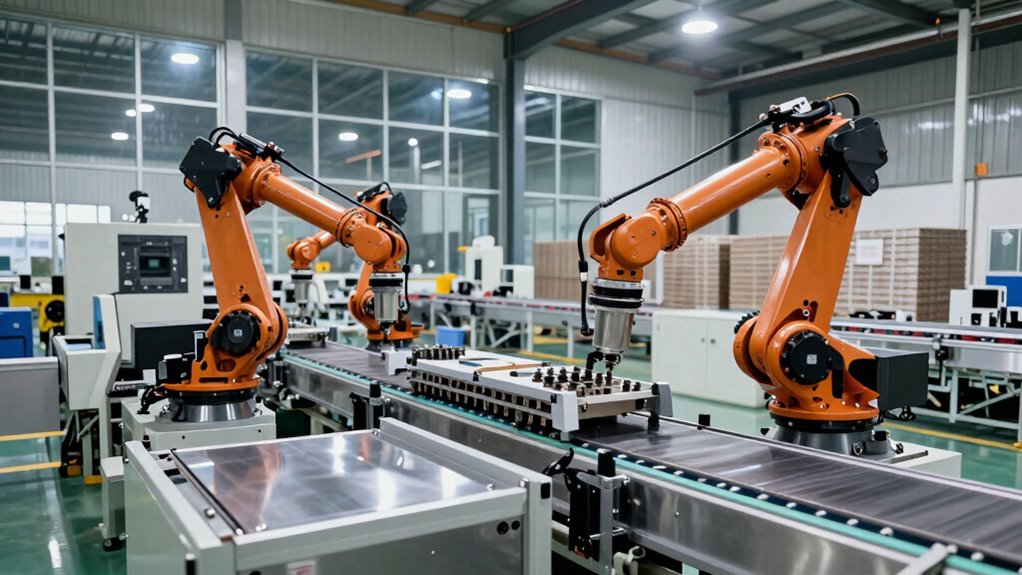

Vertical integration in manufacturing is a strategy where you control multiple stages of your supply chain, from raw materials to finished products. This approach helps you reduce reliance on outside suppliers and optimize operations for better quality, efficiency, and cost savings. It also gives you more control over market prices and protects proprietary processes. As you explore further, you’ll discover how this powerful strategy can boost your company’s long-term growth and competitiveness.
Key Takeaways
- Vertical integration involves a manufacturing company controlling multiple supply chain stages from raw materials to finished products.
- It reduces reliance on external suppliers and distributors, enhancing operational efficiency.
- Vertical integration allows for better quality control and quicker response to market changes.
- It provides strategic advantages by influencing market dynamics and strengthening competitive positioning.
- Modern innovations in supply chain management further optimize vertical integration for long-term growth.
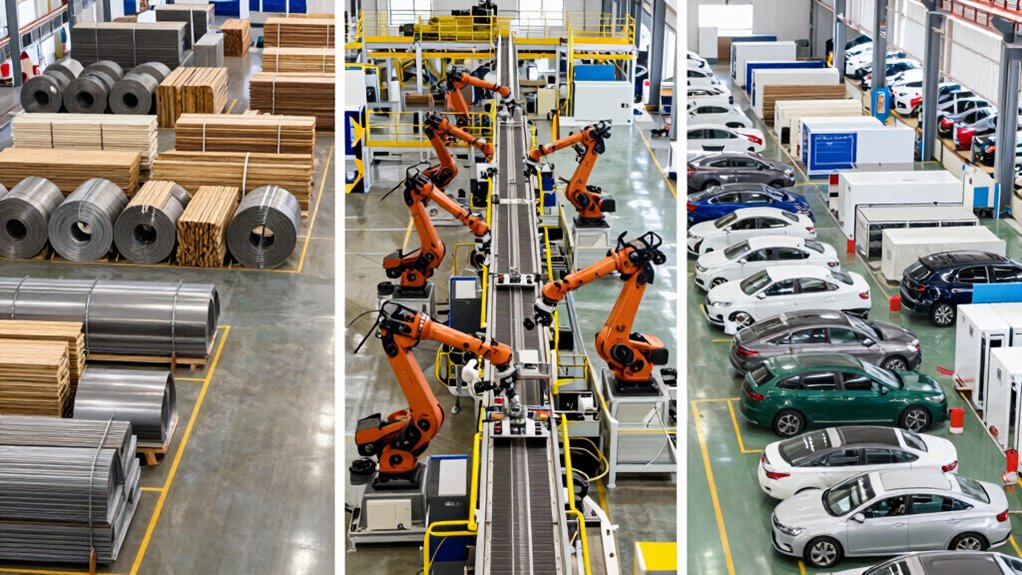
Have you ever wondered how some manufacturing companies control every step of their production process? It’s often through a strategy called vertical integration. When a company adopts vertical integration, it takes control of multiple stages within its supply chain, from raw materials to finished products. Instead of relying on external suppliers or distributors, the company handles these functions internally, giving it greater oversight and efficiency. This approach allows them to streamline operations, cut costs, and reduce delays that can occur when coordinating with third parties. When you think about market control, vertical integration becomes a powerful tool. By owning or directly managing key parts of the supply chain, a company can influence market dynamics, set prices more effectively, and fend off competitors. It’s a way to strengthen their position and create a more solid market presence.
This level of control means the company can better ensure the quality of its products at every stage, from sourcing raw materials to delivering the finished goods. It reduces dependency on outsiders, which can be risky if suppliers face disruptions or price fluctuations. With a tighter grip on the supply chain, the company can respond more quickly to changes in demand or market trends. For example, if consumer preferences shift, they can adjust production without waiting for external suppliers or distributors to catch up. This agility can be a significant advantage in competitive markets. Additionally, supply chain control can help companies better protect proprietary technology or processes, further elevating their market control. Understanding the benefits of vertical integration can help businesses assess whether this strategy aligns with their long-term goals. Moreover, mastering supply chain management is essential for maximizing the advantages of vertical integration and maintaining a competitive edge. Developing a comprehensive understanding of vertical integration strategies can also enable companies to identify new opportunities for growth and efficiency. Incorporating modern supply chain innovations can further enhance the effectiveness of vertical integration initiatives.

For 0618 CJ18 CJ0618A 0618-3B 7×10 7×12 and 7×14 Machining Equipment – Cast Iron Mini Lathe Saddle Assembly and Vertical Slide Block Longitudinal Bed Slider
- Material: Cast iron for durability and wear resistance
- Tool Mounting: Integrated tool holder for precise positioning
- Compatibility: Fits 7×10, 7×12, 7×14 mini lathes
As an affiliate, we earn on qualifying purchases.
As an affiliate, we earn on qualifying purchases.
Frequently Asked Questions
How Does Vertical Integration Impact Product Quality?
Vertical integration allows you to enhance product quality by giving you greater control over quality control and process consistency throughout production. When you oversee every stage, from raw materials to finished products, you reduce variability and defects. This direct oversight helps identify and fix issues early, ensuring higher standards. As a result, your products become more reliable, consistent, and aligned with customer expectations, ultimately boosting your brand reputation.
What Are Common Challenges Faced During Vertical Integration?
You might think vertical integration simplifies things, but it often brings unexpected hurdles. Cost management becomes a tricky balancing act, as expanding control over the supply chain can inflate expenses unexpectedly. Meanwhile, market competition intensifies because larger, integrated firms can outpace smaller players, making it harder to stay agile. Ironically, the very goal of streamlining operations can trap you in complex challenges, risking profitability and market relevance if not managed carefully.
How Does Vertical Integration Affect a Company’s Supply Chain?
Vertical integration streamlines your supply chain by bringing suppliers or distributors in-house, which strengthens supplier relationships and reduces reliance on external parties. This approach allows you to control quality and delivery schedules more effectively. Additionally, it leads to cost reduction since you eliminate middlemen and lower transaction expenses. Overall, vertical integration can make your supply chain more efficient, responsive, and cost-effective, giving you a competitive edge in the market.
Can Small Manufacturers Adopt Vertical Integration Strategies?
Sure, small manufacturers can adopt vertical integration strategies, even if it seems intimidating. Ironically, by strengthening supplier relationships and controlling more of their supply chain, they might just open market expansion opportunities. While it’s more common among giants, small firms can leverage niche markets and agility to benefit from integration, reducing costs and gaining a competitive edge. So, don’t dismiss it—vertical integration could be your secret weapon for growth.
What Industries Benefit Most From Vertical Integration?
Industries like automotive, tech, and pharmaceuticals benefit most from vertical integration because it helps you gain market dominance and a competitive advantage. By controlling supply chains, you reduce costs and improve quality, making your products more attractive. This strategy allows you to respond faster to market changes and protect proprietary technology. Overall, vertical integration strengthens your position, enabling you to outperform competitors and secure a larger market share.
Conclusion
Imagine you’re the captain steering your ship through the vast ocean of manufacturing, controlling every port from raw materials to finished products. That’s vertical integration—keeping everything under your own flag. It’s a strategic move that can boost efficiency and cut costs, much like a well-orchestrated symphony. Embrace this approach, and you’ll navigate your business toward greater independence and success, much like a hero forging their own destiny amidst the unpredictable tides of industry.