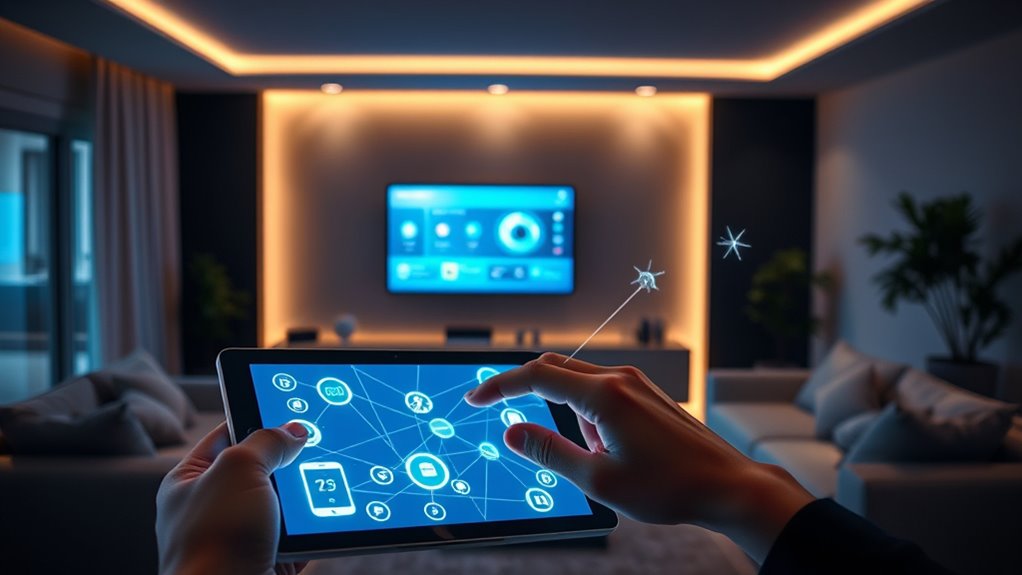

The Internet of Things (IoT) connects everyday devices like thermostats, lights, and security cameras to the internet, allowing them to share data, automate routines, and respond to commands. You can create a smart environment that enhances convenience, efficiency, and safety by enabling devices to work together seamlessly. This integration relies on standard protocols and security measures to protect your data. Keep exploring to discover how these connections truly transform your everyday life.
Open a free Amazon Business account
Business pricing, bulk buying and tax-exempt orders.
As an affiliate, we earn on qualifying purchases.
Key Takeaways
- IoT connects everyday objects to share data, improving convenience, efficiency, and safety in daily environments.
- Smart device integration relies on standard protocols and standards for compatibility across different brands.
- Seamless IoT ecosystems enable automation, real-time updates, and coordinated responses among devices.
- Data security in IoT involves encryption, secure authentication, and regular updates to protect sensitive information.
- Risks include cyber threats and unauthorized access, mitigated by best practices like strong passwords and firmware updates.
Have you ever wondered how your smart devices communicate seamlessly to make your life easier? The answer lies in the incredible world of the Internet of Things (IoT), where everyday objects connect and share data to improve convenience, efficiency, and safety. At the core of this interconnected network is smart device integration, which allows your thermostats, lights, security cameras, and even appliances to work together smoothly. When these devices are integrated properly, they can respond to your commands, automate routines, and provide real-time updates without you having to lift a finger. But for all this to happen securely, data security becomes a critical concern. You need to trust that the data your devices exchange is protected from hackers and unauthorized access.
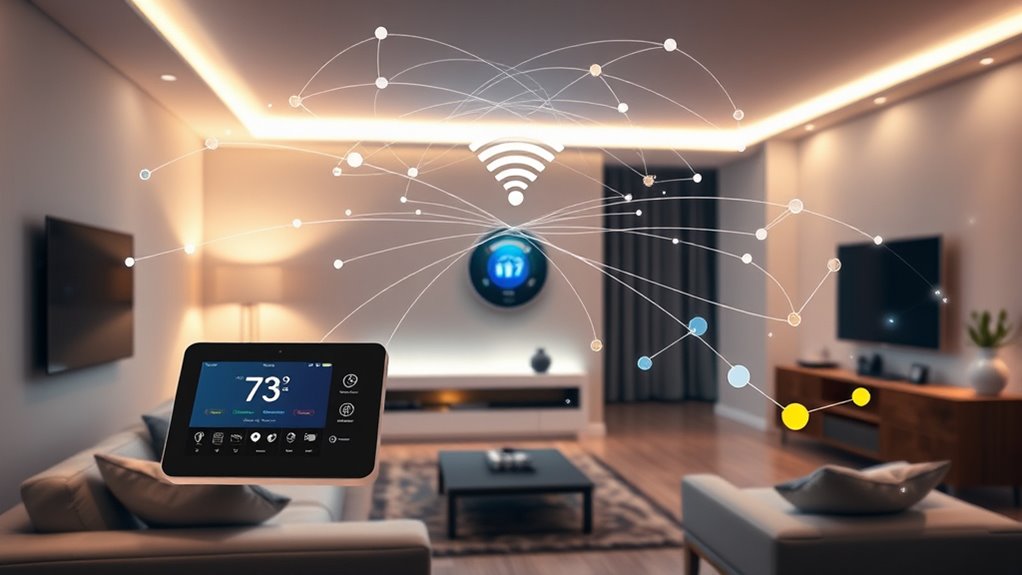
Smart device integration is what makes the IoT ecosystem so powerful. Instead of isolated gadgets functioning independently, they communicate through a central hub or cloud platform. For instance, your smart home system can detect when you’re leaving and automatically turn off the lights, adjust the thermostat, and lock the doors—all coordinated through seamless integration. This coordination depends heavily on standard protocols and interoperability standards, ensuring devices from different brands can work together without issues. The more integrated your devices are, the more intuitive and responsive your smart environment feels. Additionally, implementing security measures such as encryption and regular updates helps safeguard your network from cyber threats.
Seamless smart device integration creates a responsive, intuitive, and coordinated smart home experience.
However, with increased connectivity comes increased vulnerability. That’s why data security is essential. As your devices send and receive sensitive information—like your daily routines, voice commands, or security footage—protecting this data must be a priority. Manufacturers implement encryption, secure authentication, and regular firmware updates to shield your network from cyber threats. You should also practice good security habits, such as changing default passwords and using strong, unique passwords for each device. These steps help prevent malicious actors from gaining access and compromising your personal information or even taking control of your devices.
Understanding how your smart devices work together and the importance of data security can empower you to create a safer, more efficient smart home. When your devices are integrated well and protected with proper security measures, you enjoy a smoother experience and peace of mind. The IoT is constantly evolving, making everyday tasks simpler, but it’s up to you to stay informed and proactive. By understanding these key elements—smart device integration and data security—you can harness the full potential of the Internet of Things while keeping your digital life safe. Remember, a connected home is a smarter, more responsive home, but only if you prioritize both seamless communication and robust security.
smart home hub compatible with multiple devices
As an affiliate, we earn on qualifying purchases.
As an affiliate, we earn on qualifying purchases.
Frequently Asked Questions
How Secure Are Iot Devices Against Hacking?
IoT devices can be vulnerable to hacking if you don’t implement proper security measures. You should ensure device authentication is strong, preventing unauthorized access. Additionally, using effective encryption protocols protects data during transmission. Regular updates and strong passwords also boost security. While no device is completely foolproof, these steps considerably reduce the risk, helping keep your IoT devices safer from potential hackers.
What Industries Benefit Most From Iot Integration?
You’ll find that industries like agriculture and healthcare benefit most from IoT integration. In Smart Agriculture, IoT devices help you monitor soil conditions, optimize water usage, and increase crop yields. In Healthcare Monitoring, IoT enables you to track patient health data remotely, improve treatment, and reduce hospital visits. These applications empower you to make data-driven decisions, enhance efficiency, and improve outcomes across these essential sectors.
How Does Iot Impact Data Privacy Concerns?
Think of IoT as a double-edged sword—it offers great benefits but also sharpens data privacy concerns. You need to guarantee data encryption is robust and that you obtain clear user consent before collecting personal info. Without these safeguards, your data can be vulnerable to breaches, putting sensitive information at risk. By prioritizing encryption and transparency, you protect your privacy and build trust in this interconnected world.
Can Iot Devices Operate Without Internet Connectivity?
Yes, IoT devices can operate without internet connectivity by utilizing edge computing and local processing. When offline, these devices process data locally instead of relying on cloud servers, ensuring continuous functionality. This approach allows you to maintain control over sensitive information, reduce latency, and improve response times. However, some features or updates may require internet access, but core operations can still run smoothly with local processing.
What Are the Future Trends in Iot Technology?
You’ll see future IoT trends focus on smarter homes and wearable health devices. Expect more integration with AI for better automation and personalized experiences in your smart home. Wearable health gadgets will become more advanced, providing real-time data and insights to improve your well-being. As connectivity improves, these devices will become more seamless, secure, and energy-efficient, making your daily life more convenient and healthier.
Conclusion
So, after all this talk about connectivity, you might think you’re in control. But with the Internet of Things, your smart fridge could be smarter than you, and your thermostat might just be plotting its own little rebellion. Ironically, in trying to make life easier, we’ve handed over a bit of our independence. Guess it’s true: the more connected we get, the more we realize we’re just along for the ride.
Flea & tick season Picks
flea and tick prevention
As an affiliate, we earn on qualifying purchases.