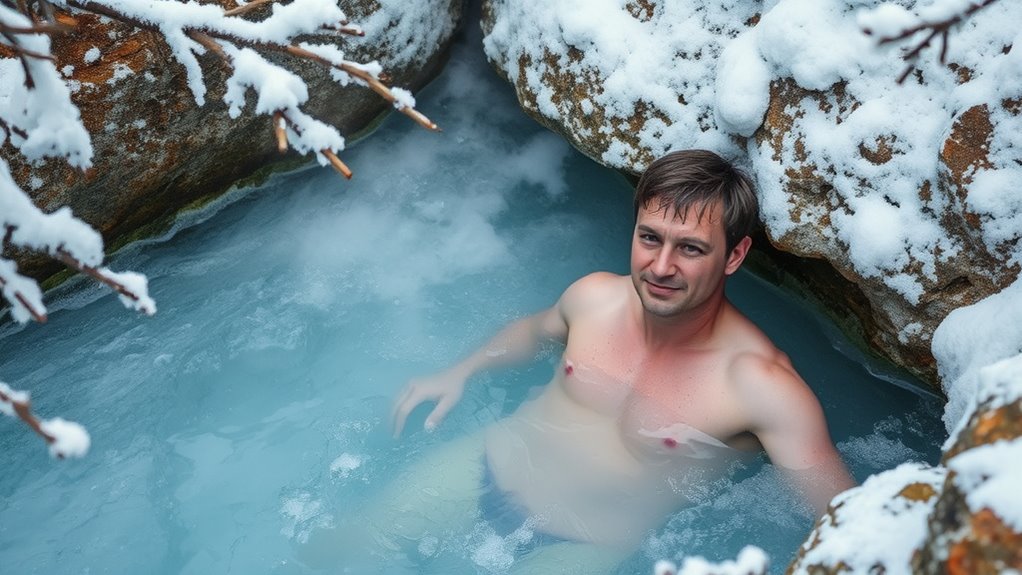

Cold plunges can boost your immune system, improve cold tolerance, and support overall health when done gradually and safely. They stimulate adaptation by teaching your body to handle cold better, reducing shock and discomfort over time. However, sudden or extreme immersion can cause risks such as blood pressure spikes or heart issues, especially if you have health concerns. Exploring more about these practices will help you understand how to use cold plunges effectively and safely.
Key Takeaways
- Cold plunges boost immune function by increasing white blood cell production and enhancing the body’s defense mechanisms.
- Regular cold immersion promotes cold adaptation, improving tolerance and resilience to low temperatures over time.
- Benefits include faster recovery, increased metabolic efficiency, and overall health improvement when practiced safely.
- Risks involve potential cardiovascular stress, blood pressure spikes, and the need for gradual exposure, especially for individuals with health issues.
- Proper progression, patience, and consultation with healthcare professionals are essential to maximize benefits and minimize dangers.
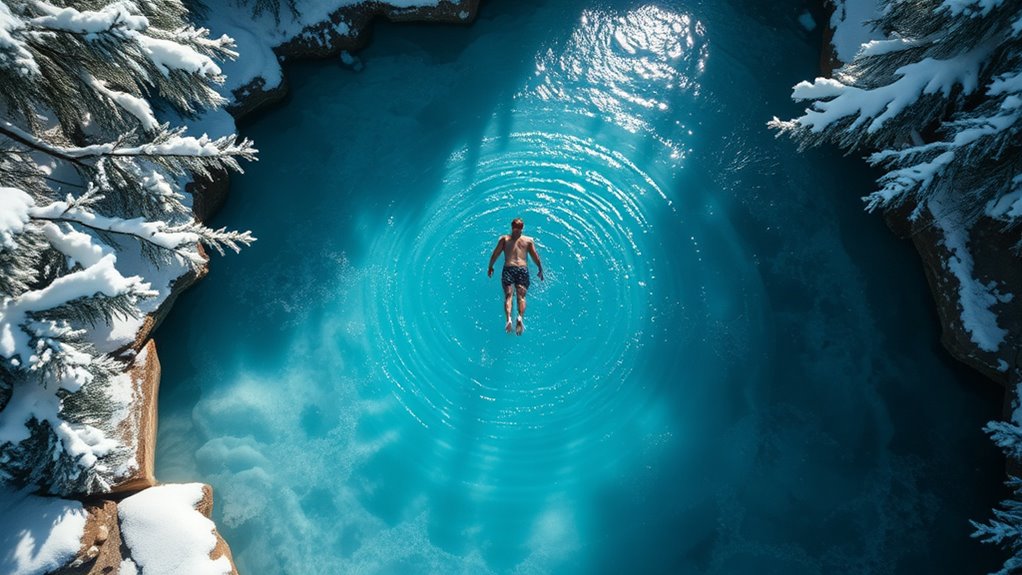
Have you ever wondered why cold plunges have gained popularity among athletes and wellness enthusiasts? It’s because they offer more than just a quick shock to your system. Cold plunges can stimulate cold adaptation, a process where your body gradually becomes more efficient at handling low temperatures. When you regularly immerse yourself in cold water, your body learns to respond better to the cold, reducing the shock response over time. This adaptation can improve your tolerance for cold environments, making future cold exposures less uncomfortable and potentially more beneficial.
Cold plunges promote cold adaptation, helping your body handle low temperatures more efficiently over time.
But beyond cold adaptation, many people are drawn to cold plunges because of their effects on your immune response. Cold exposure has been linked to an increase in the production of white blood cells, which are vital for fighting off infections. When you immerse yourself in cold water, your body’s initial response is to constrict blood vessels to conserve heat, but soon after, it activates mechanisms that boost immune function. Over time, this can lead to a more resilient immune system, helping you fend off illnesses more effectively. This immune response stimulation is one reason athletes, in particular, use cold plunges to recover faster and stay healthier during intense training periods.
Additionally, some studies suggest that cold water immersion may influence electric power generation in the body by stimulating metabolic processes, which can support overall health and recovery. However, it’s important to recognize that cold plunges aren’t without risks. For some, especially those with cardiovascular issues, sudden immersion in cold water can cause a spike in blood pressure or trigger irregular heartbeats. If you’re not accustomed to cold exposure, jumping straight into a very cold plunge can be overwhelming and potentially dangerous. That’s why it’s advisable to start slowly, gradually increasing your exposure and allowing your body to adapt safely. Always listen to your body and consult a healthcare professional if you have underlying health conditions before incorporating cold plunges into your routine.
In essence, cold plunges can be a powerful tool for enhancing cold adaptation and boosting your immune response, but they should be approached thoughtfully. The benefits come with the responsibility of understanding your own limits and progressing safely. When used correctly, cold immersion can improve your resilience to cold, support your immune health, and aid recovery. Just remember that patience and moderation are key—your body needs time to adjust, and rushing into cold water without preparation can do more harm than good. With proper care, cold plunges can become a valuable part of your wellness routine, helping you feel stronger, more resilient, and healthier overall.
Top picks for "understand cold plung"
Open Amazon search results for this keyword.
As an affiliate, we earn on qualifying purchases.
Frequently Asked Questions
Can Cold Plunges Replace Traditional Recovery Methods?
Cold plunges can be a helpful alternative therapy, but they shouldn’t replace traditional recovery methods entirely. You might find they boost mental health and reduce inflammation, yet combining them with rest, proper nutrition, and physical therapy is more effective. Listen to your body and consult a healthcare professional to guarantee cold plunges complement your recovery plan without risking overexposure or injury. Balance is key for ideal results.
How Often Should Beginners Try Cold Plunging?
Start slow and steady with cold exposure—try cold plunging once or twice a week. As you build mental resilience and adapt to the cold, you can increase frequency gradually. Beginners should listen to their bodies, avoiding overdoing it. This gentle approach helps you enjoy the mental clarity and physical benefits without risking overstress or discomfort. Remember, consistency is key to safely reaping cold plunging’s rewards.
Are There Specific Health Conditions That Prevent Cold Plunging?
If you have heart conditions or circulatory issues, cold plunging might not be safe for you. These conditions can cause your blood vessels to respond abnormally to cold temperatures, increasing risks like arrhythmias or blood vessel constriction. Before trying cold plunges, you should consult your healthcare provider to verify it’s appropriate for your specific health situation. Always prioritize safety and listen to your body’s signals.
What Is the Optimal Water Temperature for Cold Plunges?
The ideal water temperature for cold plunges is typically between 50 to 59°F (10 to 15°C). Staying within this range helps you avoid excessive cold shock, which can be dangerous. If the water’s too cold, you risk rapid breathing and fainting; if it’s too warm, you won’t get the full benefits. You should listen to your body and gradually acclimate to colder temperatures for safety and effectiveness.
How Long Should a Typical Cold Plunge Last?
Think of cold plunges as your personal quest for resilience—like a knight facing the icy dragon. You should keep your immersion time between 3 to 5 minutes, following duration guidelines for safety. Staying in too long can be risky, so listen to your body and don’t push past your comfort zone. Start with shorter durations and gradually increase as your tolerance builds, ensuring a safe and effective cold plunge experience.
Conclusion
Remember, cold plunges are like a double-edged sword—offering powerful benefits but with risks if not approached carefully. As you dip into icy waters, you’re igniting your resilience and boosting recovery, but rushing in without preparation can cut you down. Approach with respect and awareness, and you’ll find yourself riding the wave of renewal rather than drowning in danger. Embrace the chill wisely, and let it be a tool that sharpens your health, not harms it.