


A calorie deficit happens when you burn more calories than you consume, which forces your body to use stored fat for energy, leading to weight loss. It’s essential to manage your total calorie intake and increase activity levels to create this balance. Factors like your metabolic rate, muscle mass, and lifestyle influence how quickly you lose weight. Want to understand how to optimize this process? Keep exploring for key strategies to make your goals achievable.
Key Takeaways
- A calorie deficit occurs when energy intake is less than energy expenditure, leading to weight loss.
- Achieving a calorie deficit involves managing diet and increasing physical activity, not just eating less.
- Your metabolic rate determines how many calories your body burns at rest, influencing your calorie needs.
- Combining strength training and adequate protein intake helps preserve muscle and enhance fat loss during a calorie deficit.
- Monitoring and adjusting your calorie intake and activity levels optimize fat reduction and sustainable weight loss.
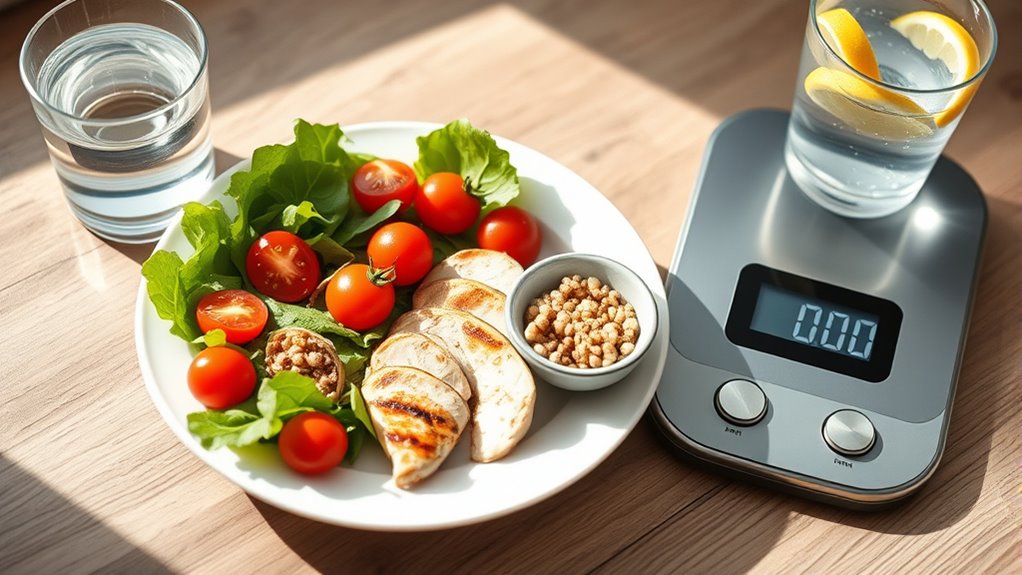
If you’re looking to lose weight, understanding the concept of a calorie deficit is essential. A calorie deficit occurs when you consume fewer calories than your body needs to maintain its current weight. To create this deficit effectively, it’s important to grasp how your body uses energy, which involves your metabolic rate and macronutrient balance. Your metabolic rate is the number of calories your body burns at rest to keep essential functions running, such as breathing, circulating blood, and regulating body temperature. Knowing your metabolic rate helps you determine how many calories you need daily, and by consuming less than that, you can start shedding excess weight.
Achieving a calorie deficit isn’t just about eating less; it also involves understanding how your diet influences your body’s energy expenditure. Macronutrient balance plays a critical role here. Your diet consists of carbohydrates, proteins, and fats, each contributing differently to your overall caloric intake and metabolic processes. For example, protein has a higher thermic effect, meaning your body uses more energy to digest and process it compared to carbs or fats. Prioritizing a balanced intake of these macronutrients can help you maintain muscle mass while losing fat, making your weight loss more sustainable and healthier.
Furthermore, your metabolic rate isn’t static. It can fluctuate based on various factors, including age, activity level, muscle mass, and even the types of foods you eat. Increasing your physical activity, especially strength training, can boost your metabolic rate by building muscle, which burns more calories even at rest. Additionally, eating enough protein supports muscle preservation during weight loss, ensuring your metabolic rate remains higher. Understanding these interactions helps you tailor your diet and activity plan to maximize fat loss while maintaining your health. Metabolic rate can also be influenced by your overall energy balance and lifestyle choices, emphasizing the importance of consistency in your efforts.

Etekcity Smart Scale for Body Weight, FSA&HSA Eligible, Bathroom Digital Weighing Scale with BMI, Body Fat, Muscle Mass, Accurate Bluetooth Home User Health Equipment Sync Apps, LED, Tempered glass
𝑼𝒏𝒑𝒂𝒓𝒂𝒍𝒍𝒆𝒍𝒆𝒅 𝑨𝒑𝒑 𝑬𝒙𝒑𝒆𝒓𝒊𝒆𝒏𝒄𝒆: Elevate your fitness journey with us. Our scale stands out with the free vesync app,…
As an affiliate, we earn on qualifying purchases.
As an affiliate, we earn on qualifying purchases.
Frequently Asked Questions
Can I Lose Weight Without Tracking Calories?
Yes, you can lose weight without calorie counting by focusing on mindful eating and healthy habits. Instead of diet tracking, pay attention to portion sizes, eat more whole foods, and reduce processed foods. Avoid emotional eating and listen to your body’s hunger cues. While calorie counting helps, these intuitive strategies can help you create a calorie deficit naturally, leading to weight loss without the need for strict diet tracking.
How Does Metabolism Affect Calorie Deficit?
Ever wonder how your metabolism influences your calorie deficit? Your metabolic rate determines your energy expenditure at rest and during activity. If your metabolism is fast, you burn more calories, making it easier to create a deficit. Conversely, a slower metabolism means fewer calories burned, which can slow weight loss. By understanding your metabolic rate, you can tailor your diet and exercise to optimize your calorie deficit effectively.
Is a Calorie Deficit Safe Long-Term?
A calorie deficit can be safe long-term if you avoid metabolic adaptation by incorporating calorie cycling. This approach prevents your metabolism from slowing down and helps sustain weight loss. You should also listen to your body and avoid extreme deficits that could cause nutritional deficiencies or fatigue. Consulting with a healthcare professional ensures your plan remains balanced, safe, and effective over time.
Can I Cheat on My Calorie Goals?
Sure, go ahead and cheat—after all, who’s counting? But don’t forget, cheat strategies and calorie flexibility are fine in moderation, not as an excuse to binge. You can bend your calorie goals a bit, just like a yoga master, but don’t turn it into a full-on breakdance. Balance is key; a little flexibility keeps you sane, while staying on track helps you reach your goals.
How Do Hormones Influence Calorie Burning?
Hormonal regulation plays a key role in how you burn calories. Metabolic hormones like insulin, thyroid hormones, and adrenaline influence your metabolism, either speeding it up or slowing it down. When these hormones are balanced, your body efficiently converts food into energy. Conversely, hormonal imbalances can reduce calorie burning, making it harder to lose weight. Staying active, managing stress, and maintaining a healthy diet help keep these hormones in check.

TYZDMY Adjustable Dumbbells Set of 2,Free Weights Dumbbells Set,Adjustable Dumbbell Set,52.5 lbs pair 105 lbs,15 in 1,for Men/Women Gym Equipment for Home Strength Training Equipment
【15 in1 Adjustable Dumbbells】You will receive a pair of 52.5 lb dumbbells, each adjustable in 15 different weights:…
As an affiliate, we earn on qualifying purchases.
As an affiliate, we earn on qualifying purchases.
Conclusion
By now, you see how creating a calorie deficit helps you lose weight. Imagine Sarah, who cut 300 calories daily and lost 10 pounds in two months. Just like her, you can achieve your goals by monitoring your intake and staying active. Remember, consistency is key. Keep track, stay motivated, and you’ll see progress. With patience and effort, a healthier, happier you is within reach!

Muscle Milk Genuine Protein Powder, Vanilla Crème, 1.93 Pounds, 12 Servings, 32g Protein, 2g Sugar, Calcium, Vitamins A, C & D, NSF Certified for Sport, Energizing Snack, Packaging May Vary
Contains one (1) 1.93 pound cannister (about 12 servings) of Muscle Milk Genuine Protein Powder. Packaging may vary….
As an affiliate, we earn on qualifying purchases.
As an affiliate, we earn on qualifying purchases.

Calorie Counter – EasyFit
Track calories, exercises and macros. create your own food and watch animated statistics.
As an affiliate, we earn on qualifying purchases.
As an affiliate, we earn on qualifying purchases.