


Understanding your Body Mass Index (BMI) helps you quickly gauge your health status. You calculate BMI by dividing your weight in kilograms by your height in meters squared or using the formula for pounds and inches. It categorizes your weight as underweight, normal, overweight, or obese, indicating potential health risks. Keep in mind, BMI isn’t perfect and doesn’t measure body fat or muscle. If you’re interested, there’s more to uncover about how BMI impacts your health and choices.
Key Takeaways
- BMI is calculated by dividing weight in kilograms by height in meters squared, or using a simple formula with pounds and inches.
- It is a standardized tool to categorize weight status and assess potential health risks.
- BMI ranges help identify underweight, normal, overweight, or obese conditions linked to health concerns.
- BMI does not distinguish between muscle and fat, so it should be used alongside other health assessments.
- Understanding BMI empowers individuals to make informed decisions about their health and lifestyle.
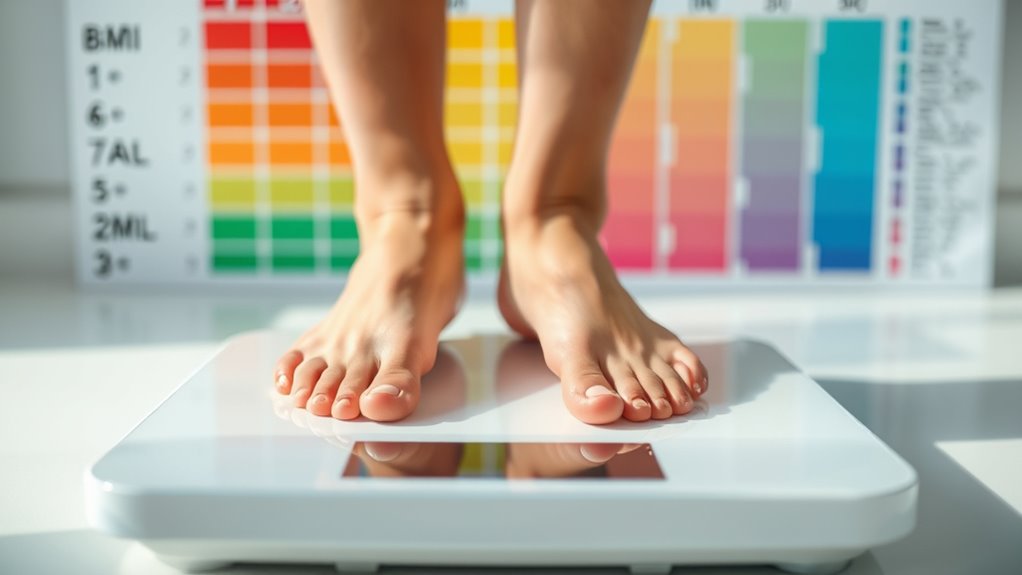
Have you ever wondered what your Body Mass Index (BMI) really means? It’s a simple number that can tell you a lot about your health, but understanding how it’s calculated and what it indicates is essential. BMI is determined using specific calculation methods that involve your height and weight. Typically, you take your weight in kilograms and divide it by your height in meters squared. If you’re using pounds and inches, the formula adjusts accordingly, multiplying the weight by 703 before dividing by height squared. This straightforward calculation allows you to quickly gauge whether you’re within a healthy range, overweight, or underweight, making it a handy tool for self-assessment.
Knowing the calculation methods behind BMI helps you grasp its significance. It’s not just a random number; it’s a standardized measure used globally to assess body fatness. The calculation methods are designed to be simple enough for anyone to perform at home or during a routine check-up. By plugging in your height and weight, you can find your BMI without needing any specialized equipment. This number then fits into established categories—underweight, normal weight, overweight, or obese—that health professionals use to evaluate potential health risks. Understanding this process can motivate you to stay aware of your body composition and make informed lifestyle choices.
Understanding BMI calculation helps you stay aware of your health and make informed lifestyle choices.
However, it’s important to recognize the health implications associated with different BMI ranges. A low BMI might suggest malnutrition or underlying health issues, while a high BMI is associated with increased risks of conditions like heart disease, diabetes, and hypertension. These health implications aren’t set in stone, but they serve as indicators that your body’s weight status could impact your overall wellness. For example, being in the overweight or obese range may prompt you to adopt healthier eating habits or increase physical activity to reduce risk factors. Conversely, a very low BMI might lead you to seek medical advice to address nutritional deficiencies or other health concerns.
While BMI is a useful screening tool, it doesn’t tell the whole story. It doesn’t distinguish between muscle and fat, nor does it account for distribution of body fat, age, or ethnicity. But understanding the calculation methods and health implications of your BMI offers valuable insight into your overall health. It’s a starting point for discussions with healthcare providers and can serve as motivation to maintain or improve your well-being. So, next time you check your BMI, remember it’s more than just a number — it’s a reflection of your body’s health status and an opportunity to take proactive steps toward a healthier life.

Etekcity Smart Scale for Body Weight, FSA&HSA Eligible, Bathroom Digital Weighing Scale with BMI, Body Fat, Muscle Mass, Accurate Bluetooth Home User Health Equipment Sync Apps, LED, Tempered glass
𝑼𝒏𝒑𝒂𝒓𝒂𝒍𝒍𝒆𝒍𝒆𝒅 𝑨𝒑𝒑 𝑬𝒙𝒑𝒆𝒓𝒊𝒆𝒏𝒄𝒆: Elevate your fitness journey with us. Our scale stands out with the free vesync app,…
As an affiliate, we earn on qualifying purchases.
As an affiliate, we earn on qualifying purchases.
Frequently Asked Questions
How Accurate Is BMI Compared to Other Health Measurements?
BMI isn’t perfect; it has limitations because it doesn’t account for muscle, bone, or fat distribution. You might be misclassified if you’re muscular or have a healthy body fat. Alternatives like waist circumference, body fat percentage, or metabolic health markers offer more accurate insights. These measurements provide a clearer picture of your health, making them better options for evaluating your overall well-being than BMI alone.
Can BMI Predict Individual Health Risks Precisely?
BMI alone can’t predict your health risks precisely because it doesn’t account for body composition or genetic factors. You might have a healthy BMI but still carry excess fat or low muscle mass, which affects your health. Genetic factors also play a role in your risk for certain conditions. To get a clearer picture, combine BMI with other measurements and consider your unique body composition and family health history.
Does BMI Account for Muscle Mass Differences?
No, BMI doesn’t account for muscle mass differences. It mainly considers weight and height, so your body composition, like muscle versus fat, isn’t reflected accurately. If you have more muscle, BMI might classify you as overweight or obese even if you’re healthy. For a better understanding of your health, focus on other measures that evaluate muscle mass and body composition directly.
How Often Should I Check My BMI?
Imagine your body as a garden growing with your efforts. You should check your BMI every 3 to 6 months, just like tending your plants regularly. When you’re calorie counting or following diet plans, frequent updates help you see if you’re on track. Keep an eye on your progress, adjusting as needed. Regular BMI checks guide you, ensuring your efforts cultivate a healthier, balanced body.
Is BMI Suitable for Children and Elderly?
BMI can be useful for children and the elderly, but its age appropriateness varies. For kids, growth considerations mean you’d use BMI percentiles instead of standard adult ranges to assess healthy weight. In older adults, BMI still offers insights, but you should consider other health factors, as muscle loss and aging affect BMI readings. Always consult healthcare professionals for an accurate assessment tailored to age-specific growth and health considerations.
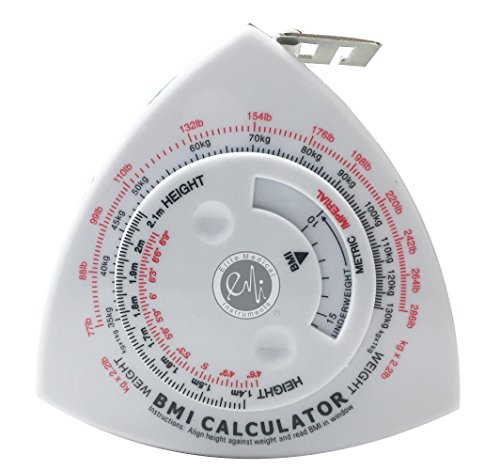
EMI Triangle BMI Body Mass Index Calculator and Body Tape Measure – 60" / 1.5 m ECB-301
OVERVIEW: The brightly-colored, friendly BMI Health Calculator provides a stress-free, simple way to gauge how you're doing in…
As an affiliate, we earn on qualifying purchases.
As an affiliate, we earn on qualifying purchases.
Conclusion
Remember, your BMI is like a compass guiding you through health’s landscape. It points you toward the balance between excess and deficiency, but it’s just one symbol on your journey. Don’t let it define you entirely—use it as a signpost, not the destination. Ultimately, your well-being depends on understanding and caring for yourself beyond numbers, recognizing that your health is a treasure chest filled with many valuable pieces, not just one measure.

GE Smart Scale for Body Weight: 8-Electrode Digital Bathroom Scale for Weight Fat BMI Muscle Mass Full Body Composition Analyzer 50 Measurements Bluetooth Highly Accurate Weighing Machine 400lb Black
COMPREHENSIVE AND HIGHLY ACCURATE: The GE smart scale utilizes 8-electrode dual-frequency and segmental BIA technology, segmenting the body…
As an affiliate, we earn on qualifying purchases.
As an affiliate, we earn on qualifying purchases.

RENPHO Smart Scale for Body Weight, FSA&HSA Eligible, Digital Bathroom Scale BMI Weighing Bluetooth Body Fat Scale, Body Composition Monitor Health Analyzer with Smartphone App, 400 lbs – Elis 1
Renpho smart app works in connection with fitness apps. Easy setup app works with Samsung Health, Fitbit and…
As an affiliate, we earn on qualifying purchases.
As an affiliate, we earn on qualifying purchases.