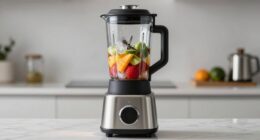
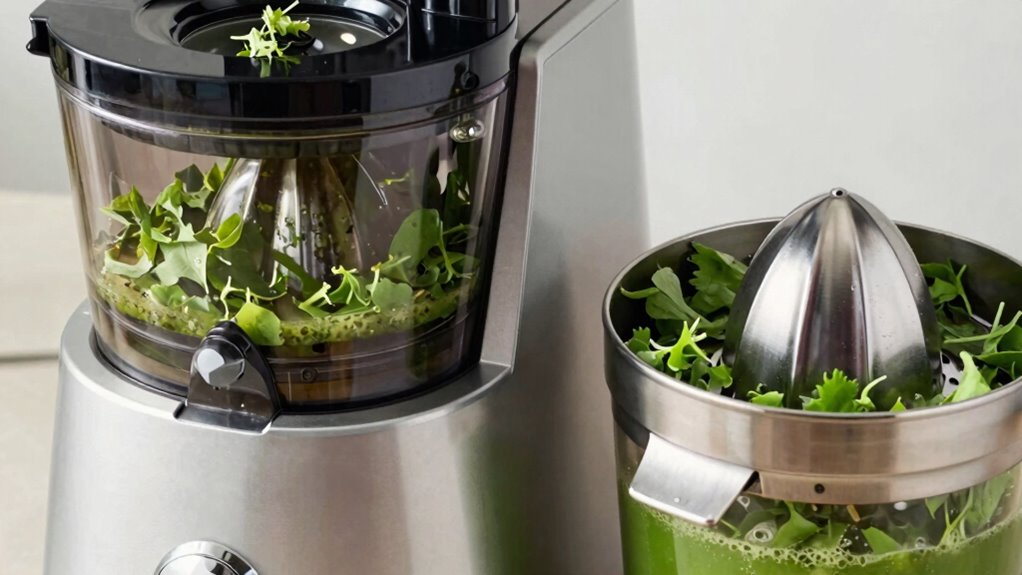
If you want to juice greens effectively, a slow juicer is your best option because it extracts nutrients gently, producing richer juice with less foam and oxidation. It retains more vitamins and enzymes, making your greens healthier. Centrifugal juicers work quickly but can reduce nutrient quality for leafy greens. To discover more about which juicer suits your needs and how they compare, keep exploring the pros and cons of each option.

Prime made for students and young adults
- Fast, free delivery for dorm and study essentials
- Prime Video and Amazon Music included
- Member-only deals
Key Takeaways
- Slow juicers extract greens gently, preserving nutrients and enzymes better than centrifugal juicers.
- Centrifugal juicers process greens quickly but may reduce nutrient quality due to heat and oxidation.
- Slow juicers typically yield more juice from leafy greens, making them more cost-effective long-term.
- For maximum nutrient retention from greens, slow juicers are generally preferable.
- Centrifugal juicers are faster and easier to clean but may compromise nutrient integrity with greens.
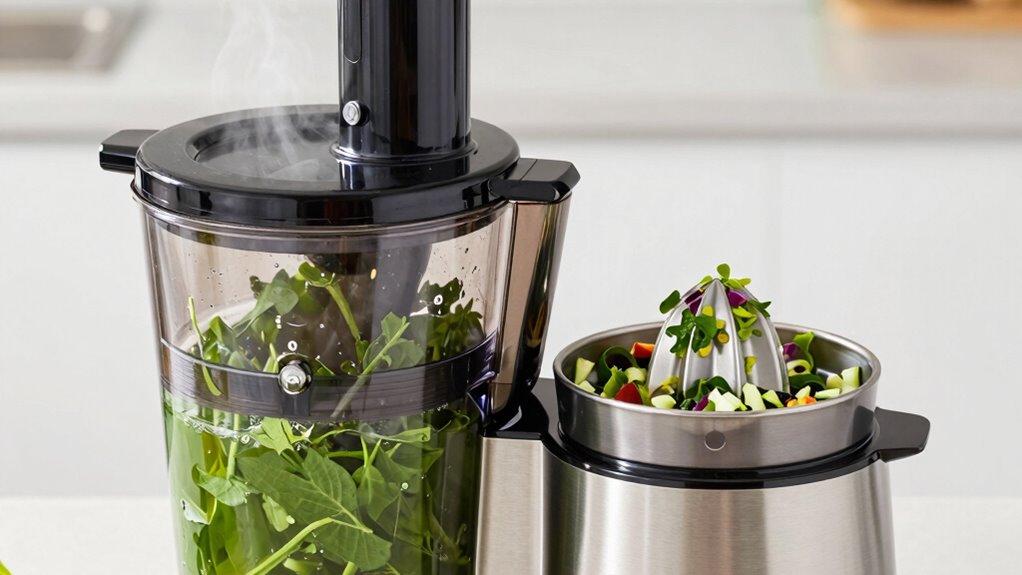
When choosing a juicer, understanding the differences between slow juicers and centrifugal juicers is essential, as each type offers distinct advantages and drawbacks. If you primarily want to juice greens, these differences can significantly impact your experience and the quality of your juice. One of the first factors to consider is juicing speed. Centrifugal juicers operate quickly, often producing juice in seconds, making them perfect for busy mornings or when you want a quick glass of juice. They use high-speed spinning blades to shred produce, separating juice from pulp rapidly. However, this fast juicing process can generate heat and friction, which may compromise nutrient retention. Because nutrients, especially enzymes and vitamins, are sensitive to heat and oxidation, the quicker process might result in slightly less nutritious juice compared to slower methods.
On the other hand, slow juicers, also known as masticating juicers, operate at a much lower speed. They crush and press greens slowly, which means your juicing process takes more time. This slower juicing speed allows for gentle extraction, reducing heat buildup and oxidation. As a result, the juice you get from a slow juicer typically retains more nutrients, especially delicate vitamins and enzymes that can degrade when exposed to high speeds and heat. If you’re aiming to maximize nutritional value, especially from leafy greens, a slow juicer might be the better choice. The slower process also tends to produce less foam and oxidation, giving you a richer, more vibrant juice that stays fresh longer. Additionally, slow juicers often preserve more nutrients and enzymes, making them preferable for health-conscious consumers.
Furthermore, slow juicers often have better juice yield from greens and other produce, which can make them more cost-effective over time. However, slow juicers can be more labor-intensive and require more prep time due to their slower operation and more involved cleaning process. They’re usually more expensive upfront but may save you money in the long run because they’re often more efficient at extracting juice from greens and other produce. Conversely, centrifugal juicers are generally easier to use and clean, making them appealing if convenience is your priority. They also handle larger quantities of produce quickly, which is ideal if you’re making juice for multiple people at once.
Frequently Asked Questions
Which Juicer Is Easier to Clean After Blending Greens?
You’ll find that a centrifugal juicer is generally easier to clean after blending greens because its cleaning process is quicker and involves fewer parts. Its maintenance requirements are lower, often needing just a rinse and occasional brush cleaning. Slow juicers, on the other hand, usually have more components and a more involved cleaning process. So, if simplicity matters, a centrifugal juicer is your best bet for easy maintenance.
How Do Juicers Affect the Nutrient Retention of Greens?
Imagine you’re juicing fresh greens, and your goal is maximum nutrient retention. Your choice impacts oxidation effects and nutrient degradation; for instance, slow juicers minimize oxygen exposure, preserving vitamins and antioxidants better than centrifugal models. This means you get more health benefits and fewer nutrients lost during juicing. So, if nutrient preservation matters most, a slow juicer is your best bet to reduce oxidation effects and keep greens nutritious.
Are Slow Juicers More Durable Than Centrifugal Juicers?
Yes, slow juicers are generally more durable than centrifugal juicers. They have fewer moving parts, which reduces wear and tear, and they produce less noise during operation. Although slow juicers tend to be pricier upfront, their sturdy build and long-lasting quality often justify the higher price. Centrifugal juicers, while less expensive, may wear out faster due to their higher noise levels and more complex mechanisms.
Can Both Juicer Types Handle All Types of Leafy Greens?
Think of your juicing adventure as a race—both juicer types can handle leafy greens, but their speed differs. Slow juicers excel at gentle extraction, preserving nutrients, while centrifugal ones work faster but may struggle with delicate greens. When considering cost comparison, slow juicers tend to be pricier upfront but last longer, whereas centrifugal juicers are more budget-friendly but may need replacement sooner. Both can handle greens, but your choice depends on your juicing pace and budget.
Which Juicer Produces More Juice From the Same Amount of Greens?
A slow juicer produces more juice from the same amount of greens because it extracts nutrients more thoroughly, even at lower juicing speeds. It operates with quieter noise levels, making it ideal if you prefer a peaceful environment. In contrast, centrifugal juicers are faster but tend to produce less juice and generate more noise. If maximizing juice yield is your goal, a slow juicer is the better choice.
Conclusion
Choosing between a slow juicer and a centrifugal juicer depends on your priorities. Imagine savoring nutrient-rich greens, with a slow juicer gently extracting every drop, preserving flavor and nutrients. Now picture a centrifugal juicer spinning at high speeds, quickly delivering your juice but sacrificing some nutrients. Both have their place, but if you value quality and efficiency with greens, a slow juicer offers a smoother, more vibrant experience. It’s about matching the machine to your health goals.
Fall Picks
fall essentials
As an affiliate, we earn on qualifying purchases.