
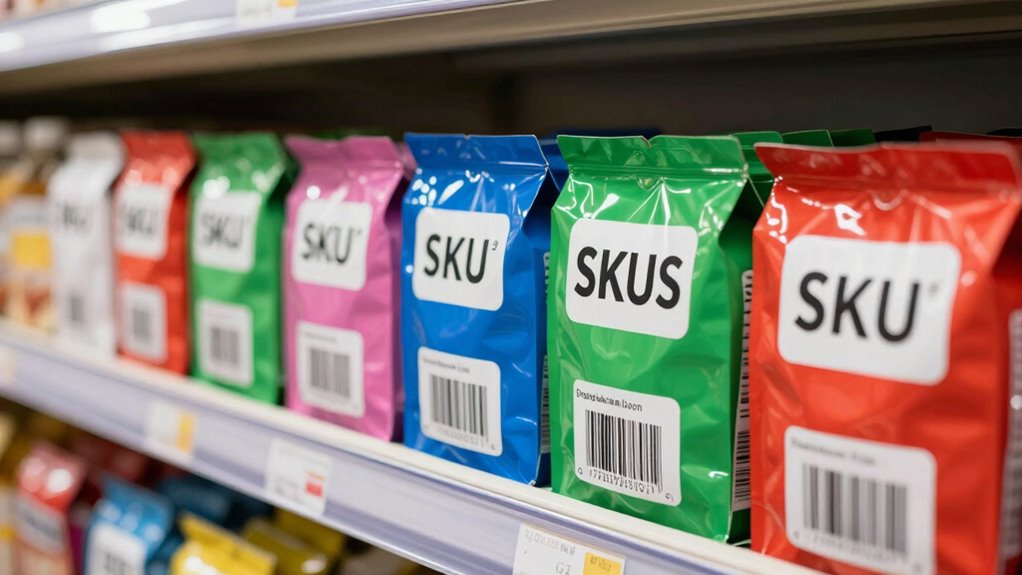

An SKU, or Stock Keeping Unit, is a unique alphanumeric code that helps you identify and manage each product in your inventory. It acts like a fingerprint for your items, making it easier to track stock levels, sales, and reordering needs quickly. By using meaningful codes that include details like brand, size, or color, you can prevent mistakes and keep things organized. Keep going to discover how SKUs can streamline your inventory management even further.

Get school and study supplies delivered free — and shop member deals
- Fast, free delivery on millions of items
- Access to Prime Big Deal Days deals on October 6–7
- Prime Video, Amazon Music and more included
Key Takeaways
- An SKU (Stock Keeping Unit) is a unique identifier for a specific product.
- It helps track inventory levels, sales, and restocking efficiently.
- SKUs act as a product’s fingerprint for quick identification.
- They facilitate better organization and categorization of products.
- SKUs support automation and accuracy in inventory management systems.

Ever wondered what a SKU is and why it matters for your inventory management? Well, a SKU, or Stock Keeping Unit, is a unique identifier assigned to each product in your inventory. Think of it as a product’s fingerprint—something that helps you distinguish one item from another quickly and accurately. When you’re managing multiple products, especially in a busy retail or warehouse setting, SKUs become essential tools for keeping everything organized. They aid in effective inventory management by providing a straightforward way to track stock levels, sales, and restocking needs. Without SKUs, you’d be relying on vague descriptions or manual data, which can lead to confusion, errors, and lost sales. Product categorization is a key reason SKUs are so valuable. By creating a structured system of SKUs, you can group related products logically—by size, color, style, or any other attribute relevant to your business. This systematic approach makes it easier not just to find items when needed but also to analyze sales patterns across different categories. For example, if you notice a spike in sales for a particular SKU, you quickly identify which product that represents and respond accordingly. Conversely, if a specific SKU isn’t moving, you can decide whether to discount, reorder, or phase it out. SKUs streamline this process, giving you a clear overview of your product catalog and helping you make smarter inventory decisions. Creating effective SKUs involves some planning. You typically incorporate meaningful codes that reflect key product details—such as brand initials, product type, size, or color—into a concise alphanumeric sequence. This way, each code carries useful information at a glance. When your team scans a SKU, they instantly know what product it is, reducing errors during picking, packing, or restocking. Additionally, SKUs support automation within your inventory management system, enabling faster data entry and real-time updates. This automation minimizes manual work and boosts accuracy, especially when handling large inventories. Incorporating standardized coding systems can further enhance the efficiency of your SKU management. Understanding how Indian currency and number formatting tools work can also help streamline your inventory processes, especially when dealing with international vendors or pricing in different currencies. Having a well-designed SKU system also facilitates easier integration with various inventory software and other digital tools, making your entire inventory process more seamless. Properly designed SKUs can also support inventory audits, ensuring your stock counts are accurate and up-to-date. In essence, SKUs empower you to organize your inventory intelligently, improve Product categorization, and enhance overall operational efficiency. They are fundamental to maintaining a clear, manageable, and scalable inventory system. Whether you run a small shop or a large warehouse, understanding and implementing effective SKUs can save you time, reduce mistakes, and give you better control over your stock. This, in turn, helps you serve your customers better by ensuring the right products are available when they want them.
As an affiliate, we earn on qualifying purchases.
Frequently Asked Questions
How Are SKUS Different From Barcodes?
Skus differ from barcodes because SKUs are unique identifiers you create for product categorization and stock management, helping you track inventory details. Barcodes, on the other hand, are scannable symbols that encode SKU information or other data, making checkout and inventory updates faster. While SKUs are tailored to your specific needs, barcodes are standardized symbols used across systems to quickly identify products, streamlining your overall stock management process.
Can SKUS Be Reused for Different Products?
Think of SKUs like unique fingerprints for products—you can reuse them, but it’s like giving the same name to different people, which causes confusion. Generally, SKUs shouldn’t be reused across different products, especially with unique product naming and SKU customization. Reusing SKUs might seem efficient, but it risks mix-ups in inventory management and sales tracking. To stay clear, assign distinct SKUs tailored to each product.
What Tools Are Best for Managing SKUS?
You should use inventory management tools like Shopify, Zoho Inventory, or TradeGecko to efficiently manage SKUs. These tools help with SKU categorization and inventory labeling, making it easier to track stock levels and organize products. They also allow you to quickly search, update, and analyze SKUs, reducing errors and saving time. By integrating these tools into your business, you’ll streamline your inventory processes and improve overall efficiency.
How Do SKUS Impact Inventory Accuracy?
You might think SKUs are just labels, but they actually play a essential role in inventory tracking and stock management. When SKUs are accurate and well-organized, they help you avoid costly stock discrepancies and improve order fulfillment. Ironically, neglecting SKU details can lead to chaos, making inventory management a nightmare. So, paying close attention to SKUs guarantees your stock levels stay precise, saving you time and money.
Are SKUS Necessary for Small Businesses?
Yes, SKUs are necessary for small businesses. They help with product categorization and improve inventory organization, making it easier to track stock levels and sales. By assigning unique identifiers, you can quickly locate items, reduce errors, and streamline operations. Even on a small scale, SKUs enhance efficiency and customer satisfaction, ensuring you manage inventory effectively as your business grows.
Conclusion
So, now you know what an SKU is—simply, a stock-keeping unit that helps you track and organize products with precision. Remember, an SKU simplifies shipping, streamlines stocking, and speeds sales. Stay savvy by selecting specific, strategic SKUs for smoother sales success. With this little label, you’ll master managing merchandise, making your market moves more manageable and memorable. Stay sharp, streamline stock, and succeed with smart SKUs!
Halloween Picks
halloween
As an affiliate, we earn on qualifying purchases.