
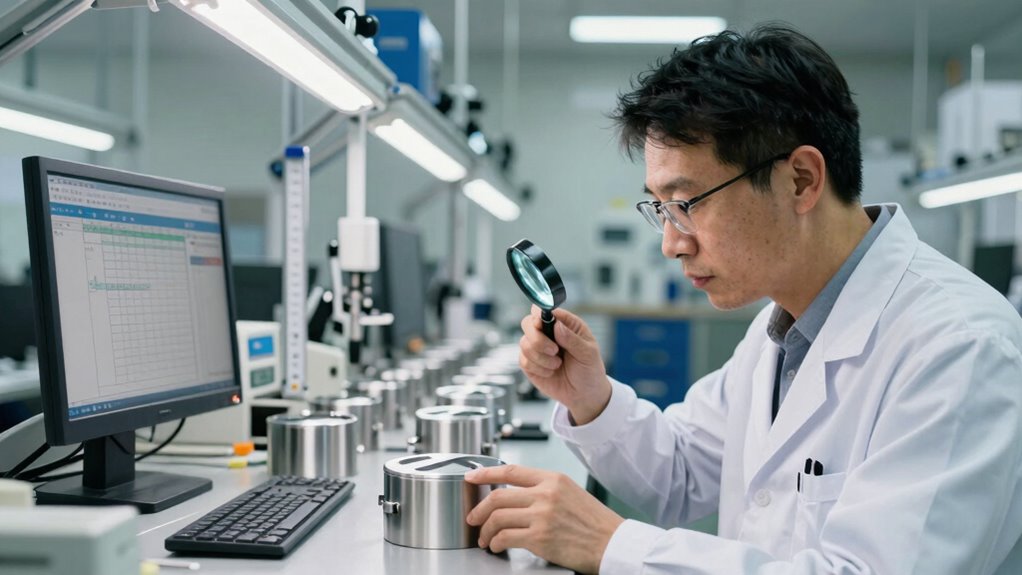

Quality control and quality assurance both aim to guarantee product quality, but they approach it differently. Quality control involves inspecting finished products to catch defects and fix issues before reaching customers, making it a reactive process. Quality assurance focuses on designing processes to prevent defects in the first place, taking a proactive approach. Understanding these differences helps you improve product consistency and customer satisfaction—continue exploring to learn more about how each method plays a crucial role.
Key Takeaways
- Quality control detects defects in finished products through inspection, while quality assurance prevents defects by designing effective processes.
- Quality control is reactive, focusing on identifying problems after they occur; quality assurance is proactive, aiming to prevent issues.
- Quality control verifies product standards before shipment; quality assurance ensures processes consistently produce quality outputs.
- Combining both creates a comprehensive quality management system that enhances product reliability and customer satisfaction.
- Quality control involves testing and measuring, whereas quality assurance emphasizes process design, standards, and training.
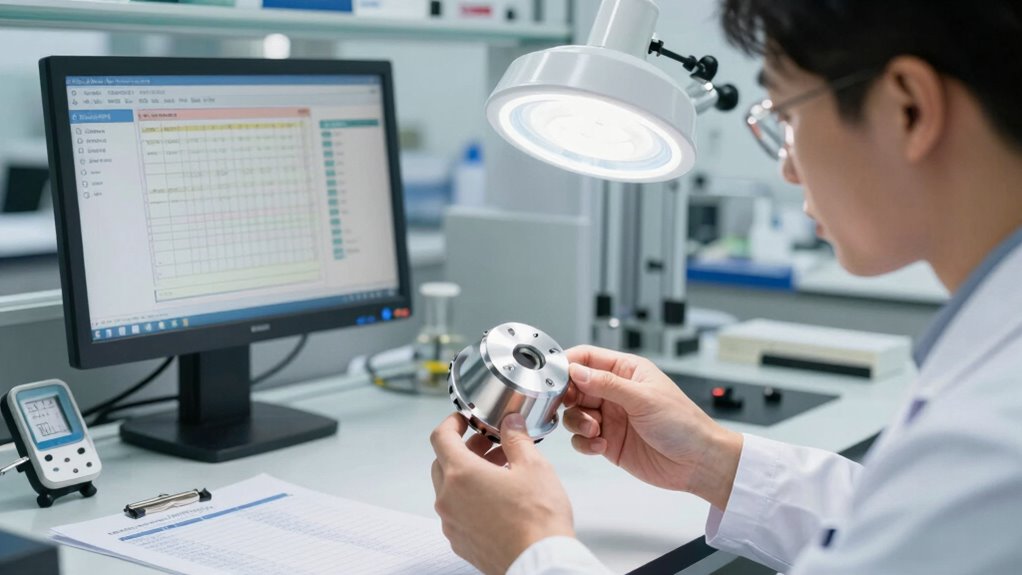
Have you ever wondered how organizations make sure their products meet consistent standards? It all comes down to two essential concepts: quality control and quality assurance. While they’re closely related, they serve different purposes in maintaining product excellence. Quality control, for example, focuses on identifying defects in finished products through inspection techniques. You might use tools like sampling, testing, and measurement to catch issues before products reach customers. The goal is to detect and fix problems during production, ensuring that only products meeting quality standards are shipped out. This reactive approach helps minimize returns and dissatisfaction, but it’s only part of the story.
Quality control detects defects in finished products to ensure standards are met before reaching customers.
On the other hand, quality assurance takes a proactive stance. It’s about designing and implementing processes that prevent defects from occurring in the first place. You’re looking at the entire process to identify potential weaknesses and streamline workflows for better process improvement. By establishing clear procedures, standards, and training, you guarantee consistent quality from the start. Instead of just fixing problems after they happen, quality assurance aims to build quality into the system itself. This approach reduces the need for extensive inspection techniques later on because issues are less likely to arise. Additionally, understanding quality management systems can help organizations integrate both strategies more effectively. Incorporating systematic approaches can further enhance the effectiveness of quality assurance efforts.
Understanding the difference between these two helps you see how they complement each other in a holistic quality management system. Quality control acts as a checkpoint, catching problems in the final stages, while quality assurance seeks to eliminate root causes of defects early on. When combined effectively, they create a cycle of continuous improvement. You analyze data from inspections, identify patterns, and implement process improvement strategies to prevent future issues. This ongoing feedback loop can be strengthened by effective process design, which minimizes the chance of defects from the outset. This ongoing feedback loop ensures products become more consistent and reliable over time.
Both quality control and quality assurance are crucial, but they focus on different parts of the production journey. Quality control is about verifying that the output meets specifications, whereas quality assurance is about designing the process to meet those specifications reliably. As someone responsible for quality, you’ll need to balance these approaches—using inspection techniques to catch defects and process improvement to prevent them. By integrating both strategies into your operations, you not only enhance product quality but also build trust with your customers. Ultimately, understanding and applying these concepts help you deliver products that meet or exceed expectations, fostering long-term success.

Tatuo 2 Pieces LED Mirror Inspection Telescoping Round Square Mirror Inspection Tool for Check The Condition of Vehicle, Observe The Eyelashes, Mouth and Other Small Parts
- Package Includes: Two different style inspection mirrors
- Versatile Usage: Suitable for mechanics, dentists, makeup artists
- Easy to Use: Telescopic rod and rotating mirror for flexibility
As an affiliate, we earn on qualifying purchases.
As an affiliate, we earn on qualifying purchases.
Frequently Asked Questions
How Do Quality Control and Assurance Impact Customer Satisfaction?
Quality control and assurance directly impact your customer satisfaction by ensuring products meet high standards, reducing defects, and preventing issues. When you actively listen to customer feedback, you can improve processes and build trust. This focus enhances your brand reputation, showing customers you prioritize quality. As a result, satisfied customers become loyal, and positive word-of-mouth strengthens your market position, ultimately boosting your business success.
Can Quality Assurance Prevent Defects in Products?
Yes, quality assurance can prevent defects in products through preventive measures. By implementing proactive processes, you identify potential issues early, reducing the chances of defects reaching customers. This approach emphasizes defect reduction before production, ensuring consistent quality. When you focus on quality assurance, you establish standards and procedures that guide your team, helping to catch problems early and maintain high product quality, ultimately leading to greater customer satisfaction.
Which Is More Cost-Effective: Quality Control or Quality Assurance?
Think of quality assurance as planting seeds early, saving you from costly weeds later. It’s generally more cost-effective because you prevent issues before they grow, unlike quality control, which acts like a diligent gardener catching problems after they appear. When comparing costs, implementation strategies favor quality assurance for long-term savings. Investing in proactive measures reduces rework and waste, making your process smoother and more economical in the long run.
How Do Industries Differ in Applying Quality Control and Assurance?
Industries differ in applying quality control and assurance based on their standards and regulations. You’ll find manufacturing heavily relies on quality control to detect defects, while service sectors focus more on quality assurance to prevent issues. Compliance regulations guide these practices, ensuring products and services meet industry standards. Your approach should adapt to specific industry needs, balancing proactive assurance measures with reactive control processes to maintain consistent quality.
What Tools Are Commonly Used for Quality Assurance?
You use various tools for quality assurance, including inspection techniques and process audits. Inspection techniques help you identify defects early and guarantee products meet standards. Process audits evaluate your procedures, ensuring they’re followed correctly and consistently. These tools allow you to proactively improve quality, reduce errors, and maintain high standards across your operations. Regularly applying inspection techniques and process audits keeps your processes efficient and your products reliable.
Conclusion
Imagine quality control as a vigilant lighthouse keeper, constantly scanning the horizon to spot and fix problems before they reach shore. Quality assurance, on the other hand, is the sturdy lighthouse itself—built on strong foundations to guide every ship safely. Together, they create a reliable voyage, ensuring your product’s success. Remember, both lighthouse and keeper work in harmony; without one, the other’s light alone can’t steer your journey toward excellence.