


If you’re wondering what contract manufacturing is, it’s a process where you partner with a specialized producer to handle the entire manufacturing of your products. This allows you to focus on design, marketing, and sales, while the factory manages everything from raw materials to final assembly. They guarantee your products meet quality standards and deliver on time. Want to find out how it all works behind the scenes? Keep exploring to learn more.

Prime made for students and young adults
- Fast, free delivery for dorm and study essentials
- Prime Video and Amazon Music included
- Member-only deals
Key Takeaways
- Contract manufacturing involves producing goods for other brands, allowing them to focus on design and marketing.
- It covers all production stages, from raw materials to final assembly, ensuring product standards are met.
- Quality assurance is a core aspect, with regular inspections and compliance checks to maintain safety and standards.
- It manages supply chain logistics, coordinating vendors and ensuring timely delivery of components.
- This process supports global product availability and plays a crucial behind-the-scenes role in the supply chain.
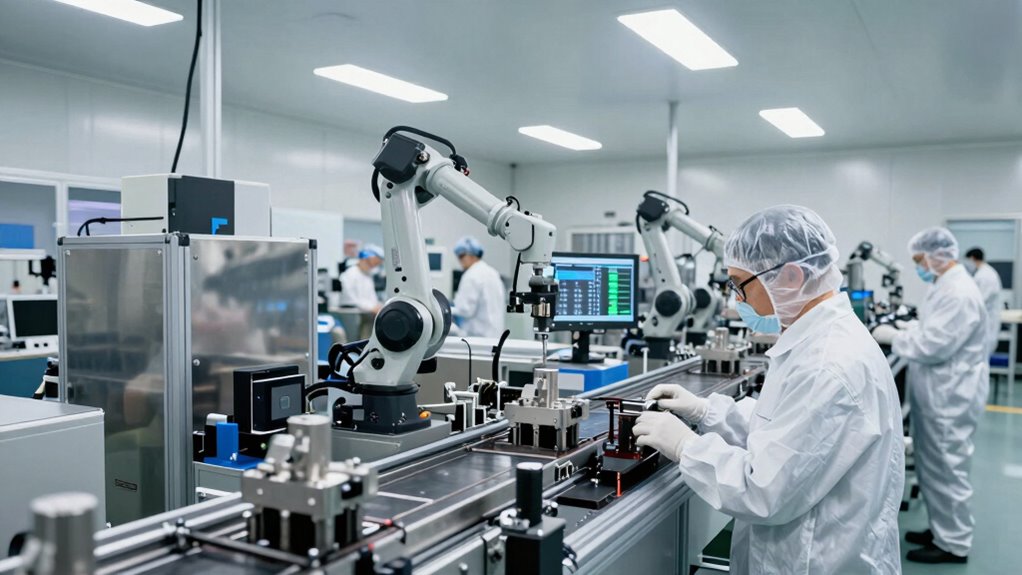
Have you ever wondered how many products you use daily are made by companies you’ve never heard of? Chances are, many of those items come from contract manufacturing firms. These companies specialize in producing goods on behalf of other brands, allowing the original companies to focus on design, marketing, and sales. When you pick up a snack, wear a piece of clothing, or even use a tech gadget, there’s a good chance it was produced by a contract manufacturer behind the scenes. They handle everything from raw materials to final assembly, making sure products meet the standards set by their clients.
One of the key elements in contract manufacturing is quality assurance. You might not see it happening, but contract manufacturers implement rigorous quality control processes to make certain every product meets safety standards and specifications. This involves regular inspections, testing, and compliance checks throughout production. Because a manufacturer’s reputation relies heavily on the quality of their output, they often develop long-term relationships with clients based on trust and consistent quality. This focus on quality assurance means that, even though you might not know the manufacturer’s name, you can still rely on the product’s reliability and safety.
Supply chain management is another critical aspect of contract manufacturing. You might not realize it, but managing the supply chain involves coordinating multiple vendors, sourcing raw materials, and making certain timely delivery of components. Effective supply chain management keeps production running smoothly and helps control costs. It also involves steering global logistics networks, managing inventory levels, and mitigating risks like delays or shortages. When you see a product arrive on store shelves, it’s the result of complex planning and coordination by contract manufacturers to deliver on time and within budget.
As an affiliate, we earn on qualifying purchases.
Frequently Asked Questions
How Do I Choose the Right Contract Manufacturer?
To choose the right contract manufacturer, start with thorough supplier evaluation—assess their quality standards, reputation, and experience. Consider their production scalability to guarantee they can handle your growth without compromising quality or delivery times. Communicate your specific needs clearly, visit their facilities if possible, and compare multiple options. A reliable partner will align with your goals, offer flexibility, and demonstrate a strong commitment to quality and scalability.
What Are Common Risks in Contract Manufacturing?
Think of contract manufacturing as walking a tightrope—you must balance risks carefully. Common pitfalls include disruptions in your supply chain, which can delay production or increase costs. You also risk losing control over intellectual property, as sharing sensitive designs or processes might lead to leaks or infringements. Staying vigilant, establishing clear agreements, and maintaining close oversight help you mitigate these risks and keep your production smooth and secure.
How Is Quality Control Managed in Contract Manufacturing?
You manage quality control in contract manufacturing through rigorous quality assurance practices and detailed inspection procedures. You set clear standards, conduct regular audits, and monitor production closely to catch issues early. By establishing strict specifications and working with your manufacturer to adhere to them, you guarantee consistent product quality. Continuous communication and feedback loops help maintain high standards, reducing risks of defects and ensuring your products meet customer expectations.
What Industries Frequently Use Contract Manufacturing?
You’ll find contract manufacturing across industries like electronics, pharmaceuticals, and automotive, where 60% of companies rely on it for product customization. It helps streamline supply chain management by outsourcing production, allowing you to focus on design and innovation. This flexibility lets you adapt quickly to market changes. Whether you’re creating complex gadgets or health products, contract manufacturing offers a scalable, efficient way to meet demand and maintain quality.
How Does Pricing Typically Work in Contract Manufacturing?
In contract manufacturing, pricing typically works through cost negotiation and various pricing models like fixed, variable, or milestone-based rates. You’ll negotiate costs upfront based on production volume, complexity, and materials. The manufacturer may offer a per-unit price or a bulk discount. Clear communication during cost negotiation helps guarantee both parties agree on fair pricing, minimizing surprises and fostering a successful partnership throughout the manufacturing process.
Conclusion
So, now you see, contract manufacturing isn’t just a fancy term for “outsourcing.” It’s your ticket to “manufacture-in-the-mystery,” where you trust strangers with your dreams—and maybe your sanity. Who needs control when you can have “cost savings” and “flexibility,” right? Just remember, in this game, you get what you pay for—unless what you pay for is a surprise. Happy outsourcing, and may your product always arrive *on time*—or at least, with a good story!
Columbus Day / Indigenous Peoples' Day Picks
long weekend sales
As an affiliate, we earn on qualifying purchases.