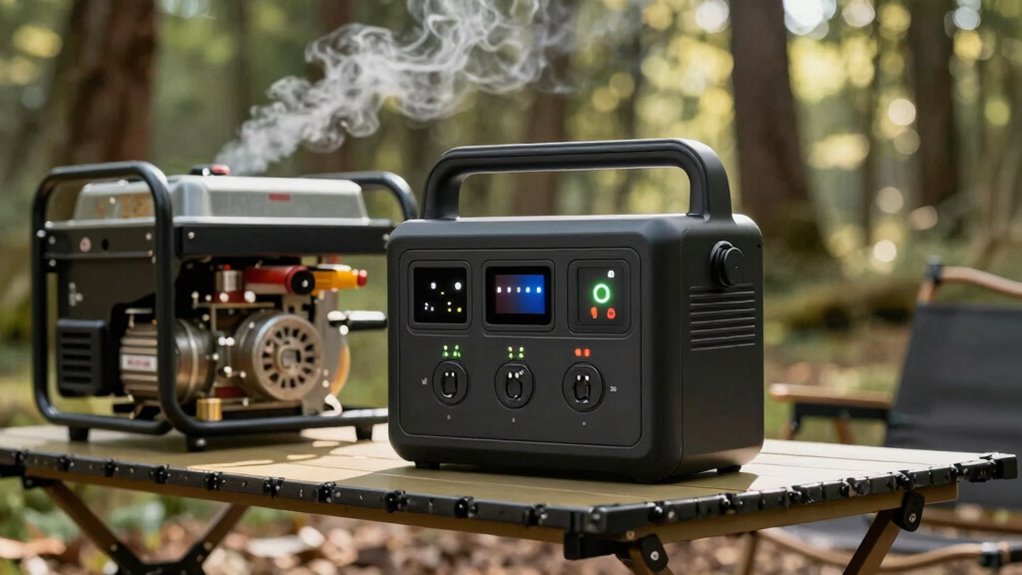

If you want a quiet, eco-friendly, and portable backup, a power station is your best bet, especially for outdoor use or quick power needs. But if you require higher capacity and longer runtime, a generator may be more suitable, despite its noise and fuel costs. Both options have pros and cons depending on your priorities. Keep exploring to discover which option fits your situation best and how to maximize their benefits.

Prime made for students and young adults
- Fast, free delivery for dorm and study essentials
- Prime Video and Amazon Music included
- Member-only deals
Key Takeaways
- Portable power stations are quieter, more eco-friendly, and easier to transport, ideal for outdoor activities and residential use.
- Generators offer higher power capacity and longer runtime, suitable for heavy-duty or extended power needs.
- Portable power stations can recharge via renewable sources, reducing ongoing costs and environmental impact.
- Generators produce noise and emissions, making them less suitable for quiet or sensitive environments.
- The best choice depends on balancing power demands, environmental considerations, and portability needs.
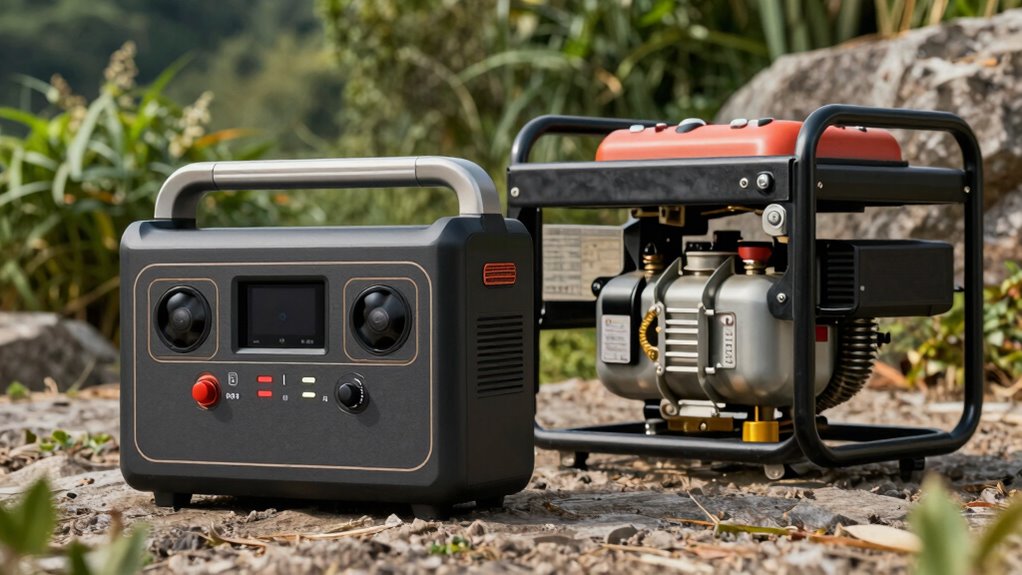
When choosing a reliable power source for outdoor adventures, emergencies, or work sites, you’ll often compare portable power stations and generators. Both options have their advantages, but understanding their differences can help you make the best choice for your needs. Portable power stations are battery-powered devices that can be recharged via wall outlets, solar panels, or car chargers. They’re especially appealing if you prioritize renewable energy sources, like solar, because they can often be charged using sustainable energy, reducing your carbon footprint. Plus, they operate silently, making them ideal for camping trips, quiet outdoor events, or residential use where noise levels matter. Their quiet operation guarantees you won’t disturb nearby neighbors or wildlife, which is a significant benefit over traditional generators. Additionally, portable power stations are generally more portable and easier to transport, making them suitable for a variety of outdoor activities. They can also be more cost-effective over time, especially if you utilize renewable energy sources for recharging. Incorporating renewable energy options into your power setup can enhance both sustainability and savings. Furthermore, advancements in battery technology have increased the efficiency and lifespan of portable power stations, making them a more reliable choice for long-term use.
Portable power stations are quiet, eco-friendly options ideal for outdoor adventures and emergencies.
Generators, on the other hand, are typically fueled by gasoline, diesel, or propane. They produce power by burning fuel, which means they can generate higher wattages and operate for longer periods without needing a recharge. However, this fuel-based operation comes with noise levels that can be quite high, often making them unsuitable for quiet environments or late-night use. If you’re in a situation where noise is a concern—like camping or residential backup—you might find a generator disruptive. Conversely, if you need reliable, continuous power for a construction site or during extended outages, a generator’s ability to run on fuel can be a significant advantage, even if it’s louder. It’s important to consider the fuel consumption of generators, as this impacts ongoing costs and environmental impact. Many models also include features like automatic start or remote monitoring, which can improve convenience and efficiency.
When considering renewable energy, portable power stations have a clear edge. Many models are compatible with solar panels, allowing you to harness the sun’s energy to recharge them without relying on grid power or fuel. This eco-friendly feature can save you money over time and reduce environmental impact. Generators, while powerful, do not typically incorporate renewable energy options directly; they depend on fuel, which contributes to emissions and environmental concerns. Noise levels also play an essential role in your decision. Portable power stations operate quietly, making them suitable for environments where peace and quiet are vital. Generators, by contrast, tend to be noisy, which might limit their use in sensitive settings. Overall, portable power stations are a more environmentally friendly and quiet alternative for many users compared to traditional generators. Choosing between them often comes down to balancing power capacity, environmental considerations, and convenience.
portable power station for camping
As an affiliate, we earn on qualifying purchases.
As an affiliate, we earn on qualifying purchases.
Frequently Asked Questions
How Long Do Portable Power Stations Typically Last on a Full Charge?
A portable power station typically lasts between 3 to 8 years on a full charge, depending on its battery lifespan and how often you go through charging cycles. If you use it frequently, the battery’s capacity may decrease faster. Properly charging and storing it can extend its life, ensuring you get the most out of your device during emergencies or outdoor adventures.
Are Portable Power Stations Environmentally Friendly Compared to Generators?
You’ll find portable power stations are generally more environmentally friendly than traditional generators, especially since many rely on renewable energy sources like solar. Notably, generators can emit up to 2.5 pounds of carbon dioxide per hour, increasing your carbon footprint. In contrast, portable stations produce little to no emissions, making them a cleaner, greener backup option that helps reduce your environmental impact during power outages or outdoor adventures.
Can Portable Power Stations Power Large Appliances?
Yes, portable power stations can power large appliances, but it depends on their battery capacity and power efficiency. If the station has a high-capacity battery and offers efficient energy use, you can run larger devices like refrigerators or power tools. However, for prolonged use of heavy-duty appliances, a generator might be more reliable. Always check the wattage limits to confirm your appliances are compatible with the power station.
What Are the Safety Considerations for Using Generators Indoors?
Using generators indoors isn’t safe due to fuel storage and high noise levels. Fuel vapors can build up and cause explosions or carbon monoxide poisoning. Always store fuel in approved containers outside, away from vents or windows. Noise levels can be dangerously loud, so make certain proper ventilation and consider using generators in well-ventilated areas or outdoors. Never run a generator inside a home or enclosed space.
How Do Maintenance Needs Compare Between Power Stations and Generators?
You’ll find that portable power stations require minimal maintenance, mainly occasional charging and cleaning, making them more convenient overall. Generators, on the other hand, need regular checks of oil, filters, and spark plugs, and they consume fuel efficiently only with proper upkeep. Noise levels are also a consideration; generators tend to be louder and need maintenance to keep noise low, whereas power stations operate silently with little fuss.
Conclusion
Ultimately, choosing between a portable power station and a generator depends on your needs. If you prioritize convenience, quiet operation, and clean energy, then a power station is your best bet. If you require higher power output, longer runtime, and the ability to handle heavy loads, then a generator might suit you better. Both options have their strengths—select the one that aligns with your lifestyle, supports your activities, and meets your expectations.
Fall Picks
fall essentials
As an affiliate, we earn on qualifying purchases.