
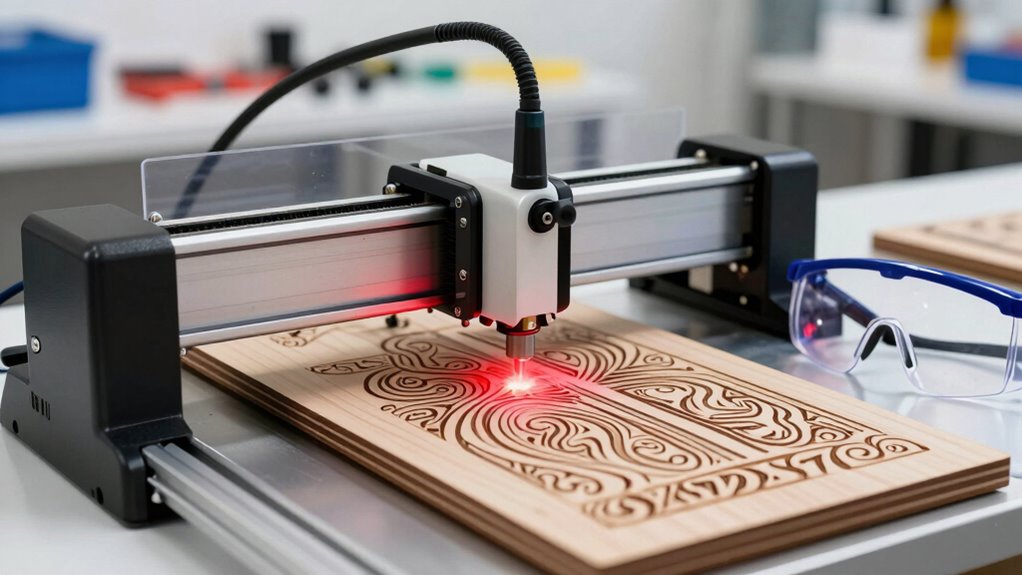

When starting with laser engraving, you should always wear proper safety gear like goggles that filter the specific laser wavelength, and guarantee your workspace is well-ventilated to clear fumes and dust. Be aware of material hazards, as plastics and certain woods can release toxic fumes or irritants. Use fume extractors or respirators, and organize your workspace to minimize accidents. Following these basic precautions helps keep you safe; explore further tips for safer laser engraving as you continue.

Prime made for students and young adults
- Fast, free delivery for dorm and study essentials
- Prime Video and Amazon Music included
- Member-only deals
Key Takeaways
- Always wear appropriate safety goggles designed for the laser’s wavelength to protect your eyes.
- Ensure proper ventilation or use fume extractors to remove toxic fumes and smoke during engraving.
- Identify materials correctly to understand their hazards and select suitable safety measures.
- Use gloves carefully to protect hands from hot materials without risking fire hazards.
- Keep your workspace organized and well-ventilated to minimize accidents and exposure to hazardous fumes.
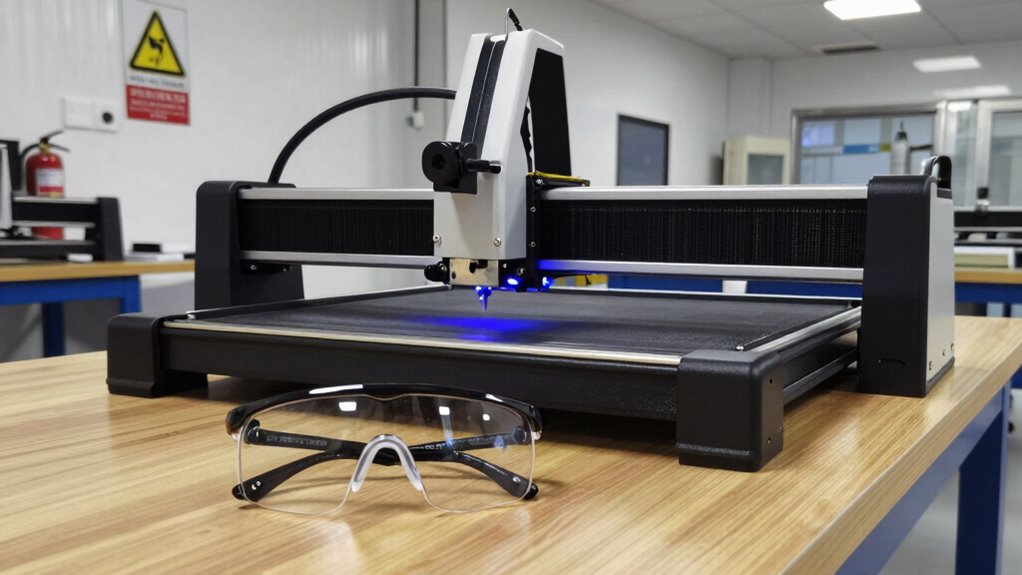
Laser engravers are powerful tools that can create intricate designs, but safety should always come first. When you start working with a laser engraver, understanding the different material types you’ll be working with is crucial. Each material reacts differently to laser cutting or engraving, and some can produce hazardous fumes or dangerous debris. For example, wood and paper are generally safe but can emit smoke and particles that irritate your eyes or lungs if you’re not properly protected. Plastics, especially acrylics and certain polymers, release toxic fumes when laser-cut, so knowing the type of plastic you’re handling helps you decide if additional ventilation or protective gear is necessary. Metals are usually safe to engrave but often require specialized equipment and precautions. Being aware of the materials’ properties and potential hazards allows you to set up a workspace that minimizes risk and guarantees safe operation. Proper material identification ensures you select the right safety measures and equipment for each project.
Equally important is the safety equipment you wear and use during your laser engraving projects. Eye protection is non-negotiable; always wear safety goggles designed to filter the specific wavelength your laser emits. Your eyes are vulnerable to laser radiation, and even brief exposure can cause serious damage. Gloves can protect your hands from hot materials and sharp debris, but be cautious—some gloves can be a fire hazard if they come into contact with the laser beam. Respiratory protection is equally essential, especially when working with materials that produce toxic fumes or fine dust. A proper fume extractor or respirator helps you avoid inhaling harmful particles, reducing health risks over time. Additionally, understanding material hazards is crucial for implementing appropriate safety measures and avoiding accidental exposure. Using the correct safety equipment not only protects you but also ensures compliance with safety standards. A well-ventilated workspace is also vital; proper ventilation systems not only clear away fumes but also contribute to a safer environment overall. Regular training on safety protocols and proper equipment handling can further reduce the risk of accidents. Incorporating safety best practices into your routine helps foster a safer working environment and prevents costly mishaps. Being aware of air quality considerations can further enhance safety, especially in enclosed spaces. Remember, safety isn’t just about personal gear; it’s about creating an environment where accidents are less likely to happen. By understanding material types and wearing the right safety equipment, you take proactive steps to protect yourself while enjoying the creative process. Safety should always be your top priority, letting you focus on making beautiful, precise engravings without risking your health or safety.
laser safety goggles for engraving
As an affiliate, we earn on qualifying purchases.
As an affiliate, we earn on qualifying purchases.
Frequently Asked Questions
Can Laser Engravers Be Used Without Protective Eyewear?
No, you shouldn’t use a laser engraver without protective eyewear. Laser safety is essential because the intense light can damage your eyes, even from reflected beams. Always wear proper protective gear, including laser safety glasses designed for your specific laser’s wavelength. Skipping protective eyewear puts you at risk of serious eye injury, so make sure to prioritize safety measures every time you operate your laser engraver.
What Should I Do if My Laser Engraver Overheats?
If your laser engraver overheats, immediately turn it off and unplug it to prevent damage. Use overheat prevention strategies like guaranteeing proper ventilation and regular maintenance. Check if your cooling systems, such as fans or water cooling, are functioning correctly, and clean any dust or debris. Allow the machine to cool completely before restarting. Implementing these measures helps protect your equipment and ensures safe, efficient operation.
Are There Specific Safety Protocols for Different Materials?
You should definitely follow material-specific precautions because different engraving materials pose unique hazards. For example, engraving plastics can release toxic fumes, while wood sparks might ignite. Investigating these material-specific precautions reveals that understanding engraving material hazards helps you avoid accidents and health risks. Always check manufacturer guidelines and use proper ventilation, masks, or protective gear tailored to each material, ensuring safe and effective engraving every time.
How Often Should I Inspect and Maintain My Laser Engraver?
You should inspect and maintain your laser engraver regularly, ideally weekly, to guarantee safety and peak performance. During these checks, focus on laser calibration to keep engravings precise and verify material compatibility to prevent accidents. Regular maintenance includes cleaning lenses and mirrors, inspecting for wear, and testing safety features. Consistent care helps avoid malfunctions, maintains quality, and ensures you’re working safely with your equipment.
Is Ventilation Necessary When Operating a Laser Engraver?
Yes, ventilation is vital when operating a laser engraver. You should use proper air filtration systems to trap fumes and particles, protecting your health. Always have emergency procedures in place in case of fire or accidents, and guarantee your workspace is well-ventilated. Good ventilation minimizes health risks from fumes and helps your equipment operate safely, making it an imperative part of your laser engraving safety routine.
Conclusion
Now that you’re armed with these safety fundamentals, think of your laser engraver as a trusted steed—powerful but requiring gentle handling. Treat it with respect, and it’ll become your creative partner in crafting masterpieces without a hitch. Remember, safety isn’t just a rule; it’s your shield against mishaps, turning your hobby into a safe, exciting adventure. Keep these basics in mind, and you’ll forge a path of artistry without a shadow of danger.
Fall Picks
fall essentials
As an affiliate, we earn on qualifying purchases.