
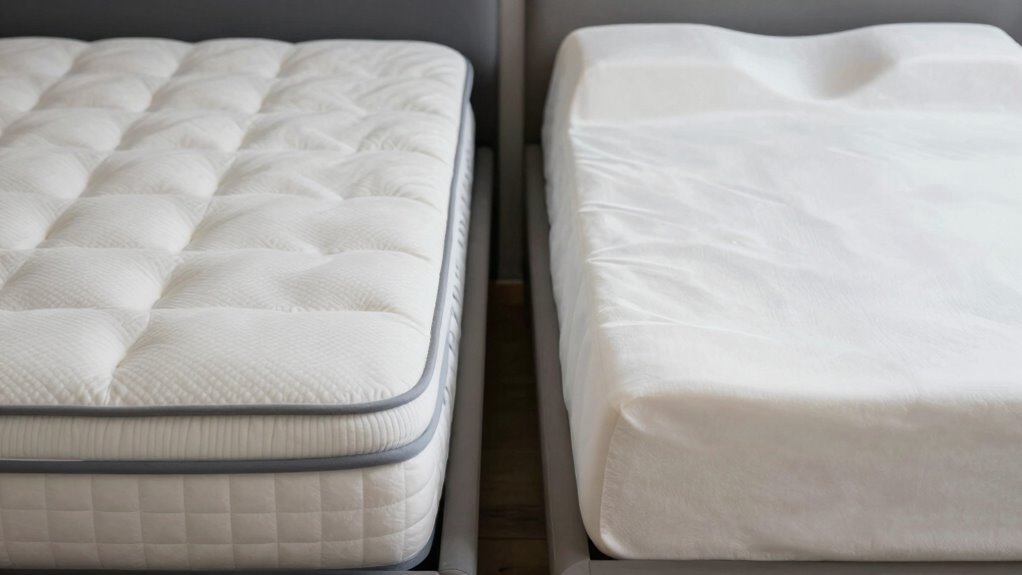

If you prefer a supportive and responsive feel, a hybrid mattress might suit you better, offering bounce and better airflow for temperature regulation. If you favor contouring comfort and pressure relief, memory foam can provide a cozy, cradling experience, though it may trap heat. Both options vary in durability and maintenance. To find the best fit for your sleep style, explore the key differences further—your ideal mattress is out there waiting.

Prime made for students and young adults
- Fast, free delivery for dorm and study essentials
- Prime Video and Amazon Music included
- Member-only deals
Key Takeaways
- Hybrids offer better temperature regulation and airflow, ideal for hot sleepers, while memory foam tends to retain heat.
- Memory foam provides superior motion isolation, making it suitable for couples or those sensitive to movement.
- Hybrids deliver a more responsive, bouncy feel with longer durability due to coil support.
- Memory foam offers a plush, contouring comfort that relieves pressure points, favored by those seeking a sinking sensation.
- Durability and maintenance favor hybrids, which generally last longer and are easier to keep cool and clean.
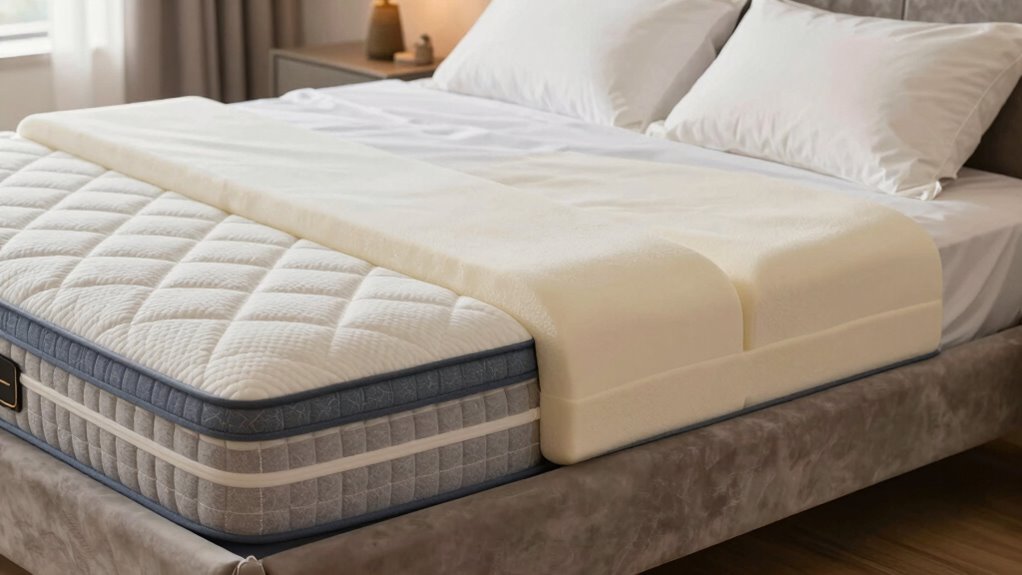
Choosing the right mattress can profoundly impact your sleep quality, and two popular options are hybrid and memory foam mattresses. Both types offer unique benefits, but understanding their differences can help you decide which suits your needs best. Hybrid mattresses combine the support of innerspring coils with the comfort of foam layers, often incorporating cooling technology to regulate temperature. If you tend to sleep hot, a hybrid might be the better choice because the coils promote airflow, preventing heat buildup. Many hybrid models also feature advanced cooling materials like gel-infused foam or breathable covers, helping you stay comfortable throughout the night.
Memory foam mattresses, on the other hand, are renowned for their superior motion isolation. When you move during sleep, your partner or pet’s movements are absorbed by the foam, reducing disturbances and helping you stay asleep longer. If you share a bed and are easily disturbed by movement, memory foam offers a significant advantage. However, traditional memory foam can trap heat, making it less ideal if you tend to overheat. Fortunately, many modern memory foam mattresses now incorporate cooling technology, such as gel infusions or open-cell structures, to improve airflow and dissipate heat more effectively. Properly ventilating your mattress can also help mitigate heat retention issues.
When it comes to feel, memory foam molds closely to your body, providing a cradling sensation that relieves pressure points. If you prefer a mattress that contours to your shape and offers a plush, sinking feel, memory foam is likely the better fit. Conversely, hybrid mattresses tend to have a more responsive surface thanks to the coil support, offering a bounce that makes changing positions easier and gets you moving more quickly in the morning. This responsiveness can be beneficial if you dislike feeling stuck or “sunk in.” Additionally, hybrid mattresses often have a longer lifespan due to the durability of the coil support system.
Durability is another consideration. Hybrids generally last longer because the coils provide sturdy support, preventing sagging over time. Memory foam can also be durable, but it may soften or develop indentations faster if made from lower-quality materials. Proper maintenance can extend the lifespan of both types, but hybrids tend to require less frequent replacement. Maintenance-wise, hybrids tend to be easier to keep cool and fresh, especially with removable, washable covers and cooling layers. Memory foam mattresses require careful cleaning and sometimes need additional cooling accessories to prevent heat retention.
In the end, your choice depends on your sleep preferences. If you want a cooler sleeping surface with responsive support and less motion transfer, a hybrid mattress might be your best bet. If you value deep contouring, excellent motion isolation, and don’t mind extra measures to stay cool, memory foam could be the ideal choice. Both options have their strengths, so understanding your priorities ensures a better night’s sleep. Recognizing the supportive structure of each type can help you make an informed decision.
Popular right now

De'Longhi Stilosa Compact Manual Espresso Machine with Milk Frother

Hisense E7 Cinema Series 55-Inch Hi-QLED Mini-LED 4K UHD Smart Fire TV

Apple AirPods Pro 3 Wireless Earbuds with Active Noise Cancellation
As an affiliate, we earn on qualifying purchases.
Frequently Asked Questions
Which Mattress Type Is Better for Allergy Sufferers?
You’ll find that memory foam mattresses often work better for allergy sufferers because they’re made from hypoallergenic materials that resist dust mites and mold growth. Look for models with allergy relief features like antimicrobial covers or tightly knit fabrics. Hybrids can also be good if they use hypoallergenic materials for the comfort layers, but generally, memory foam offers a more allergen-resistant environment, making it a better choice for allergy relief.
How Do Hybrid and Memory Foam Mattresses Compare in Durability?
Hybrid mattresses generally offer better durability compared to memory foam, thanks to their mixed materials like coils and foam, which enhance material longevity. Memory foam tends to soften and sag over time, reducing its lifespan. Your choice depends on how long you want your mattress to last; hybrids usually provide a more durable option, maintaining support and comfort longer, especially if you prefer a mattress that withstands frequent use.
Are There Significant Differences in Temperature Regulation?
You’ll notice significant differences in temperature regulation between hybrid and memory foam mattresses. Hybrids often provide better sleep comfort because their breathable coils promote airflow, keeping you cooler throughout the night. Memory foam mattresses tend to trap heat, which can cause discomfort, especially if you’re a hot sleeper. If temperature control is essential for your sleep quality, a hybrid might be the better choice, offering a cooler, more comfortable sleep experience.
Which Mattress Type Offers Better Edge Support?
You’ll find that hybrid mattresses typically offer better edge support than memory foam beds, thanks to reinforced edges and a combination of coils and foam. This edge stability means you can sit or sleep near the edge comfortably without sagging. Additionally, hybrid mattresses tend to enhance mattress longevity, maintaining their supportive structure over time. Memory foam, while cozy, may develop permanent indentations, reducing edge support and overall durability.
How Do Maintenance and Cleaning Differ Between the Two?
When it comes to maintenance and cleaning, you need to keep in mind that hybrid mattresses usually require more care routines. They’re often more durable but may need occasional spot cleaning and rotating to prevent wear. Memory foam mattresses, on the other hand, benefit from simple cleaning methods like vacuuming and using a removable, washable cover. Either way, staying on top of your care routines keeps your mattress in tip-top shape.
Conclusion
So, when it comes to choosing between a hybrid and a memory foam mattress, it’s like picking your ultimate sleep sidekick—each with its own superpowers! Hybrid mattresses can turn your sleep into a luxurious, cloud-like adventure, while memory foam molds around you like a gentle, comforting hug from a thousand sleeping kittens. No matter what, your perfect mattress is out there, waiting to transform your nights into epic journeys of restful bliss—so go ahead, choose your champion and conquer your sleep!