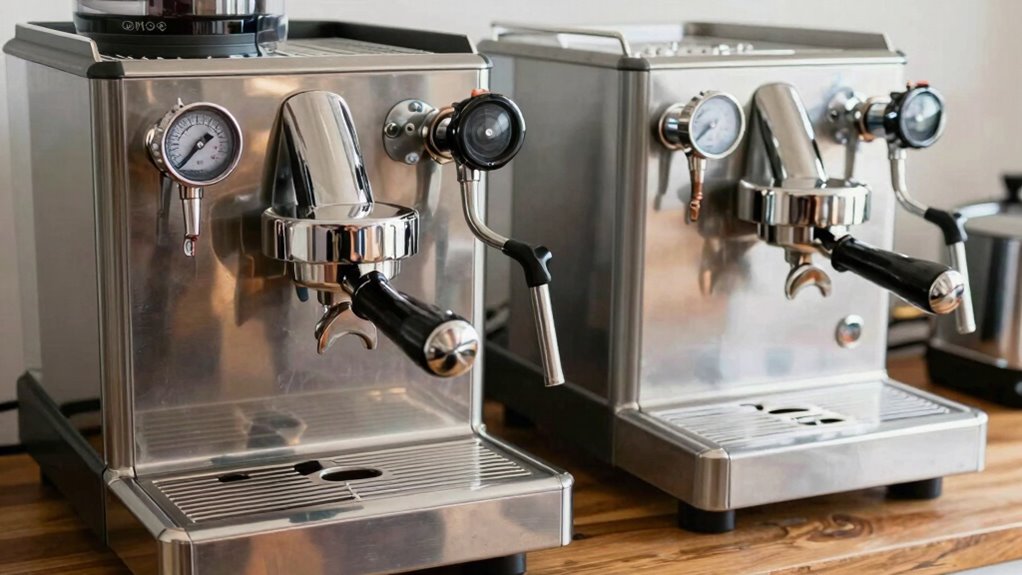

If you often make milk-based drinks and want precise temperature control, a dual boiler setup makes sense, as it allows for simultaneous brewing and steaming with reliable consistency. On the other hand, a heat exchanger machine is a versatile, space-saving choice that heats water on demand, offering faster operation and good temperature stability for most home baristas. To discover which setup aligns best with your needs and preferences, keep exploring the details below.

Prime made for students and young adults
- Fast, free delivery for dorm and study essentials
- Prime Video and Amazon Music included
- Member-only deals
Key Takeaways
- Dual boilers offer precise temperature control and simultaneous brewing and steaming, ideal for high-volume or milk-based drinks.
- Heat exchanger machines are more compact, energy-efficient, and suitable for versatile, space-constrained setups.
- Dual boilers provide greater consistency and stability over time, especially with frequent milk steaming.
- Heat exchanger systems can be faster and easier to maintain, making them suitable for quick, casual brewing.
- Choice depends on space, brewing frequency, and the level of temperature precision desired.
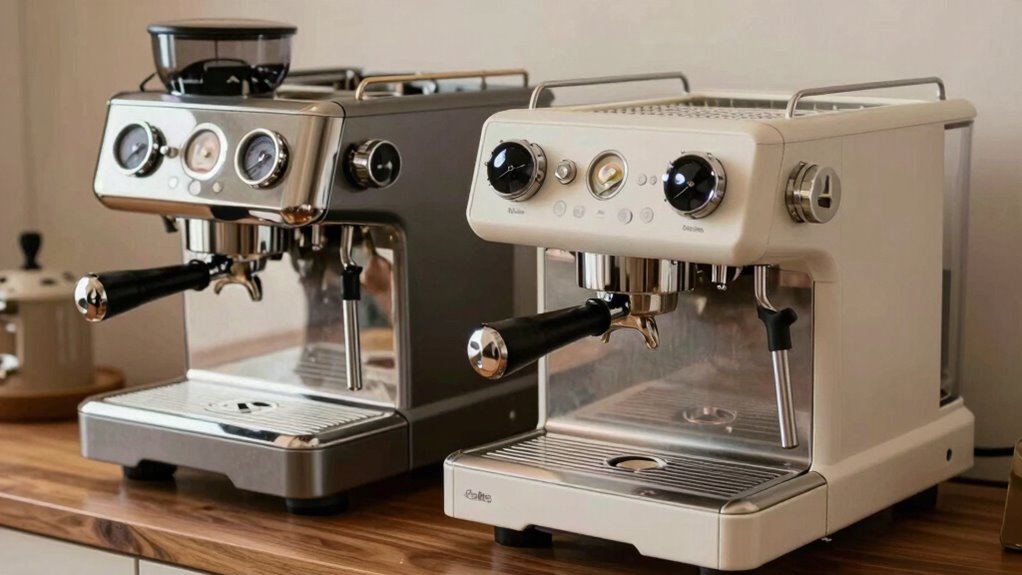
Are you trying to decide between a dual boiler and a heat exchanger espresso machine? If so, you’re likely considering which setup will best suit your brewing needs, especially if you love milk-based drinks like lattes and cappuccinos. Both machines have their strengths, but understanding how they handle milk steaming and temperature stability can help you make the right choice.
With a dual boiler, you get dedicated chambers for brewing espresso and steaming milk. This setup excels in milk steaming because it offers precise control over temperature, ensuring that your milk heats evenly and quickly. You won’t experience fluctuations in temperature that can cause burnt or scalded milk. The separate boilers allow you to steam milk simultaneously while brewing espresso, saving time and ensuring that each component maintains optimal temperature. This setup is particularly beneficial if you frequently prepare multiple milk-based drinks or if you prefer consistency in every shot. Temperature stability is a hallmark of dual boilers, making it easier to maintain the perfect environment for both espresso extraction and milk steaming. Moreover, temperature stability is often more reliable with dual boiler systems, which enhances overall brewing quality. Additionally, energy efficiency can vary between the two setups, with dual boilers sometimes consuming more power due to their separate heating chambers.
Dual boilers provide dedicated chambers for precise, simultaneous espresso brewing and milk steaming, ensuring optimal temperature stability and consistency.
A heat exchanger machine, on the other hand, uses a single boiler with a specialized system that allows you to brew espresso and steam milk in quick succession. While it doesn’t have dedicated boilers, it compensates with clever engineering that maintains a stable temperature during operation. When you’re steaming milk, the heat exchanger system keeps the water temperature consistent enough for quality milk frothing. However, because it shares the boiler for brewing and steaming, you might notice slight temperature fluctuations if you switch rapidly between brewing and steaming. This can sometimes affect the quality of your espresso or the texture of your milk, especially if your machine isn’t well-calibrated. It’s worth noting that some advanced heat exchanger models incorporate features designed to better stabilize temperature during operation. In addition, maintenance and calibration are essential for these machines to perform optimally over time.
If you prioritize milk steaming and want the most consistent temperature stability, a dual boiler is usually the better choice. It offers greater precision and reliability, making it easier to produce creamy, perfectly textured milk every time. On the other hand, some heat exchanger machines incorporate temperature stability features that can improve performance. If you prefer a more compact setup, or you don’t mind slightly more involved temperature management, a heat exchanger machine can be a versatile and more affordable option. It’s fast enough for most home baristas, but you might need to pay a bit more attention to temperature adjustments when switching between brewing and steaming.
Ultimately, your decision depends on how often you make milk-based drinks, how much space you have, and how precise you want your temperature control to be. Both setups can produce excellent espresso, but understanding their differences in milk steaming and temperature stability can help you choose the machine that makes the most sense for your brewing style.
As an affiliate, we earn on qualifying purchases.
Frequently Asked Questions
How Do Maintenance Requirements Differ Between Dual Boiler and Heat Exchanger Machines?
You’ll find maintenance differs mainly in water filtration and steam pressure. Dual boiler machines require regular cleaning of both boilers and water filters to prevent scale buildup, especially since constant steam pressure can cause mineral deposits. Heat exchangers need less maintenance overall but still benefit from water filtration to avoid mineral buildup. You should regularly descale both systems and check steam pressure levels to keep your espresso machine in top shape.
Which Setup Is More Energy-Efficient for Daily Home Use?
A heat exchanger setup generally uses less energy for daily home use because it heats water on demand, reducing overall energy consumption. Dual boilers, while offering quicker, simultaneous brewing and steaming, tend to consume more power due to maintaining two heated chambers constantly. If you’re conscious of environmental impact and want to save energy, a heat exchanger machine makes more sense, helping you reduce your carbon footprint and lower utility bills.
Can a Heat Exchanger Machine Produce the Same Quality Espresso as a Dual Boiler?
Think of your espresso as a delicate dance, where temperature stability and brewing speed lead. A heat exchanger can produce excellent espresso, but it might not match the consistency a dual boiler offers. With a dual boiler, you get precise temperature control, ensuring each shot is perfect, especially for complex brews. While a heat exchanger’s quicker brewing speed is tempting, for top-tier quality, a dual boiler’s stability wins the dance.
What Is the Typical Lifespan of Each Type of Espresso Machine?
A heat exchanger machine usually lasts around 5-10 years, while a dual boiler can last 8-15 years with proper care. You’ll find that machine durability depends heavily on build quality and usage, but dual boilers often come with longer warranty coverage due to their more robust design. Regular maintenance extends lifespan for both, and investing in reputable brands guarantees you get the most out of your espresso setup.
Are There Significant Price Differences Between Dual Boiler and Heat Exchanger Models?
Imagine you’re shopping for a luxury car—your options range from a sleek, budget-friendly sedan to a high-end sports car. Similarly, price comparison between dual boiler and heat exchanger espresso machines varies wildly, thanks to brand variations. Dual boilers often come with a hefty price tag, while heat exchangers tend to be more budget-friendly. So, you’ll pay more for precision and durability or save cash for your next coffee adventure.
Conclusion
Choosing between a dual boiler and a heat exchanger is like picking between a race car and a trusty bicycle—you’ll get there, but your ride depends on your needs. If you crave perfect temperature control and quick, consistent shots, the dual boiler is your highway. But if you’re just starting out or want a more budget-friendly option, a heat exchanger keeps you moving smoothly. Either way, your espresso journey is ready to brew—just pick your vehicle!
Halloween Picks
halloween
As an affiliate, we earn on qualifying purchases.