
To write a check, start by using blue or black ink for clarity and security. Fill in the date, the payee’s full name, and the amount in both numbers and words, making sure they match exactly. Sign the check as it appears on your bank account and keep your checkbook secure. Be precise and careful with every detail to prevent fraud and processing errors. Keep learning each step to master check writing confidently.
Key Takeaways
- Use blue or black permanent ink to fill out the check clearly and securely.
- Write the full date and payee’s exact name in the designated spaces.
- Enter the amount in numbers and words accurately, ensuring they match.
- Sign the check exactly as your bank account is registered.
- Keep checks neat, avoid blank spaces, and verify details before handing over.
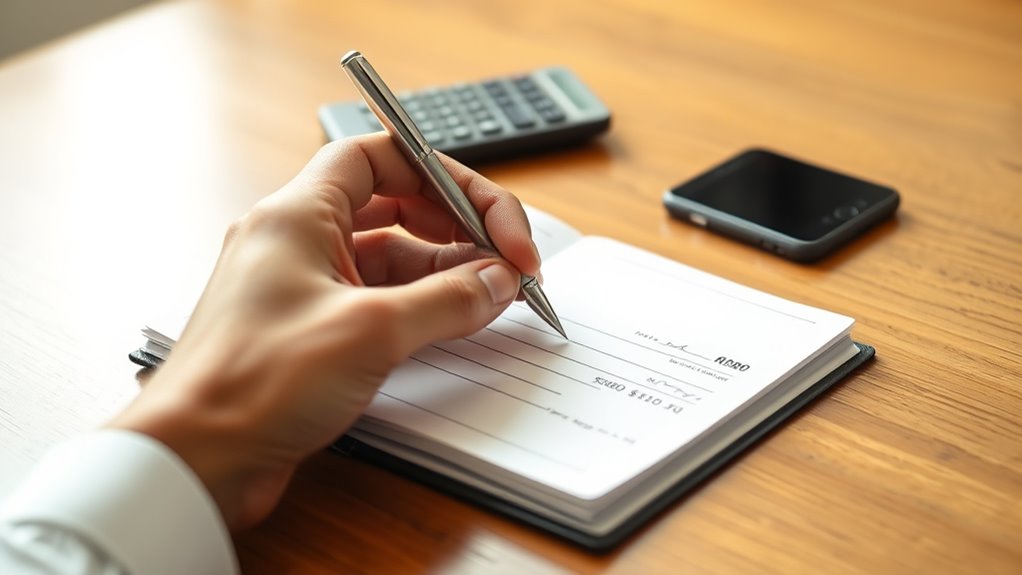
Have you ever wondered how to write a check correctly? Mastering check writing isn’t just about filling out a form; it’s about following proper check writing etiquette and protecting yourself from check fraud. When you understand these basics, you guarantee your payments are processed smoothly and securely. First, always use a pen with blue or black ink. This helps prevent alterations and makes your check easier to verify. Writing in pencil or using erasable ink can lead to unauthorized changes, so stick to permanent ink to maintain the integrity of your check.
Always use blue or black ink to ensure check security and easy verification.
Next, date the check accurately. Write the full date in the designated space, usually at the top right corner. This not only records when the transaction took place but also helps prevent someone from depositing or cashing the check after a significant delay, which could cause issues if the check is lost or stolen. When you write the payee’s name, make sure it’s spelled correctly and legibly. Avoid abbreviations unless they’re part of the official name. Clear handwriting ensures the bank and the payee can process the check without confusion, reducing the chances of delays or errors.
The amount box, on the right side, is where you write the numerical value. Write the amount carefully, starting as close to the dollar sign as possible, to prevent someone from adding extra digits. Then, on the line below, write out the amount in words. For check writing etiquette, make sure the amount in words matches the number you wrote in the box. Draw a line after the amount in words to fill any remaining space, preventing someone from adding extra words or numbers afterward. This simple step is vital for check fraud prevention, as it helps guarantee the check can’t be altered easily.
Sign your name on the bottom right line exactly as it appears on your bank account. Your signature authorizes the transaction. Keep your checkbook in a safe place so no one can access your checks and commit fraud. When filling out the check, avoid leaving blank spaces or using erasable pens; these are common targets for fraudsters. Always double-check each detail before handing over or mailing the check. Additionally, understanding the importance of a high contrast ratio can help you recognize the visual quality of images on your bank statements or digital check images, making it easier to detect any unauthorized alterations. By following check writing etiquette and being vigilant about check fraud prevention, you protect yourself and guarantee your payments are processed accurately and securely. Writing a check properly isn’t complicated once you get into the habit of paying attention to detail and safeguarding your banking information.
Frequently Asked Questions
Can I Write a Check in Foreign Currency?
Yes, you can write a check in foreign currency for international transactions, but it’s not common. Many banks require you to specify the foreign currency amount and may convert it to your local currency. Keep in mind, some banks may charge extra fees or have specific procedures for foreign currency checks. Always check with your bank beforehand to verify they accept and process foreign currency checks correctly for your international needs.
What Should I Do if I Make a Mistake on a Check?
If you make a mistake on a check, you should correct errors carefully by crossing out the mistake with a single line and writing the correct info nearby, if allowed by your bank. If the mistake is too significant, it’s best to void the check by writing “VOID” across it and then use a new check. Always double-check to prevent errors and keep accurate records of voided checks.
How Long Does It Take for a Check to Clear?
Oh, the thrilling suspense of waiting for your check to clear! Usually, it takes 1 to 3 business days, but factors like the bank’s policies, the amount, and whether it’s a personal or business check can stretch this out. Sometimes, weekends and holidays add extra drama. So, check clearing time varies, and you might just need patience—or a good book—while your funds make their way through the banking maze.
Are Handwritten Checks Still Accepted by All Merchants?
Handwritten checks are still accepted by most merchants, but acceptance varies. With digital banking and mobile payments gaining popularity, many places prefer electronic transactions for speed and security. Some merchants might not accept handwritten checks due to the risk of fraud or processing delays. It’s a good idea to ask beforehand or carry alternative payment methods like digital banking options or mobile payments to guarantee smooth transactions.
What Are the Security Features of a Check to Prevent Fraud?
Check security features include watermarks, microprinting, and holograms that help prevent fraud. You should look for special inks that change color or fade when exposed to light, making counterfeit checks easier to spot. Using security features effectively enhances fraud prevention, ensuring your check remains safe from unauthorized duplication. Always verify these security elements before signing or accepting a check to protect yourself from potential fraud.
Conclusion
Writing a check might seem simple, but it’s a small act with big implications. Just like verifying facts before accepting them, always double-check your details to avoid errors. This careful approach reminds us that even routine tasks reflect our responsibility and integrity. When you write a check correctly, you’re not just making a payment—you’re practicing attention to detail and trustworthiness, qualities that extend far beyond the checkbook and into everyday life.