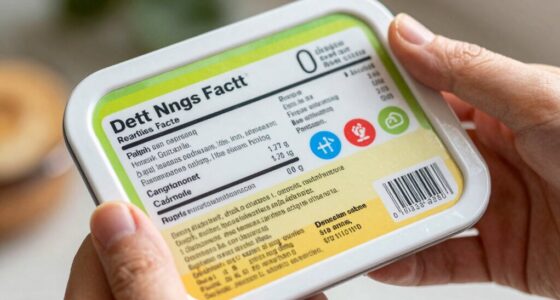


To understand refrigerator energy labels, look for the annual energy consumption in kWh/year, which shows how much electricity it uses over a year—lower numbers mean better efficiency. Check the energy efficiency class from A+++ to D, with higher classes being more efficient. Notice symbols and color codes like green or red for quick comparison. Also, review the estimated yearly operating cost based on local electricity rates. Keep these tips in mind—if you keep exploring, you’ll discover even more helpful details.

Prime made for students and young adults
- Fast, free delivery for dorm and study essentials
- Prime Video and Amazon Music included
- Member-only deals
Key Takeaways
- Check the annual energy consumption in kWh/year to compare overall energy use across models.
- Look for visual symbols and color codes, like A+++, for quick efficiency assessment.
- Review the estimated yearly operating cost based on your local electricity rates.
- Note the energy efficiency class from A+++ to D for overall performance ranking.
- Use these details to compare energy use, costs, and efficiency for informed selection.

Have you ever looked at a refrigerator’s energy label and wondered what all those numbers and symbols mean? It can seem overwhelming at first, but understanding how to read these labels is key to making smarter, more energy-efficient choices. The label provides essential information about the appliance’s energy efficiency, helping you compare models easily and choose one that saves you money and reduces your environmental impact.
The most prominent figure on the label is usually the annual energy consumption, expressed in kilowatt-hours per year (kWh/year). This number tells you how much electricity the refrigerator uses in a year. When comparing models, look for lower numbers because they indicate higher energy efficiency. Keep in mind, however, that a lower energy use also depends on the size and capacity of the appliance. Larger refrigerators typically consume more energy, but a high-efficiency model can offset that by using less power relative to its size.
Color codes or symbols often accompany the energy consumption figures to give you a quick visual cue about the refrigerator’s efficiency. For example, a green or A+++ symbol usually signifies top-tier energy efficiency, while red or lower classifications indicate less efficient models. These labels make it easier to perform a quick label comparison between different brands and models without getting bogged down in technical details.
Another important aspect is the estimated yearly operating cost, which is often calculated based on average local electricity rates. This figure can give you an idea of what the appliance will cost you annually in electricity bills. When comparing models, a lower operating cost means you’ll spend less money over time, even if the upfront price is slightly higher.
Additionally, pay attention to the energy efficiency class, often denoted by a letter scale from A+++ (most efficient) to D (least efficient). This classification summarizes the appliance’s overall energy performance relative to others. Choosing a model with a higher efficiency class can notably reduce your energy bills over the lifespan of the refrigerator. Understanding the energy efficiency ratings can help you make more informed decisions and select appliances that align with your sustainability goals.
In essence, by understanding these key elements—annual energy consumption, efficiency symbols, operating costs, and efficiency classes—you can make a label comparison to select the most energy-efficient refrigerator for your needs. It’s a straightforward way to save money and support environmental sustainability, all by learning to interpret what those numbers and symbols really mean.
As an affiliate, we earn on qualifying purchases.
Frequently Asked Questions
Do Energy Labels Include Noise Level Information?
Yes, energy labels often include noise level information, helping you assess a refrigerator’s quietness. This detail is part of the labeling standards set by regulatory agencies and is usually measured in decibels (dB). When comparing models, pay attention to the noise levels listed on the label, especially if your kitchen or living space is close to where the fridge will be placed. This way, you can choose a quieter, more comfortable appliance.
How Often Are Refrigerator Energy Labels Updated?
Imagine the label on your fridge as a snapshot of its energy efficiency. These labels are updated every few years, ensuring accuracy and reflect latest standards. You can trust the label’s info to guide your buying decision, knowing it’s based on current testing methods. Regular updates maintain label accuracy, helping you compare models and choose appliances that save energy and lower your electricity bills effectively.
Are Energy Labels the Same Worldwide?
Energy labels aren’t the same worldwide because of labeling variations and differing global standards. You’ll find some countries use specific labels like the EU’s Energy Label or the US’s EnergyGuide, each with unique designs and info. These variations aim to meet local regulations, so when you compare appliances globally, you need to understand the specific standards and labels in each region for accurate comparisons.
Can Energy Labels Predict Refrigerator Lifespan?
Energy labels can give you an idea of a refrigerator’s efficiency but don’t predict its lifespan or durability. While a higher-rated appliance might operate more efficiently, it doesn’t guarantee longer durability. Rely on manufacturer info and reviews for durability insights, as energy label accuracy focuses mainly on energy consumption. Ultimately, a well-maintained refrigerator with good energy ratings can last longer, but labels alone aren’t enough to predict longevity.
Do Energy Labels Account for Usage Habits?
Surprisingly, energy labels don’t account for your actual usage habits, even though they claim to show a refrigerator’s efficiency. You might think they’re accurate, but your usage habits—like opening the door frequently or setting the temperature—can drastically alter energy consumption. So, while labels give a good baseline, they often don’t reflect real-world energy use, making their accuracy somewhat ironic. Be mindful of your habits for true savings.
Conclusion
By understanding refrigerator energy labels, you’re like a savvy navigator steering through a sea of options, steering toward the most efficient vessel. These labels are your compass, guiding you to make smarter choices that save energy and cut costs. Remember, each number and symbol is a star on your map, illuminating the best path for your wallet and the planet. With this knowledge, you’re ready to sail confidently into a more sustainable future.
Fall Picks
fall essentials
As an affiliate, we earn on qualifying purchases.